





In southern Africa lies a breathtaking water wilderness—the Okavango Delta. Unlike ordinary deltas, this one doesn’t empty into the sea. Instead, it spreads across the desert, forming the largest inland delta on Earth and one of Africa’s most remarkable ecosystems.
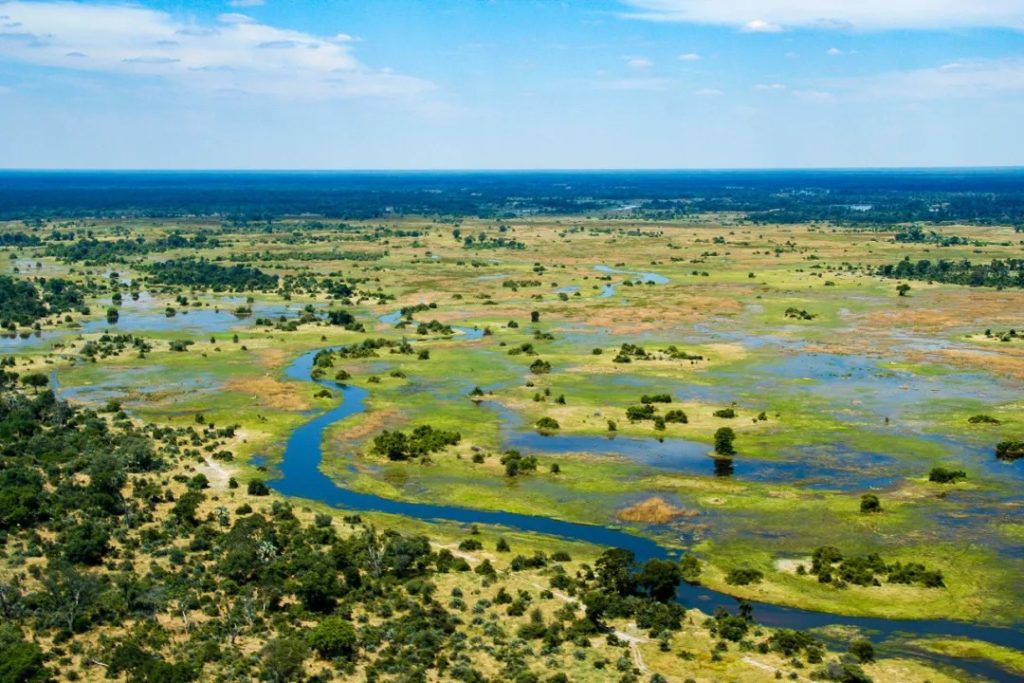
Here, the river disappears into the sands of the Kalahari Desert, transforming an otherwise dry landscape into a lush oasis covering roughly 15,000 square kilometers.
This extraordinary landscape overturns the common image of Africa as nothing but dry savannah. Each year, a dramatic natural phenomenon—often called the “miracle flood”—brings life to the region. Thanks to this annual cycle, the delta has become one of the world’s richest wildlife habitats and a dream destination for nature lovers and safari explorers. 
In 2014, the UNESCO World Heritage Committee officially added the Okavango Delta to the UNESCO World Heritage List, recognizing it as one of the planet’s most extraordinary natural treasures. It is also widely regarded as one of the Seven Natural Wonders of Africa.
A Reverse-Flowing River That Creates a Wildlife Wonderland
The magic of the Okavango Delta begins with a geographical paradox.
Most rivers eventually reach the ocean. The Okavango River, however, follows a completely different path. Rising in the Angolan Highlands, the river travels about 1,600 kilometers before flowing directly into the Kalahari basin—never touching the sea.
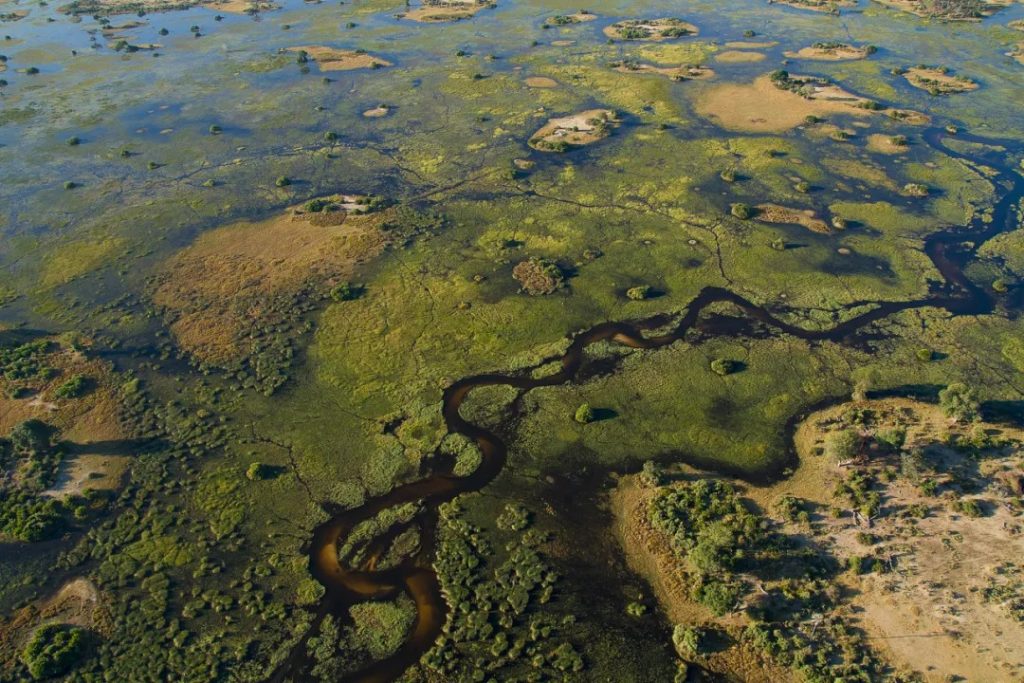
Instead of draining outward, the river spreads across the desert, forming a massive wetland maze.
Even more fascinating is the timing of the water cycle.
- When much of southern Africa enters the dry season, the floodwaters finally reach the delta between June and August.
- As the rest of the region receives rain, the waters here slowly recede.
This unusual rhythm creates a landscape that is half land, half water, constantly transforming throughout the year.
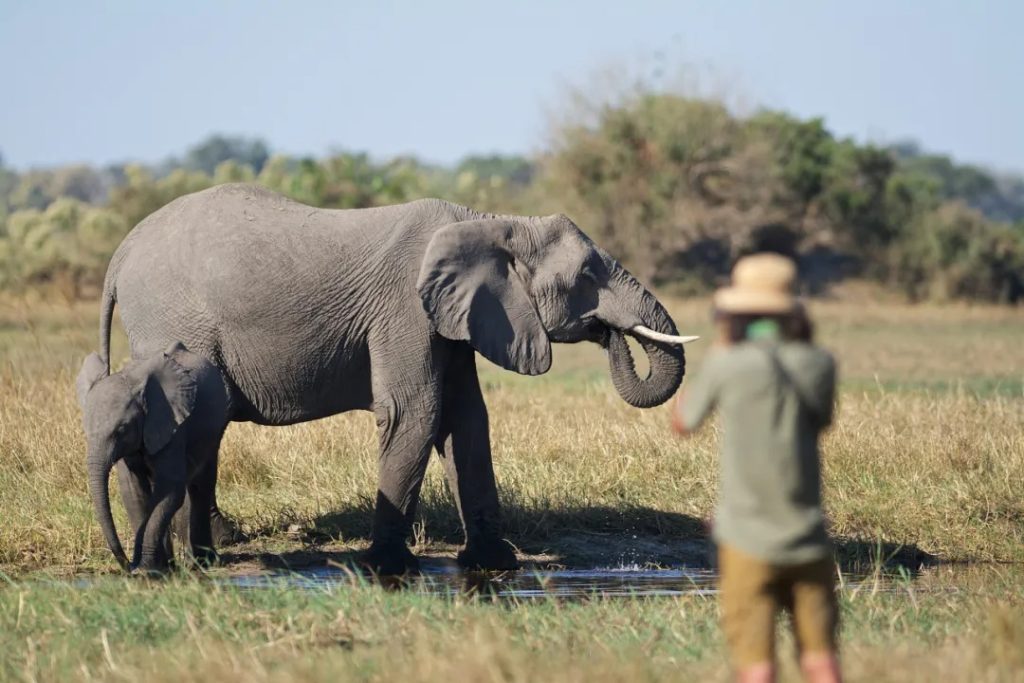
During the dry months, animals from surrounding regions migrate toward the delta in search of water and food. The result is one of the highest wildlife densities in Africa.
Within an area of less than 20,000 square kilometers, the ecosystem supports:
- More than 400 species of birds
- Around 130 species of mammals
- Countless reptiles and fish
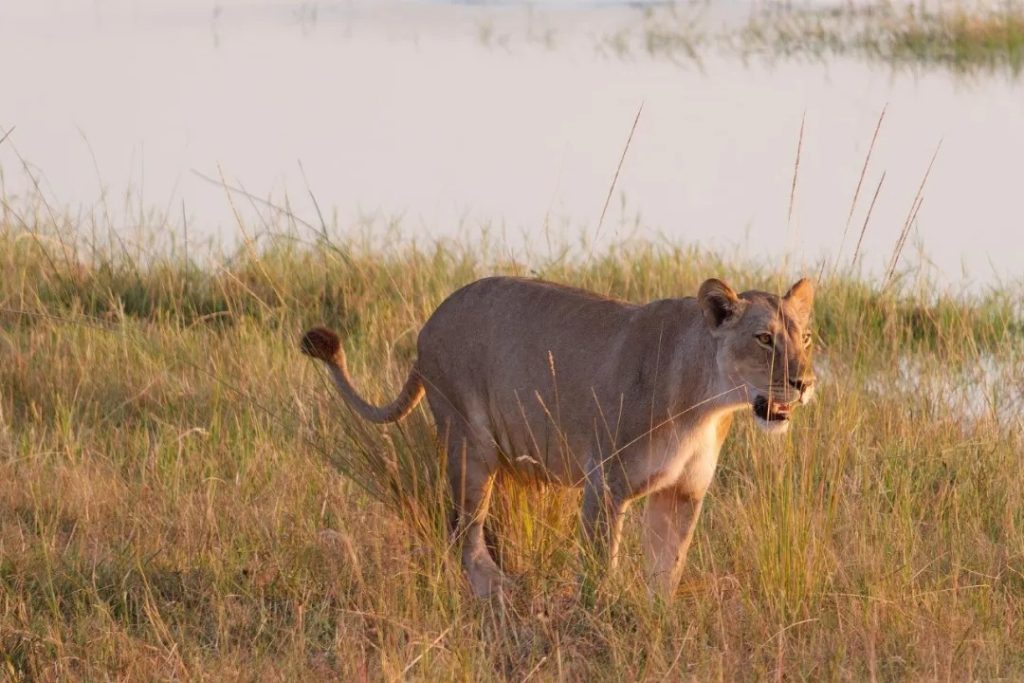
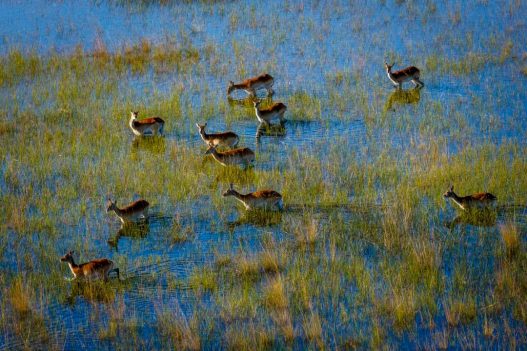
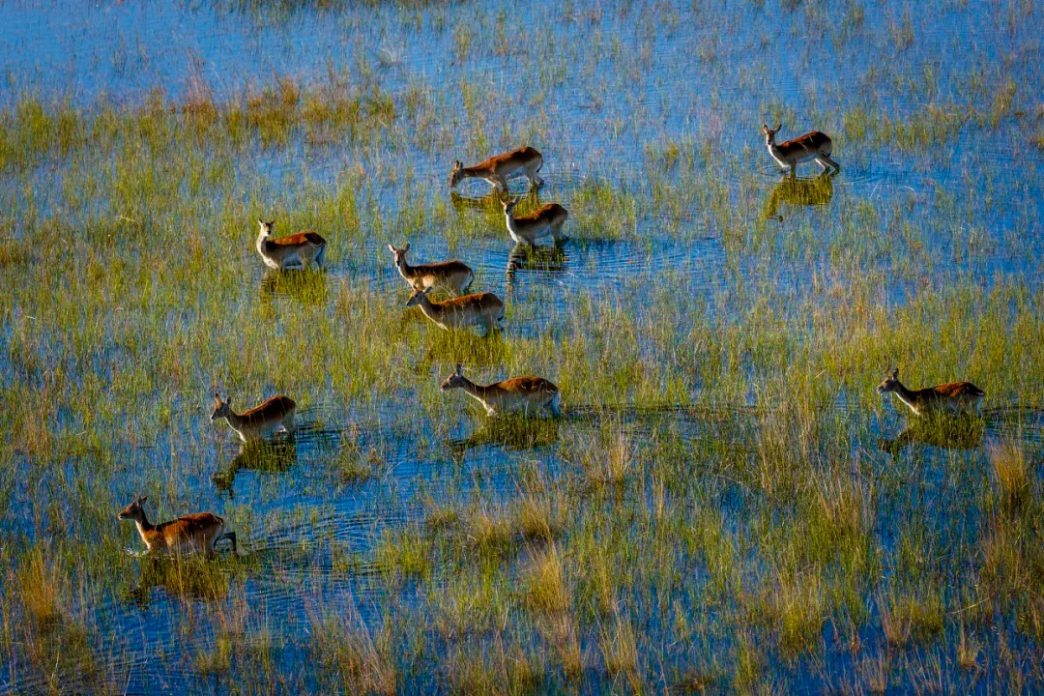
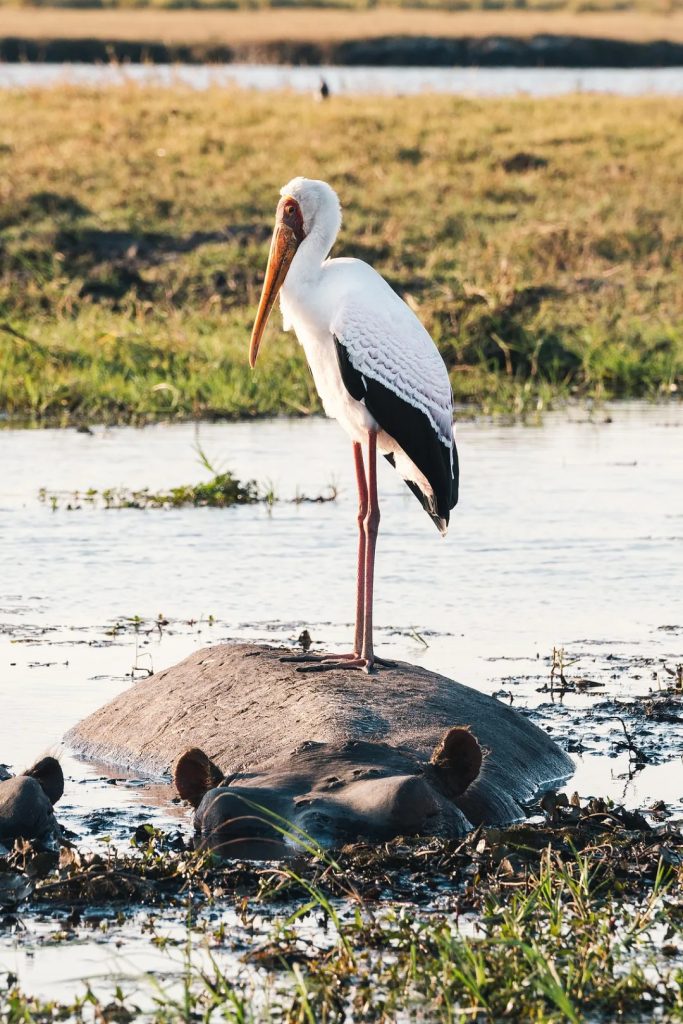
When the floodwaters rise, the land breaks into scattered islands. Hippopotamus and Nile crocodile glide through winding waterways, while antelope roam shallow marshes and birds nest among reeds. The delta becomes a spectacular stage for what many call “water safaris.”
A Landscape Where Multiple Ecosystems Meet
Unlike many African reserves dominated by open grasslands, the Okavango Delta is a mosaic of ecosystems.
Here you’ll find:
- Rivers and lagoons
- Marshes and swamps
- Grasslands and floodplains
- Woodlands and islands
This diversity creates ideal habitats for a huge range of wildlife.
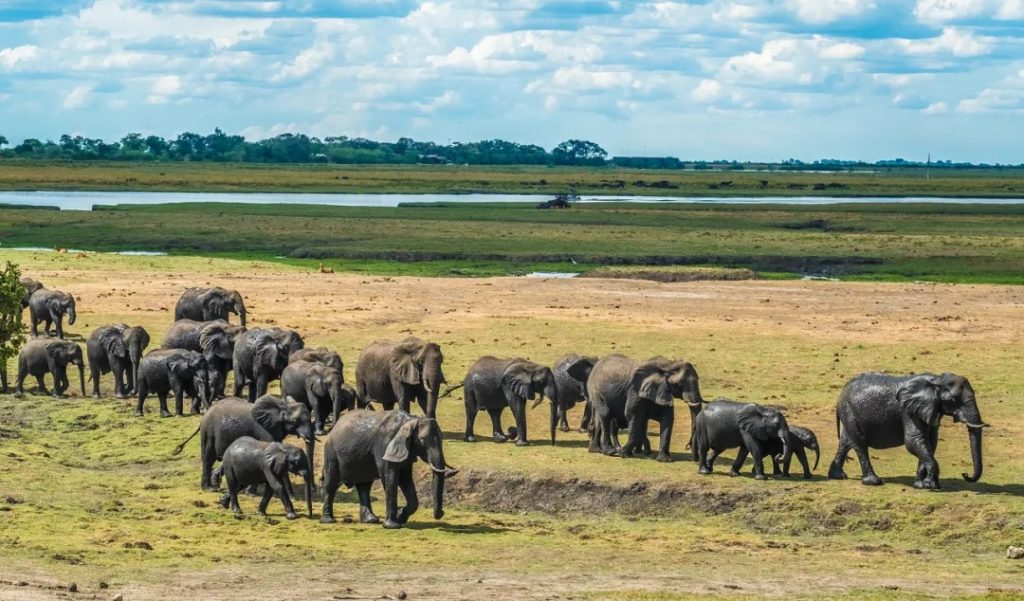
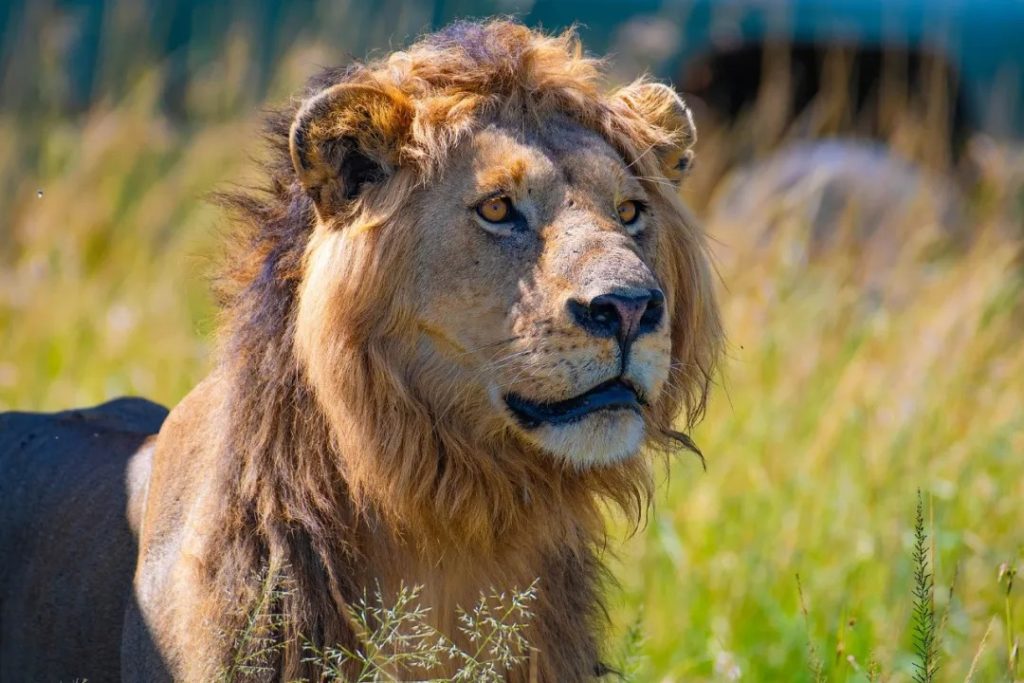
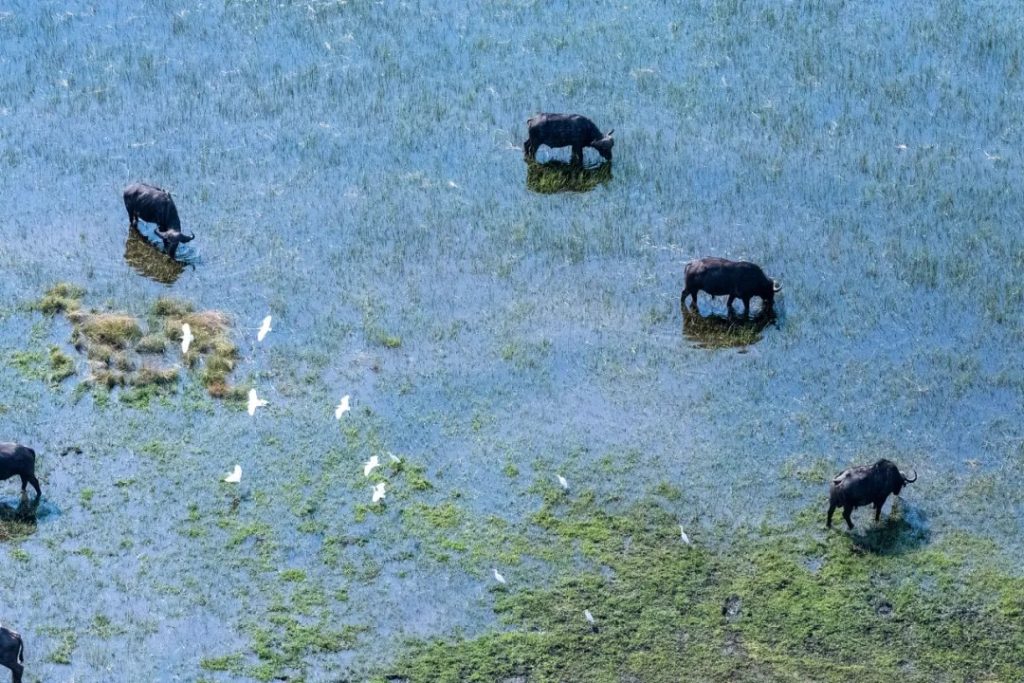
Visitors might encounter powerful predators like the Lion and the lightning-fast Cheetah on open plains. In wetter areas, massive African bush elephant herds and African buffalo move through swamps and wetlands.
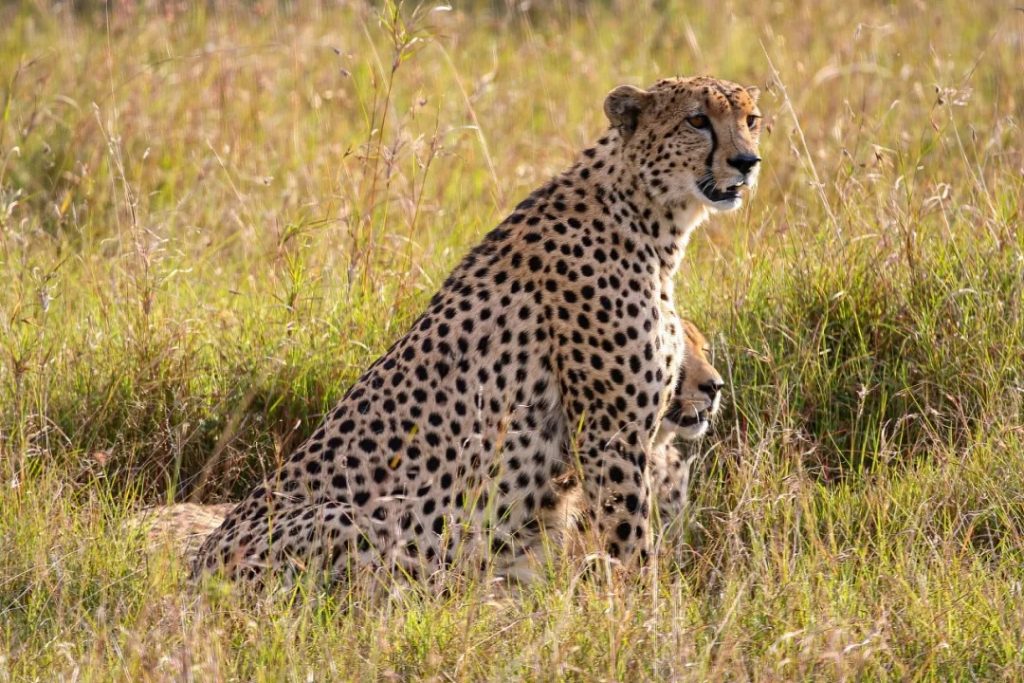
Hidden among forests and riverbanks are elusive hunters such as the Leopard and Spotted hyena.
This incredible ecological variety is exactly why the Okavango Delta is often described as the “ceiling of wildlife viewing” in Africa—the ultimate safari environment.
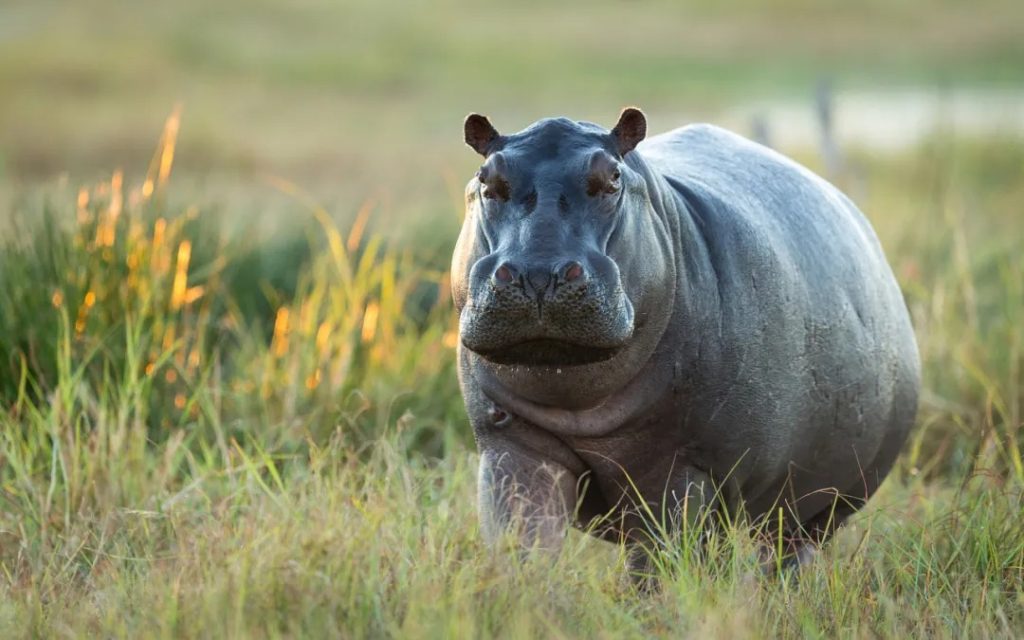
The Ultimate Three-Dimensional Safari Experience
A world-class safari destination isn’t defined only by its wildlife—it also depends on how people experience it. The Okavango Delta excels by offering adventure on land, water, and in the air.
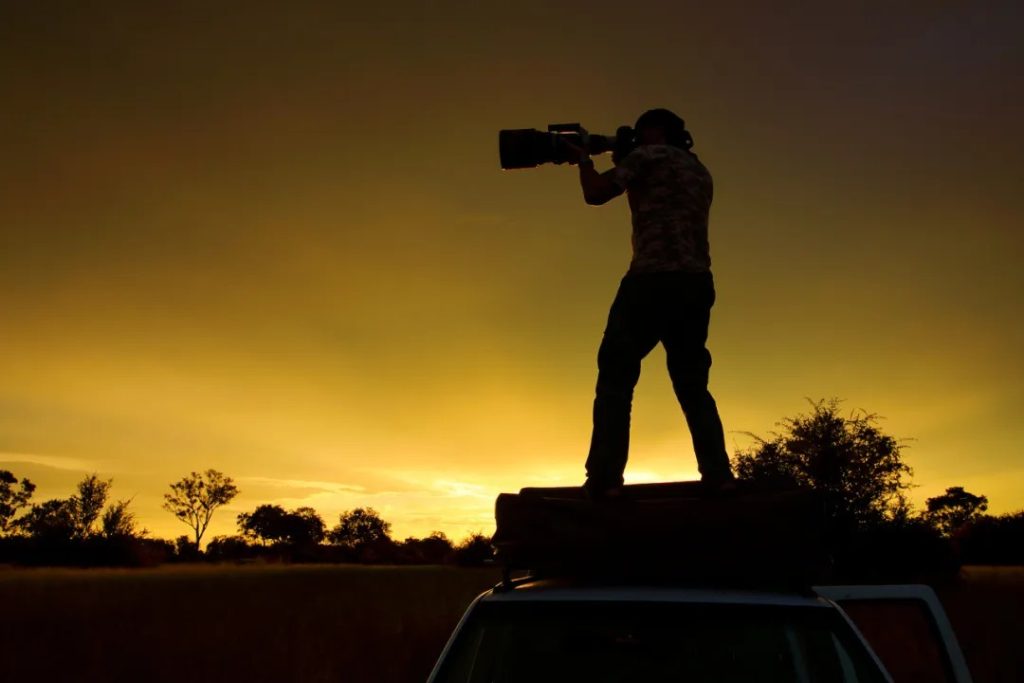
Land Safaris: Tracking Wildlife Up Close
On land, safaris usually take place in specially equipped 4×4 vehicles or on guided walking tours.
Because grasslands and wetlands are interwoven, many areas require vehicles designed for muddy terrain. These “wetland safari vehicles” feature wide tires that allow guides to reach remote regions most travelers could never access.
This provides incredible opportunities to track animals at close range in their natural habitat.
Water Safaris: The Delta’s Signature Experience
What truly sets the Okavango Delta apart from other African parks is its water-based safari.
Travelers often explore the wetlands in a traditional mokoro—a dugout canoe traditionally carved from the trunk of a Baobab tree. Skilled local guides, known as “polers,” gently push the canoe through narrow channels using long poles.
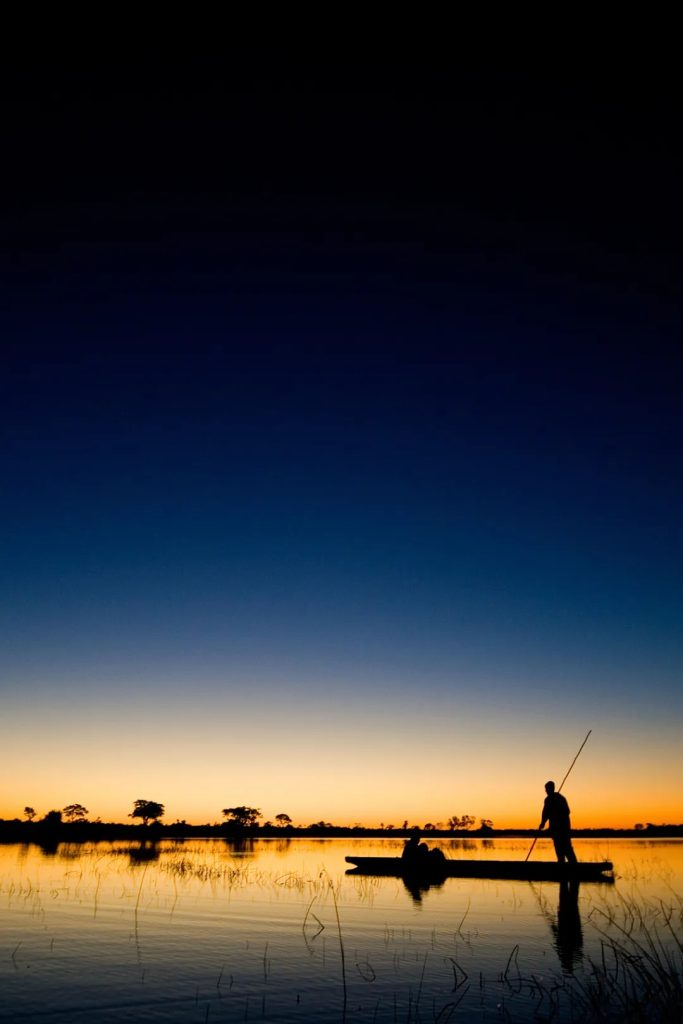
Gliding silently through the reeds allows visitors to observe wetland wildlife up close—from hippos and antelope to colorful waterbirds. The experience is peaceful, immersive, and deeply connected to nature.
Aerial Views: Witness the Delta From the Sky
For a completely different perspective, many travelers take small aircraft or helicopter flights above the delta.
From the air, the landscape reveals its full beauty—an intricate web of waterways, islands, and floodplains. During the dry season, it’s even possible to see animal herds migrating along natural water corridors that resemble lifelines across the land.
A Safari Built on Respect for Nature
The Okavango Delta’s reputation as Africa’s ultimate safari destination isn’t only about wildlife abundance. It’s also about conservation.
Tourism in the region follows strict principles:
- Limited visitor numbers to prevent overdevelopment
- Minimal interference with wildlife behavior
- Respect for local communities and traditional ecological knowledge
Because of these efforts, the delta remains one of the most pristine wilderness areas left on Earth.
Here, a safari is more than simply spotting animals. It becomes a powerful encounter with nature—a journey that reveals the raw beauty and resilience of life in the wild.