





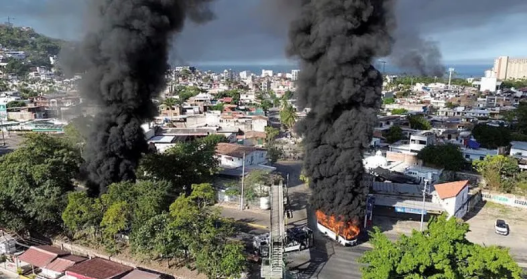
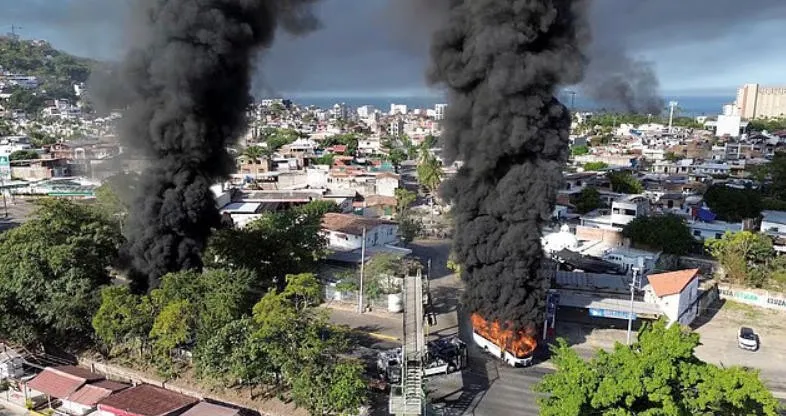
Sun, beaches, and cocktails define the everyday life of Puerto Vallarta, a famed Mexican tourist city.
This past weekend, that serene image was shattered.
Tourists witnessed scenes reminiscent of war: streets, shops, and pharmacies were set ablaze. Cars turned to rubble, smoke and toxic fumes blanketed once-crowded beaches.
In the distance, gunfire echoed, and smoke from explosions rose. Close by, a small dog ran desperately, searching for shelter.
Terror at the Airport
At Puerto Vallarta Airport, the horror intensified.
Videos circulating online showed fully armed gunmen storming the international hub, opening fire recklessly. Unarmed travelers ran in panic, the airport descending into chaos. 
Meanwhile, in Guadalajara, the capital of Jalisco, violence spread. Armed gangs set fires across the city and occupied its airport. Civilians scrambled for cover, mirroring the desperation of the fleeing dog.
Airlines immediately halted all flights to Jalisco. Even planes already over the Pacific were ordered to turn back.
The U.S. State Department issued a red-level security warning. Americans in five high-risk Mexican states were urged to shelter in place. Canada and China quickly followed with alerts for their citizens.
The Target: El Mencho
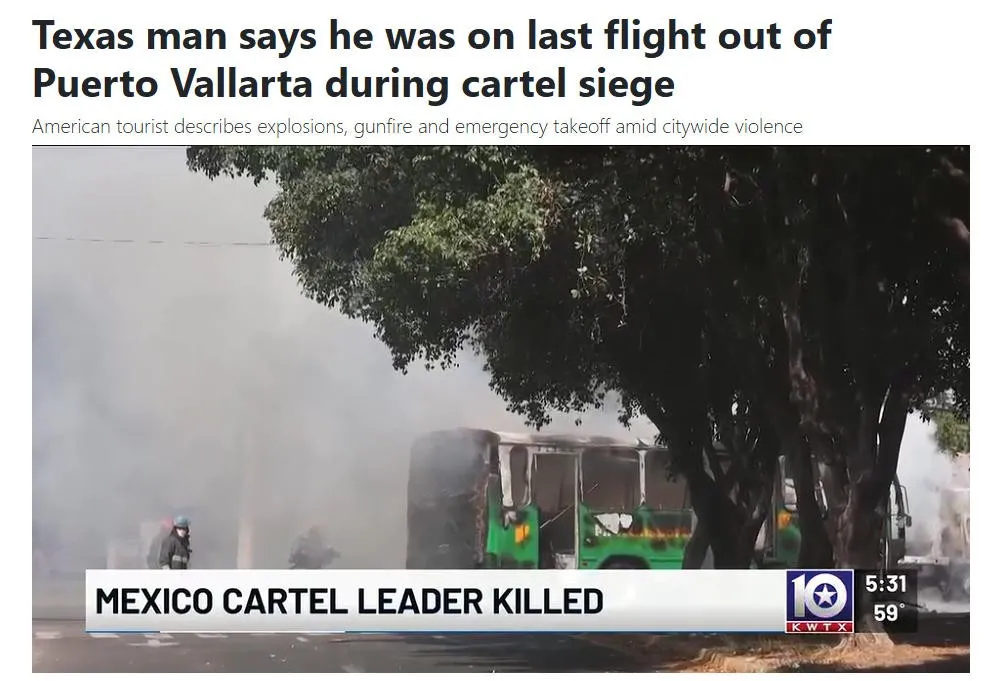
All this chaos stemmed from a raid in the mountains two hours from Guadalajara. On February 22, Mexican forces killed one of the country’s most wanted drug lords: El Mencho.
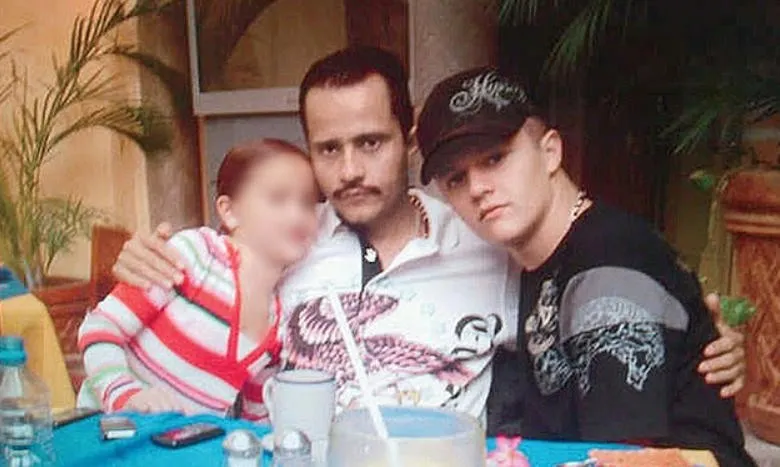
Born in 1966 in Michoacán, he quit school in fifth grade and worked on avocado farms. By age 14, he was guarding drug plantations. In his twenties, he illegally entered California, became involved in street crime, and in 1986 was arrested for carrying weapons.
By 1992, the FBI targeted him for a heroin deal, resulting in nearly three years of prison. He was deported back to Mexico upon release.
Surprisingly, he became a police officer briefly before leaving to join the Milenio Cartel. His influence grew, eventually marrying the boss’s sister.
By 2009, the Milenio leadership had been arrested or killed. El Mencho seized the opportunity, defeating rival factions in a bloody internal war and forming the CJNG.
Rise of the CJNG
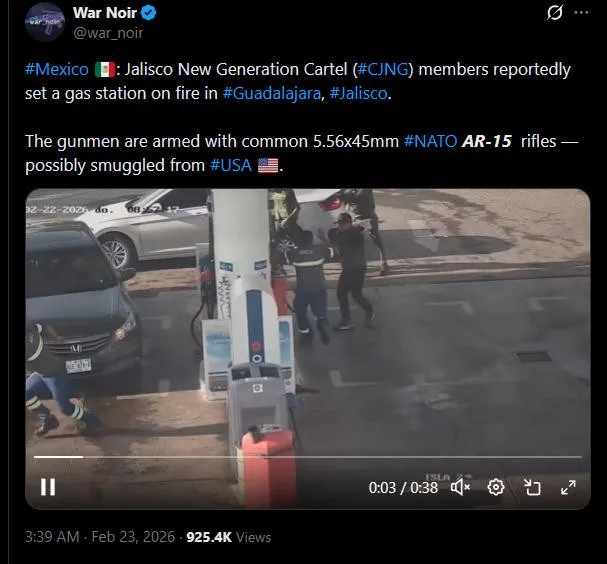
By 2010, CJNG became the dominant drug cartel in Jalisco.
Fifteen years later, it is a global criminal empire, with operations in 50 U.S. states and over 40 countries, assets exceeding $20 billion.
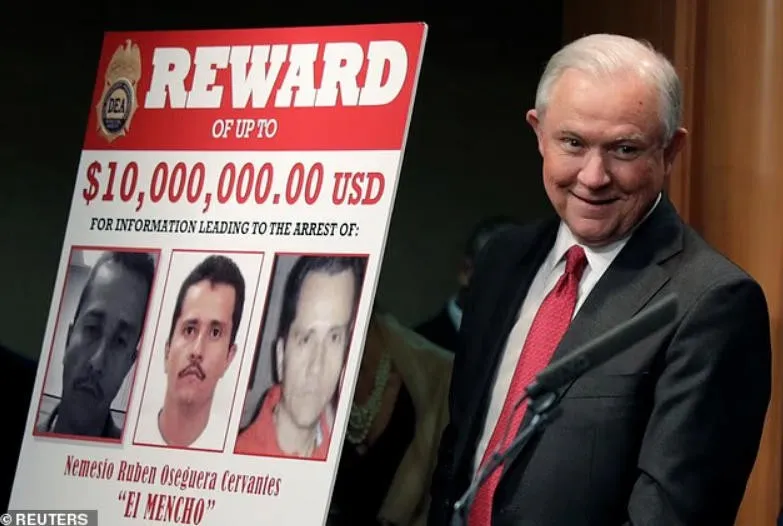
El Mencho evaded capture despite a $15 million U.S. reward. Military operations repeatedly failed, including one where CJNG used a rocket launcher to down a helicopter, killing nine soldiers.
The Fatal Raid
On February 22, 2026, Mexican special forces raided CJNG territory. El Mencho was fatally wounded in the firefight and died en route to Mexico City. Only three soldiers were injured, while seven CJNG members were killed. The army confiscated armored vehicles and rocket launchers.
The U.S. provided intelligence support behind the scenes.
CJNG’s Violent Retaliation
El Mencho’s death triggered nationwide violence. Reports show chaos in at least 21 states. Highways were blocked, shops burned, and attacks targeted ordinary citizens.
Guanajuato suffered 70 attacks in one day, 69 stores burned, and banks destroyed. Videos flooded social media showing civilians terrorized and cars destroyed.
Airports shut down, flights canceled or diverted, and foreign governments updated travel warnings.
The Hydra Effect in Mexico
History shows that killing a drug lord rarely brings peace.
In 2009, the death of a cartel leader led to the massacre of his family shortly after.
The arrest of El Chapo did not collapse the Sinaloa Cartel, which maintained operations under successors.
The Gulf Cartel’s creation of Los Zetas demonstrates how militarized groups can turn against their founders, escalating violence.
Scholars call this the “Hydra Effect”: cutting off one head leads to multiple new ones.
Research shows that within six months of a drug lord’s capture, murder rates in their city increase by 61%.
Guns, Money, and Corruption
CJNG’s power stems from firearms, finances, and systemic corruption.
70% of guns recovered at Mexican crime scenes between 2014–2018 originated from the U.S. They also use armed drones and employ mercenaries trained abroad.
CJNG’s annual revenue is in the billions, from drugs, oil smuggling, human trafficking, illegal mining, and extortion. Attempts to freeze accounts have little impact.
Corruption is rampant. 99% of crimes go unpunished. High-ranking officials, including Genaro García Luna and Salvador Cienfuegos, were bribed by cartels, demonstrating systemic rot.
Conclusion: The Crisis Continues
El Mencho’s death marks a political victory but leaves CJNG power struggles unresolved. Violence is likely to escalate as factions fight for control.
The story of CJNG is far from over. Cutting off one head only allows new ones to grow.