





A controversial plan shakes British politics
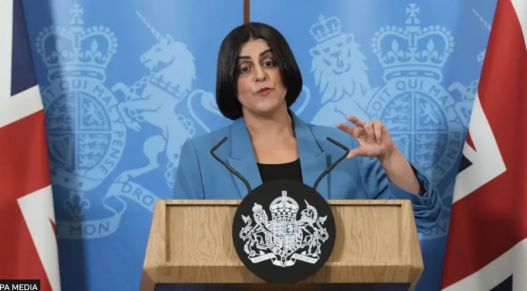
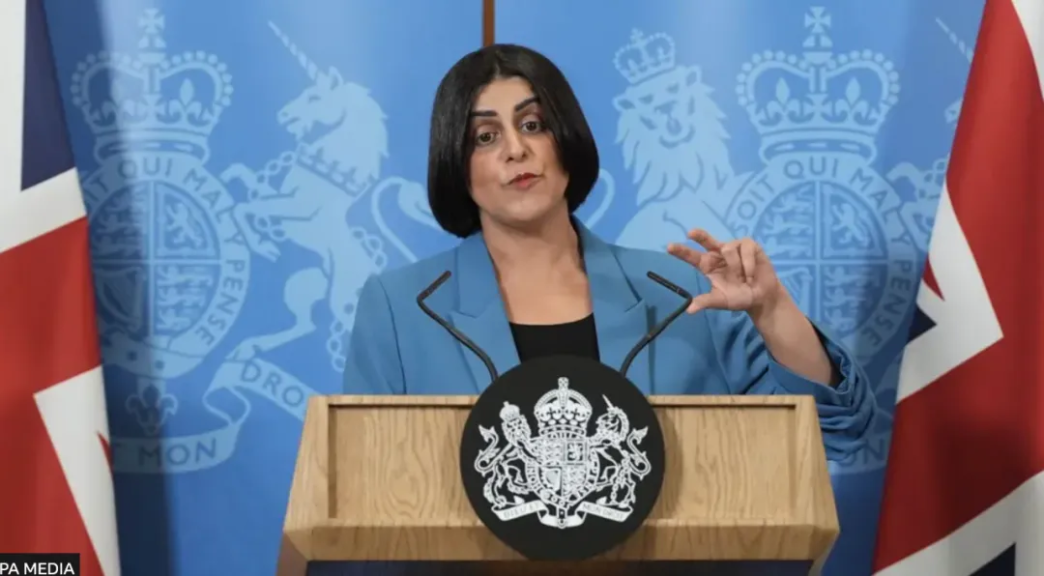
UK’s asylum policy offers £40,000 to rejected families, sparking legal, political, and ethical debates.On March 5, 2026, the UK Home Secretary Shabana Mahmood stood at a podium in London.
The venue was the Institute for Public Policy Research.
Her announcement sounded almost surreal.
The British government was prepared to offer up to £40,000 to each family whose asylum claim had been rejected.
The condition was simple.
Pack up and leave the country within seven days. 
The reaction was explosive.
Public debate erupted across Britain almost immediately.
Many people quickly pointed out the uncomfortable math.
The median salary for young adults aged 22 to 29 in the UK is roughly £32,000.
The median annual salary for all full-time workers is around £39,000.
That means a family ruled by law to have no right to stay could receive more money than many British workers earn in an entire year.
Criticism poured in from every direction.
Right-wing commentators called the policy an insult to taxpayers.
Left-wing advocacy groups attacked it as well, but for a different reason.
They argued that seven days was far too short for families to make such a life-altering decision.
Inside the ruling Labour Party, more than one hundred members of Parliament signed a letter opposing the plan.
Even the populist Reform UK party mocked the policy.
In their words, the payment looked less like a policy and more like a prize for illegal entry.
Few government initiatives manage to upset almost everyone.
This one succeeded.
Yet behind the controversy lies a logic the government believes makes perfect sense.
At its core, the debate is about money.
The staggering cost of Britain’s asylum system
Britain’s asylum crisis has been building for years.
In 2025 alone, more than 82,000 asylum applications were submitted.
Those claims involved over 100,000 people.
About 58 percent of those applications were rejected.
In theory, rejection should mean departure.
Reality looks very different.
That same year only about 28,000 migrants voluntarily left the country.
Many of the others remained inside the UK.
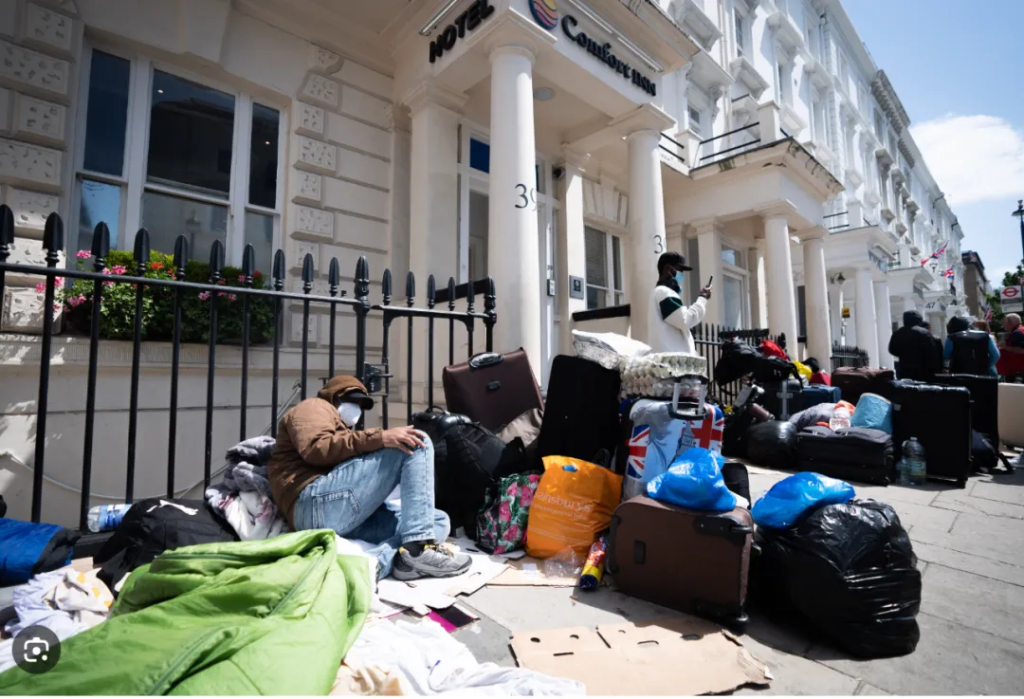
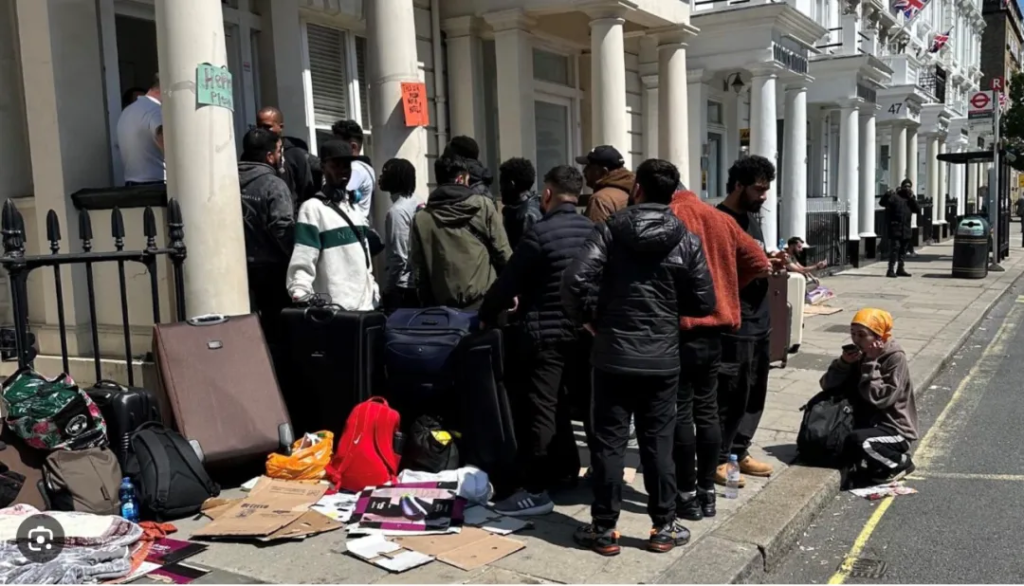
They continued living in accommodation paid for by the government.
The cost is enormous.
Britain now spends roughly £4 billion every year on the asylum system.
A huge share of that money goes toward hotels.
Studies by Durham University and the policy think tank IPPR estimated the nightly cost per asylum seeker at between £145 and £158.
For a family of three, the annual hotel bill can reach about £158,000.
Mahmood repeatedly highlighted this number during her speech.
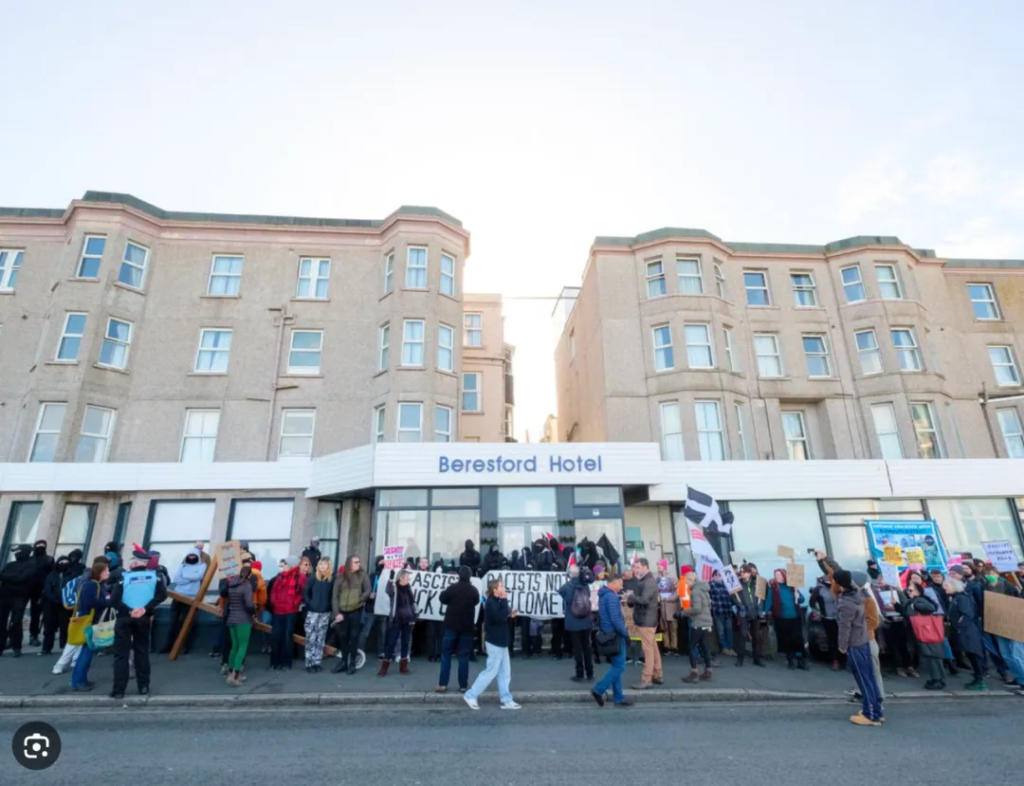
By the end of 2025 around 30,000 asylum seekers were staying in roughly 200 hotels across the country.
More than 107,000 people within the system were receiving government support.
The spending continues day after day.
During the 2024–2025 fiscal year the Home Office spent £2.1 billion on hotel accommodation alone.
That equals about £5.77 million every single day.
Originally the government signed a ten-year contract worth £4.5 billion for asylum housing.
Later calculations suggested the total cost could reach £15.3 billion.
The budget had more than tripled.
From the government’s perspective, the math seemed obvious.
If a family costs £158,000 per year to house, paying £40,000 to encourage them to leave looks like a bargain.
Even if 150 families accept the payment, the government expects to save millions.
Money, however, is not the only reason the policy appeared.
Politics played a crucial role.
An election shock pushed the issue forward
One week before Mahmood’s announcement, the Labour government suffered a humiliating defeat.
The location was a parliamentary by-election in Greater Manchester.
For more than a century, since 1918, the constituency had always elected a Labour MP.
But the vote held on February 26, 2026 produced a shock result.
The Green Party of England and Wales captured 40.7 percent of the vote.
Reform UK followed with 28.7 percent.
Labour collapsed to just 25.4 percent.
Compared with the previous general election, Labour’s support dropped by 25 percentage points.
The political map inside the constituency told an uncomfortable story.
Young urban voters shifted toward the Greens.
Older working-class voters moved toward Reform UK.
Labour was squeezed from both sides.
The broader national picture looked equally troubling.

Since April 2025, Reform UK had led several national opinion polls.
One survey showed that 36 percent of Britons believed Reform UK was best equipped to handle immigration.
Only 12 percent trusted Labour on the issue.
Another alarming signal came from a global Gallup survey.
Among all countries studied, Britain ranked first in the share of citizens who viewed immigration as their country’s biggest problem.
Twenty-one percent of British respondents named immigration as the top national issue.
The global median was only one percent.
For the government, the message was unmistakable.
Immigration had become a political emergency.
A policy that angers everyone

When Mahmood unveiled the £40,000 scheme, criticism arrived instantly.
The Conservative Party shadow home secretary Chris Philp attacked the idea.
He argued that paying rejected asylum seekers would reward illegal immigration.
Reform UK politician Zia Yusuf mocked the policy on social media.
He posted an image styled like a television game show.
The caption read simply
“A brand new game show.”
The message resonated with critics.
£40,000 is higher than Britain’s median salary.
For many voters the optics were terrible.
Advocacy groups on the left raised different concerns.
The Refugee Council warned that cutting support could push vulnerable families into homelessness.
A coalition representing around one hundred humanitarian organizations argued that seven days was far too little time to consult lawyers.
Meanwhile unrest was brewing inside Labour itself.
More than one hundred Labour MPs sent a letter opposing the proposal even before it was officially announced.
Labour parliamentarian Stella Creasy warned that the policy could trigger another scandal similar to the Windrush scandal.
That crisis erupted in 2018 when British authorities wrongly detained or deported Caribbean residents who had legal rights to live in the UK.
The government’s controversial logic
Facing heavy criticism, officials offered an unusual argument.
Human smugglers typically charge migrants between £15,000 and £35,000 for illegal journeys to Britain.
Therefore a £40,000 payment would not necessarily encourage more people to attempt the trip.
The government claimed the journey itself already costs nearly that much.
Whether the logic convinces anyone remains uncertain.
Still, the policy contains another critical element.
The payment is only the carrot.
The stick comes later.
If families refuse the money and stay beyond the deadline, the government plans to pursue forced deportation.
Mahmood also announced a twelve-week public consultation.
Officials will examine whether physical restraint could be used during deportations involving children.
In practice, that could mean handcuffs.
The proposal provoked even more outrage.
Such measures are technically allowed under the Immigration Act 2016.
Yet the provisions have never been implemented.
Previous governments understood the political cost of restraining children.
Now the Labour government appears ready to reconsider.
Looking to Denmark for inspiration
Before announcing the policy, Mahmood traveled to Copenhagen.
Her visit focused on Denmark’s immigration model.
For years Denmark has offered payments to rejected asylum seekers who agree to leave voluntarily.
Some families receive up to £30,000.
Danish authorities claim the policy helped cut the number of people waiting for deportation by half.
Mahmood returned impressed.
Her conclusion seemed straightforward.
If Denmark pays £30,000, Britain could offer £40,000.
But Denmark’s strategy includes much harsher measures.
Since 2015 the country has built one of Europe’s toughest deterrence systems.
In 2019 the Danish parliament adopted a major shift in asylum policy.
Integration was no longer the goal.
Return became the priority.
Refugee status was made temporary and reviewed every one or two years.
Permanent residence now requires at least eight years in the country.
Applicants must also pass language and employment tests.
Earlier, in 2016, Denmark introduced the controversial Jewellery law.
Police gained authority to confiscate cash or valuables from asylum seekers exceeding €1,340.
Wedding rings and sentimental items were exempt.
Critics compared the law to historical asset seizures.
In practice it was rarely used.
During its first six years it was applied only seventeen times.
Its real function was symbolic.
The message was clear: Denmark did not welcome large numbers of refugees.
Do deterrence policies actually work
Despite these strict measures, researchers remain skeptical.
A study from the UK Parliament Library concluded that deterrence policies rarely influence where asylum seekers choose to go.
People fleeing war rarely calculate welfare benefits before escaping.
Survival comes first.
Investigations by the Danish Red Cross revealed troubling consequences.
Many migrants confined to deportation centers developed serious mental health problems.
A psychological study of 56 children living in one center found extremely high levels of distress.
Fifty-eight Danish academics later signed an open letter criticizing the system.
Their research suggested many migrants never returned home.
Instead they disappeared underground or moved to another European country.
A report from the think tank IPPR reached a blunt conclusion.
There is almost no evidence that welfare restrictions significantly affect asylum destinations.
Even Denmark’s declining asylum numbers may not tell the full story.
Some analysts believe broader geopolitical factors played a larger role.
One example is the EU–Turkey deal that reduced migrant flows into Europe.
Britain tightens asylum rules further
The £40,000 payment is only the most visible change in a wider overhaul.
Since March 2, 2026 Britain’s asylum framework has shifted dramatically.
Under the new system refugee protection lasts only thirty months instead of five years.
After that period authorities reassess whether the home country is safe.
If conditions improve, deportation becomes possible.
Permanent residency requirements are also much stricter.
Legal migrants must wait twenty years.
People who arrived via small boats could wait thirty years.
That waiting period is the longest in Europe.
The Refugee Council estimates the system could trigger up to 1.9 million status reviews over the next decade.
The administrative cost alone may exceed £1.2 billion.
Children born in Britain will not automatically remain if their parents’ asylum claims fail.
They must leave with their families.
Family reunion visas have also been suspended since September 2025.
Charities have already challenged that decision in court.
Legal battles are already underway

Only two days after the policy announcement, the first legal challenge appeared.
Lawyers sent a pre-action protocol letter to the Home Office.
The argument focused on constitutional authority.
Did ministers have legal power to approve such large public spending without explicit parliamentary approval?
The lawyers cited the Bill of Rights 1689.
Additional lawsuits are already in motion.
A judicial review over the suspension of family reunification visas has been approved by the High Court.
A hearing is expected later this year.
Other legal groups are preparing challenges to the new permanent residency rules.
In short, the political fight has already moved into the courtroom.
A dilemma with no easy answer
Britain’s immigration dilemma extends beyond one controversial payment.
The deeper question is far more difficult.
What should a country do when someone is legally denied residence but cannot easily be deported?
Physical removal may be impossible.
Legal challenges can delay enforcement for years.
Moral concerns make abandonment unacceptable.
The £40,000 payment is one answer.
It may also be the answer that angers everyone.
Britain now faces a massive asylum system.
Its coastline cannot be sealed like a land border.
Its governing party has just suffered a political shock.
And its voters view immigration as a bigger issue than voters in any other country.
Meanwhile, somewhere among those 150 families offered the payment, individuals are making their own calculations.
They may remember the dangers of crossing the English Channel.
They may recall nights at sea and the fear of drowning.
And now they must decide.
Is £40,000 enough to leave the life they risked everything to reach?