




Flat-faced cats—often called Brachycephaly cats—have a distinctive look that many people instantly fall in love with. Their short noses and rounded faces give them an adorable, almost cartoon-like expression that sets them apart from other feline breeds.
However, while their appearance is undeniably charming, this unique facial structure can also come with certain health challenges. According to veterinary expert Jessica Apted, DVM, owners of these cats should be aware of the potential issues that may arise due to their facial anatomy.
Below, we’ll explore eight cat breeds known for their flat faces, along with expert insights into how to care for these fascinating pets. 
Breed Characteristics of Flat-Faced Cats
The defining feature of these cats is their brachycephalic skull, which results in a flattened face and a shortened nose. While many people find this appearance irresistibly cute, it can sometimes lead to health complications.
Respiratory Problems
Because their nasal passages are compressed, flat-faced cats may experience breathing difficulties. This condition is often linked to Brachycephalic obstructive airway syndrome, which can cause symptoms ranging from mild snorting and snoring to more serious breathing problems.
These breeds can also be more prone to respiratory infections compared to other cats.
Dental Issues
Due to the shortened jaw structure, many flat-faced cats develop crowded or misaligned teeth. This increases their risk of dental diseases such as Periodontal disease.
Another condition seen more frequently in these breeds is Tooth resorption, where the body gradually breaks down and absorbs the structure of a tooth.
Eye Conditions
Flat-faced cats typically have large, prominent eyes. While this contributes to their charming look, it also makes their eyes more vulnerable to injuries, infections, and Corneal damage.
Additionally, their tear ducts often do not drain efficiently into the nasal passages, leading to excessive tearing and tear staining. Without regular grooming, this moisture can irritate the surrounding skin.
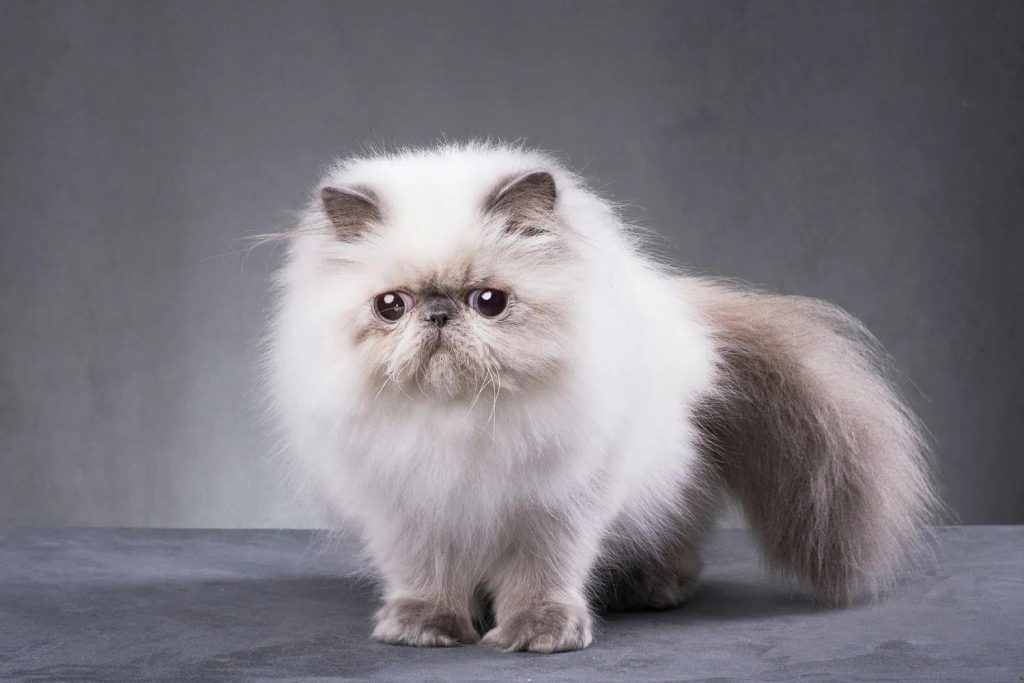
Skin Fold Dermatitis
The skin folds around a cat’s face can trap moisture, bacteria, and fungal spores. This environment increases the risk of Dermatitis and other skin infections, which may cause redness, itching, and discomfort.
Regular cleaning of facial folds and routine veterinary care can help prevent these issues.
Heat Sensitivity
Cats normally regulate their body temperature through panting, but brachycephalic cats may struggle with this process because of their restricted airways.
As a result, they can be more vulnerable to Heat stroke, especially in warm climates or during hot weather.
Some of the breeds listed below are fully brachycephalic, while others only show moderate facial flattening. Regardless, regular veterinary checkups and attentive care are essential.
8 Flat-Faced Cat Breeds
01. Persian
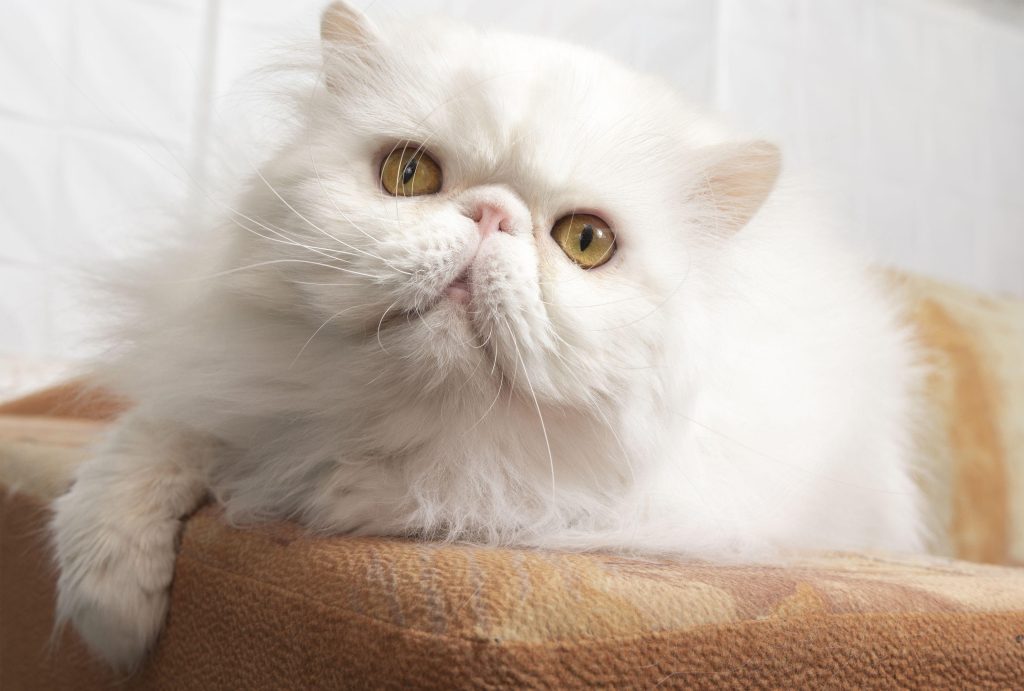
The Persian cat is perhaps the most iconic flat-faced breed. Known for their luxurious long coats and distinctively short noses, these cats have been beloved companions for centuries.
Their history dates back to the 1600s, and they are believed to have originated in Mesopotamia—later known as Persia, which inspired their name.
Persians are famous for their gentle personalities. They are calm, affectionate, and often happiest lounging beside their owners.
Because of their long coats, they require daily grooming. A wide-toothed metal comb followed by brushing helps prevent tangles and remove loose hair.
Breed Overview
Height: 10–15 inches
Weight: 7–12 pounds
Temperament: Sweet, gentle, affectionate, laid-back
Energy Level: Calm
Coat: Long hair; solid, tabby, tortoiseshell, bicolor
Life Span: 15–20 years
02. Himalayan
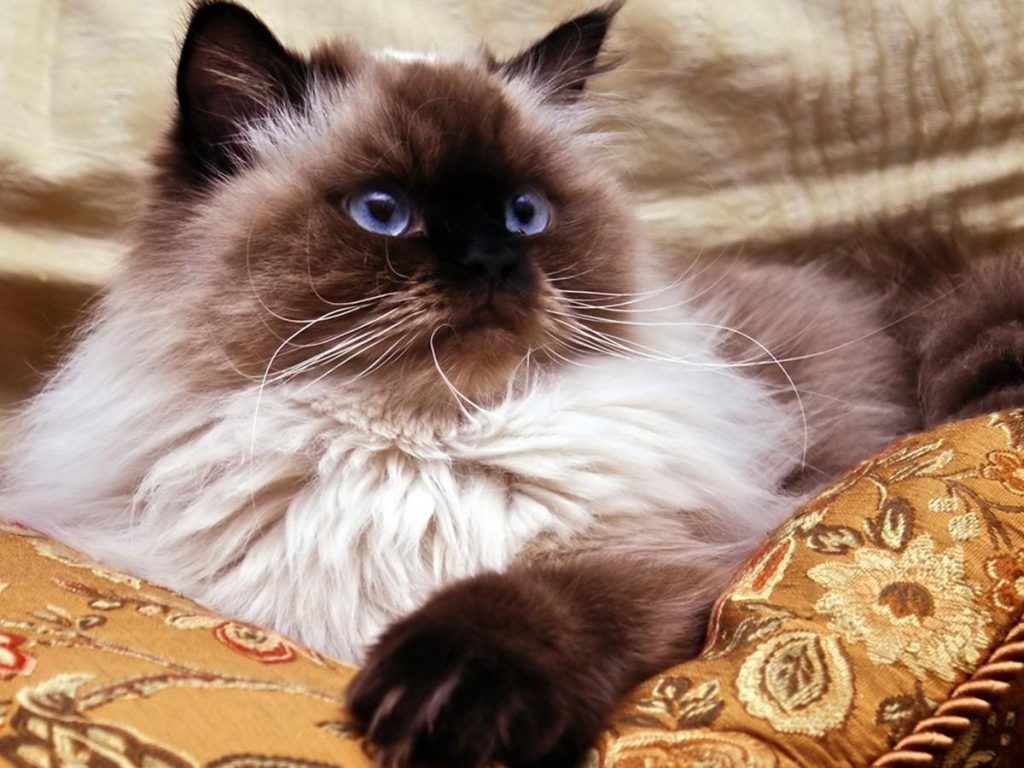
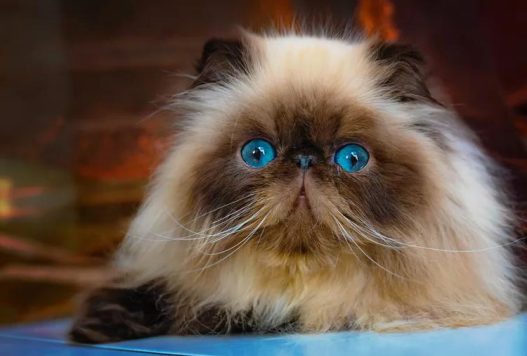
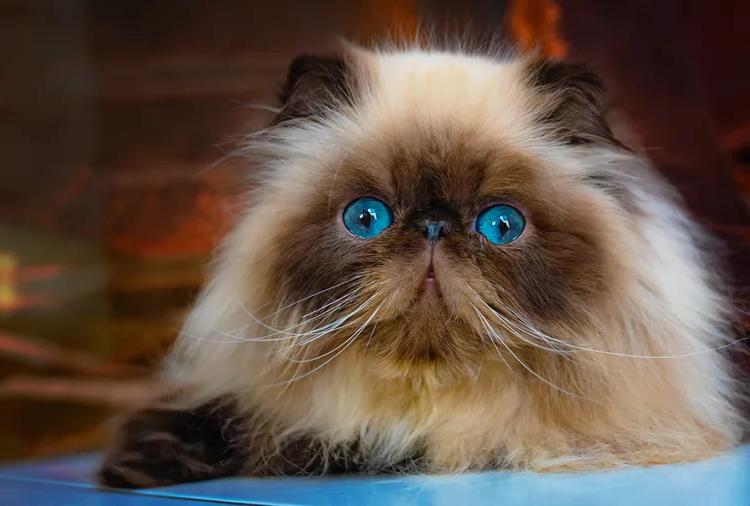
The Himalayan cat is a hybrid breed created by crossing Persian and Siamese cats.
This combination resulted in a cat with the Persian’s fluffy coat and flat face, along with the Siamese’s striking blue eyes and pointed color pattern.
The breed was developed in the 1930s during research conducted at Harvard University.
Himalayans are typically calm and affectionate but also retain a playful, kitten-like personality. They enjoy interacting with both people and other pets.
Like Persians, their coats require daily brushing to stay healthy and mat-free.
Breed Overview
Height: 10–12 inches
Weight: 7–12 pounds
Temperament: Gentle, affectionate, friendly, intelligent
Energy Level: Calm
Coat: Long hair with pointed markings
Life Span: 9–15 years
03. British Shorthair
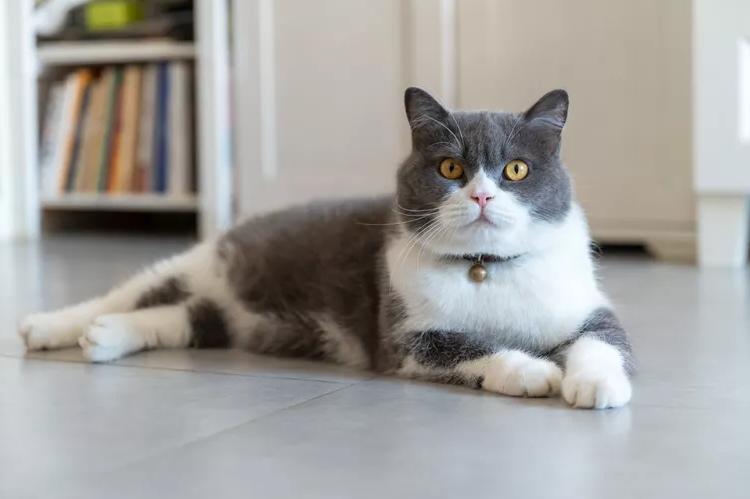
The British Shorthair traces its ancestry back to cats brought to Great Britain by the Roman Empire.
Over time, these cats adapted to the environment and eventually developed into the sturdy, plush-coated breed known today.
Although their faces appear round and slightly flattened, they are less extreme than Persians.
British Shorthairs are affectionate but not overly demanding. They are ideal for people who want a loving yet relatively independent companion.
Their dense coats benefit from brushing once or twice a week.
Breed Overview
Height: 12–14 inches
Weight: 7–17 pounds
Temperament: Friendly, easygoing, affectionate
Energy Level: Calm
Coat: Short, dense; many colors and patterns
Life Span: 12–16 years
04. British Longhair
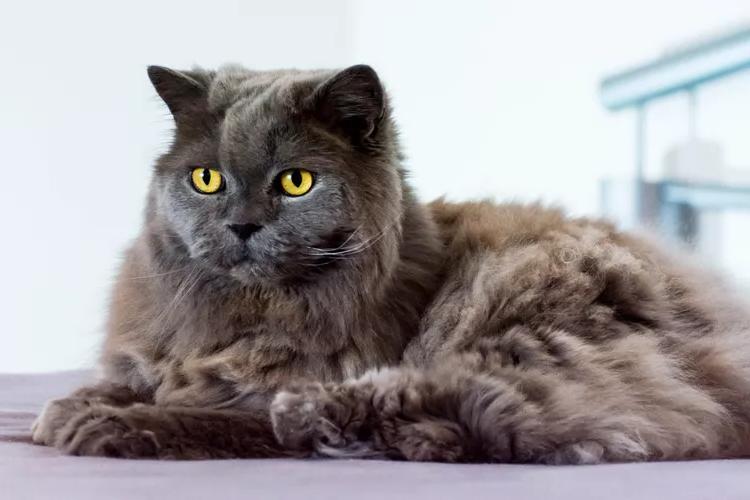
The British Longhair developed in the early 20th century when breeders crossed British Shorthair cats with Persian cats.
This cross introduced long fur while maintaining the breed’s round face and short nose.
These cats are intelligent and often motivated by food, which means they can sometimes be trained to perform simple tricks.
However, their long coats require daily grooming to prevent tangles.
Breed Overview
Height: 12–14 inches
Weight: 8–16 pounds
Temperament: Loyal, social, affectionate
Energy Level: Calm
Coat: Long hair; solid, tabby, bicolor
Life Span: 12–15 years
05. Exotic Shorthair
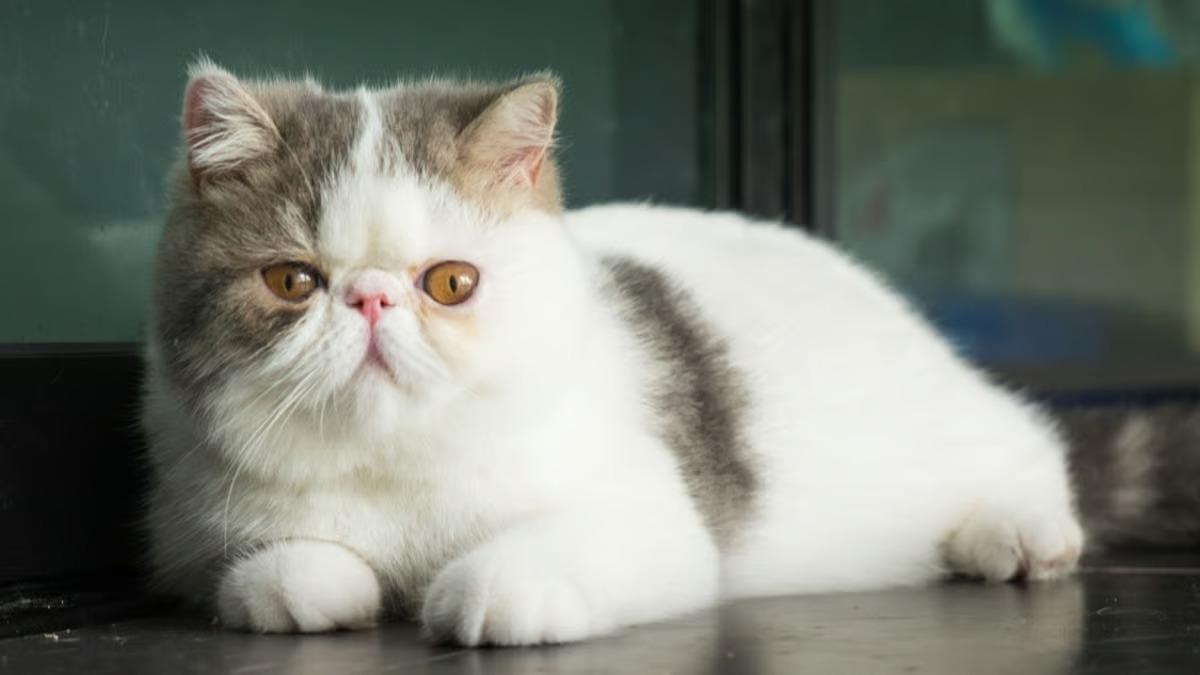
The Exotic Shorthair was developed in the United States during the 1960s by breeding Persian cats with American Shorthair cats.
They share the Persian’s flat face but have a short, plush double coat, which requires far less grooming. Because of this, they’re often called the “lazy person’s Persian.”
Exotic Shorthairs are affectionate and easygoing. They tend to get along well with children and other pets and enjoy playful activities.
Breed Overview
Height: 10–12 inches
Weight: 10–12 pounds
Temperament: Social, loyal, affectionate
Energy Level: Calm
Coat: Short double coat with many color variations
Life Span: 8–15 years
06. Scottish Fold
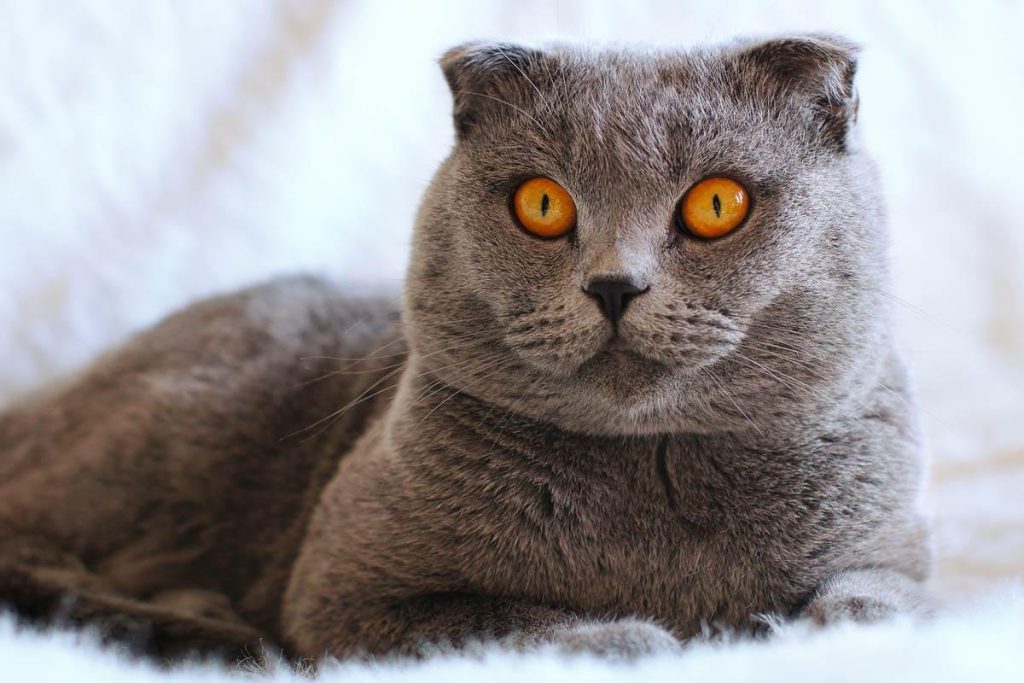
The Scottish Fold is instantly recognizable thanks to its folded ears, round face, and expressive eyes.
The breed originated in Scotland in 1961 when a kitten with naturally folded ears appeared in a litter of normal kittens.
Breeders later crossed this cat with Domestic cat breeds and British Shorthair cats to establish the trait.
Scottish Folds are affectionate and loyal. They often form strong bonds with their owners and enjoy both interactive play and quiet relaxation.
Breed Overview
Height: 8–10 inches
Weight: 6–13 pounds
Temperament: Playful, affectionate, intelligent
Energy Level: Calm
Coat: Short or long hair
Life Span: 11–14 years
07. Selkirk Rex
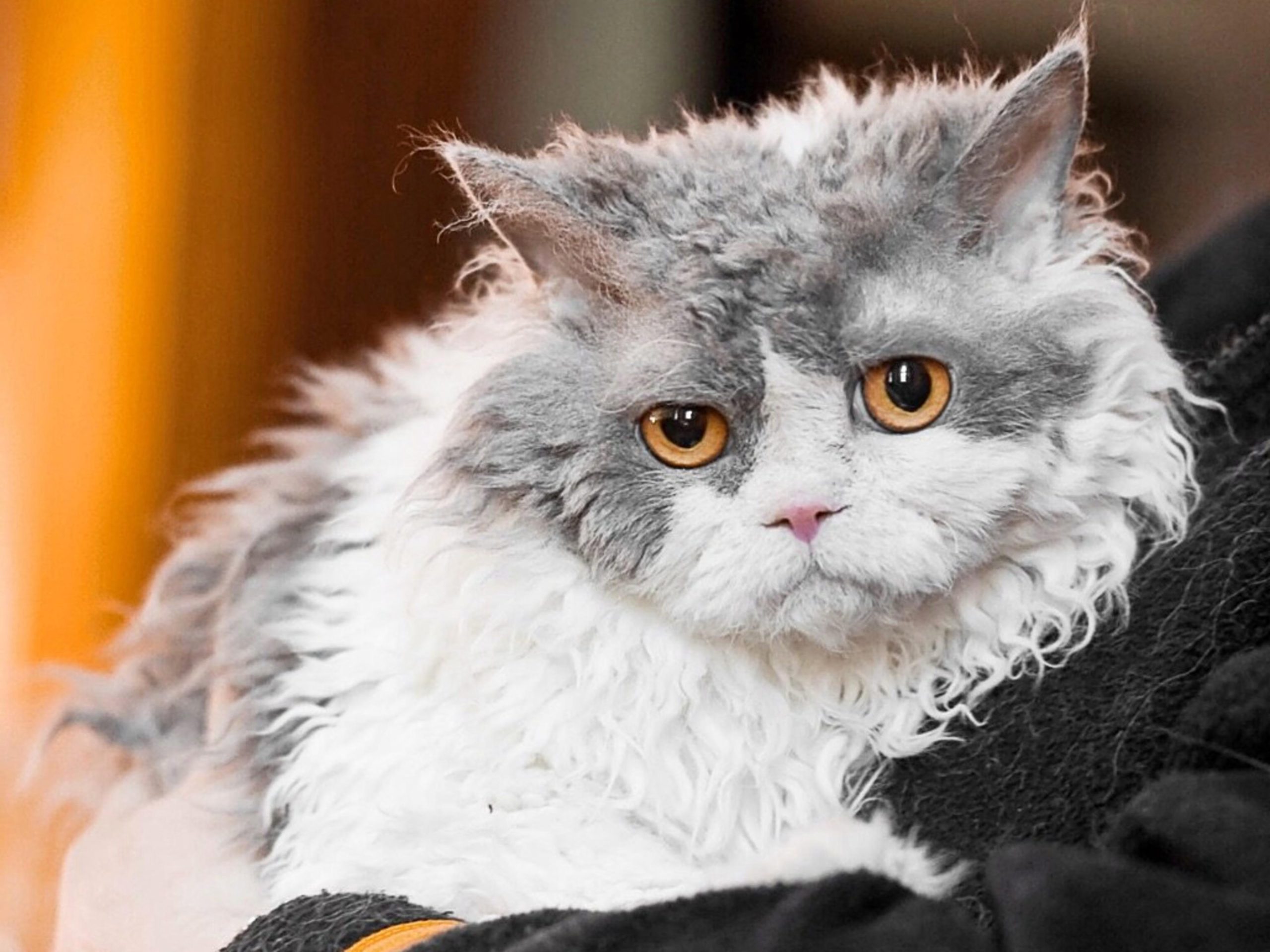
The Selkirk Rex is a relatively modern breed that originated in the United States in 1988.
It began when a breeder discovered a kitten with curly fur in a litter of straight-haired cats. This kitten was bred with a Persian and later with British Shorthair and Exotic Shorthair cats.
Selkirk Rex cats are known for their curly coats and round, teddy-bear-like faces.
They are affectionate and playful and often have very expressive personalities.
Breed Overview
Height: 9–11 inches
Weight: 6–16 pounds
Temperament: Curious, affectionate, social
Energy Level: Calm
Coat: Curly long or short hair
Life Span: 15–20 years
08. Burmese
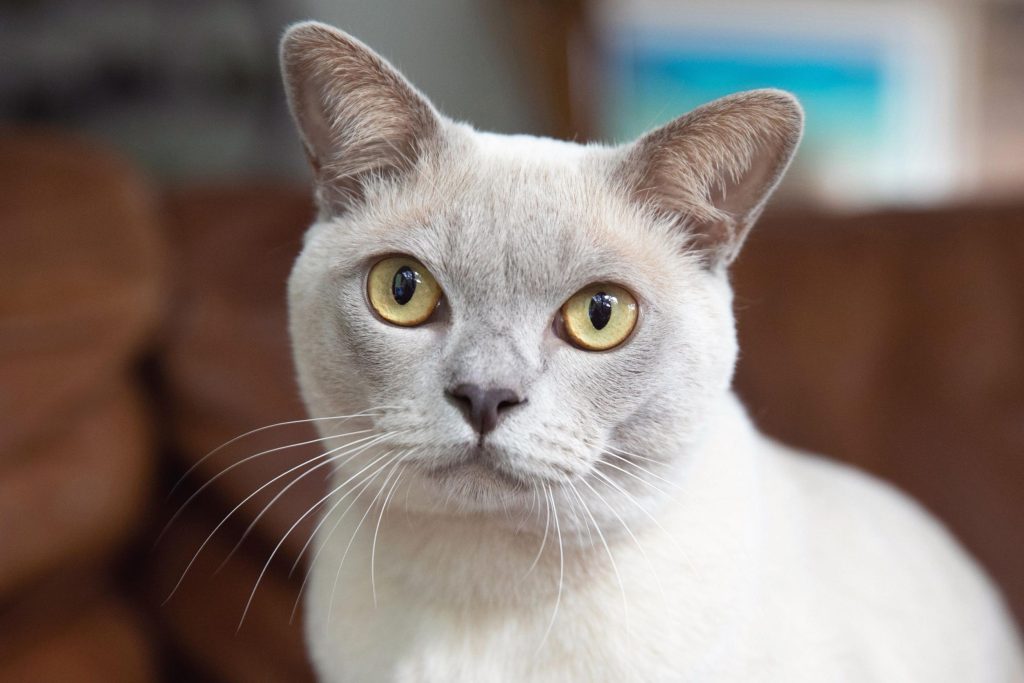
The Burmese cat has a rounded face with a slightly flattened profile, large golden eyes, and a short nose.
Modern Burmese cats can trace their ancestry back to a single cat brought from Burma to the United States in 1930.
This cat was bred with Siamese cats, creating the breed we know today.
Burmese cats are often described as “dog-like” because they form strong attachments to their humans and enjoy following them around the house.
They are curious, playful, and very interactive pets.
Breed Overview
Height: 9–13 inches
Weight: 8–15 pounds
Temperament: Loyal, affectionate, playful
Energy Level: Active
Coat: Short, glossy coat
Life Span: 15–20 years
Breeds Without Flat Faces
If you love the flat-faced look, the breeds listed above are excellent choices. However, other popular breeds such as American Shorthair, Siamese, Maine Coon, Ragdoll, Siberian, and Bengal typically do not have flattened faces.
Important Considerations Before Adopting
Bringing a flat-faced cat into your home can be incredibly rewarding, but it also comes with additional responsibilities.
Because of their facial anatomy, these cats may require closer health monitoring and more frequent veterinary visits. Respiratory issues, dental concerns, and heat sensitivity are all factors potential owners should consider.
If you notice unusual symptoms or health changes, consult a veterinarian promptly to ensure your cat remains happy and healthy.