







Let’s talk about something every parent experiences—but no one feels prepared for: baby sleep regression.
One day, your little angel sleeps peacefully, eats well, and seems perfectly predictable. Then suddenly… everything changes.
They wake up crying at night, refuse to settle, demand constant holding, and seem impossible to soothe—even feeding doesn’t always help. 
You might feel exhausted, confused, even a little helpless.
But here’s the truth: nothing is wrong with your parenting.
Your baby isn’t “broken”—they’re actually going through major developmental upgrades, both physically and mentally.
1. Growth Spurts: When the Body Is Working Overtime
What’s Happening
One of the biggest triggers of sleep disruption is a growth spurt .
Imagine suddenly growing several centimeters overnight—your muscles and bones would ache too, right?
Babies go through intense growth phases around:
- Week 2–3
- Week 6
- Month 3
- Month 6
During these periods, their bodies demand more energy, and their only way to express it is:
👉 eat more, fuss more, and sleep less peacefully

You may notice your baby suddenly wants to feed constantly—like they’ve turned into a little koala attached to you.
Why Sleep Gets Worse
During growth spurts, the body produces more Growth hormone, especially during deep sleep.
This can lead to:
- More daytime sleep
- Frequent night waking due to discomfort
What You Can Do
- Feed on demand
Forget strict schedules—your baby needs fuel. - Stay hydrated (for moms)
You’re part of the supply chain—take care of yourself too. - Lower expectations
Messy house? Totally fine. Survival mode is enough for now.
Good news: this phase usually lasts just a few days.
2. Brain Leaps: When the Mind Is Rewiring
What’s Happening
If growth spurts affect the body, mental leaps affect the brain.
This idea comes from the book The Wonder Weeks, which describes key developmental “leaps” in the first 20 months.
During these phases, your baby’s brain is rapidly forming new neural connections.
Suddenly, they begin to notice things like:
- Light changes
- Their own hands
- Sounds and patterns
It’s like their world just exploded with new information.
Why Sleep Gets Worse
This sensory overload can feel overwhelming and even scary.
Your baby may respond with:
- Clinginess
- Crying
- Sleep regression
Common leap periods occur around:
Week 5, 8, 12, 19, 26…
What You Can Do
- Offer comfort, not independence training
Right now, they need closeness, not distance. - Stimulate their curiosity
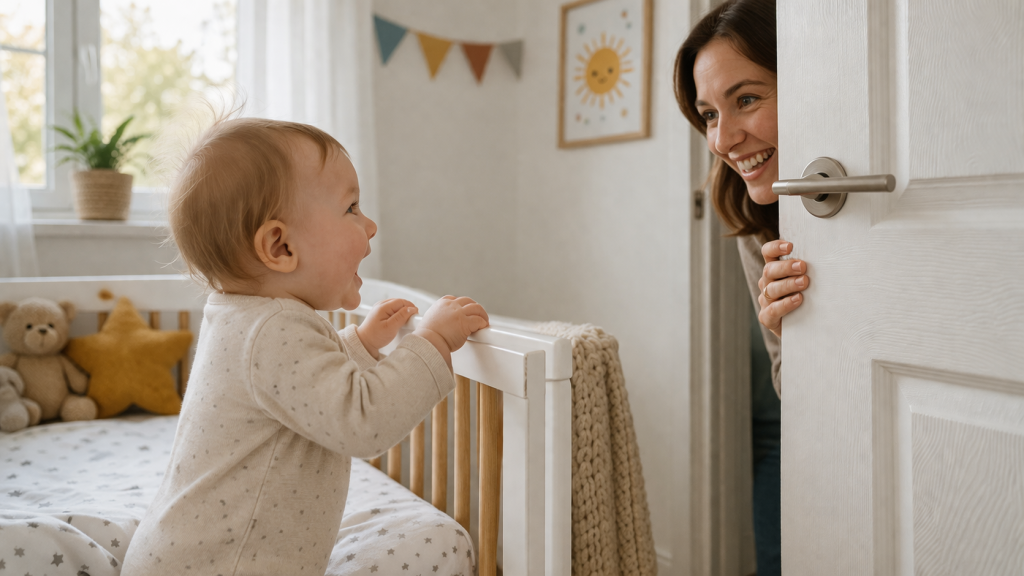
Try new games, explore the environment, play peekaboo. - Be patient
They’re not being difficult—they’re adapting to a rapidly changing world.
3. Motor Development: Practicing Skills 24/7
What’s Happening
When babies learn new physical skills—like rolling, crawling, or standing—they don’t just practice during the day.
They practice in their sleep too.
You might see your baby:
- Pushing up in the middle of the night
- Sitting up and crying because they can’t lie back down

Why Sleep Gets Worse
Their brains are busy reinforcing these new motor patterns—even at night.
What You Can Do
- Encourage practice during the day
More tummy time, more movement = less nighttime chaos - Gently assist at night
Help them reposition without fully waking them
4. Separation Anxiety: “Where Did You Go?”
What’s Happening
Around 6–8 months, babies develop a sense of Object permanence.
They realize:
👉 even when they can’t see you, you still exist
Sounds great—but here’s the downside:
They may think you’ve disappeared… or left forever.
So when they wake at night, they need to check if you’re still there.
Why Sleep Gets Worse
This leads to:
- Frequent night waking
- Crying when alone
- Strong attachment behavior

What You Can Do
- Play peekaboo
This teaches that “gone” doesn’t mean “forever” - Introduce a comfort object
A blanket or toy can provide emotional security - Respond quickly, but keep it calm
No bright lights, no playtime—just reassurance
Final Thoughts: Every Regression Is a Step Forward
It might feel overwhelming in the moment—but every sleep regression is actually a sign of growth.
Your baby isn’t regressing—they’re progressing.
Each phase marks a new milestone in their development.
That tiny human crying in your arms isn’t trying to make things harder—they’re saying:
💛 “I’m growing. The world feels big and new. Please stay close.”
A Simple Survival Formula
- Growth spurt? → Feed more
- Brain leap? → Hold more
- Motor phase? → Play more
- Separation anxiety? → Reassure more