




A few days ago, I visited a friend—and the moment I walked in, her 2-year-old completely stole my attention.
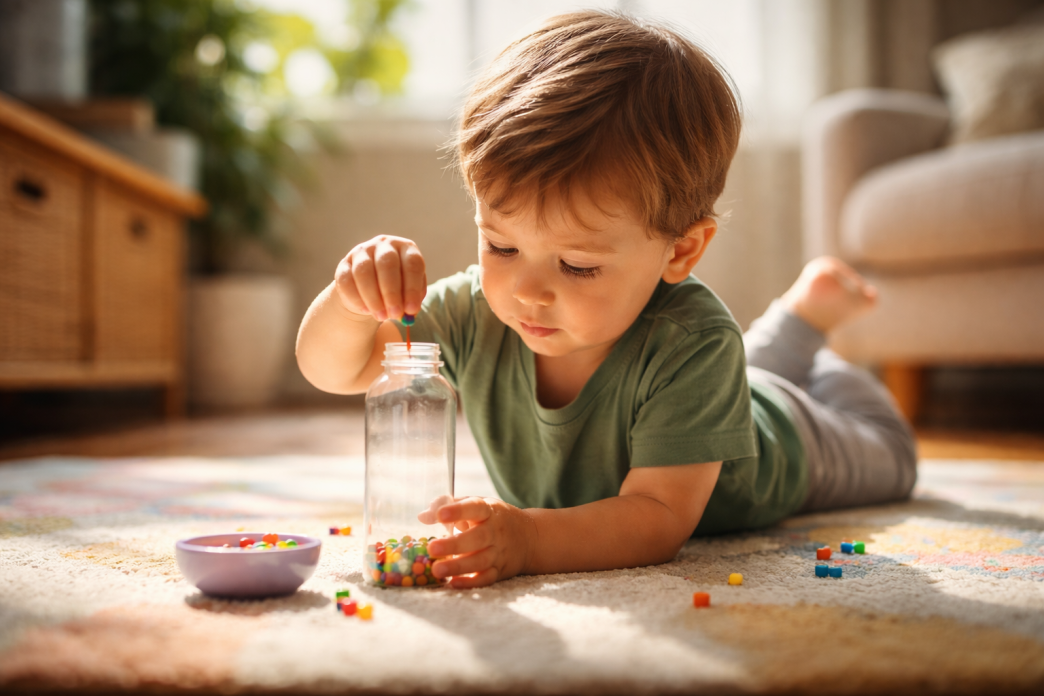
He was lying on a play mat, carefully dropping tiny beads into a plastic bottle.
One bead… two beads… three beads…
Put them in. Pour them out. Start again.
His brows were slightly furrowed, lips gently pressed together—pure concentration. 
My friend was just about to say, “Good job, baby! Let’s do another one!”
I stopped her immediately and whispered, “Shhh…”
She looked confused.
I leaned in and said quietly:
“You almost interrupted a genius in the making.”
She was even more confused.
So I explained:
At this age, this kind of deep, immersive focus is more valuable than any early education class.
What she almost did?
She would’ve pulled him straight out of what psychologists call Flow (psychology)—a powerful state of deep learning.
Most parents don’t realize this:
When your child is fully focused, your silence is the best education you can give.
Why Focus Is So Incredibly Valuable
You might not know this, but around age two, your child’s attention system is going through a massive upgrade.
According to research from the Center on the Developing Child at Harvard University, ages 2–3 are critical for developing Executive Functions.
What are executive functions?
Think of them as the brain’s CEO.
They control attention, impulse regulation, planning, and flexible thinking.
In simple terms:
Kids with strong executive function become better learners later in life.
And at the heart of it all?
Focus.
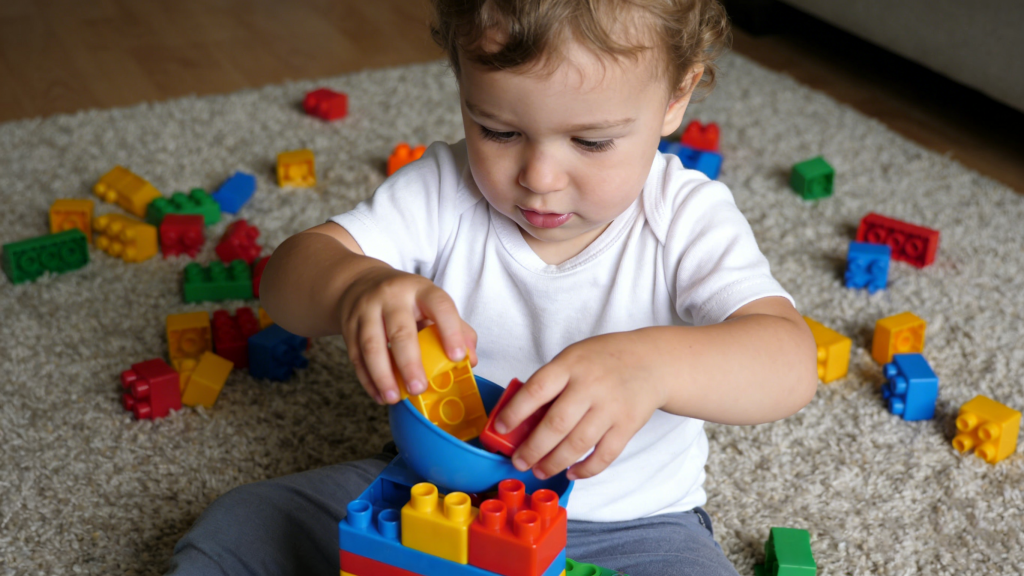
When your toddler is deeply engaged with a toy, here’s what’s happening inside their brain:
- The Prefrontal Cortex is highly active
- Neural connections are forming rapidly
- The brain is practicing:
lock onto a goal → ignore distractions → stay engaged
This isn’t “just playing.”
This is intense brain training.
Every time your child repeats an activity, experiments, and explores—they’re literally building their brain.
Your “Help” Might Be Hurting Their Thinking
Let’s be honest—most parents mean well.
When we see our child playing alone, we feel like we should say something:
- “Maybe this block goes on top?”
- “No, no—this color matches better!”
- “Let mommy show you the right way.”
- “Good job! Come here, give me a kiss!”
But here’s the truth:
Every sentence is an interruption.
You think you’re teaching—
but you’re taking away their chance to discover.
You think you’re encouraging—
but you’re pulling them out of deep thinking.
There’s a key concept in psychology called Intrinsic Motivation.
When a child acts out of curiosity, their brain enters deep processing mode.
That’s when learning is most powerful.
But once you intervene—especially with praise or instruction—their focus shifts from:
👉 “I want to explore this”
to
👉 “I want to please mom”
And just like that, the magic is gone.
Even more importantly:
Focus is like a muscle.
The more it’s used, the stronger it gets.
Interrupt it repeatedly?
That muscle weakens.
Over time, frequently interrupted children may:
- Lose interest quickly
- Struggle to stay on tasks
- Get distracted easily
And no—it’s not inborn.
It’s trained.
When to Stay Silent (And When to Step In)
This doesn’t mean ignoring your child completely.
The key is knowing the difference between interrupting and supporting.
When You Should Stay Silent
If your child is:
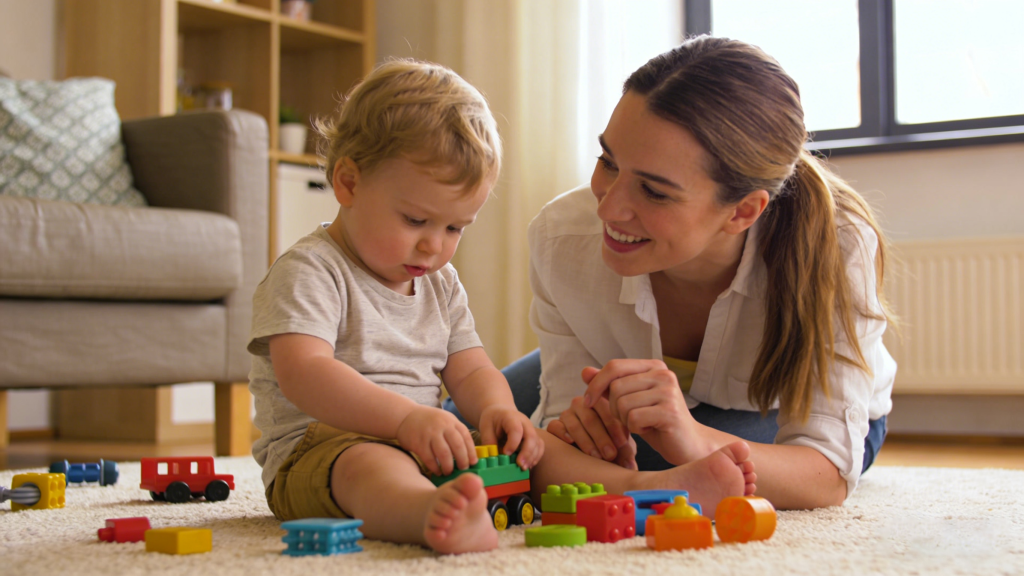
- Deeply focused, talking to themselves or concentrating
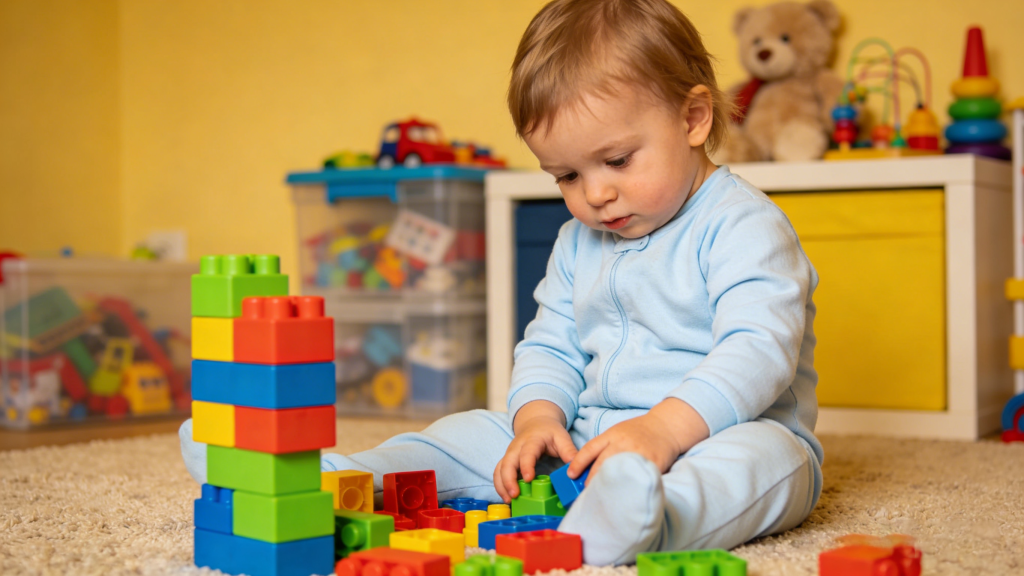
- Repeating an action (stacking, inserting, experimenting)
- Not asking for help
- Calm and safe
Then do this:
Be invisible.
No talking.
No correcting.
No filming (yes—even your phone camera can distract them).
Just sit nearby and be their quiet background.
It may feel like you’re “doing nothing”—
but in reality, this is advanced parenting.
When You Should Step In
Step in when your child:
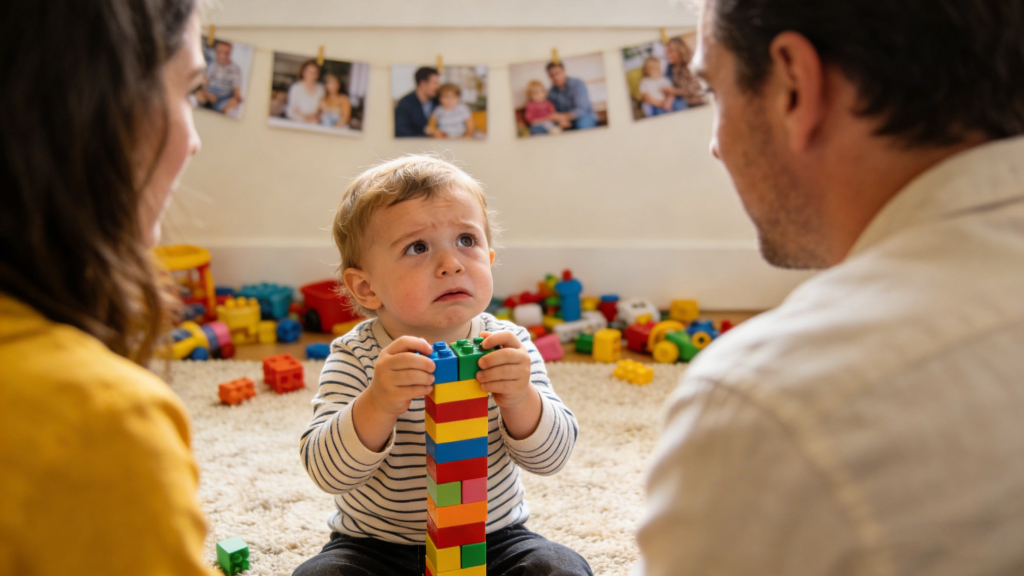
- Looks at you for help
- Shows frustration or emotional overwhelm
- Is in a potentially unsafe situation
- Finishes playing and seeks connection
Now your involvement actually matters.
How to Help Without Interrupting: The “Sandwich Method”
When your child does need you, here’s how to step in the right way.
Step 1: Describe, Don’t Judge
Avoid vague praise like “Good job” or “So smart.”
Instead, say what you observe:
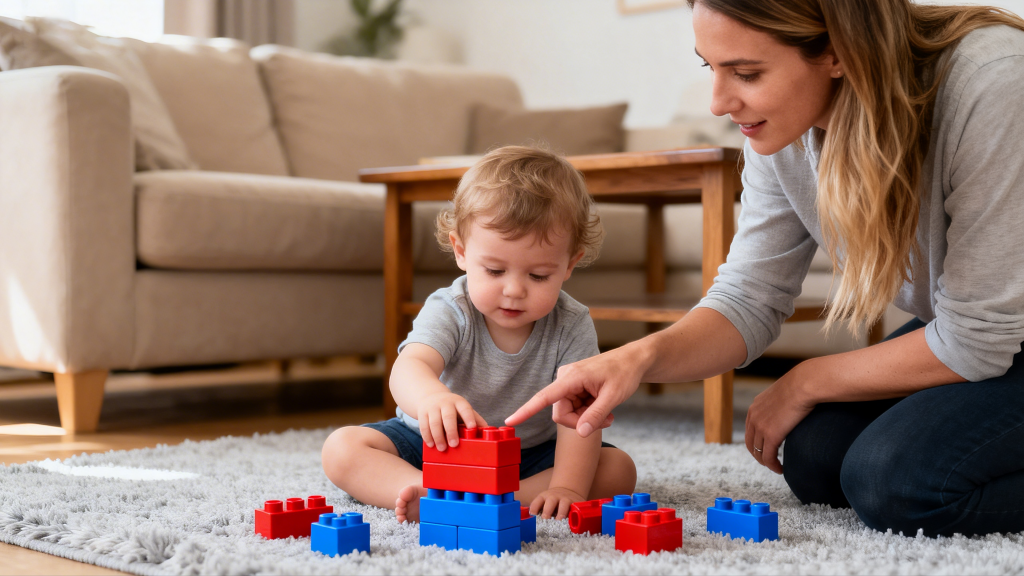
“You put the red block on top and the blue one below.”
This keeps the focus on the activity—not your approval.
Step 2: Follow, Don’t Lead
Don’t take control.
Instead of:
“Let me show you how to do it”
Say:
“Do you want to try putting this here?”
You stay a helper—not the director.
Step 3: Exit Quickly
Once you’ve helped—step back.
Don’t turn it into a lecture.
Don’t linger.
Let them return to their flow.
The Surprising Truth: Solitude Builds Creativity
Many parents worry:
“If I leave my child alone, will they feel lonely?”
Here’s the truth:
Children don’t need constant attention.
They need quality connection + quality solitude.
Psychology even highlights the idea of creativity emerging from solitude.
When kids are left undisturbed, something amazing happens:
- A block becomes a dinosaur
- A cardboard box becomes a spaceship
- A sandbox becomes a kingdom
This kind of imagination only appears when no one is telling them the “right” way to play.
So when you stay silent—
you’re not ignoring your child.
You’re protecting their creativity.
Try Being a “Background Parent”
Starting today, try this:
Be present—but quiet.
You might be surprised:
When you stop talking…
your child’s world starts expanding.