




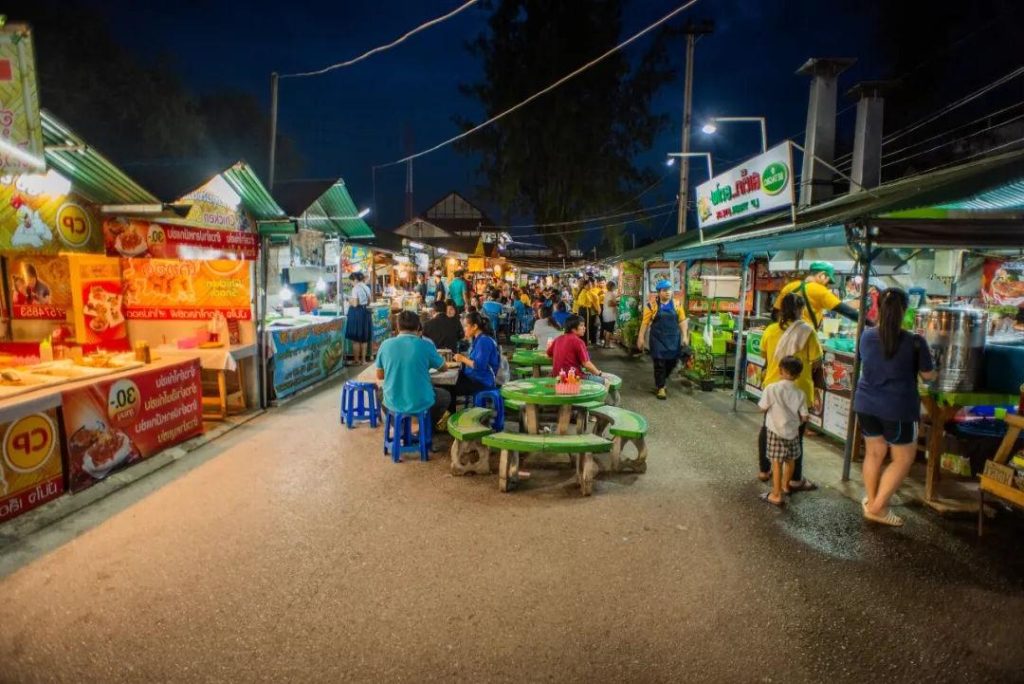
What is Thai Street Food really like? You don’t need a fancy hotel or a ladyboy show to experience Thailand. But if you skip the street stalls, you’ve missed the point entirely. Thai Street Food is where the country’s soul lives—served from carts, eaten on plastic stools, paid for with coins. Thai people rarely cook at home because Thai Street Food is delicious, fresh, and ridiculously cheap. Often 100 baht (about $3) buys a full meal. Living somewhere like that, you don’t need much money to eat well. After spending a year in Thailand, I absorbed that mindset. Now, looking back at the Thai Street Food I devoured, I’m sharing the essentials for anyone planning a Bangkok food crawl.
Savory: Cheap, Delicious, Filling
Grilled Coconut Milk Skewers
Price: 5-20 baht
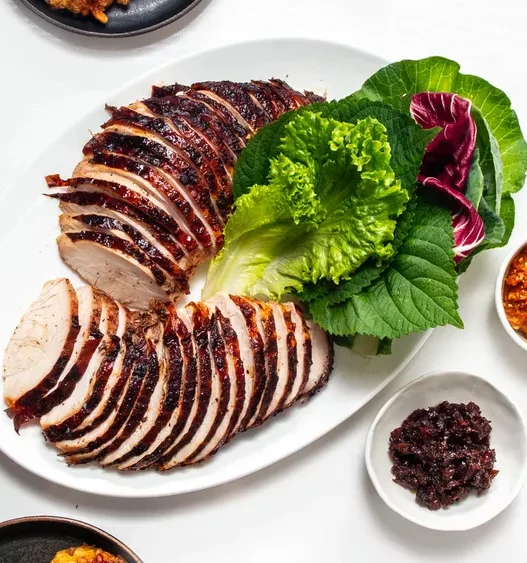
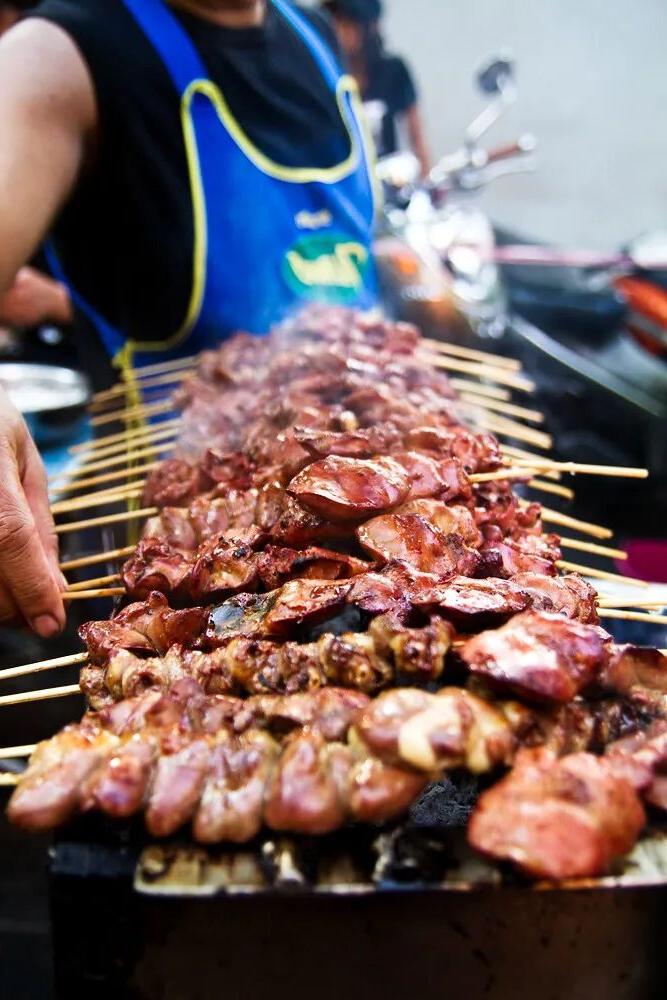
Thai grilled skewers are nothing like the versions you know. No vegetables. Just meat, sometimes paired with fruit. Pork and chicken are marinated in coconut milk and spices before hitting the grill. The result? Sweet, almost like honey-glazed BBQ chicken, with no chili powder or cumin. 
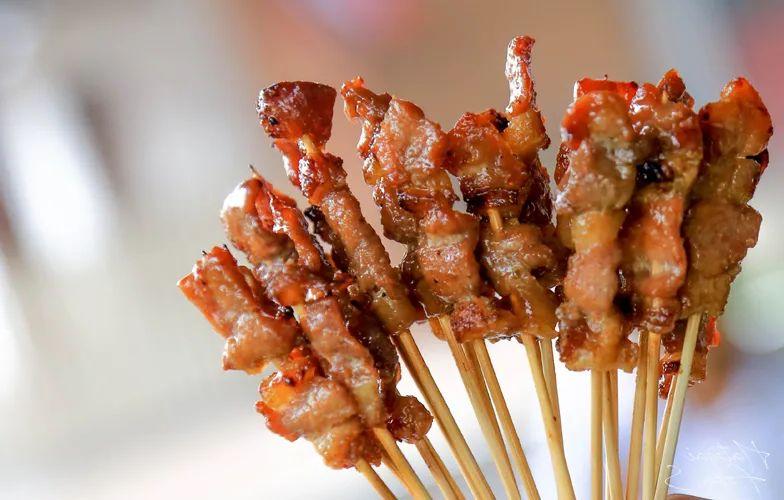
The sweetness can get overwhelming. That’s why Thais pair them with sticky rice—one bite of meat, one bite of rice. Office workers grab a few skewers and a bag of rice for a quick standing lunch.
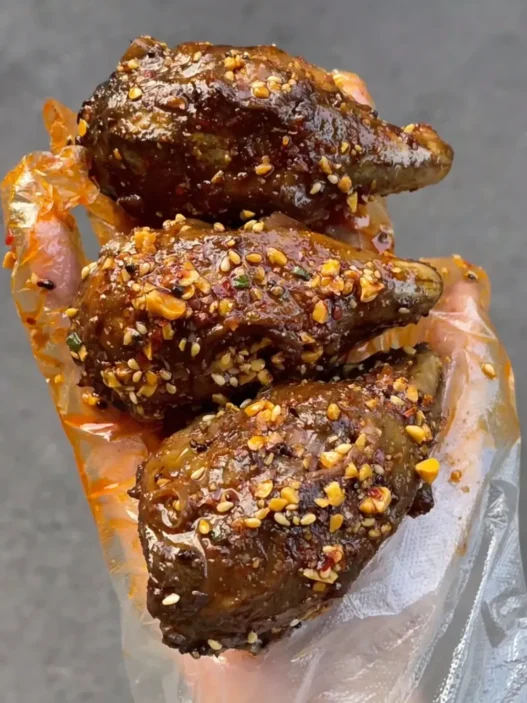
Proceed with caution if you spot offal skewers. Even this Sichuan native—someone who loves organ meat—found the sweet version impossible to enjoy.
Boat Noodles
Price: 40-60 baht
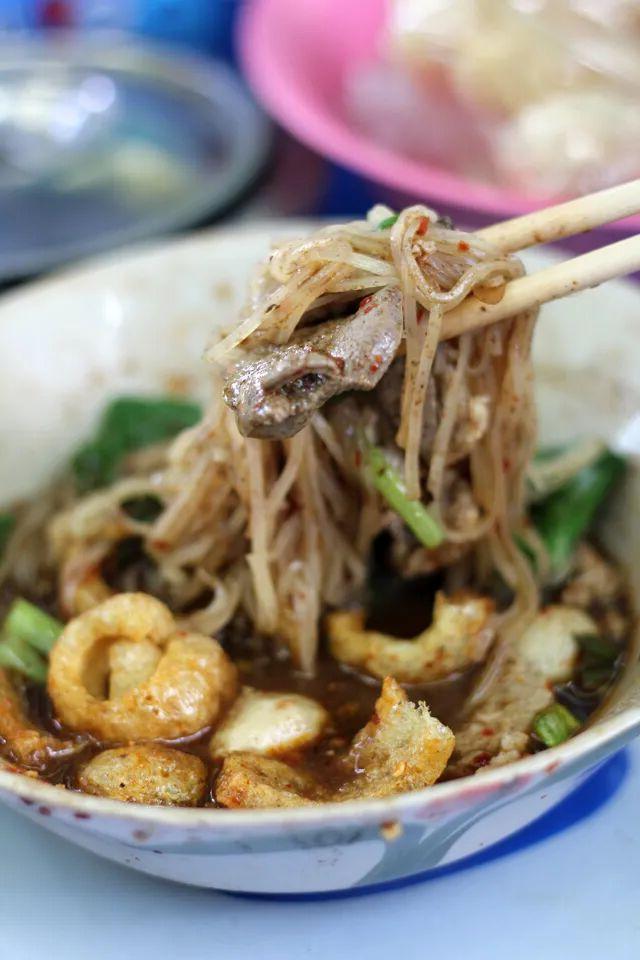
Noodles are called “kuay teow” in Thai, a clear descendant of the Teochew “kway teow” brought by Chinese immigrants. Boat noodles are served in tiny bowls, a tradition dating back to floating markets, where vendors needed small portions for quick snacking between meals.
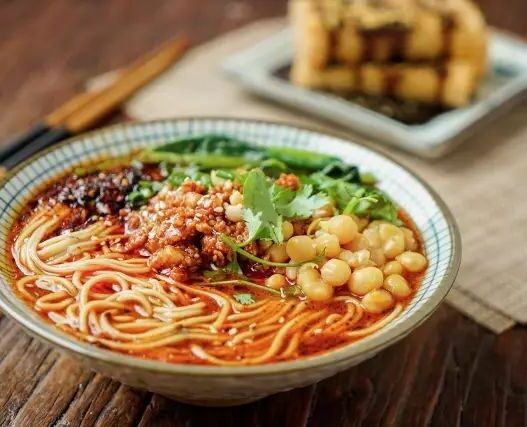
You’ll choose between yellow or white noodles, in thin, medium, or wide cuts. The dark broth is the star—simmered with pork or beef blood, it’s slightly sweet with a hint of bitterness but no trace of gamey flavor. Topped with pork, duck, fish balls, fresh greens, and bean sprouts, it’s a light yet satisfying bowl.
These noodles disappear in three bites. Order five bowls. It’s the only way to taste all the varieties.
Pad Kra Pao (Stir-Fried Holy Basil)
Price: 60-100 baht
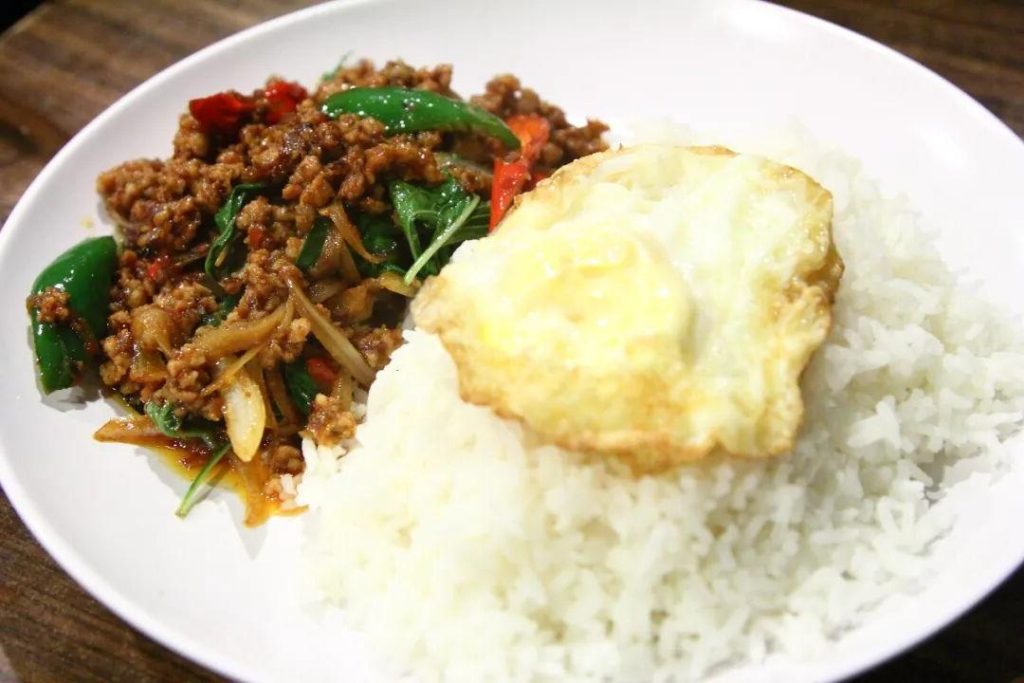
“Kra pao” is Thai holy basil—slightly spicy, aromatic, and beloved in home cooking. Its popularity rivals cinnamon in Chinese kitchens. Since Thais aren’t big on vegetables, eating kra pao counts as getting your greens.
This is Thailand’s ultimate rice bowl dish. Ground pork sizzles with chilies, garlic, fish sauce, and handfuls of kra pao leaves, then gets spooned over jasmine rice. Every bite is packed with flavor. Spice lovers, this one’s for you.
Thai Oyster Omelet
Price: 50-100 baht
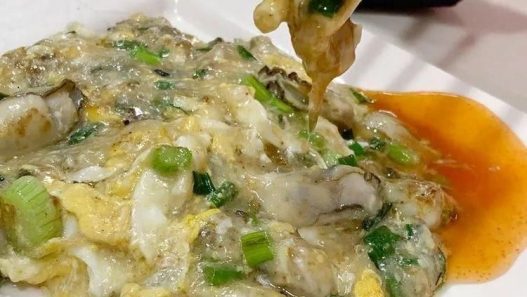
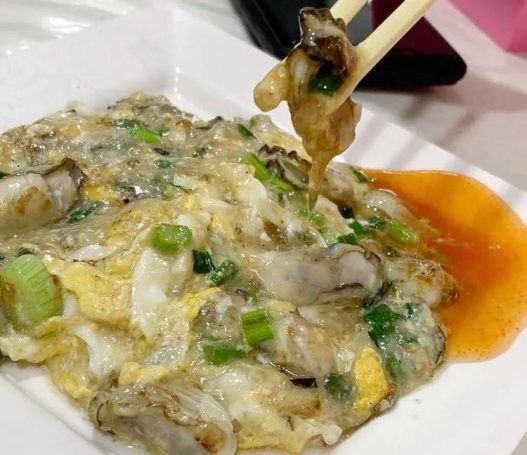
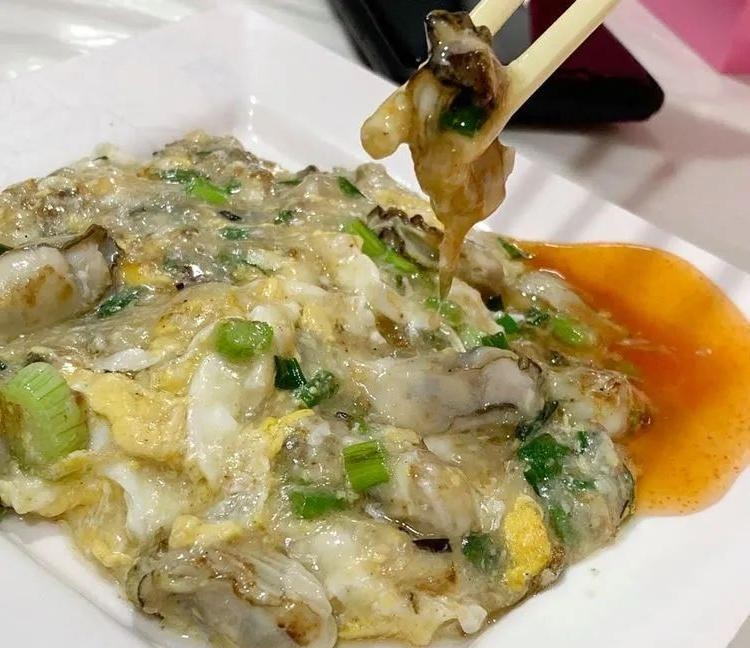
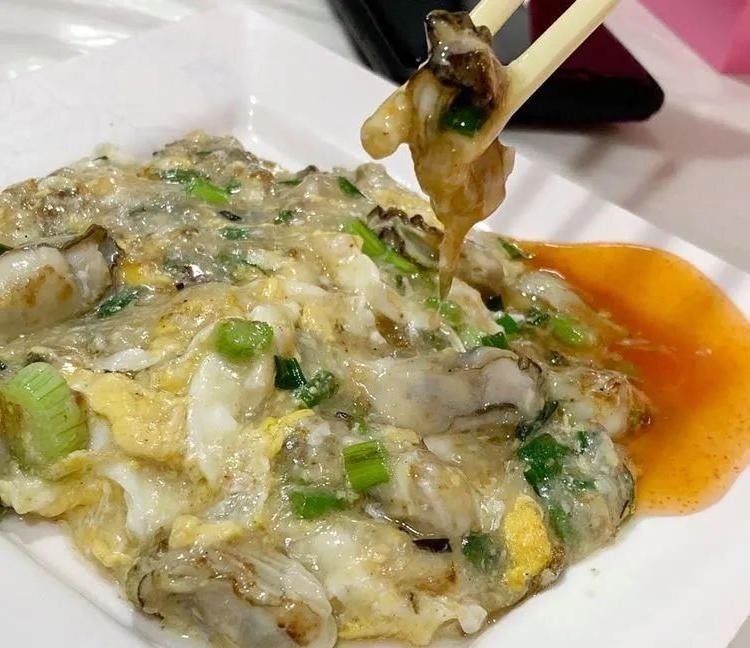
After evening classes in Bangkok, nothing beat the oyster omelet cart outside the university gate. Fresh oysters get folded into seasoned egg batter, then poured onto a sizzling iron griddle. The batter crisps instantly. Another egg cracks on top. Flip, fry, finish with bean sprouts, scallions, pepper, and sweet chili sauce.
It’s greasy, calorific, and absolutely glorious. The crispy egg pairs perfectly with plump, juicy oysters. If you want the full Thai experience, add a handful of Thai basil.
Sweet: Tropical Indulgence
Banana Roti
Price: 50-80 baht
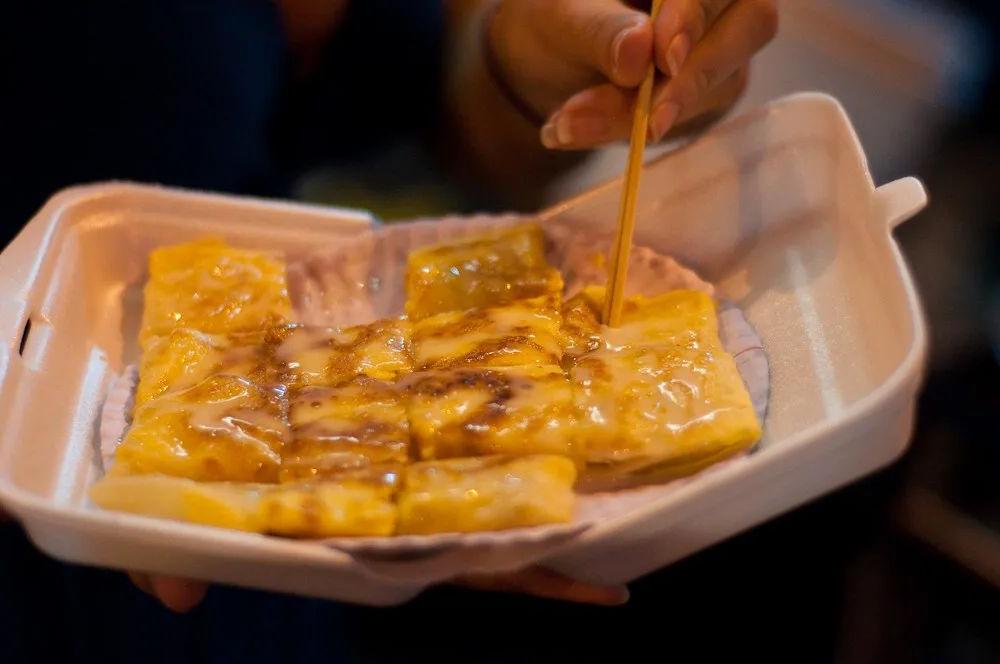
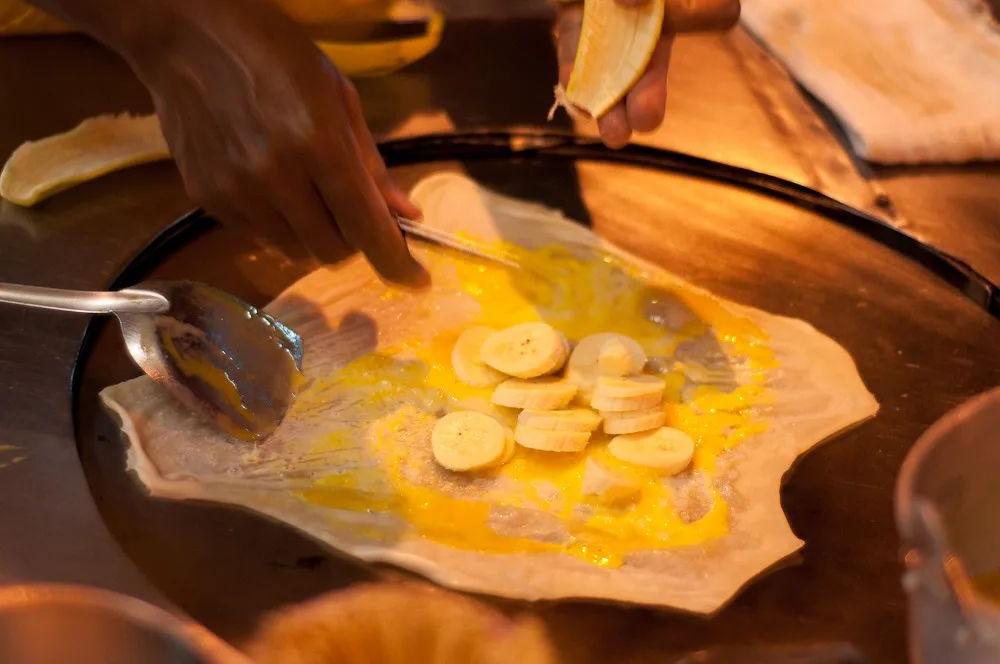
I first tried banana roti on Koh Samui. I ate it every day for a week. Think of it as a cousin to Indian paratha, but Thailand transformed it into pure dessert. The dough stretches thin, folds around sliced bananas, and fries until golden and crisp. Then comes the avalanche—condensed milk and chocolate sauce, poured on without restraint. The tartness of the banana cuts through the sweetness perfectly. Someone once told me bananas were made for heat. After this, I believe it.
Pandan Toast
Price: 20-30 baht
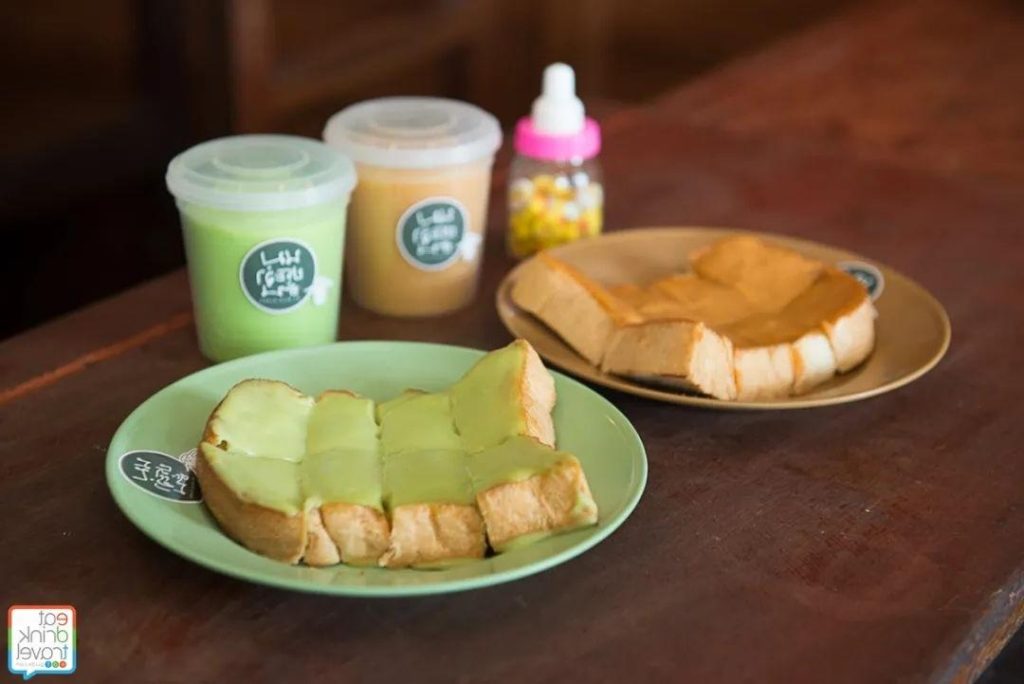
Big chain bakeries are rare in Thailand, but pandan toast appears everywhere—especially at tea stalls, sold alongside Thai milk tea. The pale green spread looks like matcha but tastes nothing like it. Made from pandan leaf juice, it has almost no flavor on its own. Mixed with butter and condensed milk, it develops a subtle, grassy sweetness. Spread thick on hot, crispy toast, paired with icy Thai tea—that’s the afternoon snack.
Mango Sticky Rice
Price: 50-100 baht
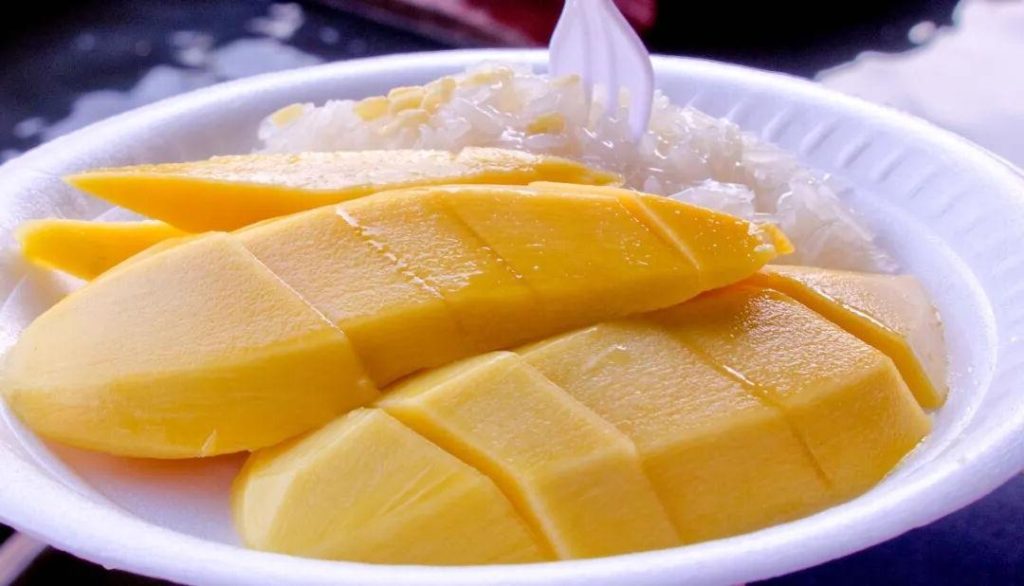
This dish needs no introduction. It’s on every Thai restaurant menu worldwide. But the real thing? Bangkok street stalls. Soft, glutinous rice, ripe mango sliced fresh, drenched in coconut cream. One and a half mangoes per serving—mango lovers, rejoice.
Some stalls go all out with three-colored rice: blue from butterfly pea flowers, green from pandan, white from jasmine. Instagram gold.
Coconut Ice Cream
Price: 20-50 baht
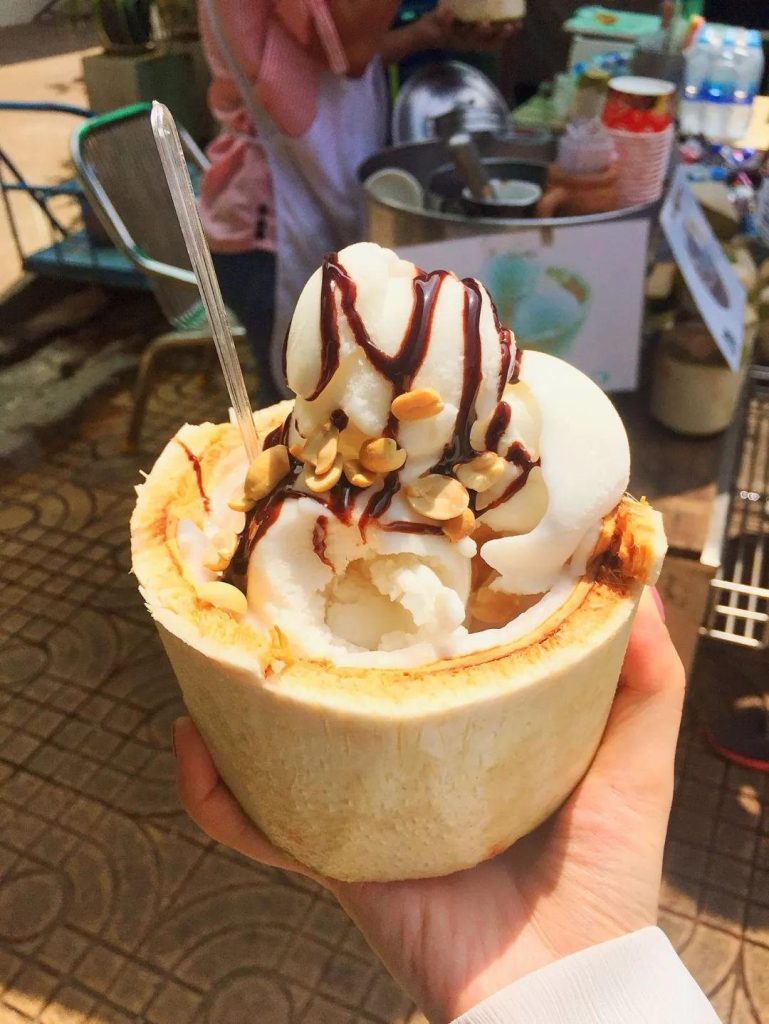
If you’ve been to Thailand, you’ve eaten coconut ice cream. It’s everywhere—food courts, weekend markets, sidewalk carts. Served in half a coconut shell, piled with fresh coconut meat, scoops of dairy-free ice cream that melt into pure tropical sweetness. Topped with roasted peanuts, sweet red beans, grass jelly, or sticky rice. That rice, slightly salted, creates a magic pairing.
The Real Taste of Thailand
Forget the hotels. Skip the tourist traps. The real Thailand lives on its streets, served from carts, eaten on plastic stools, paid for with coins. It’s food that doesn’t pretend to be anything else—just honest, delicious, and made for everyone.
And once you’ve eaten your way through Bangkok, you’ll understand why Thais never bother cooking at home. They don’t need to.