




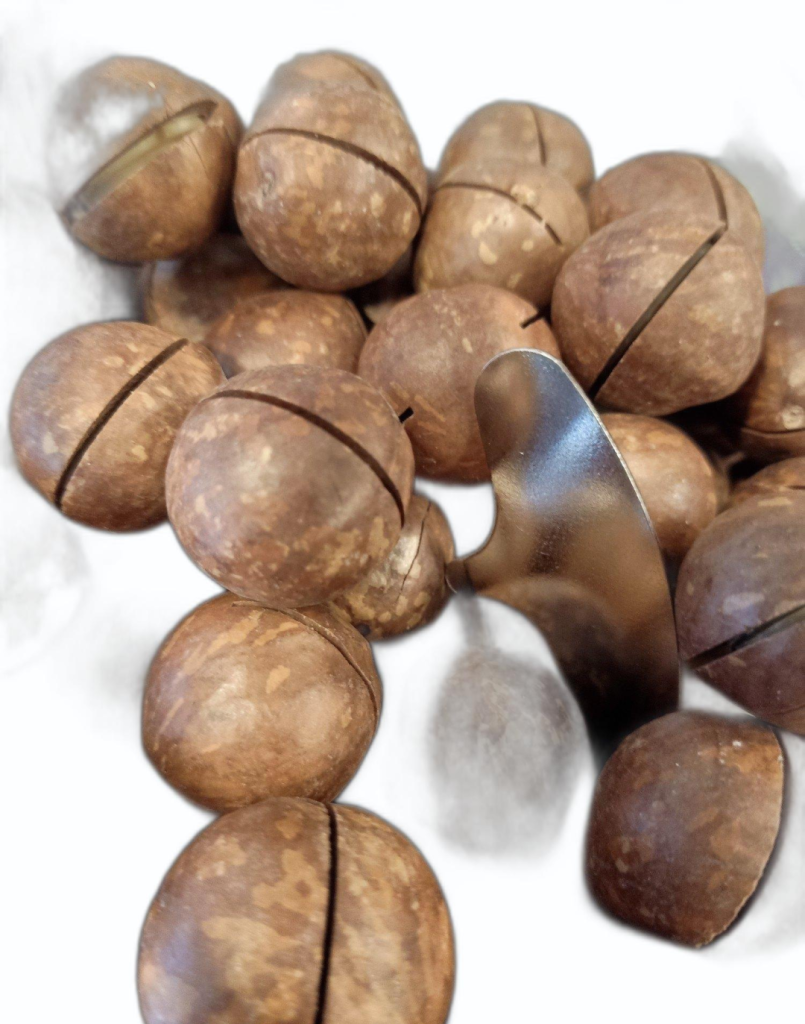
What’s the real story behind macadamia nuts? You know the drill. Chinese New Year rolls around, and suddenly your coffee table disappears under mountains of nuts. Sunflower seeds. Walnuts. Pistachios. And those round, stubborn things with the impossibly hard shell and the tiny metal key that never seems to work quite right. Macadamia nuts. By February, most families discover the same truth: nobody finished them. Too rich, some say. Too bland, others complain. One nut packs 30 calories—eat two, and you’ve undone a kilometer of walking. But here’s what’s truly nuts: the name is a lie. Macadamia nuts aren’t Hawaiian at all. They’re Australian. And the story of how they traveled from Queensland’s rainforests to becoming the world’s most expensive nut involves lost specimens, poisonous mix-ups, a German explorer, and one disobedient assistant who risked his life for a snack.
Macadamia nuts.
By February, most families discover the same truth: nobody finished the macadamias. Too rich, some say. Too bland, others complain. One nut packs 30 calories—eat two, and you’ve undone a kilometer of walking. (I am absolutely not qualified to eat these.) 
But here’s what’s truly nuts: the name is a lie. Macadamia nuts aren’t Hawaiian at all. They’re Australian. And the story of how they traveled from Queensland’s rainforests to becoming the world’s most expensive nut involves lost specimens, poisonous mix-ups, a German explorer, and one disobedient assistant who risked his life for a snack.
The Indigenous Australians Knew First
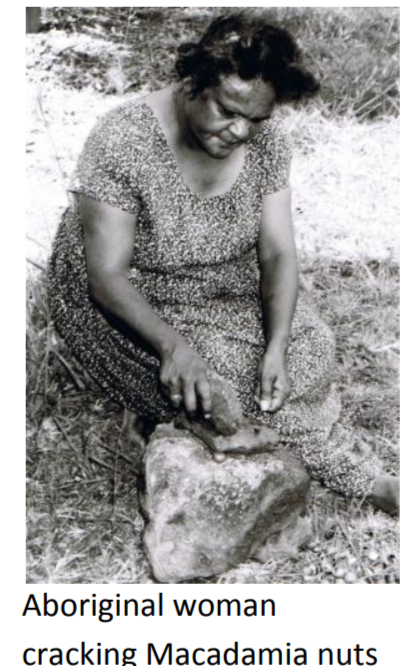
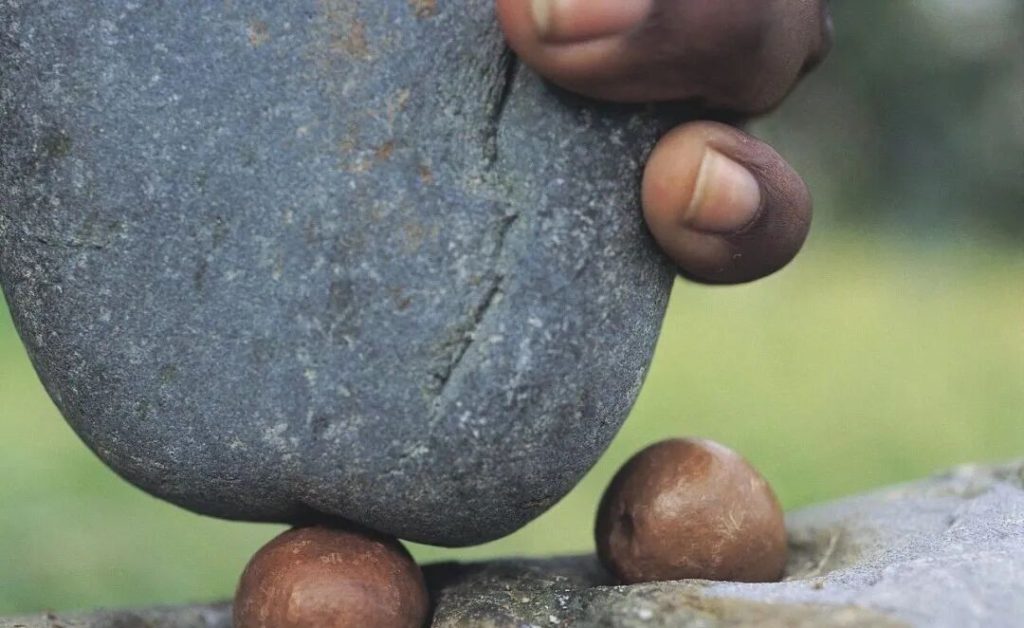
Long before Europeans arrived, Aboriginal Australians had been eating macadamia nuts for millennia. They knew exactly what to do with these calorie bombs. Their ancestors developed techniques to crack the original shells—which were thick enough to make a modern walnut cracker weep.
The method was clever: a flat stone base, another stone to hold the nut in place, and a third stone to strike. This way, no fingers got smashed. (One suspects this technique was perfected after several generations of smashed fingers.)
Some particularly determined ancestors, it’s said, kept hitting the nut directly so many times that they eventually wore a perfect nut-sized hole into their anvil stone. That stone became a family heirloom, passed down through generations of nut-crackers.
The Europeans Arrive (and Get It Wrong)
In the 1840s, European explorers began poking around Australia’s east coast. The first to encounter what might have been a macadamia tree was a British botanist named Allan Cunningham. He saw a tree with nut-like fruits and made a classic European assumption:
“That looks like a chestnut.”
He called it the “Moreton Bay Chestnut.”
The problem? He lost the specimen. No one knows for certain whether he actually found a macadamia tree or something else entirely. The first “discoverer” might not have discovered anything.
Then came Ludwig Leichhardt, a German explorer and naturalist. In 1843, he collected what was definitely a macadamia tree. Success!
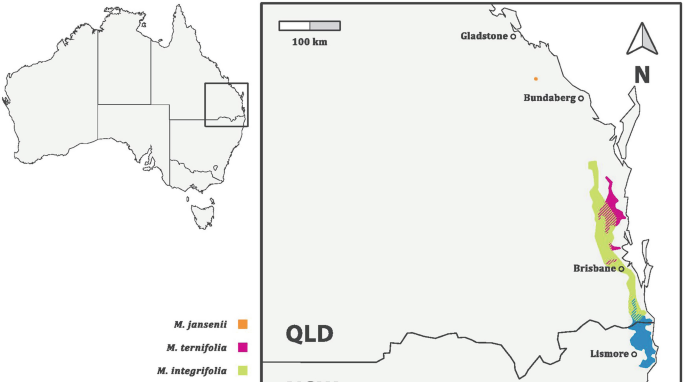
Except: he collected the poisonous species (Macadamia ternifolia). Bitter. Inedible. Possibly deadly.
Europeans concluded: “This thing will kill you.”
The Man Who Named a Nut He Never Ate
Enter Ferdinand von Mueller, a German-Australian botanist, and his colleague Walter Hill—the director of Brisbane’s Botanic Gardens.
In 1858, they formally classified the tree and gave it a scientific name: Macadamia.
The name honored their friend John Macadam—a Scottish-born physician, politician, postmaster-general, and one of the founders of Australian rules football. A classic 19th-century polymath.
Here’s the strange part: John Macadam never ate a macadamia nut in his life.
Why did von Mueller name the nut after a man who’d never tasted it? Historians don’t know. But it suggests a friendship deep enough to warrant speculation. Perhaps we’re not meant to know.
The Disobedient Assistant Who Changed Everything
Even after classification, Europeans still believed macadamias were poisonous. But Hill, the botanist, had collected a new batch of nuts. They looked different. Larger. More promising.
He made a perfectly reasonable decision:
“Crack these open. But whatever you do, do not eat them.”
His assistant made a different decision.
Hill found him eating the nuts.
“How are they?” Hill asked.
“Delicious,” the assistant replied.
Hill waited. Days passed. The assistant didn’t die. He didn’t even get sick.
So Hill tasted one himself.
And with that bite, Europe discovered that macadamia nuts were not poison. They were, in fact, one of the most delicious nuts in the world.
Think about this chain:
- An Australian nut
- “Discovered” by a Brit who lost his specimen
- Collected by a German who got the poisonous species
- Named after a Scotsman who never tasted it
- Proven edible by a disobedient assistant
Australia’s Loss, Hawaii’s Gain
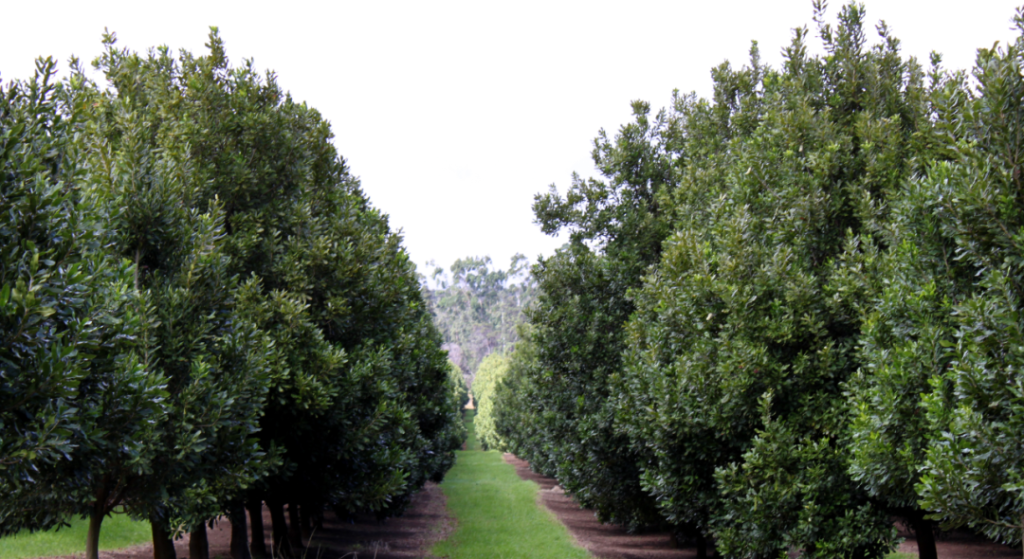
You’d think Australia would have taken over the macadamia industry. They had the trees. They had the knowledge. They had the native nuts.
But the Aussies did what the Aussies do: they treated macadamia trees like garden ornaments. Plant them here. Plant them there. Let the bugs eat half the crop. What’s the rush?
The problem was simple. Australia’s native insects loved macadamias as much as humans did. Without grafting techniques to replicate the best trees, every nut was a gamble—bitter or sweet, you never knew until you cracked it.
Then, in the 1870s, someone did something small that changed everything.
They mailed some seeds to Hawaii.
Hawaii: The Perfect Accident
The seeds arrived with a simple purpose: grow windbreaks for sugarcane fields. No one imagined they’d become a global industry.
In 1893, an Australian sea captain named Jordan was exploring Queensland’s Gold Coast hinterland when he found two macadamia trees with exceptional nuts. Consistently delicious. Reliably good.
He took some nuts back to Hawaii and planted them in a garden in Honolulu.
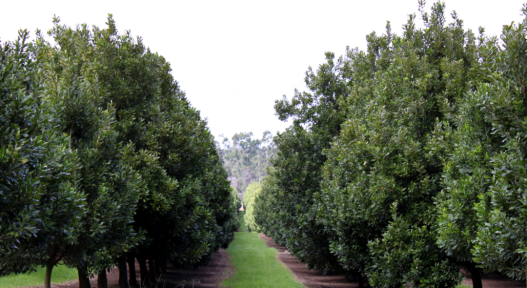
Here’s where it gets interesting: Hawaii had no native nuts. No local insects that loved macadamias. And these particular seeds—thanks to Captain Jordan’s careful selection—produced consistently good trees.
No gambling. No bitter surprises. Just sweet, buttery perfection.
Hawaiians did what Australians hadn’t: they took these trees and built an industry. They grafted. They planted orchards. They commercialized.
The Name That Stuck
By the time macadamia nuts became a global sensation, the name was already set. “Macadamia.” Named for a Scottish politician who never ate them. And “Hawaiian nuts” stuck as a marketing term, even though the trees came from Queensland.
A classic colonial confusion: the nut got the wrong name, and the wrong homeland, but somehow it didn’t matter.
Today, macadamia nuts are the world’s most expensive nut. China is the biggest importer, snapping up over 30% of global production. Australians, of course, have finally caught on, planting orchards and exporting millions of dollars worth each year.
But when you crack open that stubborn shell with its tiny metal key, when you taste that rich, buttery crunch—remember the journey.
The Aboriginal Australians who knew it first. The British explorer who lost his specimen. The German who found the poisonous one. The Scotsman who gave it his name without tasting it. The assistant who risked death for a snack. The Australian captain who shipped the right seeds to Hawaii.
And the Hawaiian farmers who turned it all into an industry.
The nut that should be Australian is named for a Scotsman, marketed as Hawaiian, and loved everywhere. That’s the strange, winding path of macadamia nuts.
Now, about that metal key. Good luck.