




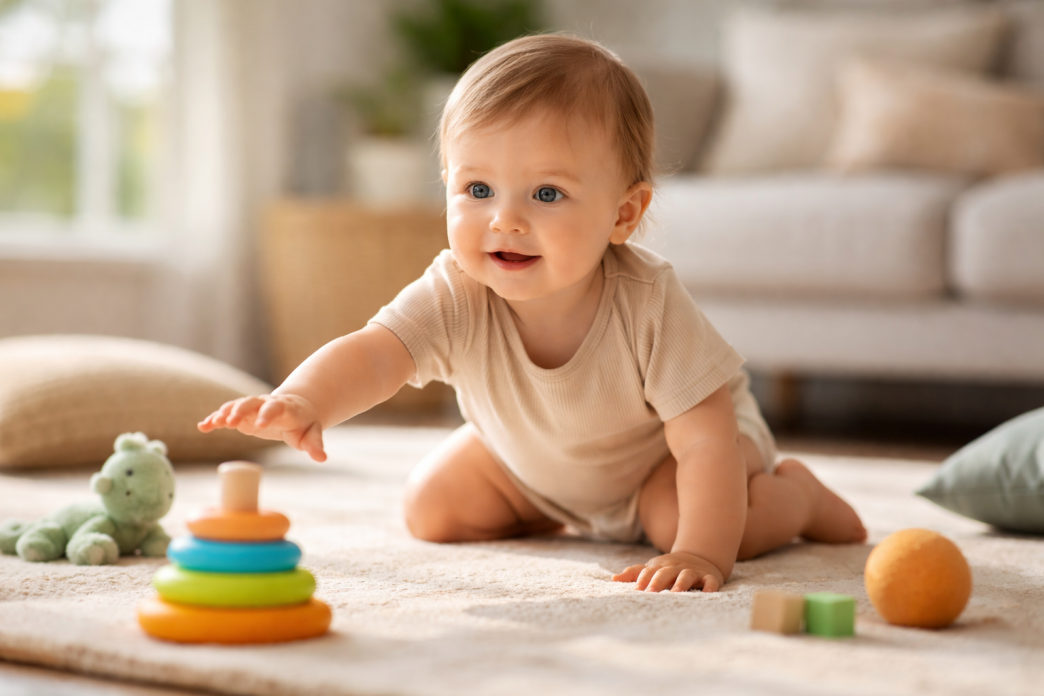
At around 8 to 9 months, your baby enters one of the most important stages of brain development.
Many parents are busy asking:
“Can my baby sit steadily yet?”
“Are they crawling?”
“Can they say ‘mama’ or ‘dada’?”
But here’s the truth:
These milestones matter—but they’re not the most important thing right now. 
What really matters is this:
8–9 months is a golden window for shaping your baby’s brain.
A Hidden Brain Explosion Is Coming
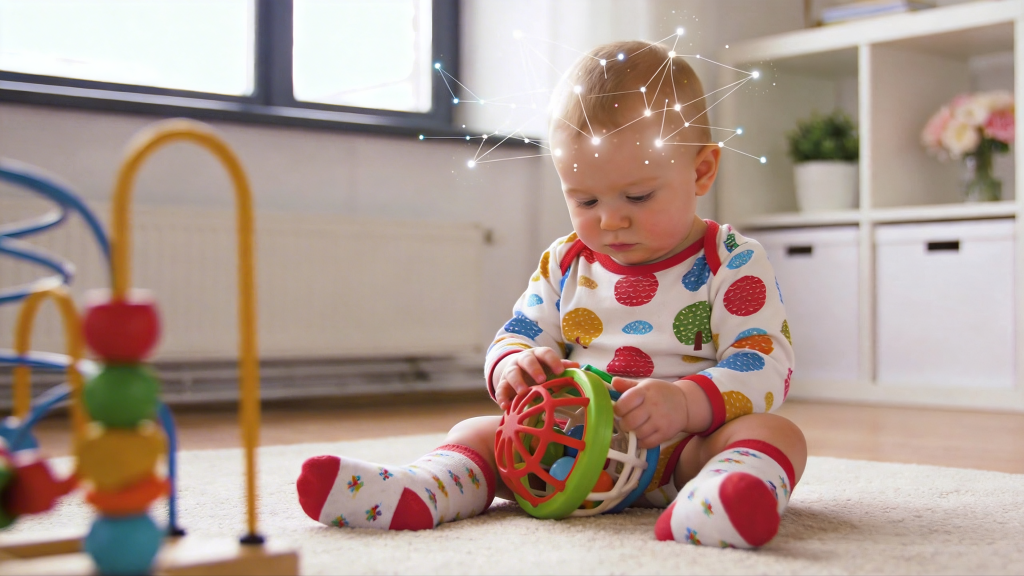
Around 18 months, your baby’s brain goes through an incredible transformation known as synaptogenesis—a rapid surge in connections between neurons.
At its peak, millions of new neural connections form every second.
It’s like building an entire highway system inside the brain.
The richer and denser these connections are, the more your child will benefit in the future:
- Faster reactions
- Stronger understanding
- Earlier language development
- Clearer expression
- Better memory and focus
- Stronger logical thinking
- Higher learning ability
- More stable emotions
- Greater emotional intelligence
What you do now lays the foundation.
It’s like paving the roads before the traffic rush begins.
The Critical Cognitive Milestone: Object Permanence
Between 8 and 9 months, your baby begins developing a key concept known as object permanence.
What does that mean?
Simply put:
Your baby starts to understand that something still exists—even when they can’t see it.
Earlier, if you hid a toy, your baby wouldn’t look for it.
In their mind, “out of sight” meant “gone forever.”
But now, something changes.
They realize:
The toy isn’t gone—it’s just hidden.
This may seem small, but it’s actually a huge leap in development.
Why it matters
This ability marks the beginning of:
- Logical thinking
- Memory formation
- Sustained attention
- Curiosity and exploration
It’s a foundational moment in how your child understands the world.
Early Education Is NOT About Teaching Tricks
A lot of parents think early education means teaching babies to:
- Clap
- Wave
- Say goodbye
But these are just imitation skills—not true brain development.
What your baby really needs right now is understanding cause and effect.
The Power of Cause-and-Effect Thinking
At this stage, your baby begins to learn:
“My actions create results.”
For example:
- Press a button → the light turns on
- Drop a toy → it makes a sound
- Push a car → it moves
- Shake a rattle → it makes noise
To adults, this might look like mess-making or mischief.
But to your baby, this is serious exploration.
Every action is an experiment:
“I did this → something happened → oh, that’s how it works!”
These small, repeated behaviors are quietly building:
- Logical reasoning
- Decision-making ability
- Understanding of the world
The more you allow safe exploration, the smarter and more adaptable your child’s brain becomes.
Easy At-Home Brain Games (No Money Needed)
1. Build Logic & Problem-Solving Skills
Don’t make life too easy for your baby.
A little challenge encourages the brain to think and grow.
Tunnel Crawling Challenge
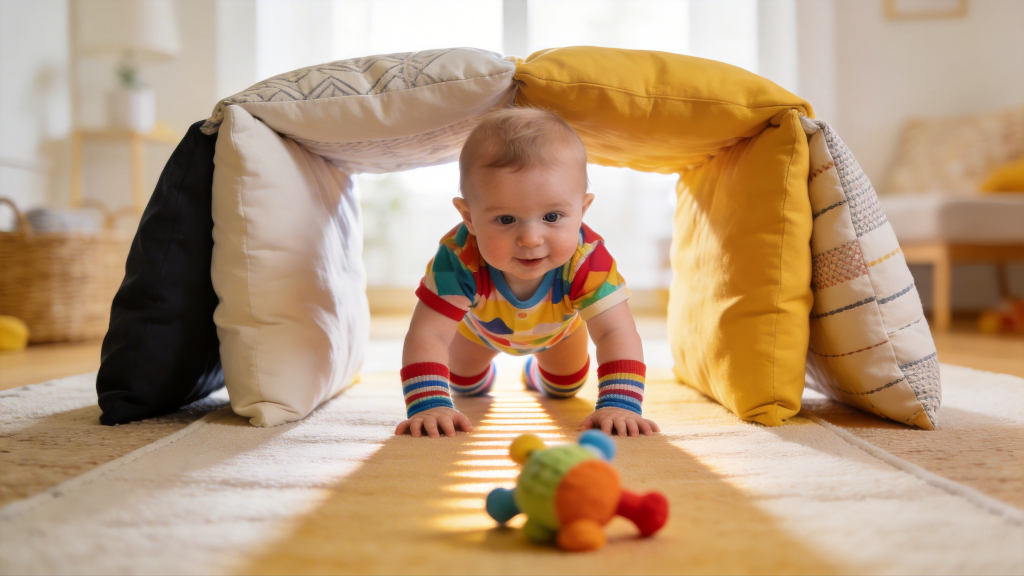
Create a mini “tunnel” using pillows or cushions, with small obstacles and a favorite toy at the end.
Goal: Encourage your baby to figure out how to navigate through.
Turn-and-Find Game
Place toys slightly behind or beside your baby instead of handing them directly.
Goal: Improve body coordination and spatial awareness.
Memory Treasure Hunt
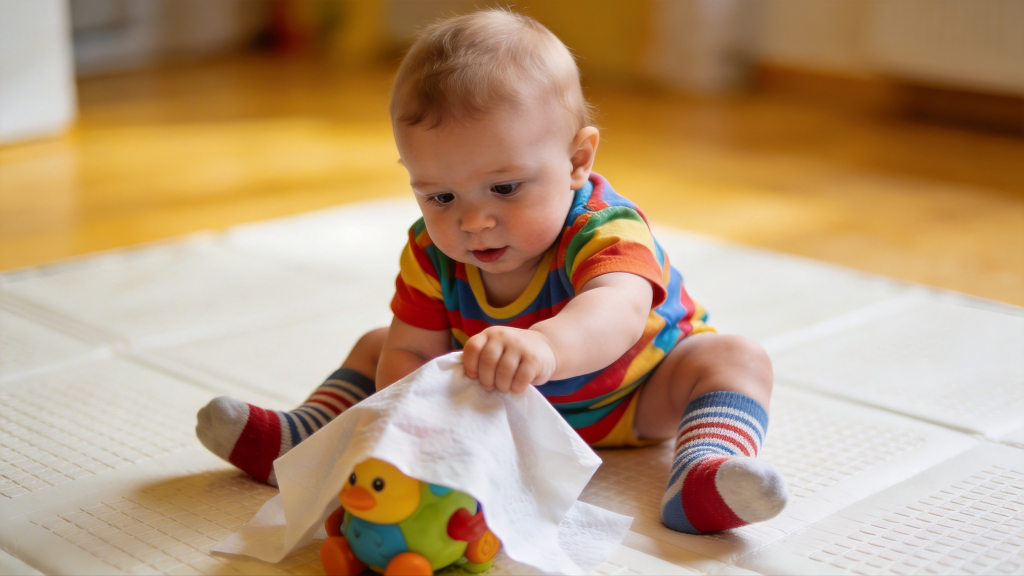
- Beginner: Partially cover a toy with paper
- Advanced: Hide a toy under cups and move them around
Goal: Strengthen object permanence and short-term memory.
Cup & Blocks Play
Give your baby a cup and some blocks to repeatedly put in and dump out.
Goal: Understand container relationships and basic spatial concepts.
2. Boost Creativity & Fine Motor Skills
If your baby suddenly loves tearing paper, throwing things, or banging objects—don’t panic.
This is linked to rapid development of the prefrontal cortex.
Research shows these “destructive” activities are actually essential learning tools.
DIY Sensory Grab Bag
Fill a sealed bag with foil, fabric balls, or textured paper.
Let your baby squeeze, press, and explore safely.
Goal: Stimulate sensory exploration and finger control.
Kitchen Texture Play
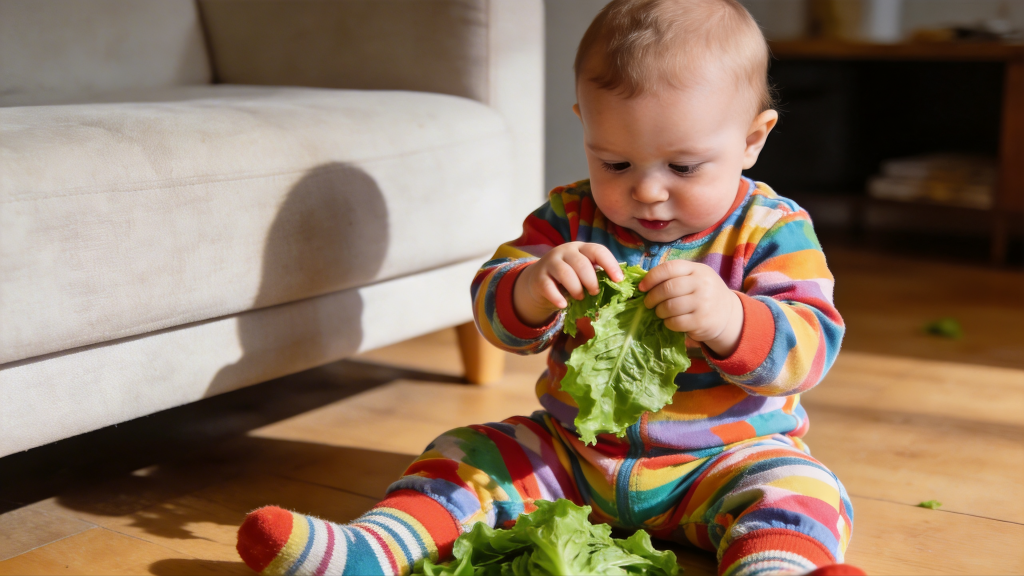
Give your baby a clean cabbage leaf to tear apart.
Real textures beat any expensive toy.
Throwing Game
Use soft balls or plush toys for a simple “throw and retrieve” game.
Goal: Improve hand-eye coordination far more effectively than passive activities.
3. The Real Foundation of Emotional Intelligence
Studies show that at 8 months, emotional and social development matters more than early academic learning.
Even without words, babies are already experts at reading emotions and tone.
Be a Dramatic Parent (Yes, Really)

Use exaggerated facial expressions and tones:
- Big smiles
- Fake anger
- Surprise reactions
Your baby will imitate you—this is their first step into emotional understanding.
Emotion Learning Through Books
Don’t just read—point and explain:
“She’s crying. She feels sad.”
“The puppy is smiling. It’s happy.”
This helps your baby connect expressions with emotions, building empathy.
Daily Social Rituals
- Say “hello” and shake hands
- Practice “bye-bye” gestures
- Play peekaboo or gentle interaction games
High-quality interaction is the best emotional education.
Final Reminder: Avoid “Fake Early Education”
Don’t rush your 8-month-old into:
- Flashcards
- Early reading
- Walkers
These go against natural development and can harm attention and curiosity.
What Real Early Education Looks Like
It’s not about how many skills your baby learns.
It’s about:
- Respecting their natural rhythm
- Being present and engaged
- Encouraging exploration
Focus on the process—not the outcome.
Start Today—And Watch the Magic Happen
Play more. Explore more. Connect more.
When you truly use this golden window,
you’ll see something incredible:
Your baby doesn’t just grow—
they get smarter with every moment of play.