








A Thunderous Launch From Florida
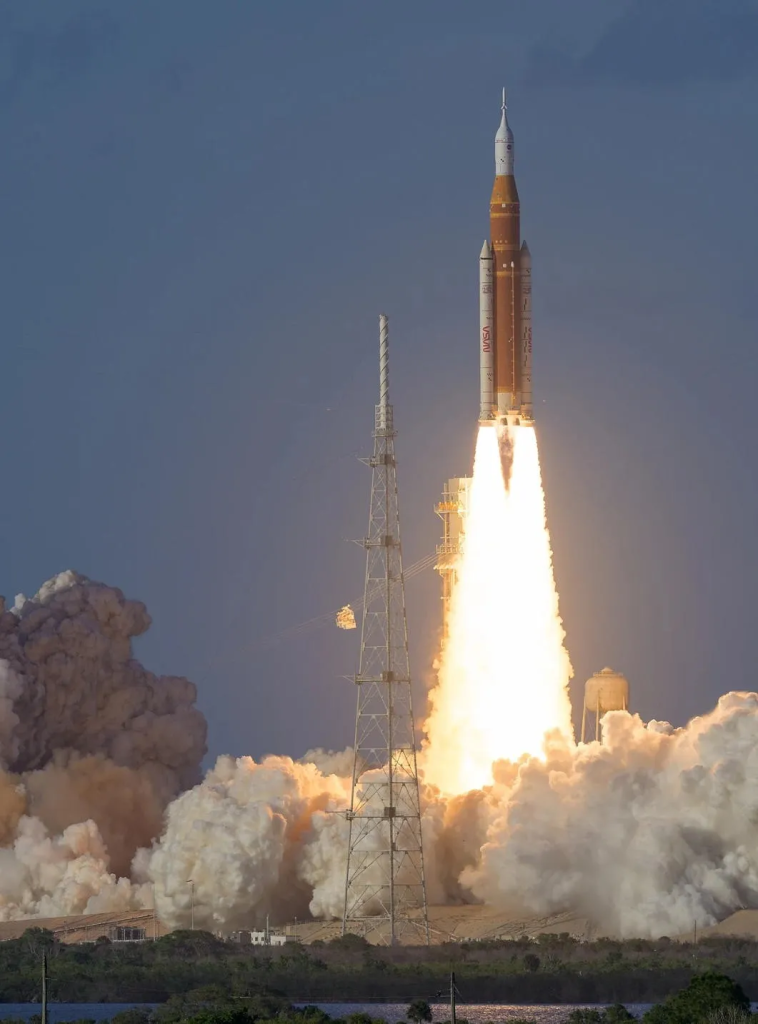
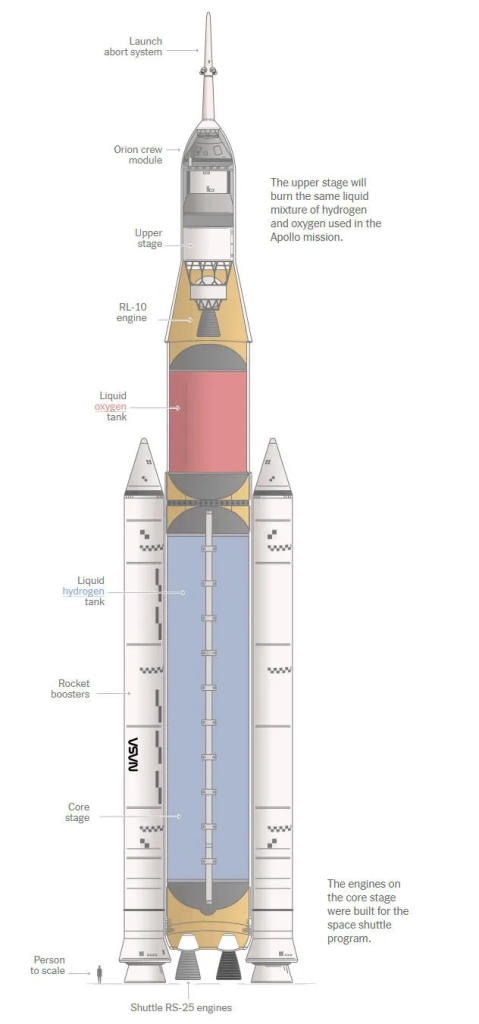
At 6:35 p.m. in Florida, a towering rocket roared to life at the Kennedy Space Center.
The vehicle stood nearly 100 meters tall and weighed about 2,600 tons.
Its engines generated immense thrust, shaking the ground and air across the coast.
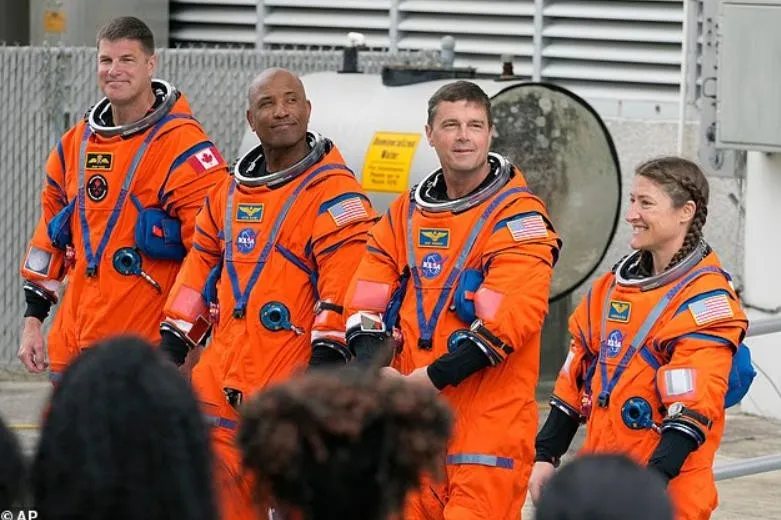
Four astronauts sat inside the Orion spacecraft at the top.
Their destination was not a landing, but a journey around the Moon.
Still, this mission marked humanity’s return to deep space.
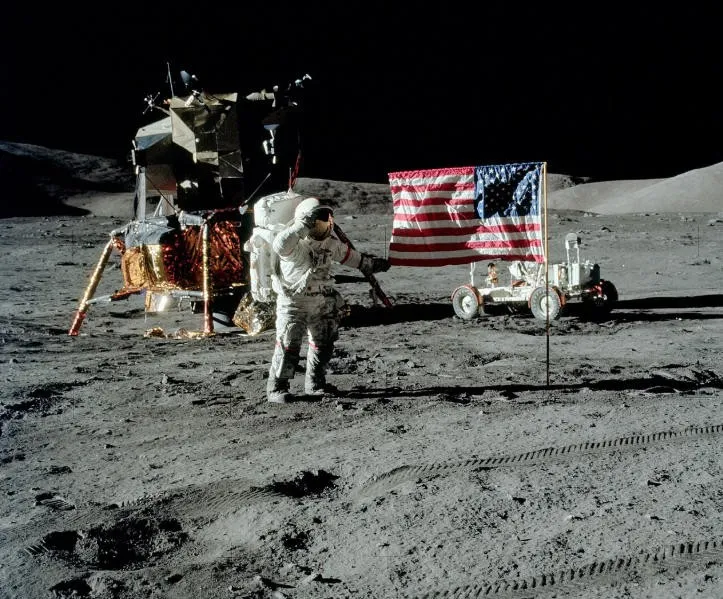
The last time humans reached the Moon was during Apollo 17 in December 1972.
That mission ended an era.
Now, after 53 years, Artemis II begins a new one. 
Testing the Future of Deep Space Travel
This mission is not about stepping onto the lunar surface.
Its goal is to test systems for future exploration.
Engineers will evaluate life support, navigation, and communication in deep space.
The Orion spacecraft must prove it can keep astronauts safe beyond Earth orbit.
If successful, it will pave the way for a crewed lunar landing planned for 2028.
Even without landing, this is historic.
It is the first time since Apollo 17 that humans have left low Earth orbit.
Back then, none of the current astronauts had even been born.
A Long and Difficult Road to Launch
The journey to this launch began over a decade ago.
In 2011, the U.S. Congress directed NASA to build a new heavy-lift rocket after the retirement of the Space Shuttle.
This rocket became the Space Launch System.
Originally, its first flight was planned for 2016.
That deadline proved far too optimistic.
The first uncrewed test did not occur until late 2022.
Artemis II is only the second flight of the SLS.
Earlier plans aimed for a launch between 2019 and 2021.
Those timelines slipped repeatedly.
NASA even considered launching part of the Lunar Gateway station during this mission.
That required a more powerful rocket configuration.
The upgrade caused delays, cost overruns, and eventually cancellation.
By early 2026, both the upgraded rocket and the Gateway module plan were abandoned.
Endless Technical Setbacks
Problems continued to follow the mission.
NASA initially targeted a late 2024 launch.
However, issues kept emerging.
Engineers found heat shield anomalies and battery validation failures.
The life support system required rework.
Each problem pushed the schedule further back.
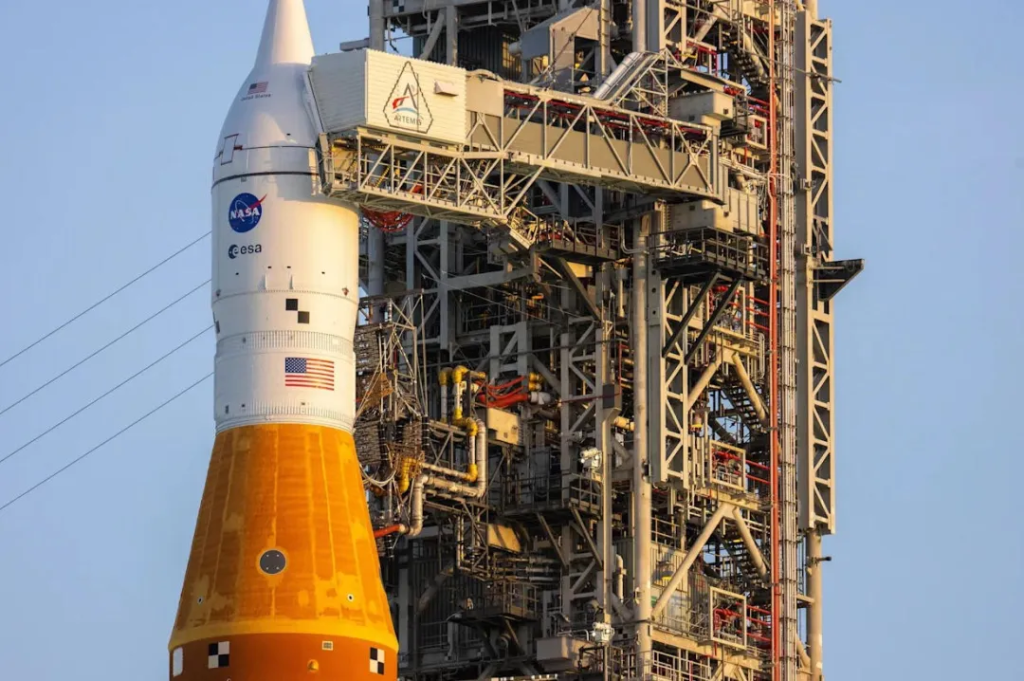
In early 2026, the rocket finally rolled out to the launch pad.
A fueling rehearsal on February 2 revealed a liquid hydrogen leak.
That forced another delay.
A second test went smoothly.
But soon after, engineers discovered helium flow issues in the upper stage.
Helium is essential for maintaining engine conditions.
The rocket returned to the assembly building.
Investigations revealed a misaligned seal blocking the gas line.
After repairs and testing, the issue was resolved.
Last-Minute Drama Before Liftoff
Even on launch day, problems continued.
Two hours before liftoff, a communication failure appeared.
It affected the connection between ground control and the flight termination system.
This system is critical for safety.
If the rocket goes off course, it must be destroyed remotely.
Fortunately, astronauts would be protected by the Launch Abort System.
This system can pull the crew capsule away before any explosion.
In a surprising twist, engineers used an old device from the shuttle era to verify the system.
At the same time, a battery in the abort system showed abnormal temperature readings.
After investigation, the issue was traced to a faulty sensor.
Both problems were resolved just in time.
The final launch decision received a unanimous “Go.”
Into the Sky Once Again
At 6:35 p.m., engines ignited.
The sky lit up in brilliant white light.
Humanity was heading back toward the Moon.
But the celebration did not last long.
About 51 minutes into flight, a communication issue occurred during a satellite switch.
Mission control could hear the astronauts, but not the other way around.
Soon after, an unexpected problem arose.
The spacecraft’s only toilet malfunctioned.
In space, such a failure can quickly become serious.
Fortunately, astronaut Christina Koch tested the system.
It returned to normal operation.
Meet the Crew of Artemis II
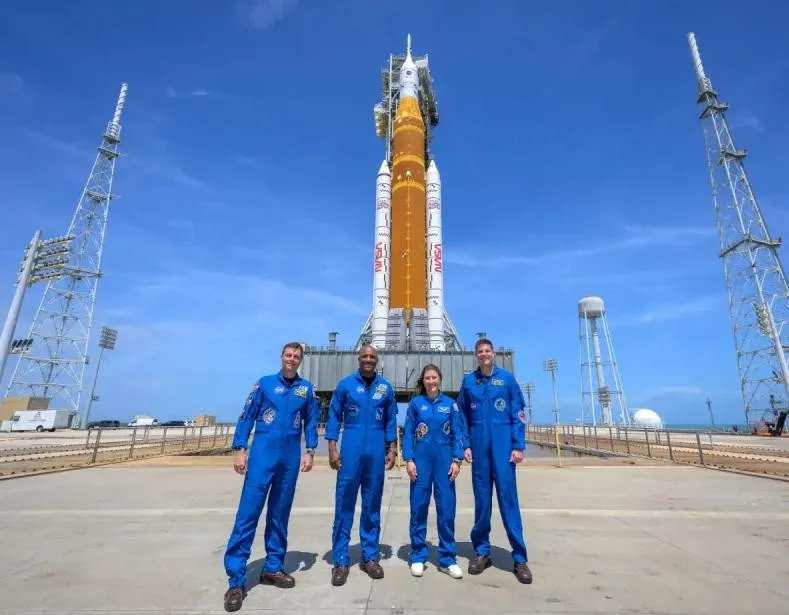
This crew represents a major shift from the Apollo era.
Back then, all astronauts were American, white, and male.
Artemis II changes that.
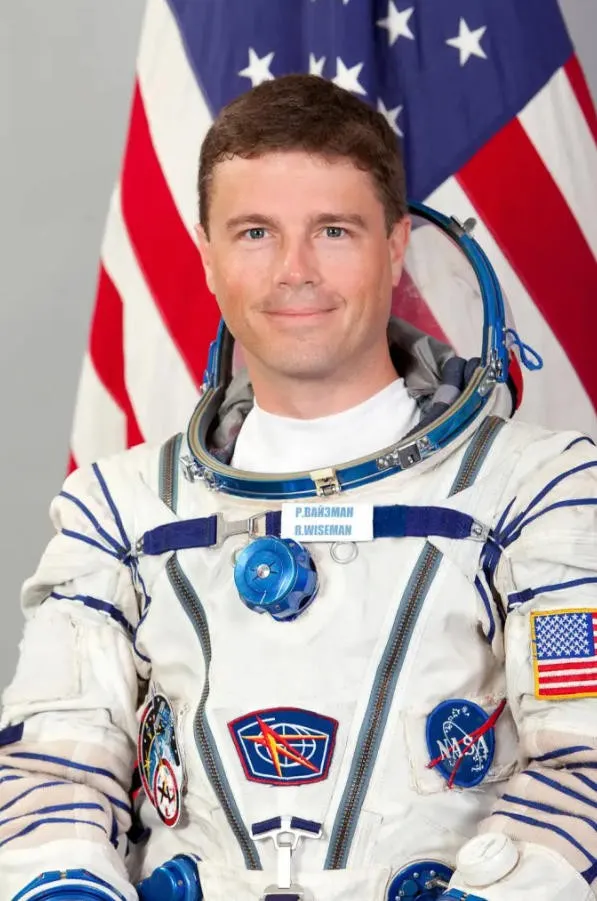
Commander Reid Wiseman, age 50, is the only white American male on board.
He is a former U.S. Navy pilot and a veteran astronaut.
Pilot Victor Glover, 49, is a naval aviator.
He becomes the first Black astronaut assigned to a lunar mission.
Mission specialist Christina Koch, 47, holds the record for the longest single spaceflight by a woman.
She is also the first woman to travel toward the Moon.
Mission specialist Jeremy Hansen, 50, is Canadian.
He becomes the first non-American to leave low Earth orbit.
A Small Mascot With Big Meaning
The astronauts are not alone.
A small mascot named “Rise” floats inside the cabin.
It was designed by an 8-year-old child in California.
The character resembles the Moon wearing an Earth-themed cap.
NASA turned the drawing into a real object for the mission.
Before boarding, the crew signed the wall of the White Room.
This tradition dates back decades.
The walls are covered with astronaut signatures.
Wiseman later said the moment felt real when the mascot was secured.
“It’s time to fly,” he declared.
The Most Critical Moments Ahead
On the second day, the spacecraft will perform a key engine burn.
This maneuver will send Orion toward the Moon.
After that, turning back will no longer be possible.
A similar situation occurred during Apollo 13.
That mission later inspired the film Apollo 13, which received an Academy Awards nomination.
On day six, the spacecraft will reach its farthest point.
It will travel about 407,000 kilometers from Earth.
This will break a record held for over 50 years.
However, the moment comes with isolation.
When Orion passes behind the Moon, communication will stop for about 41 minutes.
The crew will be completely cut off.
Returning Home
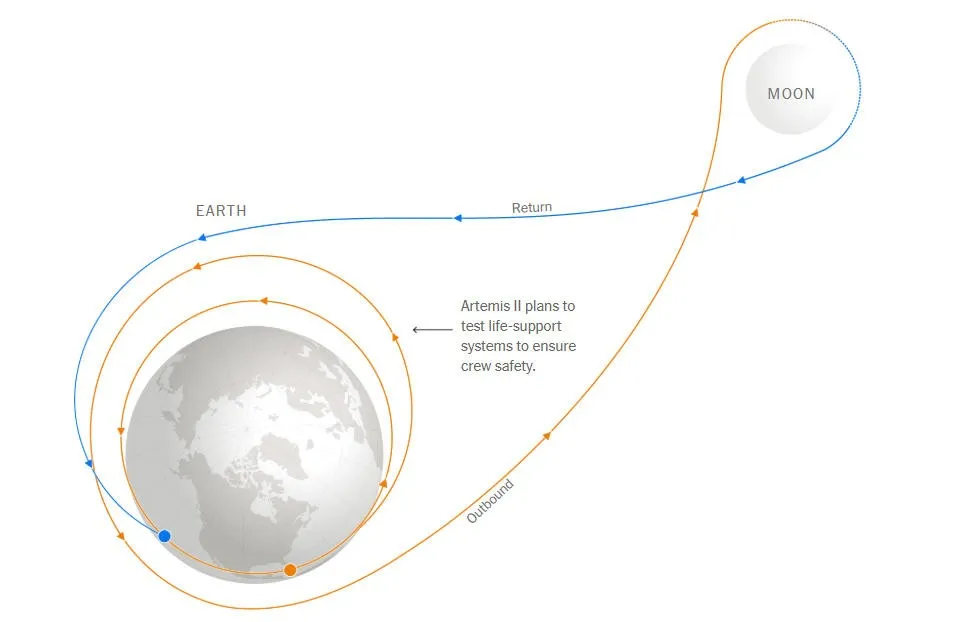
If all goes well, the spacecraft will reenter Earth’s atmosphere on day ten.
It will travel at around 40,000 kilometers per hour.
Finally, it will splash down in the Pacific Ocean.
A New Space Race Takes Shape
Artemis II represents a cautious first step.
It is a flyby mission, not a landing.
But it signals the return of human exploration beyond Earth.
Meanwhile, China is advancing rapidly.
In June 2024, Chang’e 6 landed on the far side of the Moon.
It returned 1,935 grams of lunar soil.
This was the first time samples were brought back from that region.
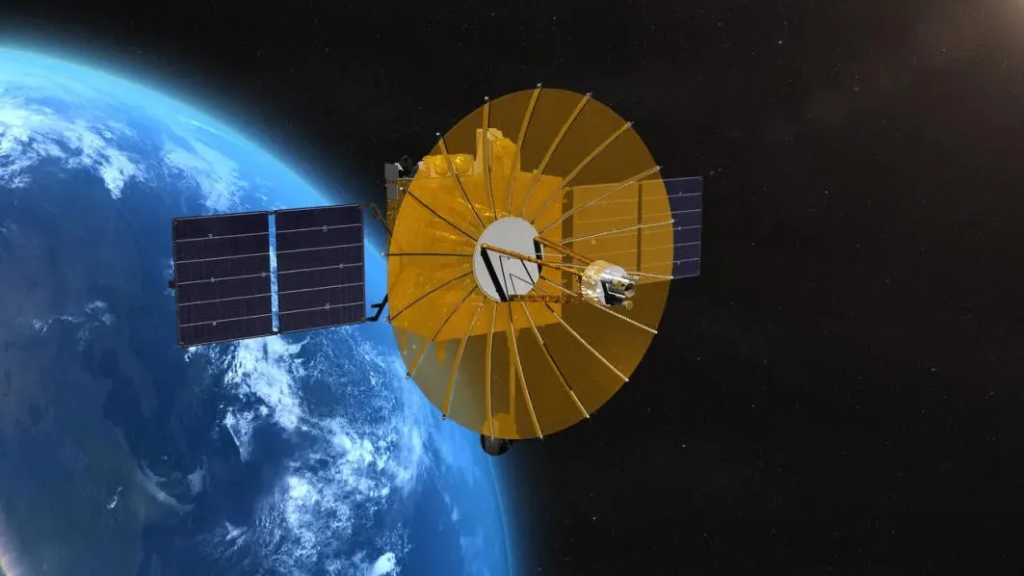
To enable communication, China launched the Queqiao-2 relay satellite.
Future missions aim to find water at the lunar south pole.
Water can support life and produce rocket fuel.
This makes it a key resource for long-term presence.
China also plans to test building materials using lunar soil.
The goal is to prepare for permanent bases.
The Bigger Picture
The United States and its partners are also planning long-term lunar exploration.
Control over lunar resources may shape future space rules.
As one former NASA official said, those who reach the Moon first may define its future.
Back in 1962, John F. Kennedy famously declared the goal of going to the Moon.
He said it was chosen not because it is easy, but because it is hard.
More than 60 years later, those words still resonate.
Humanity is returning to the Moon.
But this time, the story is being written by more than one nation.