





🧭 Introduction: A World That Feels Prehistoric
The Faroe Islands feel less like a destination and more like a forgotten chapter of Earth’s history. Rising dramatically from the North Atlantic Ocean between Norway and Iceland, this remote archipelago belongs to the Kingdom of Denmark yet lives by its own rhythm.
Frequently praised by Lonely Planet as a “once-in-a-lifetime destination,” the Faroe Islands prove that raw beauty doesn’t need crowds. At 62° north latitude, this hidden world offers cliffs, fog, seabirds, and silence—so powerful it almost feels unreal.
🌍 Where Are the Faroe Islands?
The Faroe Islands consist of 18 volcanic islands scattered across the North Atlantic. Windswept, green, and wild, they sit perfectly isolated—far from mass tourism, yet rich in culture, nature, and Nordic heritage. 
🏙️ Tórshavn: The Small Capital with a Viking Soul
Life in the World’s Coziest Capital
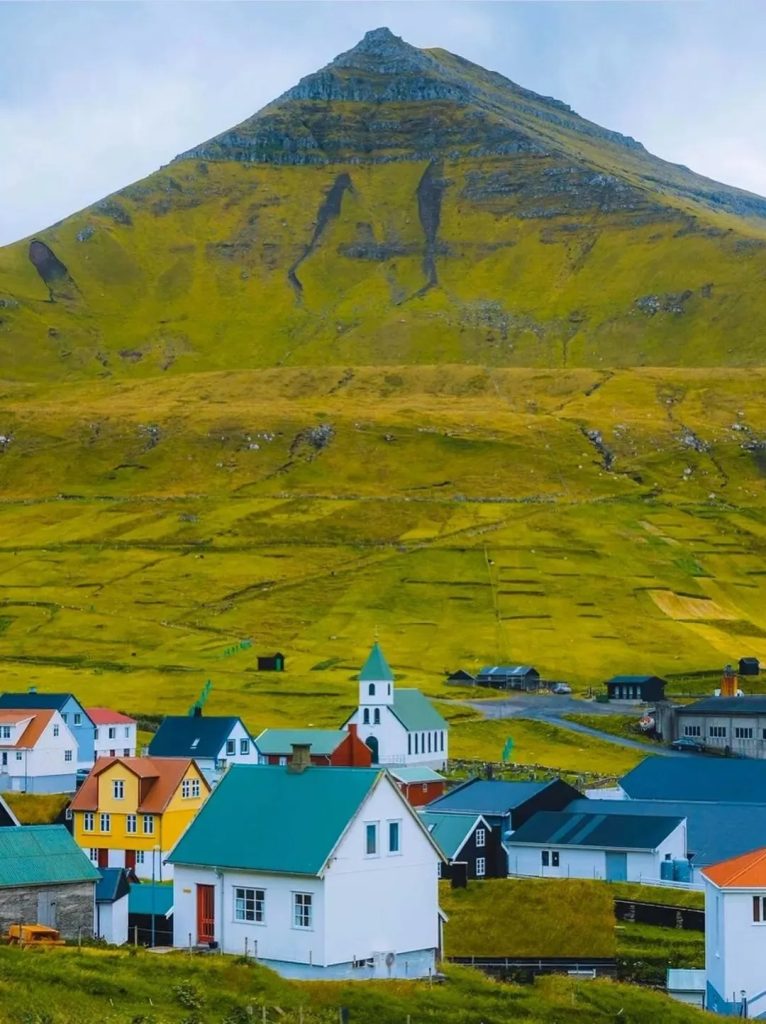
Tórshavn, named after the Norse god Thor, is the capital and largest city of the Faroe Islands. Located on Streymoy Island, it feels more like an oversized fishing village than a capital city.
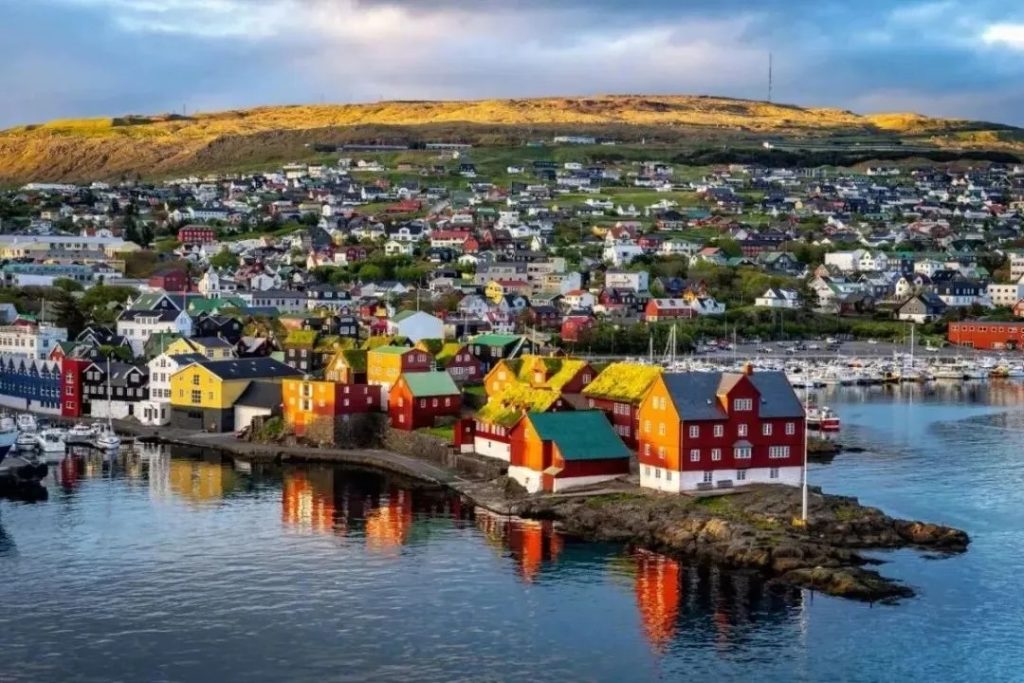
With fewer than 23,000 residents, there are no skyscrapers or traffic jams here. Colorful wooden houses line the harbor, boats gently sway in the water, and within minutes of the city center, rugged mountains and deep fjords take over.

Tinganes: Where Vikings Once Governed
The old quarter, Tinganes, is one of the oldest continuously used parliamentary sites in the world. Since the 9th century, Viking settlers gathered here for open-air assemblies—making it a living relic of Nordic democracy.
🐦 Mykines Island: The Kingdom of Seabirds
A Paradise for Bird Lovers
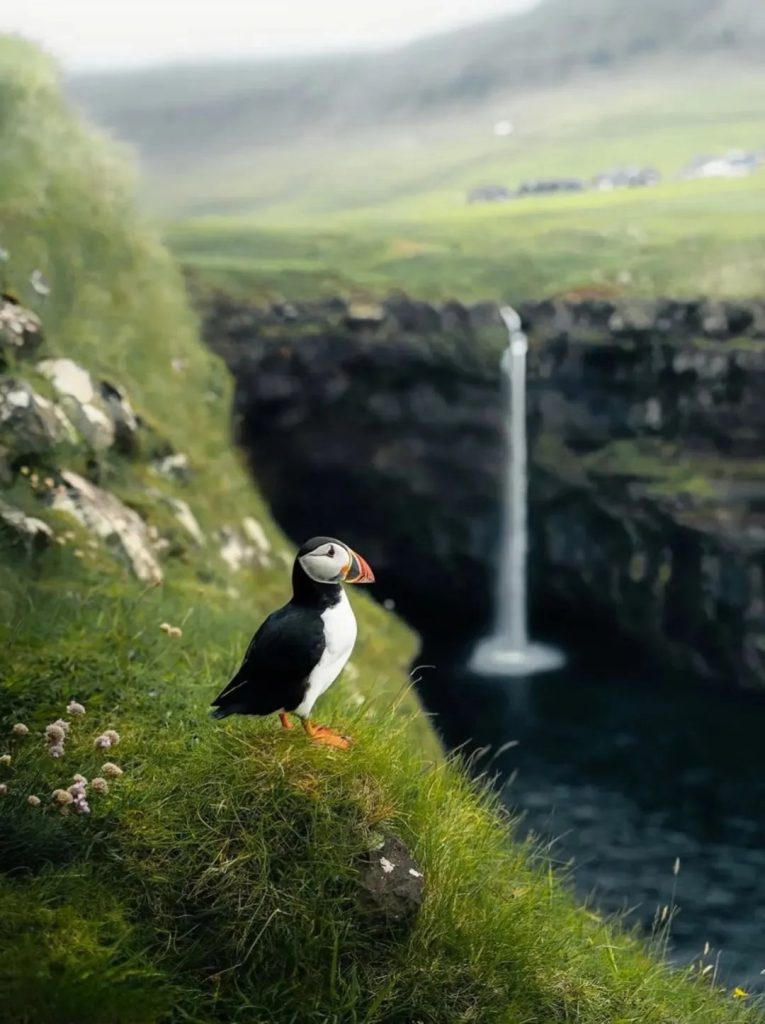
Mykines is the westernmost island of the Faroes and one of the most important seabird sanctuaries in the North Atlantic. Often called “Bird Island,” it hosts hundreds of thousands of seabirds during summer.
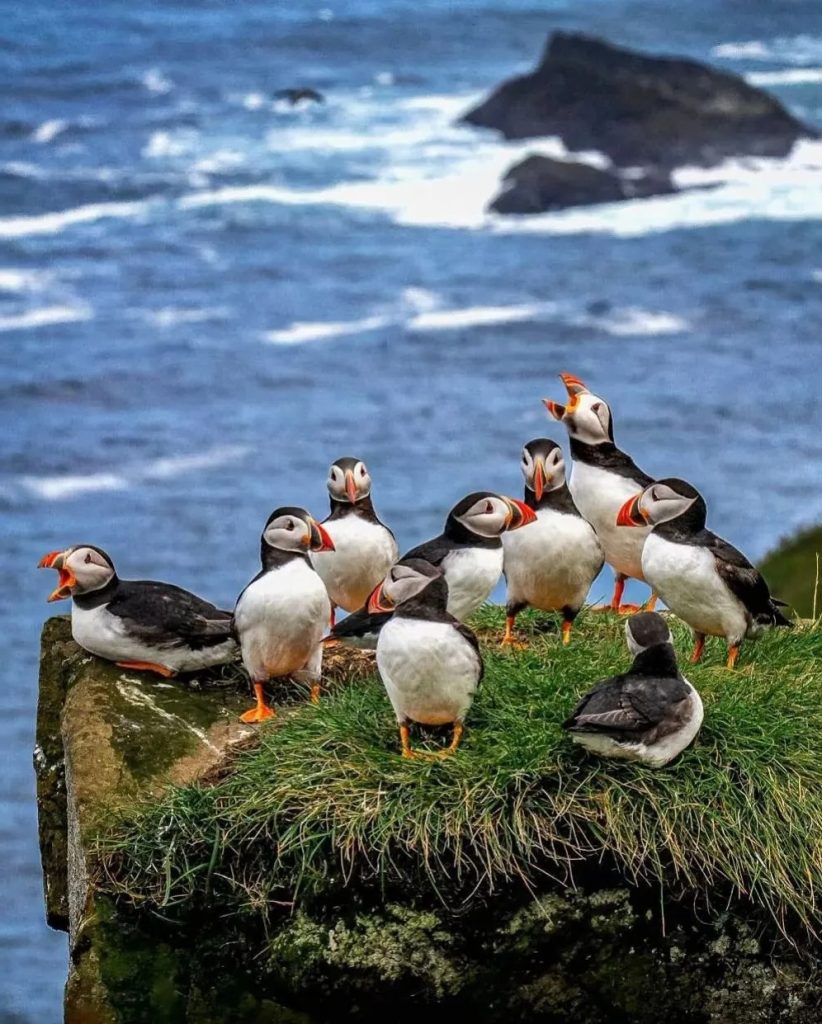
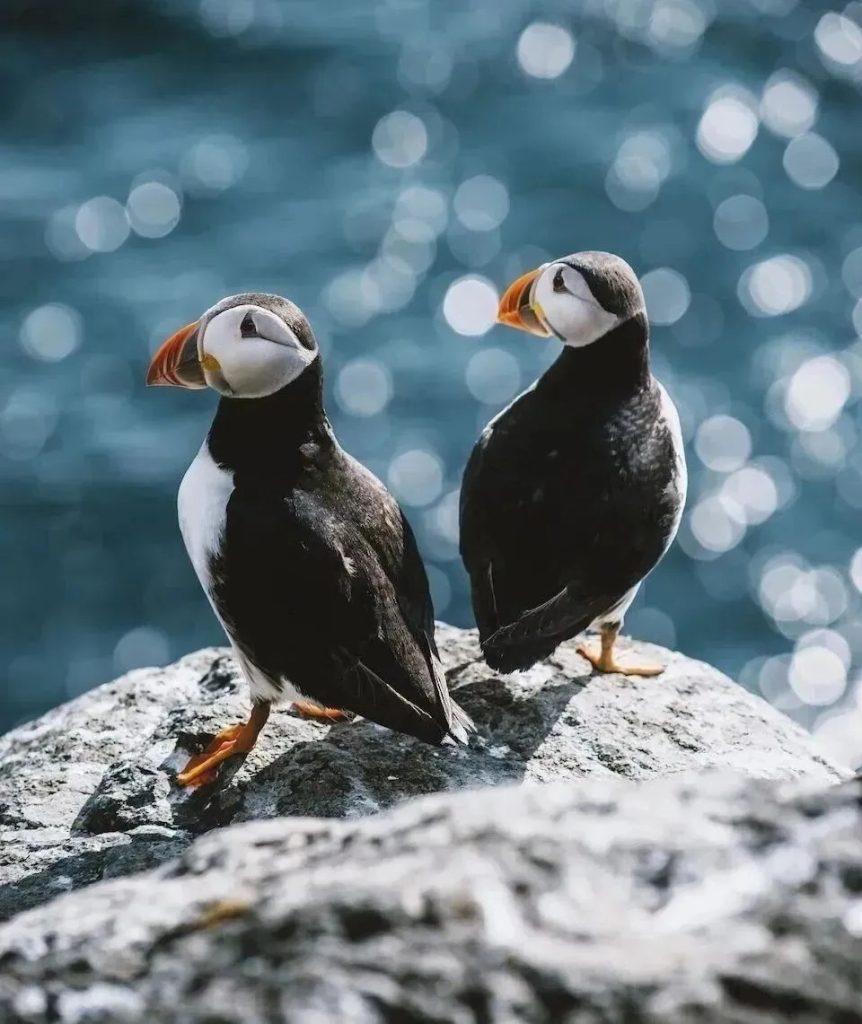
The island’s star residents are the adorable Atlantic puffins. These colorful birds hop across cliffs and soar above the ocean, giving the island an almost magical energy.
Mykines Lighthouse Trail
Perched on the western cliffs stands Mykines Lighthouse, built in 1909. Reaching it requires hiking the famous Mykinesholmur Trail, a 4 km round trip taking about 2–3 hours.
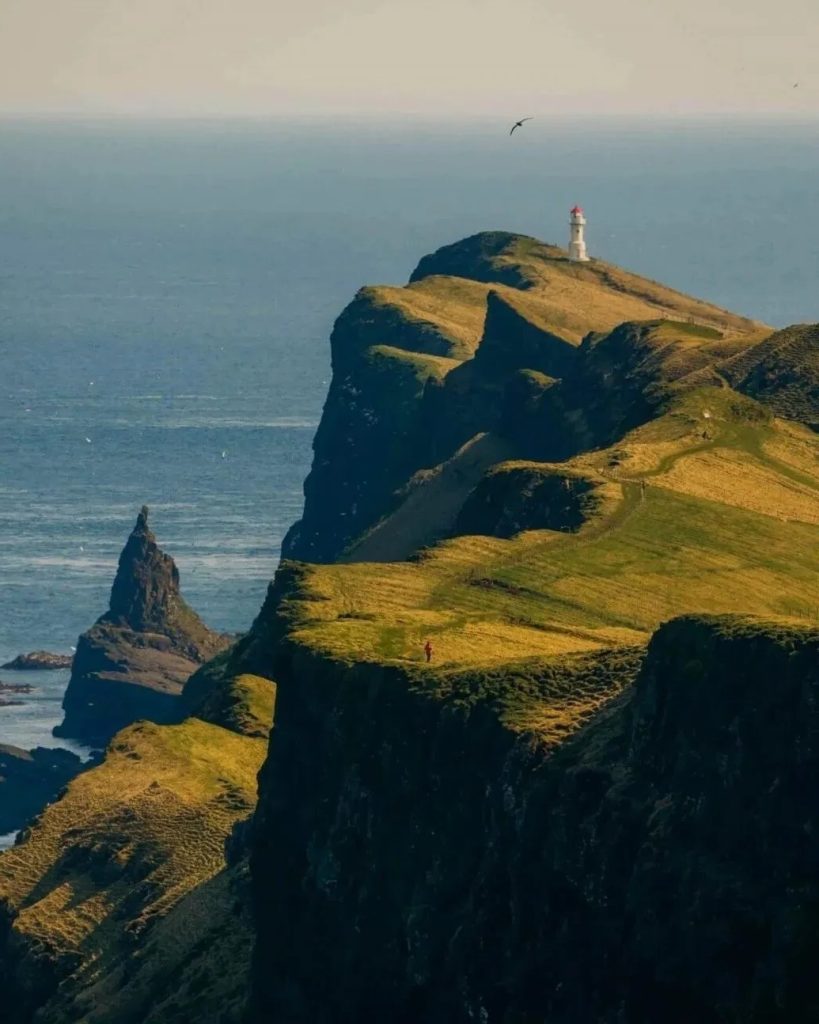
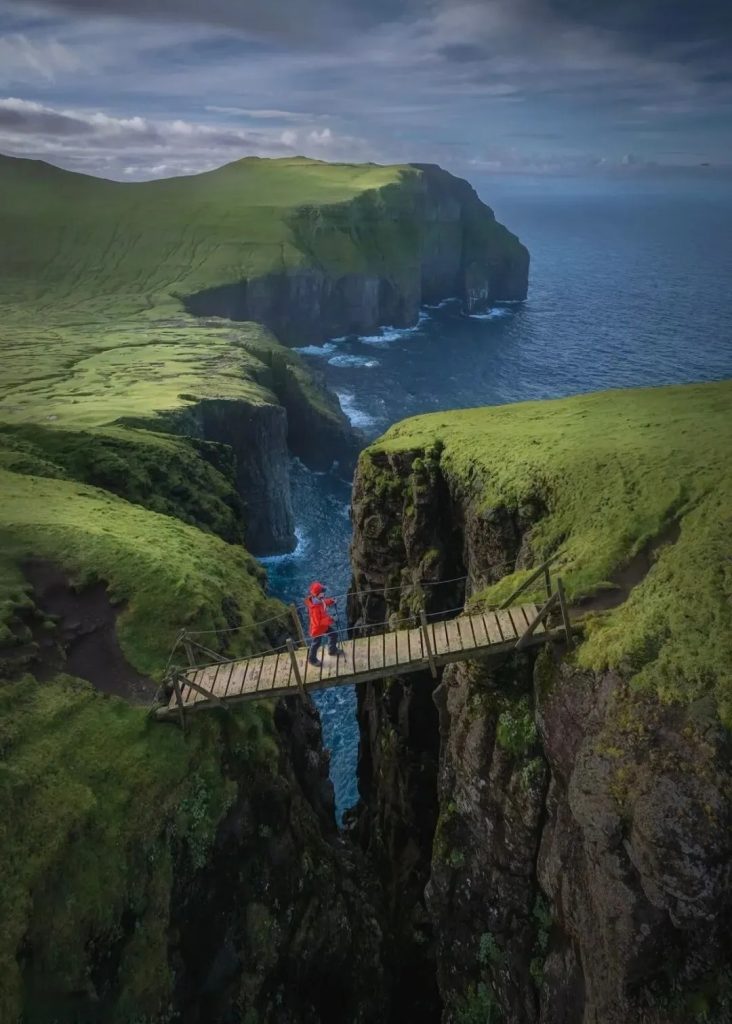
Along the way, hikers cross a narrow wooden bridge suspended over a deep gorge. Below, waves thunder through sea caves, while puffins nest just meters away—especially spectacular in summer.
🌊 Vágar Island: The Floating Lake Illusion
Sørvágsvatn – Nature’s Optical Trick
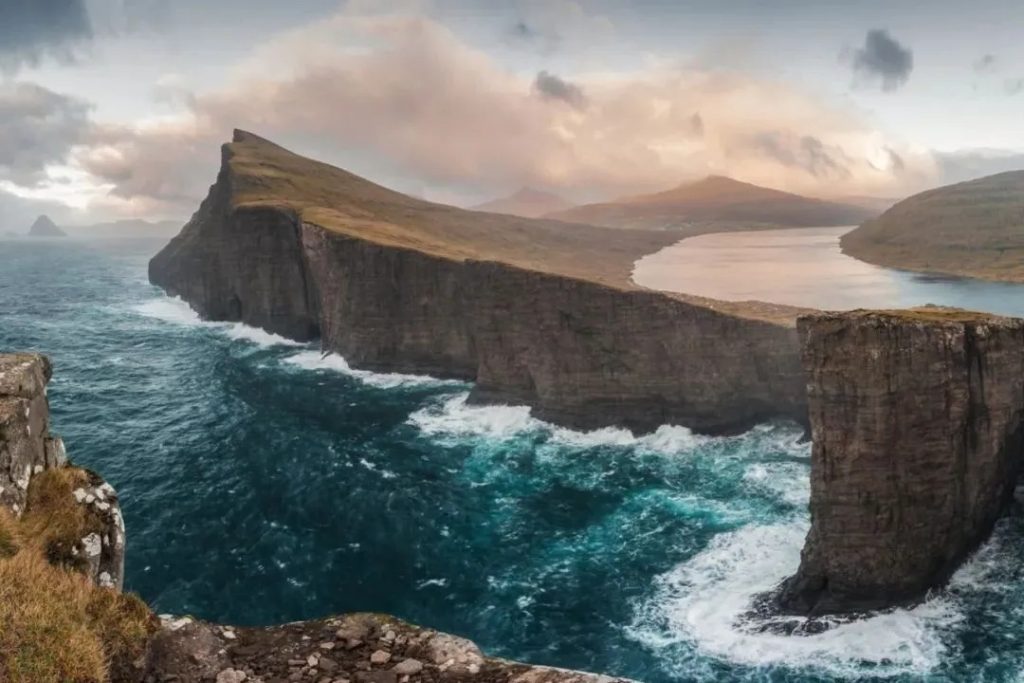
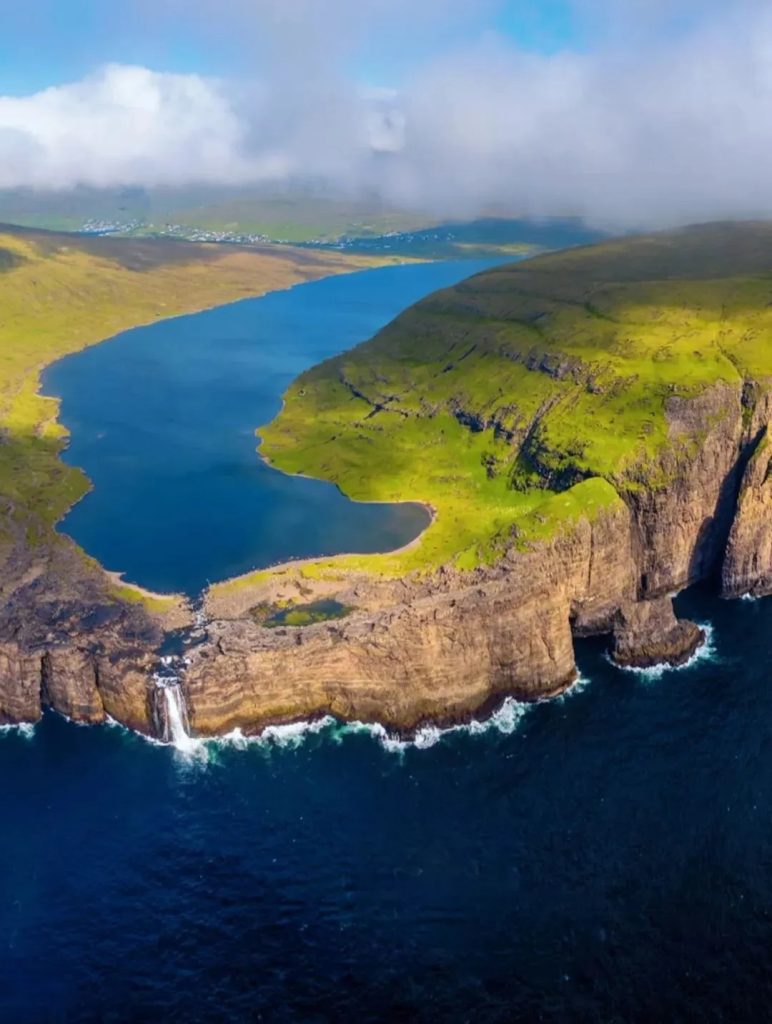
On the western side of Vágar Island lies Sørvágsvatn, also known as Leitisvatn. From a distance, the lake appears to float high above the Atlantic Ocean—a jaw-dropping illusion.

In reality, the lake sits only about 30 meters above sea level. The illusion is created by towering cliffs that dramatically exaggerate the height difference. The hiking path is soft with moss, making every step feel like walking on a natural carpet.
🌊 Múlafossur: The Waterfall That Falls into the Sea
One of the World’s Most Beautiful Sea Waterfalls
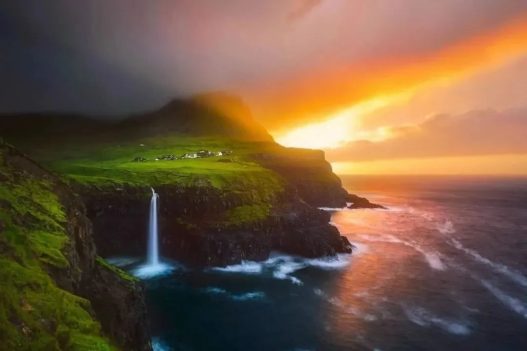
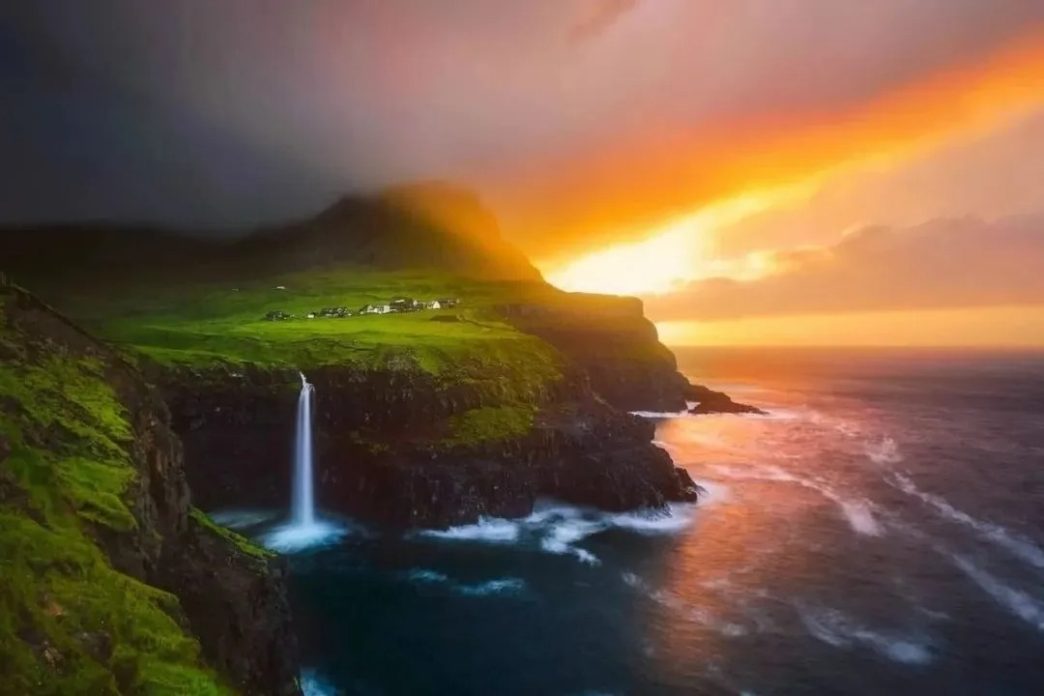
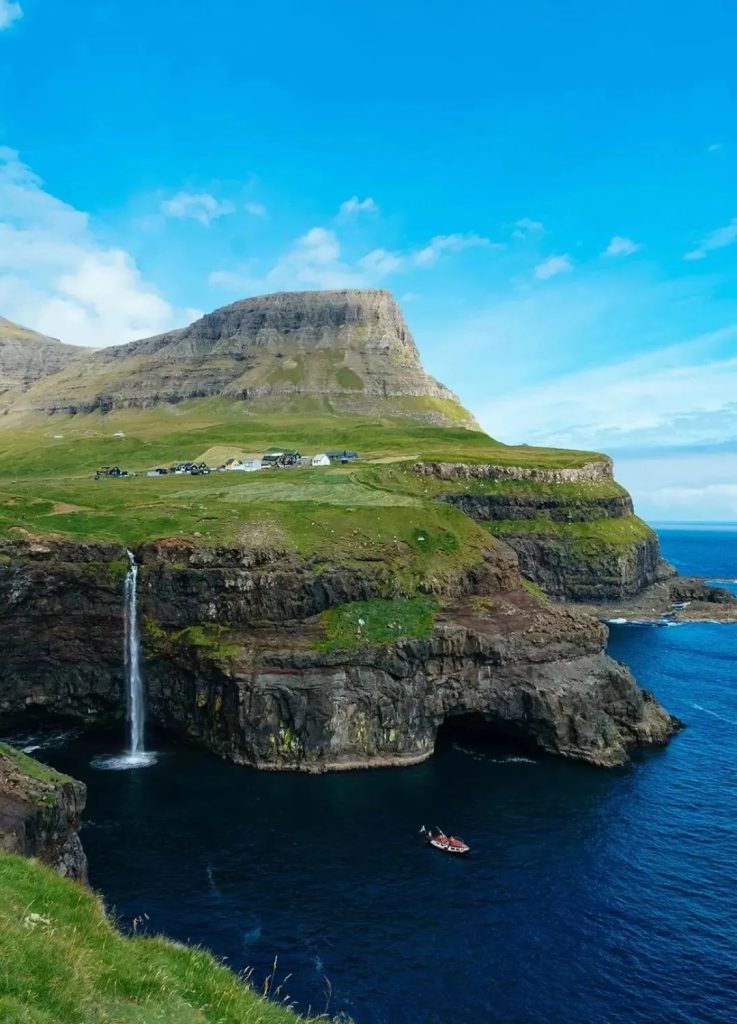
Múlafossur Waterfall is located near the village of Gásadalur on Vágar Island. Often ranked among the most stunning waterfalls on Earth, it plunges straight from cliffs into the roaring Atlantic.
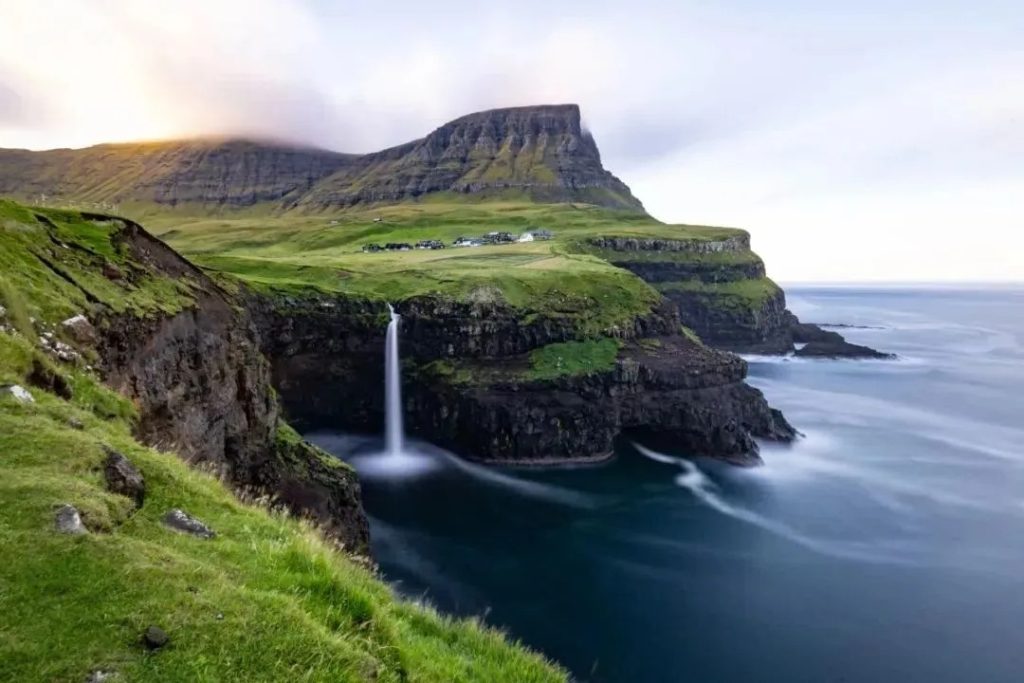
For centuries, Gásadalur was completely isolated until a tunnel opened in 2004. Today, visitors standing at the viewpoint feel salty mist on their faces as wind and water collide. On calm summer evenings, golden sunsets turn the ocean into liquid fire.
🪨 Drangarnir: The Stone Gate of the Ocean
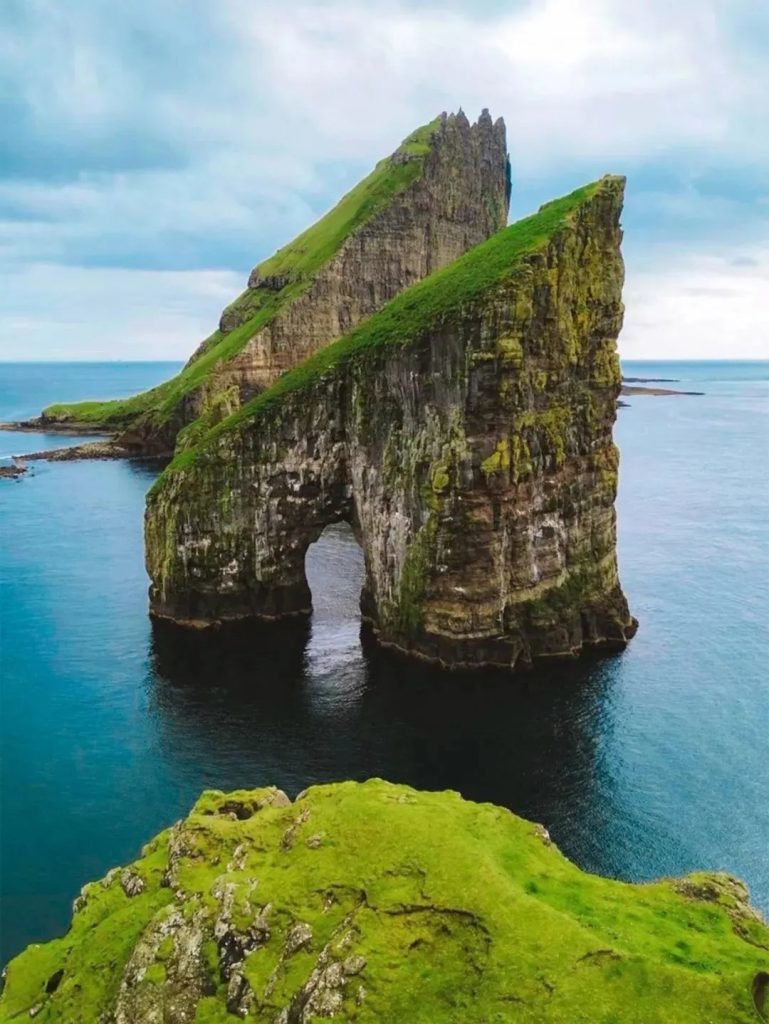
Rising dramatically between Vágar and Streymoy are two massive sea stacks known as Drangarnir. Standing nearly 70 meters tall, these basalt pillars resemble a natural gateway to another world.
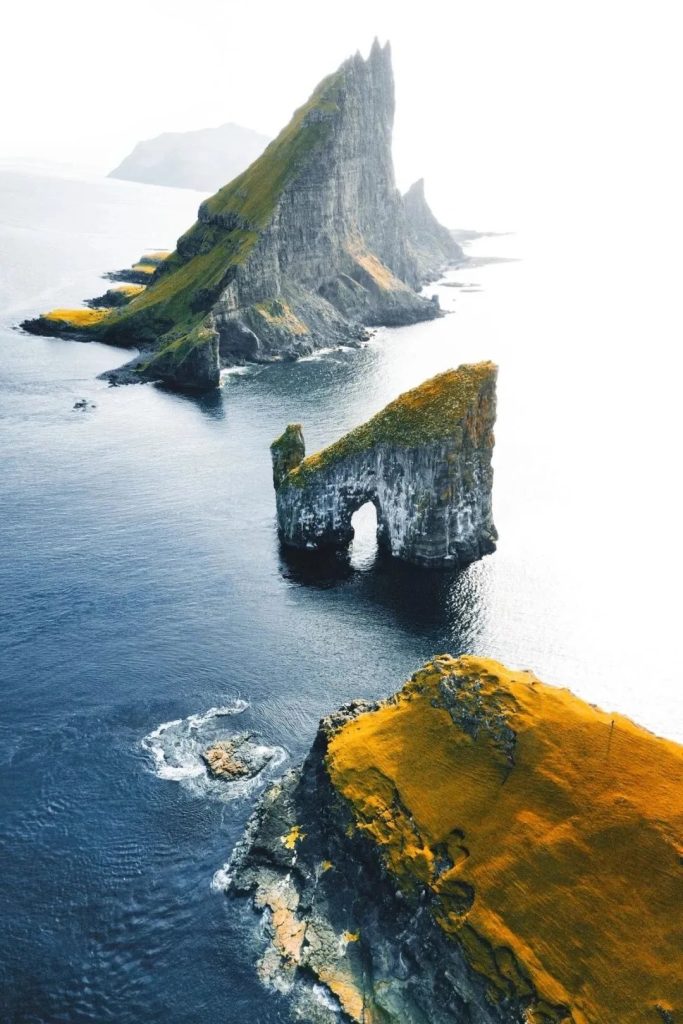
The name means “gate pillars” in Faroese, and the scene truly feels mythical. To protect this fragile geological wonder, access has required licensed guides since 2019.

🏝️ Kalsoy: The Island of Cliffs and Legends
The Flute-Shaped Island
Kalsoy lies in the northeast of the Faroe Islands. Long and narrow—only 18 km in length—it is nicknamed the “Flute Island” due to four tunnels carved through its mountains.
Kallur Lighthouse & James Bond Fame
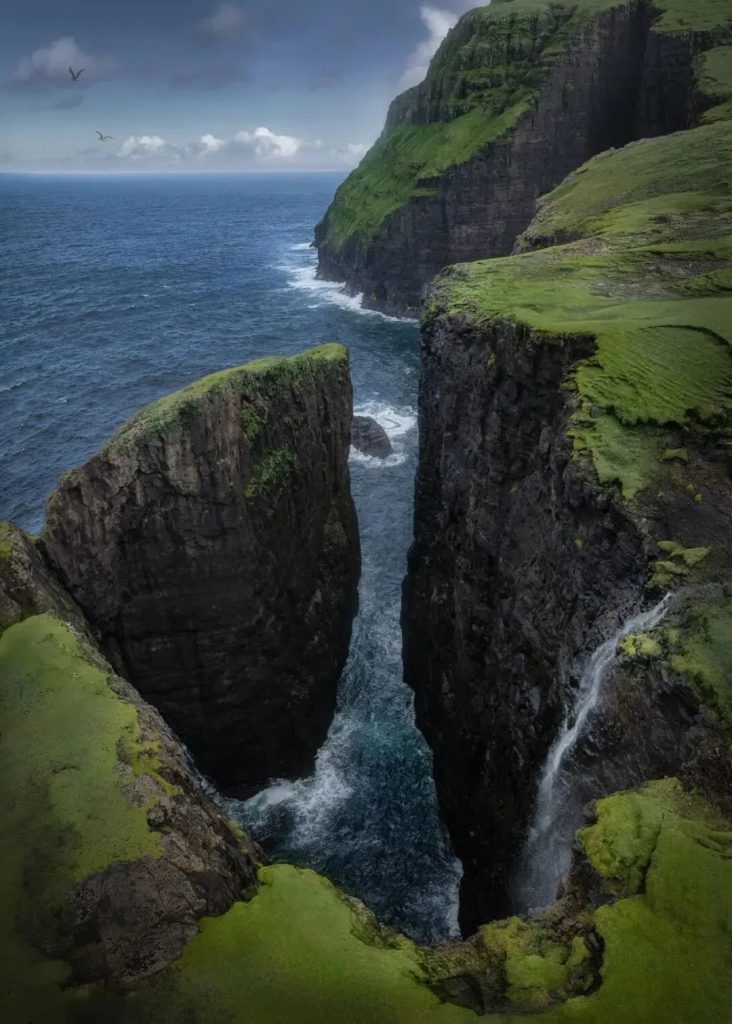
At the island’s northern tip stands Kallur Lighthouse, dramatically perched on sheer cliffs. The narrow trail leading there runs along razor-sharp ridges with dizzying drops on both sides.
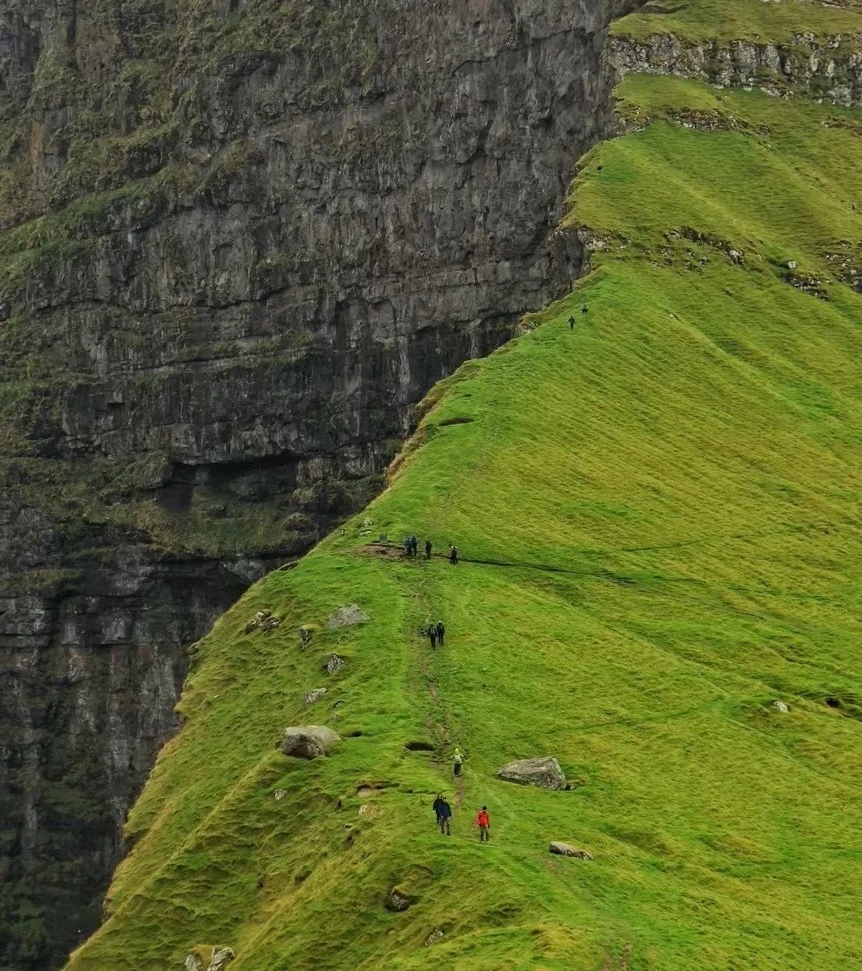
Kalsoy gained global fame as a filming location for No Time to Die, the 25th James Bond film. The final leap scene etched this wild landscape into cinematic history.
✨ Final Thoughts: Should Life Be Spent in a Place Like This?
The Faroe Islands are not comfortable. They are windy, isolated, and sometimes brutally raw. But that is exactly their power. This is a place where nature speaks louder than people—and where silence feels sacred.
Maybe life should be spent somewhere like this, even if only once.