








Have you ever walked into a room and felt like a tiny tornado just passed through?
Tissues shredded across the floor.
Toy cars thrown again and again just to hear the sound.
You say, “Don’t touch that,” and two seconds later… tiny fingers sneak back.
Take a breath — your child isn’t being “naughty.”
They’ve entered a powerful stage of development known as the Exploration Sensitive Period, a concept closely related to Sensitive Periods in early childhood development. 
What looks like chaos is actually your baby building the foundation for logic, focus, and thinking skills.
Today we’ll explore:
- What the Exploration Sensitive Period really is
- Why it’s a golden window for brain development
- How parents can support it without constant frustration
What Is the Exploration Sensitive Period?
During this stage, babies feel a strong internal drive to:
Touch everything
Drop everything
Open everything
Take things apart

Why? Because your child is starting to realize something big:
“The world has rules — and I want to test them.”
You might notice unspoken questions like:
- Why won’t this lid come off? (object structure)
- Why does this button turn on a light? (Cause and Effect)
- Why does Mom react every time I pour water on the floor? (social feedback)
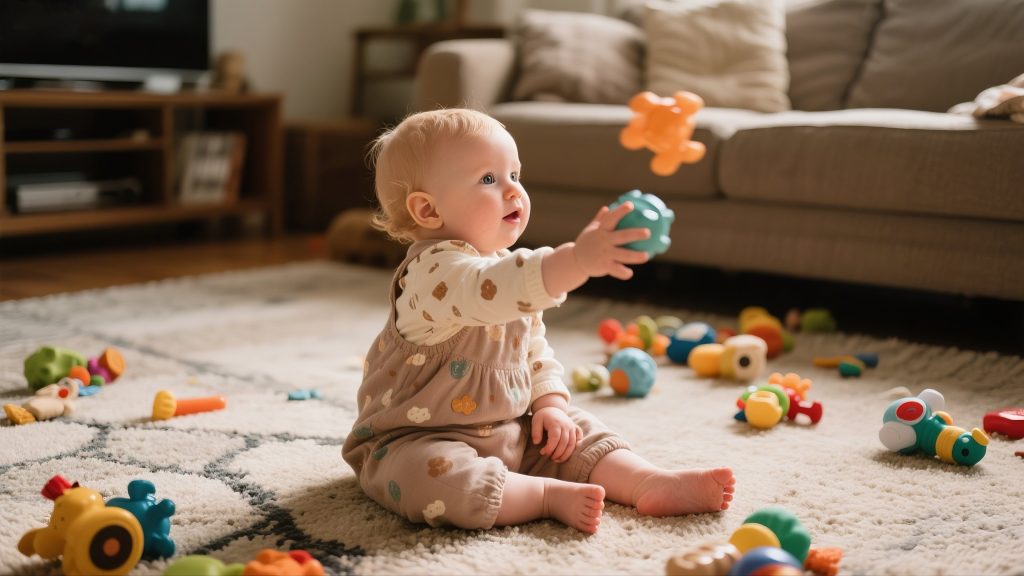
Most children enter this stage around age one, lasting into toddlerhood. During this time, the brain is rapidly forming connections through Sensory Processing and early Cognitive Development.
Developmental psychology describes this as a bridge forming between sensory experience and logical reasoning.
“Troublemaker” or Tiny Scientist?
What looks like mischief is actually research.
Here’s what your little scientist is studying:
Throwing toys repeatedly → testing sound differences, bounce direction, and emotional reactions
Ripping paper → exploring texture, sound, and how materials change
Opening cabinets → learning about space and Object Permanence
Drawing on walls → building Fine Motor Skills and understanding movement outcomes
Your child isn’t trying to annoy you.
They’re enrolled in “How the World Works 101.”
A Golden Window for Logic and Emotions
Exploration doesn’t just train thinking — it activates multiple brain systems.
Each experiment strengthens:
- Logical reasoning
- Motor coordination
- Emotional regulation
- Social awareness
This stage supports both the thinking brain and the emotional brain, helping develop early Executive Functions like impulse control and working memory.
How Parents Can Support (Without Constantly Saying “No”)
Yes, it’s messy. Yes, it’s loud.
But handled well, this phase builds confidence and independence.
Here’s how to guide without suppressing curiosity.
1. Create a Safe “Yes Space”
Designate an area at home where exploration is encouraged.
Items like containers, empty bottles, old keyboards, zippers, and knobs become powerful tools for Sensory Play.
This approach aligns with Montessori Education principles, which emphasize hands-on learning and independence.

2. Narrate Instead of Interrupting
When your child is focused, resist shouting “Stop!”
Try describing their actions:
“You’re figuring out how that lid opens.”
“You noticed the ball rolls after it drops.”
“That button makes a sound when you press it.”
This helps build the connection between language and thought — a key part of early Language Development.

3. Respect Repetition
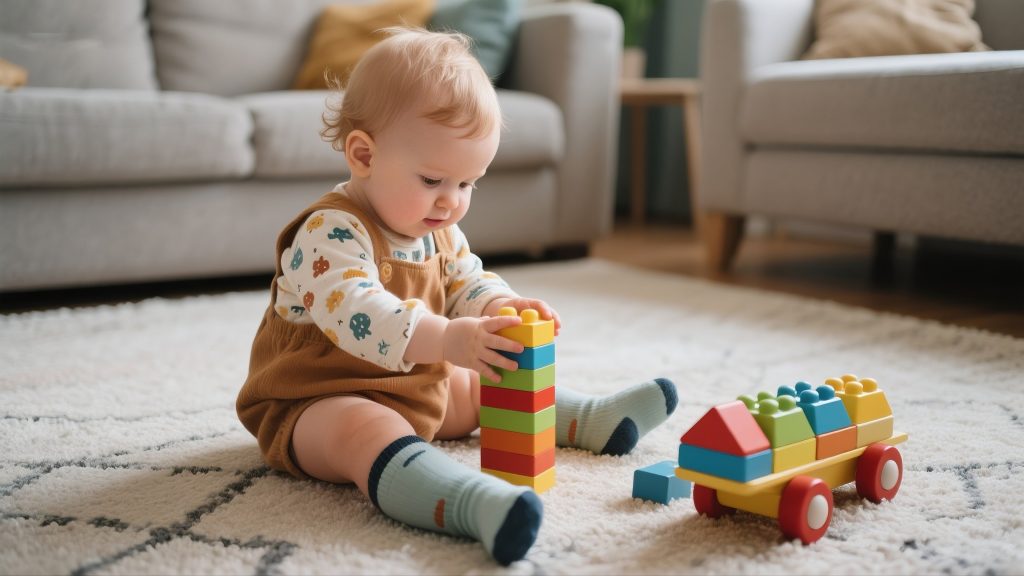
Stacking blocks and knocking them down ten times isn’t pointless.
Repetition strengthens neural pathways and builds Motor Learning.
You see a mess.
They see mastery.
Focus less on correcting results and more on supporting the learning process.
Don’t Miss This Once-in-a-Lifetime Stage
Research in Developmental Psychology shows that children who are encouraged to experiment, fail, and retry often develop stronger problem-solving skills later.
Logic isn’t taught — it’s discovered.
Your role isn’t to explain every rule of the world.
It’s to create a safe space where your child can explore those rules independently.
When you protect curiosity, you build resilience.
When you allow trial and error, you raise an independent thinker.
So next time your child is flipping switches, taking things apart, or repeating “strange” behaviors, remember:
They’re not making trouble.
They’re learning how the world works.
And your support today helps build the brain they’ll use for the rest of their life.