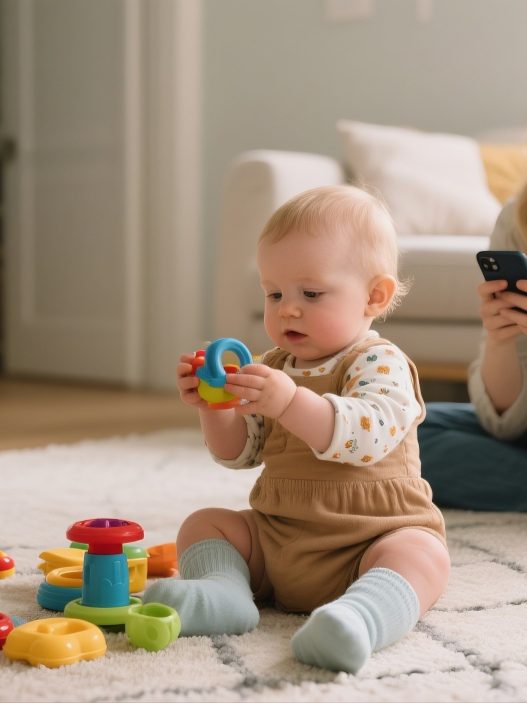







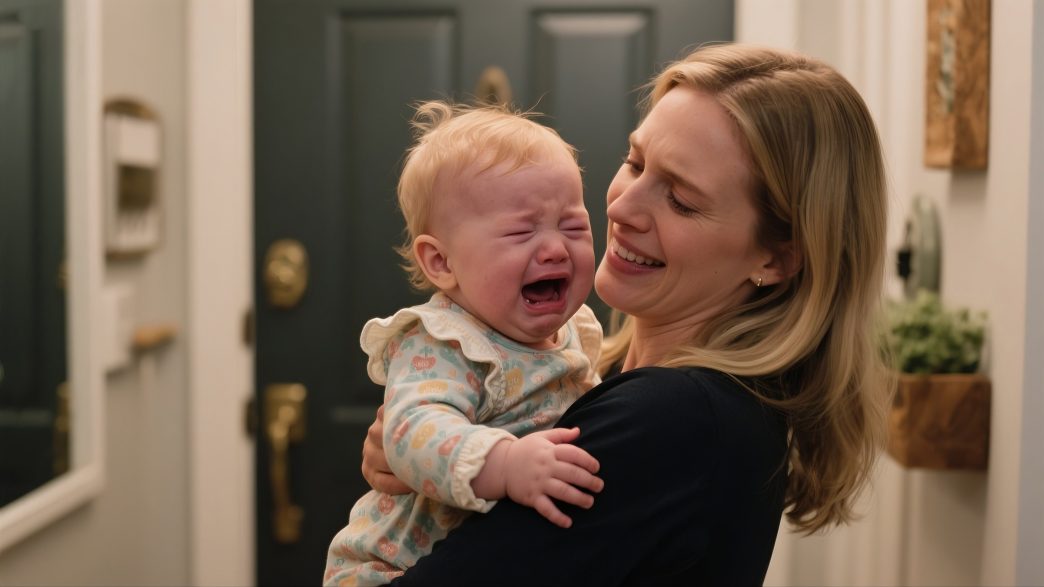
Every morning, does leaving for work feel like starring in an emotional breakup scene?
Your little one clings to your leg like their life depends on it. Tears, runny nose, full-body sobbing. Meanwhile, you’re peeling tiny fingers off your jeans, heart shattered, rushing out the door already drowning in guilt.
Take a breath — you are absolutely not alone. 
Parents all over the world are locked in daily battle with one tiny but powerful force: separation anxiety. The good news? This stage isn’t a tragedy. It’s actually a sign of healthy development — and with the right approach, those heartbreaking goodbyes can turn into moments of growth and connection.
Let’s talk about how.
Why Your Baby Suddenly Turns Into a Tiny Koala
First, let’s clear your baby’s name. They are not being dramatic. Their brain is leveling up.
Around 6–8 months, babies begin developing something called object permanence — the understanding that people and things still exist even when out of sight.
Sounds like progress, right? It is. But here’s the catch.
Your baby now knows you still exist when you leave…
They just don’t know when you’re coming back.
The part of the brain responsible for emotional control and future thinking — the prefrontal cortex — is still very immature. Waiting feels endless. Uncertainty feels terrifying.
To a baby, separation can feel as distressing as an adult being dropped in a foreign country without a phone or wallet.
So when your child cries, they’re not being “difficult.” They’re saying:
“I love you. I need you. I’m still learning how to be without you.”
Understanding this changes everything.
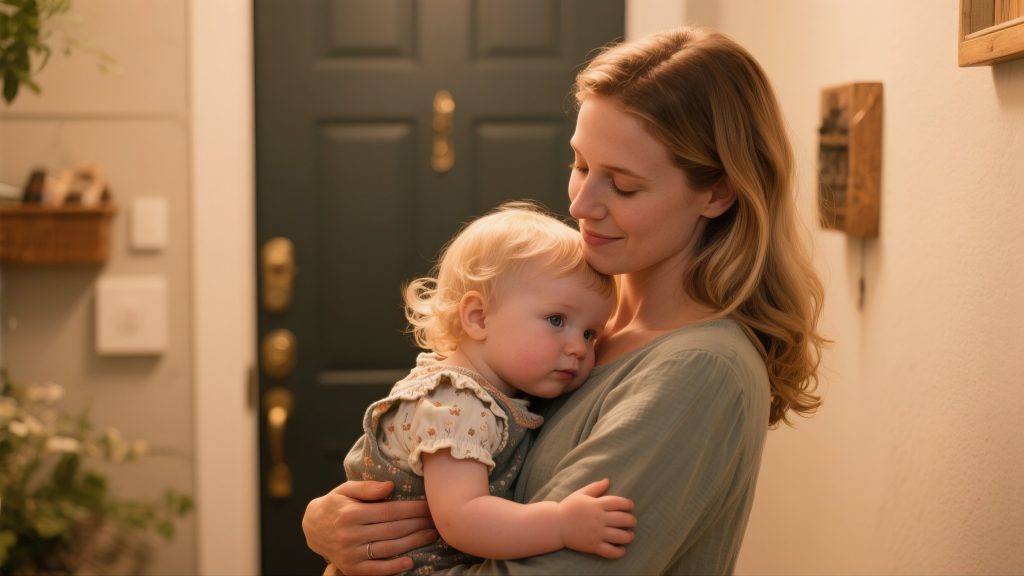
Stop Sneaking Away — Build a Predictable Goodbye Ritual
Many parents try to slip out quietly to avoid tears. It feels kind… but it actually backfires.
Imagine your baby looks up and you’ve vanished. That’s not comforting — it’s alarming. It teaches them they must monitor you constantly in case you “disappear” again.
Instead, create a short, warm, predictable goodbye routine.
Step 1: Give a Heads-Up
Even babies benefit from verbal cues.
Put on your shoes and say,
“Mommy’s putting on her shoes. I’m getting ready to go to work.”
This prepares their brain instead of shocking it.
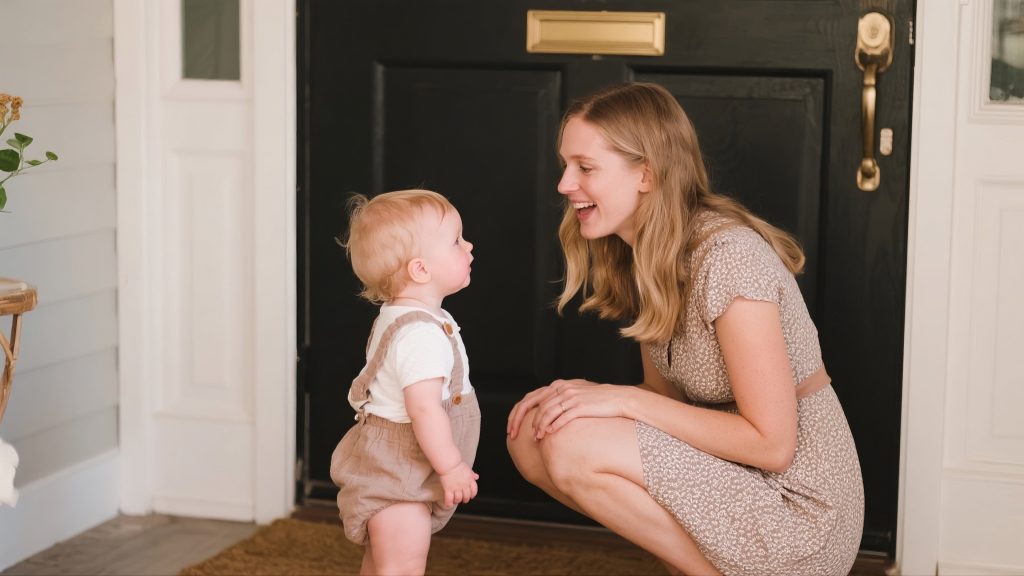
Step 2: Create a Special Goodbye Ritual
This is the heart of the strategy. Repetition builds security.
Examples:
- A three-squeeze hug: “Hug, hug, hug — power charged!”
- A kiss routine: forehead, nose, little hand
- A “magic phrase”:
“Mommy goes to work, you play and have fun. When the sun moves over there (point to a landmark), Mommy comes back.”
You’re turning abstract time into something visual and understandable.
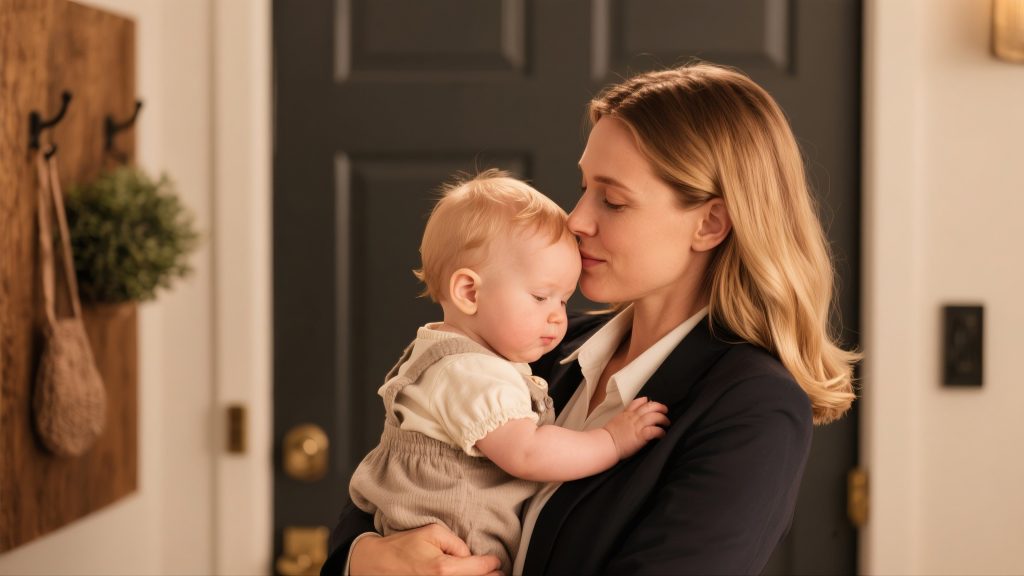
Step 3: The “See You Go” Moment
Let them watch you leave from a window or doorway. This gives emotional closure instead of a sudden disappearance.
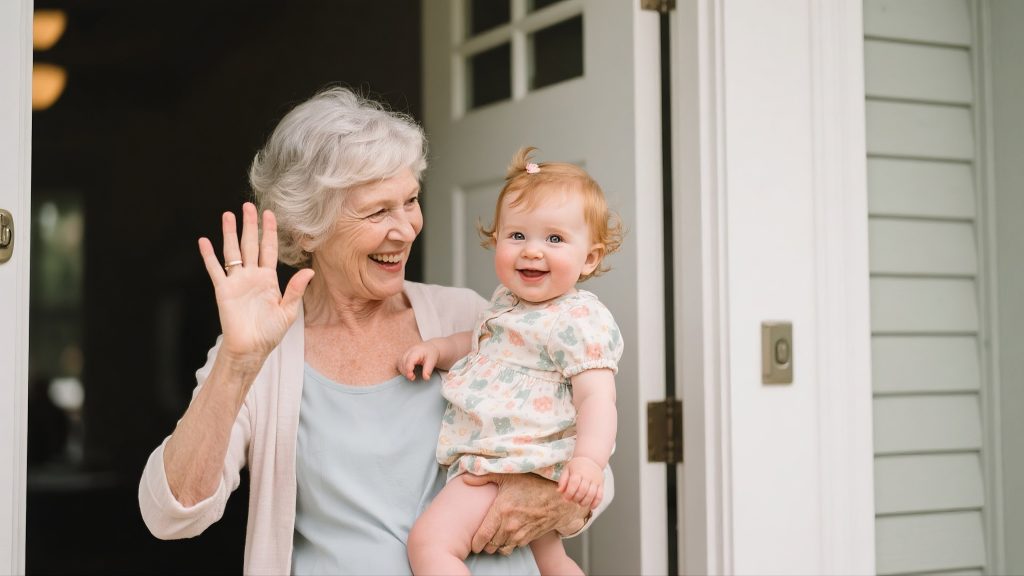
Step 4: Smile and Mean It
Your child reads your emotional signals like a weather forecast. If you look worried, they think: “This must be dangerous.”
Stay cheerful, confident, and calm. Then leave without dragging it out.
Predictability builds security, and security reduces anxiety.
Ease the Waiting: A Comfort Object + Joyful Reunion
Now let’s handle the long stretch while you’re apart.
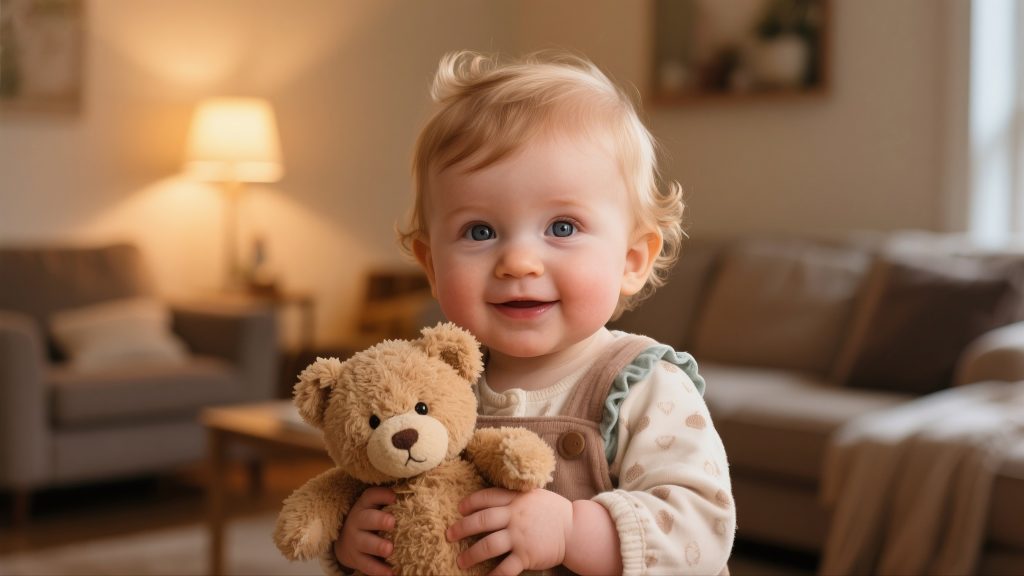
In psychology, many babies rely on a transitional object — a blanket, stuffed animal, or even a piece of mom’s clothing that smells familiar. This object helps them self-soothe when they miss you.
Before leaving, hand it to them and say,
“Bear is staying with you while Mommy works.”
You’re giving them a physical reminder of connection.
Add a “Mom Reminder” During the Day
Ask the caregiver to show your photo at a certain time or say,
“Mommy is thinking about you right now.”
This reinforces emotional continuity.
Make Reunions a Celebration
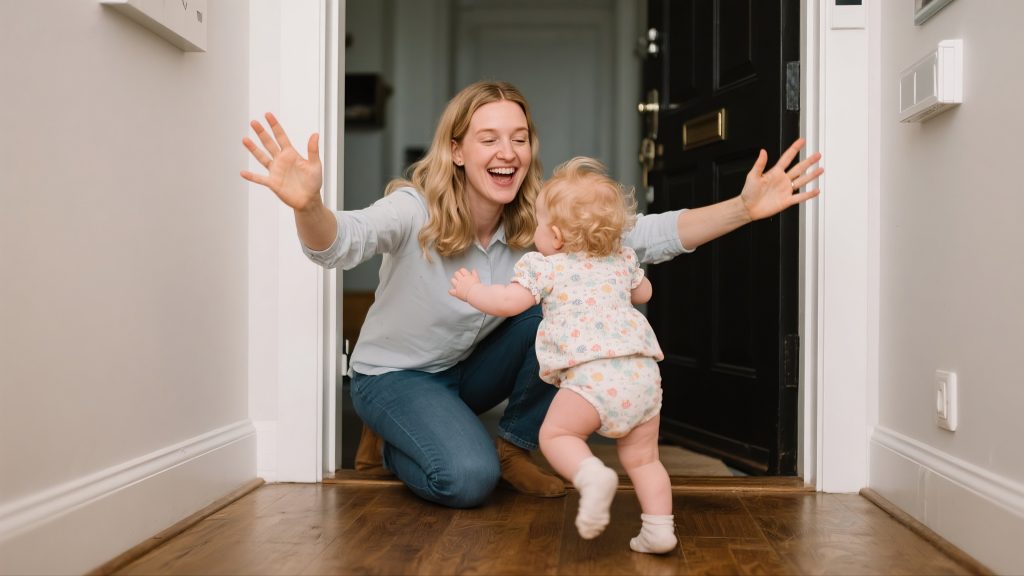
When you come home, don’t sneak in.
Call out happily, “Mommy’s home!”
Kneel down, hug, make eye contact, put your phone away.
Even ten minutes of full attention is powerful.
You can even bring a tiny “reunion surprise” — a leaf, a sticker, a small snack. Now your return becomes something exciting, not just relief after distress.
The Bigger Picture: Building Secure Attachment
All of this supports something deeply important: secure attachment.
Children who trust that caregivers leave and reliably return develop stronger emotional stability, confidence, and social skills. They explore the world more bravely because they know they have a safe base.
That’s the real goal — not just fewer tears, but a stronger emotional foundation.
A Final Reassurance for Tired Moms
Separation anxiety isn’t a straight line. Illness, teething, developmental leaps, or a new caregiver can cause setbacks. That’s normal.
You’re not failing. Your child isn’t regressing.
They’re growing — and you are their safe place in a very big world.
And one day, sooner than you think, you’ll say goodbye at the door…
and they’ll wave and run off to play.
That day is coming ❤️