





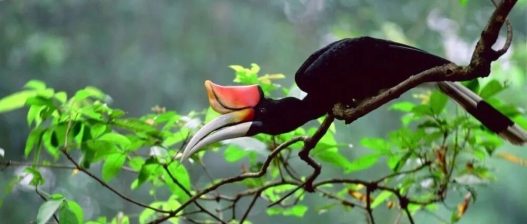
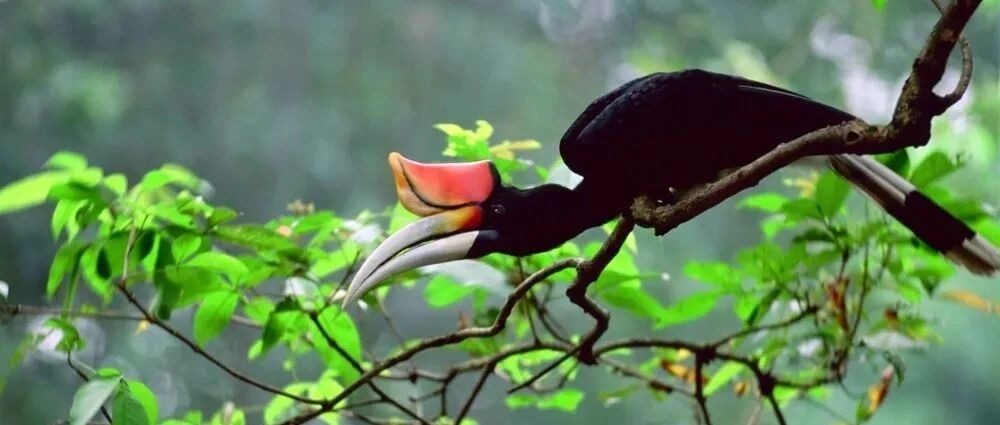
Elegant, rare, and unforgettable, the hornbill is one of Southeast Asia’s most fascinating birds. With its long eyelashes, oversized curved beak, and striking casque, the hornbill is impossible to miss. In fact, it is often said to be the only bird with visible eyelashes—one more reason it feels almost mythical.
In Sarawak, on the island of Borneo, hornbills are more than wildlife. They are symbols of love, courage, spirituality, and cultural identity.
Getting to Know the Hornbill
A Bird That Believes in Lifelong Love
Hornbills are famously loyal. They follow a strict monogamous lifestyle, forming lifelong pairs. Once bonded, male and female hornbills stay together to forage, rest, and raise their young—true symbols of devotion in the animal kingdom. 
Masters of Tree Cavities
Unlike many birds, hornbills do not build nests. Instead, they rely on natural holes in tall trees. During breeding season, the female seals herself inside the tree cavity, leaving only a narrow slit. She remains inside until the chicks are fully grown.
One of Nature’s Most Dedicated Fathers
Once nesting begins, the male hornbill takes full responsibility for feeding the female and their chicks. For nearly six months, he tirelessly delivers food to the sealed nest. If the male is harmed, the entire family may not survive—making hornbill conservation especially critical.
Hornbills in Sarawak: Rare and Remarkable
Globally, there are over 50 species of hornbills. Remarkably, eight species can be found in Sarawak alone. Even more special—one of them is officially recognized as the state bird.
The State Bird of Sarawak
Rhinoceros Hornbill
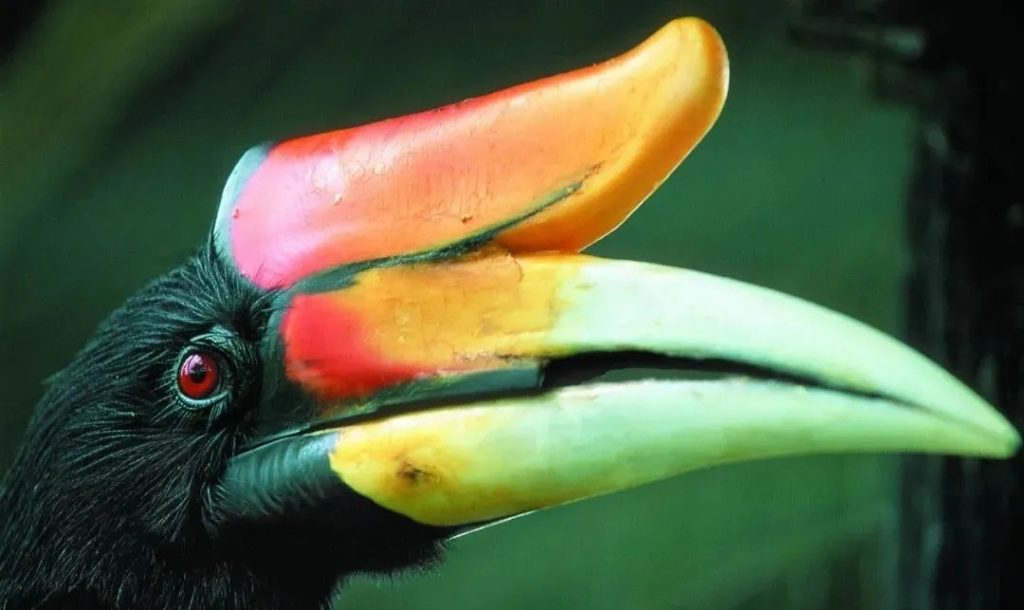
The Rhinoceros Hornbill (Buceros rhinoceros) is Sarawak’s state bird. Its upward-curving casque resembles a rhinoceros horn, giving the bird its name.
A fun detail: male rhinoceros hornbills have red eyes, while females have white eyes.
If you look closely, you’ll notice that the Sarawak state emblem also features the hornbill—proof of how deeply this bird is woven into local identity.
A Sacred Bird in Indigenous Belief
A Divine Symbol Among the Dayak
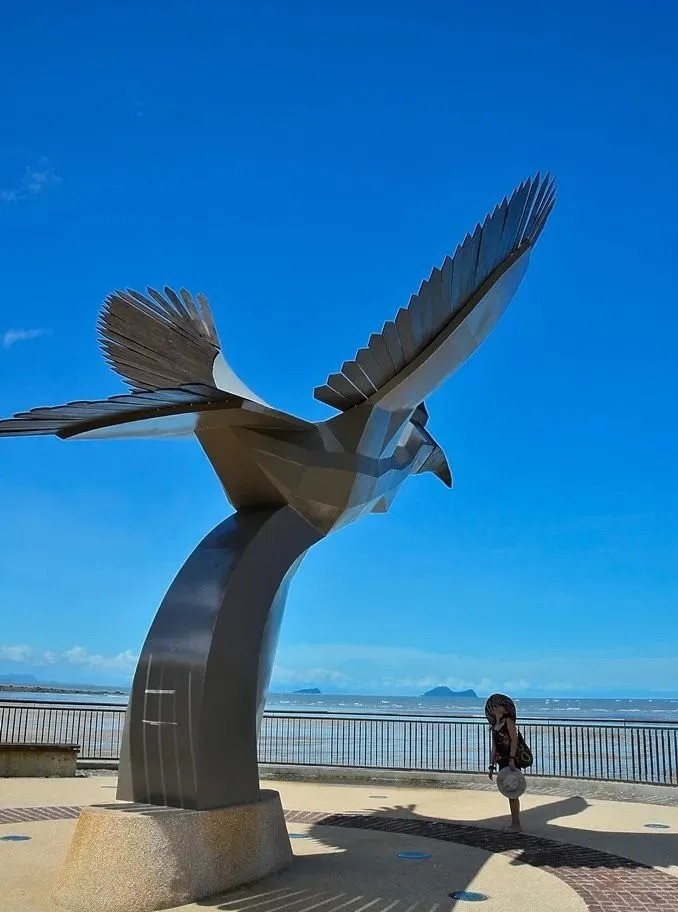
For many Dayak communities, the hornbill is regarded as a sacred war god and a powerful symbol of good fortune. Seeing a hornbill fly over a home is believed to bring blessings and protection to the entire village.
The Messenger of the Spirit World
Among the Iban people, hornbills are seen as messengers of the gods—bridges between the human world and the spiritual realm. This belief elevates the bird to a divine status in daily life and rituals.
The Hornbill as a Cultural Icon
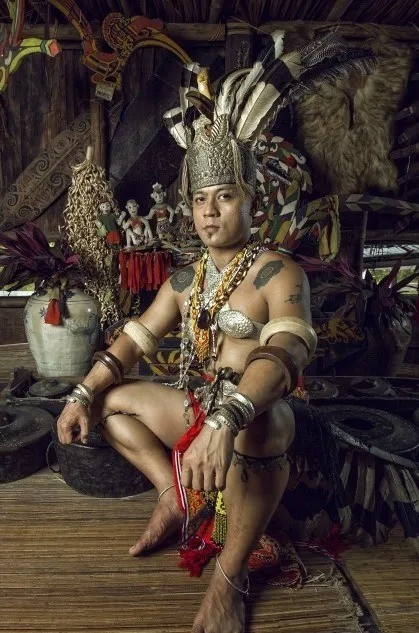
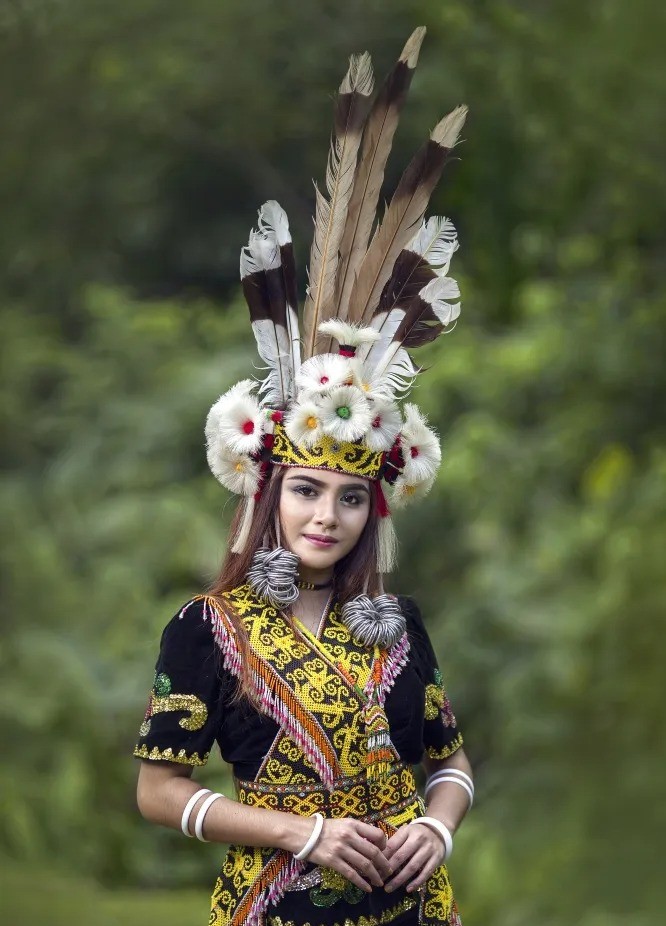
Hornbills appear everywhere in Sarawak’s indigenous culture—from clothing and crafts to music and architecture.
Feathers, Power, and Protection
Hornbill tail feathers are traditionally used to decorate ceremonial headdresses, blowpipes, and machetes. Warriors believe that wearing hornbill feathers grants strength and bravery in battle.
The Tree of Life Totem
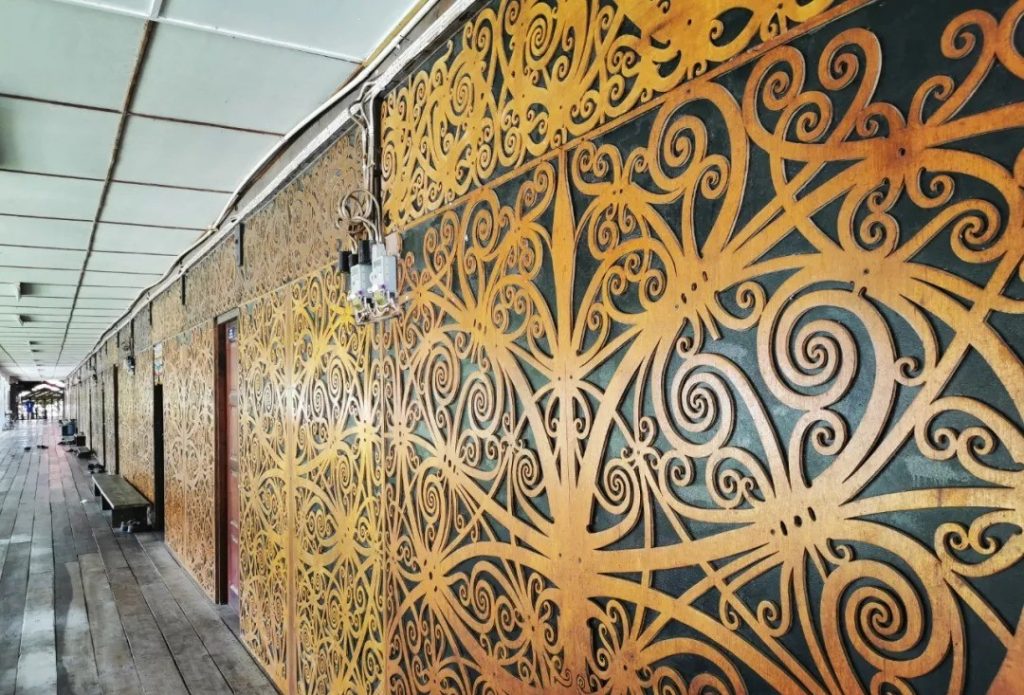
One of the most common tribal motifs is the Tree of Life, symbolizing the origin of all living things. This design appears on longhouse walls, boats, shields, musical instruments, and clothing. At the top of the tree, a hornbill is often depicted as a guardian figure representing courage and protection.
The Hornbill Dance: Movement and Meaning
Datun Julud (Hornbill Dance)
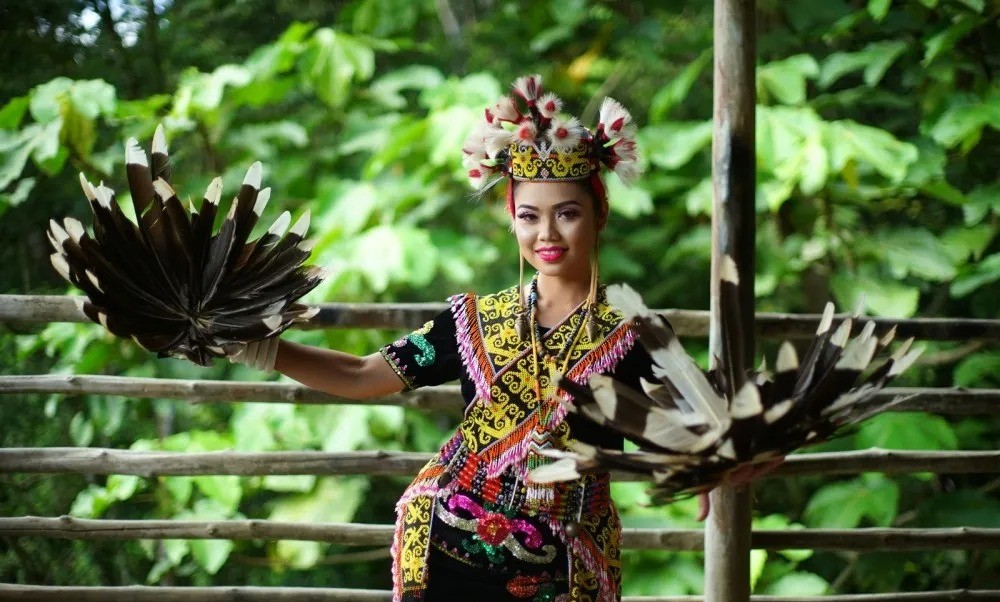
The Datun Julud, also known as the Hornbill Dance, is a traditional performance of the Kenyah people. The dance mimics the graceful flight of the hornbill and is performed to celebrate warriors returning home victorious.
A signature element of the dance is the feather fan—traditionally made from hornbill feathers—held in both hands by the dancer, symbolizing strength, honor, and spiritual protection.