






“Why does my baby seem less sharp than other kids?”
“Why don’t they respond when I call their name—are they delayed?”
“I do everything: playtime, early education, storybooks—so why does it still feel like something’s missing?”
Sometimes, it’s not that your child lacks intelligence. Often, well‑meaning daily habits can unintentionally create cognitive “roadblocks” during a child’s most crucial time of brain wiring. Today we’ll explore three everyday routines that can quietly interfere with a 1‑year‑old’s brain growth.
1. Too Much Screen Time: Passive Input Instead of Real Interaction
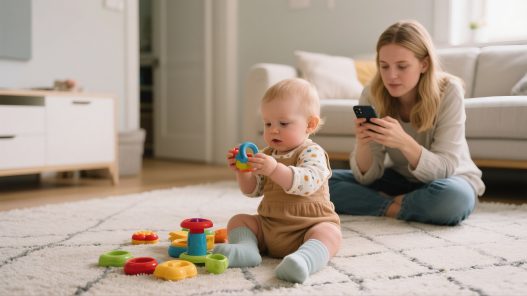
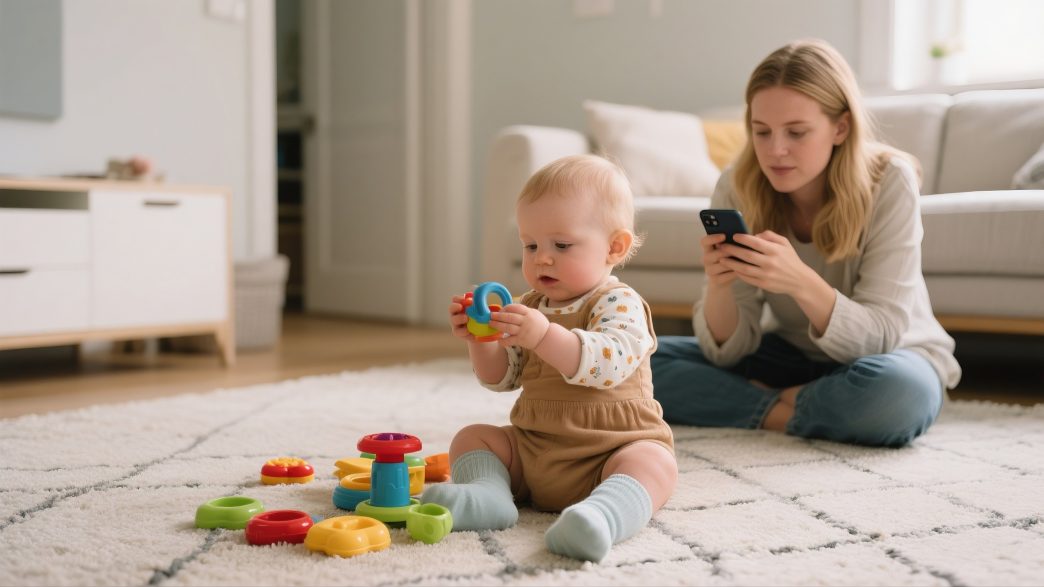
Do any of these scenarios feel familiar? You turn on a cartoon while feeding your baby, hand them a phone to calm fussiness, or you scroll your own device while your child watches nursery rhymes in the background. 
It may look like “audio‑visual stimulation,” but what’s happening under the surface is a toddler’s brain being placed into a passive mode with no meaningful interaction.
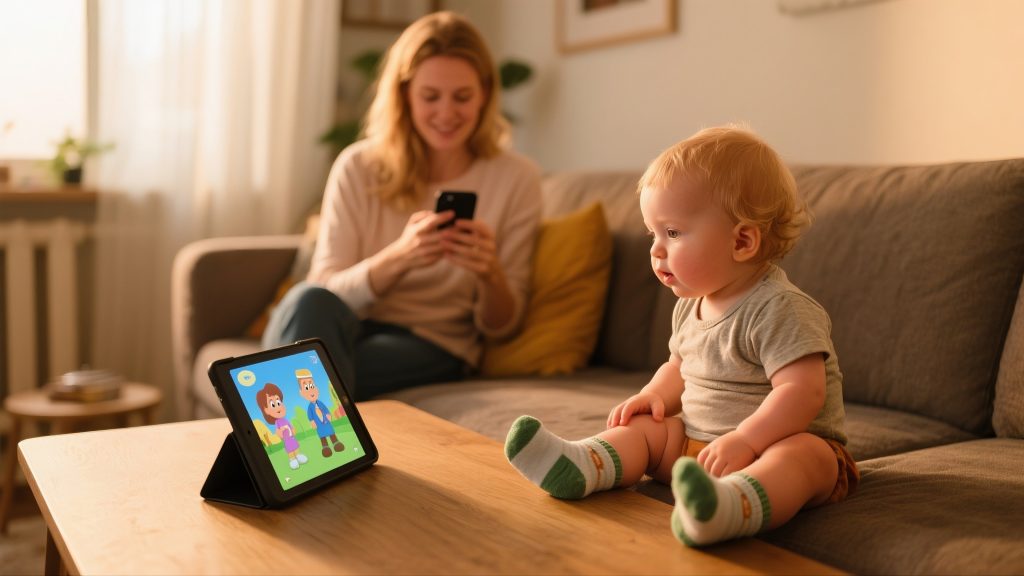
Imagine being at a dinner table, hearing, seeing, and smelling the food—but never touching or tasting a bite yourself.
Here’s why that matters:
- Screens provide one‑way input with no real response or back‑and‑forth.
- Fast flashes and loud sounds can overstimulate attention systems, making focused engagement harder.
- Without real response loops, babies miss out on learning crucial skills like expressive language, taking turns, and emotional attunement.
At this age, toddlers are in a period of explosive early childhood development where brains are rapidly growing neural pathways that support language, memory, and social understanding. What matters more than flashy visuals are real, responsive interactions:
“Do you want some water?”
…and a little nod or babble back.
You might think “watching TV together” counts as quality time, but in reality, your baby might be mentally checked out, not engaged.
What actually helps:
- Turn off screens at meals — use speech, gestures, and facial expressions to interact.
- Sing or hum yourself — even if you’re out of tune, your voice offers meaningful social input.
2. Over‑Scheduling: Filling Every Minute Without Downtime
This one happens a lot with dedicated parents: the toddler’s day ends up with every minute planned like a preschool schedule:
- Morning: English nursery songs + counting cards
- Late morning: Piano play + balance activities
- Afternoon: Library storytime + baby swimming
- Evening: Review work + flashcards + education apps
It sounds productive. But inside your baby’s brain, that can feel like a relentless stream of input with no room to digest anything.
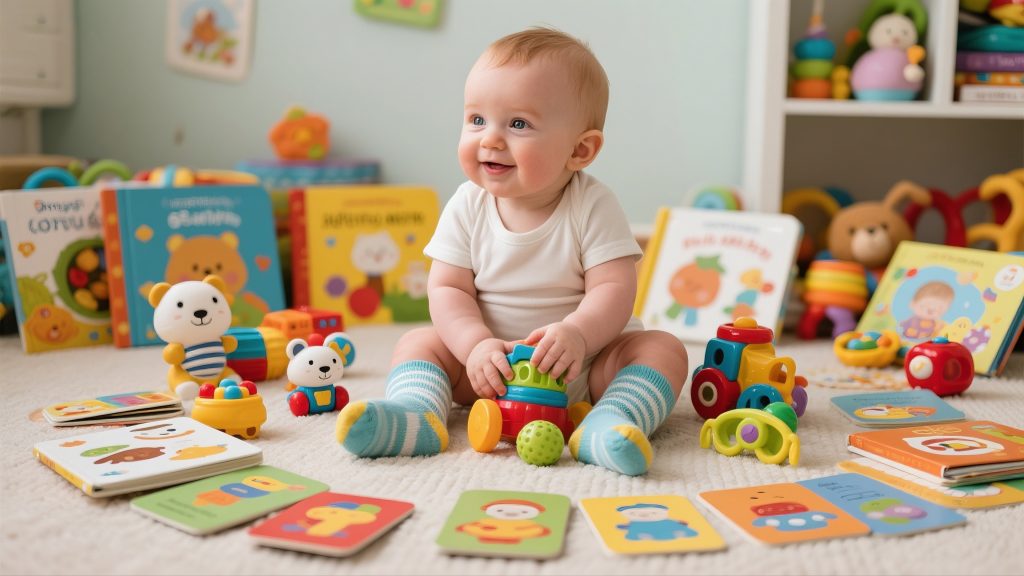
At one year old, toddlers operate primarily in a sensory‑driven mode. They are still developing foundational processes for attention, emotion regulation, and memory formation. Strikingly high‑density activity can actually overload, not help, brain development.
In simple terms: giving your child 10 learning moments before they’ve processed the first one doesn’t work. Toddlers aren’t prepping for tests — they’re exploring their world and slowly building meaning from experience.
Helpful strategies:
- Save at least one hour for unstructured exploration — flipping board books, stacking blocks, watching leaves fall, or simply touching and exploring objects.
- Slow the pace. Repetition is more important than novelty: reading the same book 20 times strengthens neural connections far more than skimming 20 books once.
- Allow your toddler to zone out occasionally — those moments could be when their brain is consolidating and organizing information.
3. Answering Too Fast: Taking Away Their Thinking Time
This one is subtle but powerful. Here’s a familiar pattern:
- “Give me the toy.” …No response? “Oh right, I’ll just take it.”
- “Do you want a banana?” …Baby looks at you. “Okay, I’ll peel it!”
- “What’s this? It’s a duck! Say it!” …without waiting for any attempt.
This is the classic “parent self‑answering reflex”.
A one‑year‑old’s thinking and response systems are still very new. They need time to hear the question, process it, and try an answer — even if it’s just a coo or a glance.
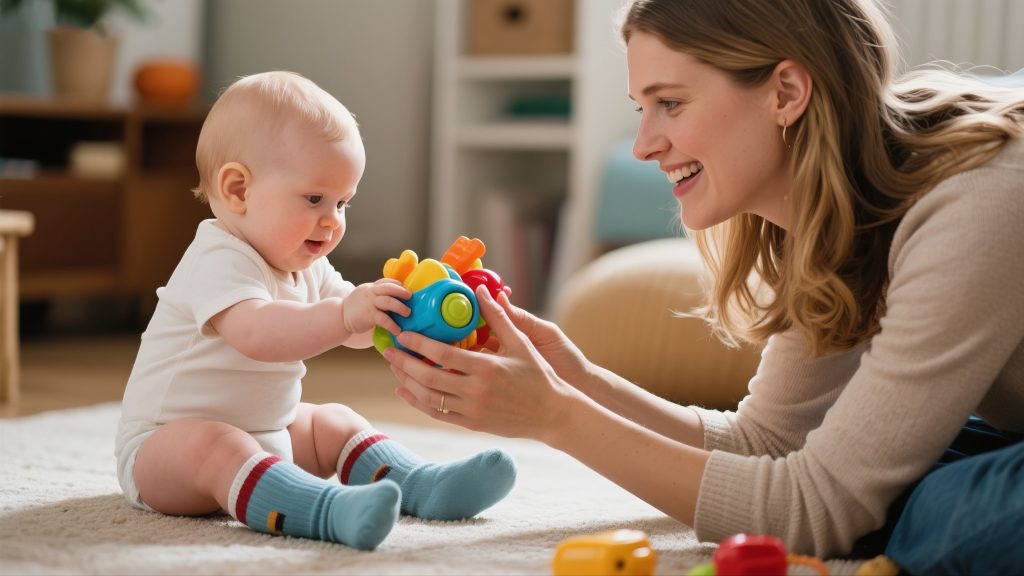
That initial pause — 2–5 seconds — is where real cognitive processing happens. When adults swoop in and take over instantly, they inadvertently train toddlers not to try at all.
What supports real development:
- Give your toddler 3–5 seconds of wait time before jumping in — even a glance, nod, or small sound is a response worth waiting for.
- Use open‑ended prompts like “Do you want the red one or the blue one?” instead of leading answers.
- Let them try tasks themselves — even if it gets messy — because self‑initiated attempts build confidence, problem‑solving, and autonomy.
A Simple Checklist for Supporting Toddler Brain Growth
Here’s what truly benefits brain wiring:
- Don’t interrupt moments that look like “nothing happening” — they might be internal processing time.
- Don’t replace their attempts with your immediate answers — let them think first.
- Don’t skimp on real responses — genuine praise, attention, and patience are brain‑strengthening.
A smart toddler isn’t made by pumping information into them. They grow intelligence when given space, interaction, patience, and love.

Age one is a time of unprecedented neural growth. You don’t have to be an “all‑day learning host.” Focus on real connection and responsive interaction. Your toddler will shine in unexpected ways — not by memorizing poems or counting numbers yet, but by gradually developing communication, anticipation, and emotional intelligence.
So don’t stress about what they can’t do now. Avoid these common developmental traps, nurture consistent presence and patience, and your baby’s brain will naturally light up on its own timeline.