





In many countries, beggars have almost disappeared as living standards improve.
India, however, remains an exception.
In cities across the country, begging is still common.
This reality recently led the local government of Indore, a major city in the Indian state of Madhya Pradesh, to launch an ambitious campaign aimed at creating a beggar free city.
The initiative was designed to help homeless people, the extremely poor, and street beggars return to normal lives through housing and employment programs.
The intention was compassionate and practical. 
Yet as the campaign moved forward, officials uncovered an unexpected problem.
Some of the city’s most familiar beggars were not poor at all.
A Man Who Seemed to Need Help

One of the most shocking cases involved a man known as Mangilal.
Mangilal is physically disabled and moves by pushing himself along the ground with his hands.
To avoid injury, he wears shoes on his palms.
No one is certain whether Mangilal is his given name or simply a nickname.
Local media report that residents have called him that for years.
He was a constant presence near Sarafa Bazaar, one of Indore’s busiest and most famous marketplaces.
Rather than actively asking people for money, he quietly traveled through the area on a small metal trolley with a backpack.
India’s strong religious culture encourages acts of charity.
Many passersby felt sympathy for a disabled man who never begged directly.
They imagined a tragic life shaped by misfortune and quiet dignity.
Government workers initially shared this impression.
They approached Mangilal hoping to offer assistance and relocation support.
What they discovered was startling.
Wealth Hidden in Plain Sight

Investigators found that Mangilal was far from destitute.
Official records revealed that he owned assets worth tens of millions of rupees.
He possessed multiple properties, vehicles, and steady income streams.
Mangilal owns three homes.
One is a government provided apartment granted through disability welfare programs.
Another is a privately owned apartment measuring about fifty six square meters.
The third is the most surprising.
It is a three story residential building.
His assets extend beyond real estate.
Mangilal owns a Suzuki sedan.
Because he cannot drive, he employs a full time driver.
The arrangement resembles executive convenience rather than survival.
He also owns three auto rickshaws, commonly used across South Asia.
He rents them out and collects monthly income without operating them himself.
Illegal Lending Behind the Scenes

Even that was not the full picture.
With surplus cash available, Mangilal began lending money illegally.
Sarafa Bazaar is home to many gold and silver jewelry merchants.
When short term cash shortages arise, some turn to informal lenders.
Mangilal became one of them.
He charged interest calculated daily or weekly.
Such lending practices violate Indian financial regulations.
This explains his constant presence near the market.
He was not there to beg.
He was conducting business.
If someone handed him money out of sympathy, he accepted it.
On average, he still collected five hundred to one thousand rupees per day through passive begging alone.
Authorities documented his bank accounts, income sources, and property records.
Although exact figures were not disclosed, Indian media estimate his wealth at several million yuan equivalent.
Officials stated that Mangilal will be summoned before the local district magistrate.
He must explain why he received disability housing benefits despite his wealth.
His illegal lending activities are also under investigation.
His public life as a beggar is likely over.
Another Famous Case of a Wealthy Beggar
Mangilal is not an isolated example.
In 2024, Indian media revisited the case of Bharat Jain, widely described as India’s richest beggar.
Jain is fifty four years old.
He began begging at around ten years of age due to family hardship.
He continued for more than four decades.
Today, his financial situation is entirely different.
Jain has accumulated approximately seventy five million rupees in assets.
This figure represents only part of his wealth.
He also owns two apartments in Mumbai valued at roughly one hundred forty million rupees.
Despite his financial security, Jain refuses to stop begging.
Begging as a Chosen Way of Life
Every day, Jain works ten to twelve hours.
He rarely takes breaks.
His daily income ranges from two thousand to two thousand five hundred rupees.
That translates to sixty thousand to seventy five thousand rupees per month.
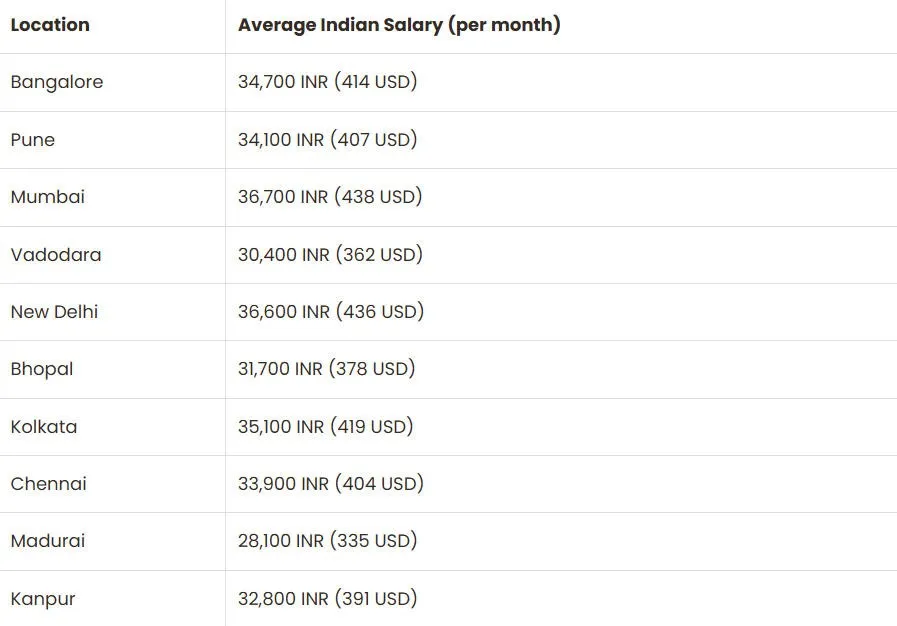
The average monthly income in India is around thirty thousand rupees.
Jain earns more than twice that amount through begging alone.
In addition, he owns two shops that generate regular rental income.
His family strongly opposes his lifestyle.
They want him to retire and live quietly.
Jain refuses.
He openly states that he enjoys begging and has no intention of quitting.
Even more puzzling, he donates money.
He claims he is generous and regularly gives to temples and charitable organizations.
When Begging Becomes an Industry
Across India’s thirty six states and union territories, twenty two have enacted anti begging laws.
In most regions, begging is illegal.
Yet enforcement remains weak.
For many beggars, arrest is not a serious deterrent.
Prison provides food, shelter, and safety.
For some, it is easier than surviving on the streets.
Indian media estimate that the begging economy may be worth as much as one point five trillion rupees.
Governments have attempted fines, arrests, and vocational training programs.
The results have been limited.
For people like Mangilal and Jain, begging is simply profitable.
Some groups even form organized begging networks.
They exploit others and treat begging as a business operation.
Sitting in one place can earn more than full time employment.
Under such conditions, moral pressure loses its force.
Many began begging out of desperation as children.
As adults, they realized it worked.
After decades, they possess no other skills.
The Cost of Exploited Compassion
No justification can hide a simple truth.
This behavior exploits public kindness.
When someone with wealth accepts charity meant for survival, it deprives those who truly need it.
A free meal taken by a hidden millionaire is a meal denied to someone starving.
Kindness is not limitless.
When it is abused, everyone pays the price.