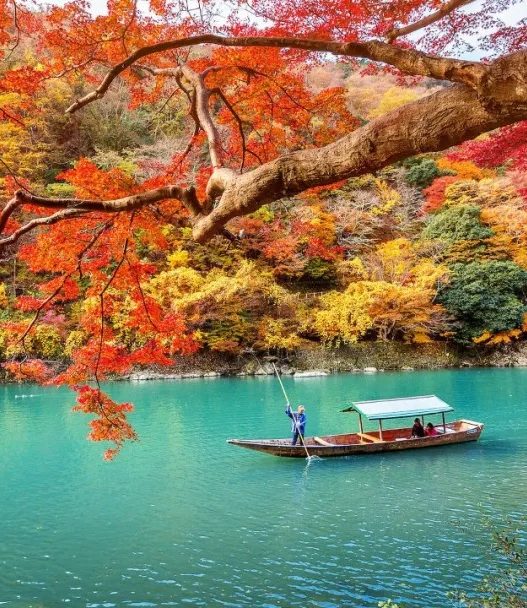






Located in the heart of Honshu, Central Japan unfolds like a layered landscape poem in autumn. Valleys, rivers, historic towns, and snow-dusted peaks all reveal different shades of the season.
Thanks to changes in altitude and geography, autumn colors arrive in waves rather than all at once. Maple leaves turn gradually, creating a staggered and lingering foliage season.
Compared to Kyoto’s crowds or Hokkaido’s vast wilderness, autumn in Central Japan feels quiet, nostalgic, and deeply atmospheric. Stone-paved streets scattered with fallen leaves, temple gardens glowing with red maples, and distant mountains where early snow meets autumn forests—this is Japan that feels frozen in time, echoing the spirit of the Edo period. 
Korankei Gorge
🍁 Best time to visit: Mid to late November
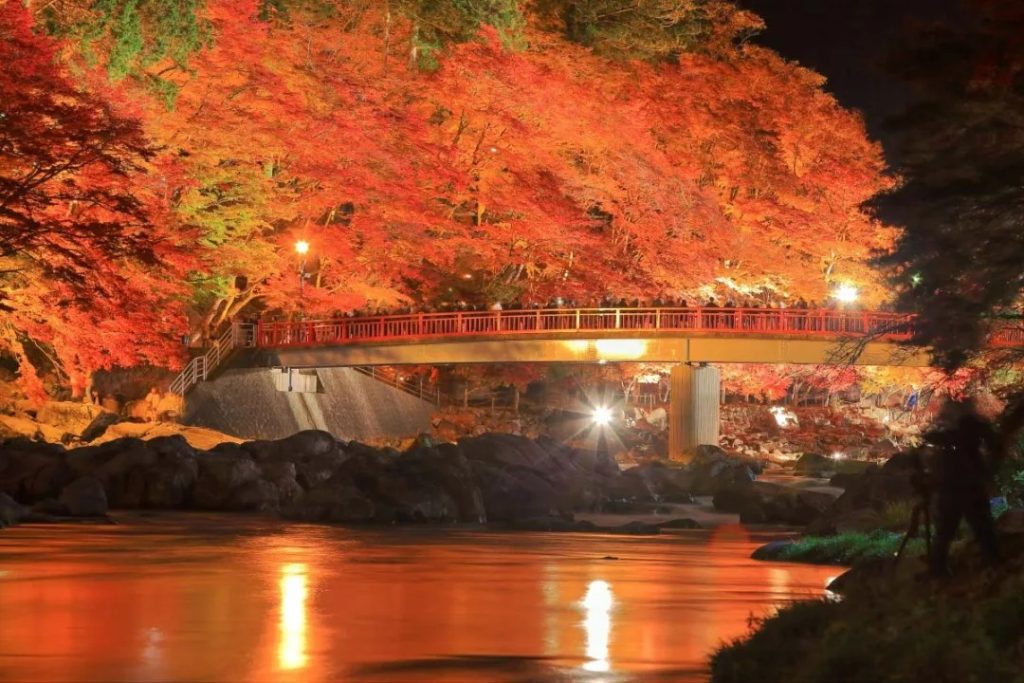
Often praised as the finest autumn foliage spot in the Tōkai region, Korankei is home to around 4,000 maple trees lining both banks of the Tomoe River.
In autumn, crimson hillsides reflect softly on the water, resembling a folding screen painted in warm tones. At night, the Korankei Maple Festival illuminates the valley, turning the leaves into glowing shades of gold and red—dreamlike and unmistakably romantic.
Obara Fureai Park (Four-Season Cherry Blossoms)
Best time to visit: Mid-November to early December
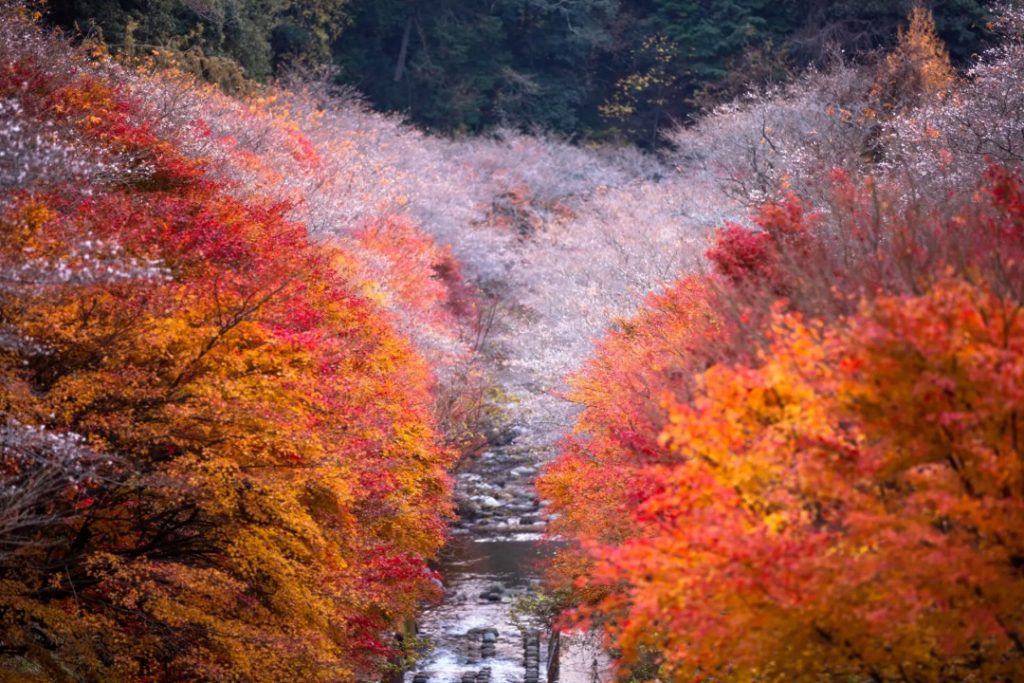
What makes Obara Fureai Park truly unique is its rare shikizakura—cherry blossoms that bloom twice a year.
Each November, pale pink cherry blossoms open alongside fiery red maple leaves, creating a surreal blend of spring and autumn. Walking through the valley feels like stepping into two seasons at once, a phenomenon seldom seen anywhere else in Japan.
Eiho-ji Temple (Kokeizan Eiho-ji)
Best time to visit: Mid to late November
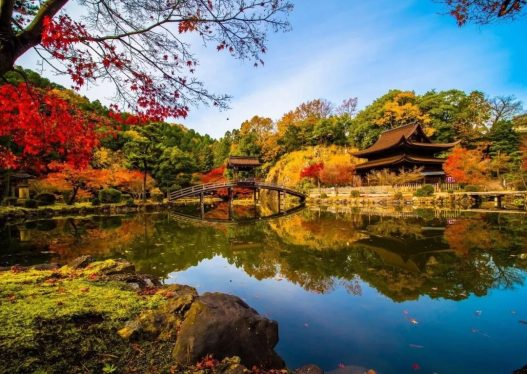
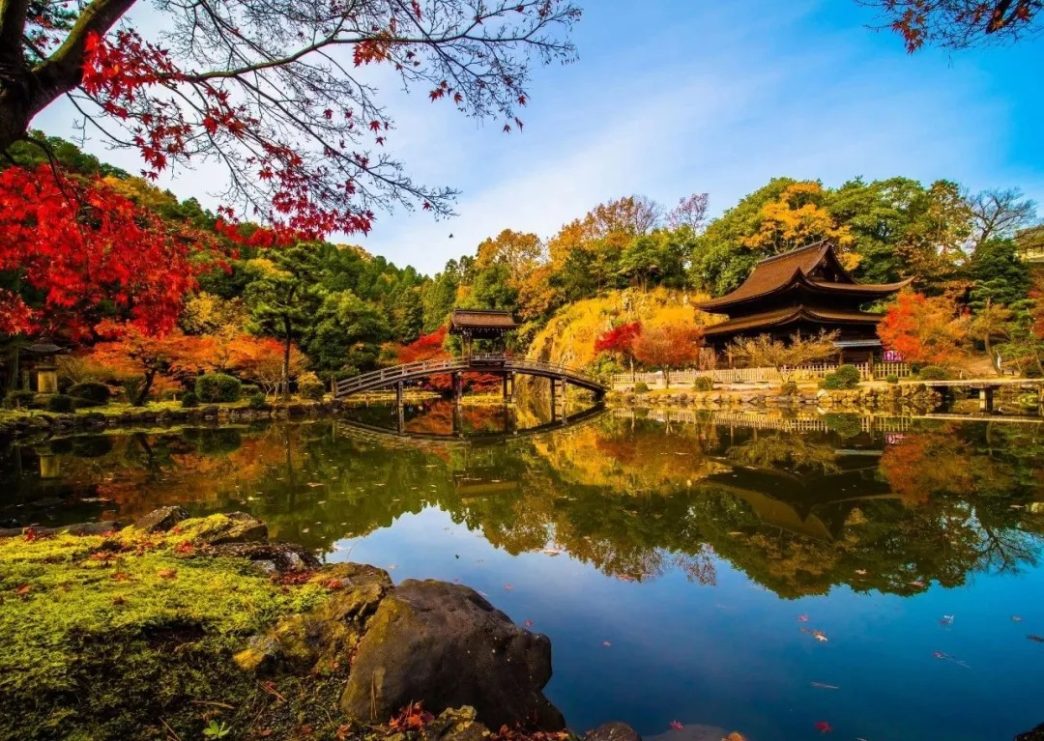
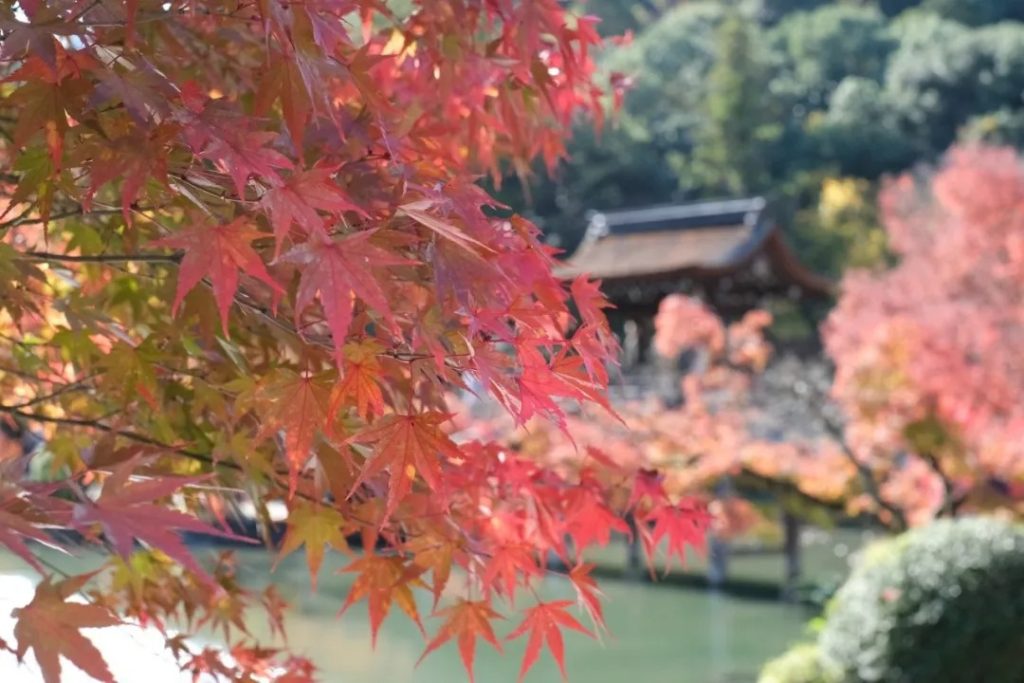
Located in Tajimi, Eiho-ji is a serene Zen temple known for its harmonious blend of architecture and nature.
The arched Mujin Bridge reflects gently in the pond below, framed by glowing maple leaves. Compared with more famous foliage spots, the temple remains relatively quiet—ideal for slow walks, peaceful photography, and moments of reflection.
Magome-juku & Tsumago-juku
Best time to visit: Mid-November
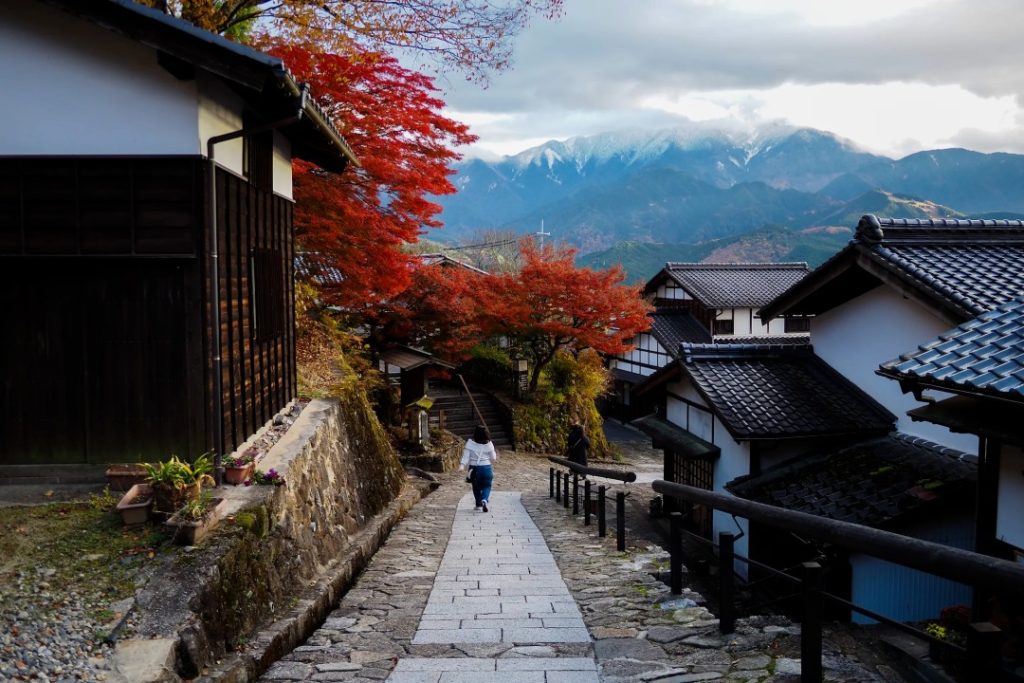
Once post towns along the historic Nakasendō route, Magome-juku and Tsumago-juku preserve wooden buildings and stone streets from the Edo era.
In autumn, maple trees line the pathways, their colors blending seamlessly with traditional houses. A scenic hiking trail connects the two towns, offering an immersive walk through forests dressed in peak fall colors—quiet, timeless, and deeply evocative.
Narai-juku
Best time to visit: Late October to mid-November
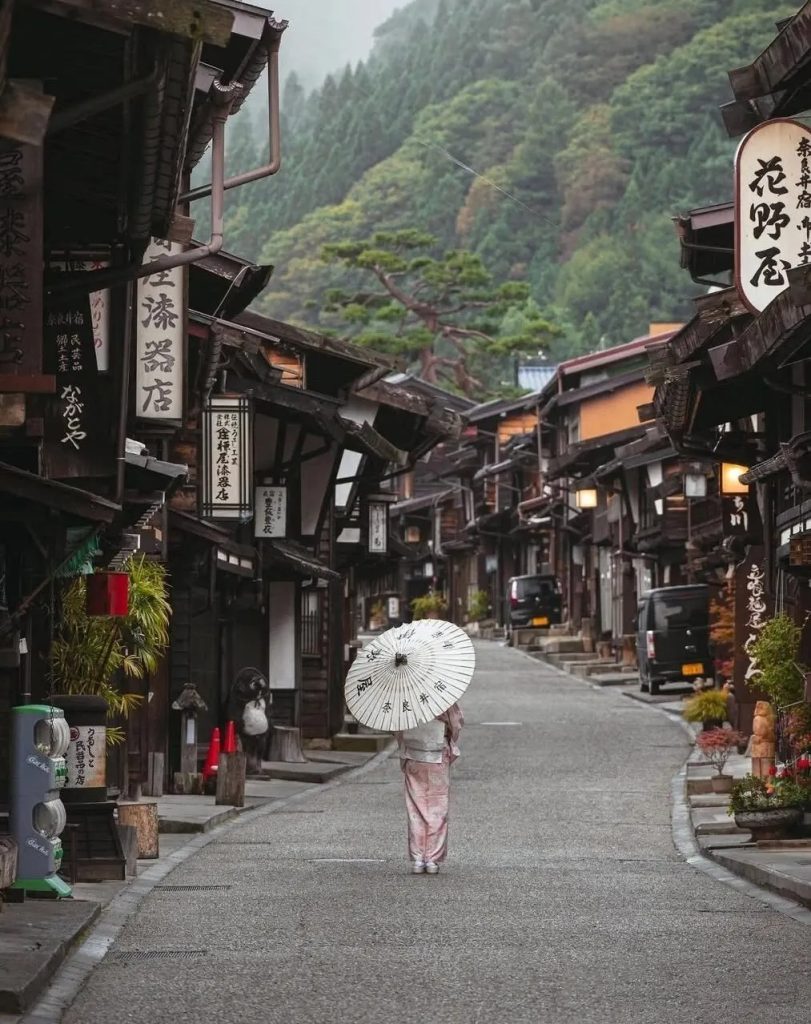
Narai-juku is the longest post town on the Nakasendō, with rows of well-preserved wooden homes stretching through the valley.
Autumn adds warmth to the scene as red and yellow leaves soften the historic streetscape. Fewer visitors mean you can wander at an unhurried pace, capturing details without distraction. At dusk, lantern lights glow softly against the foliage, creating a nostalgic, almost cinematic atmosphere.
Shirakawa-go
Best time to visit: Mid to late November
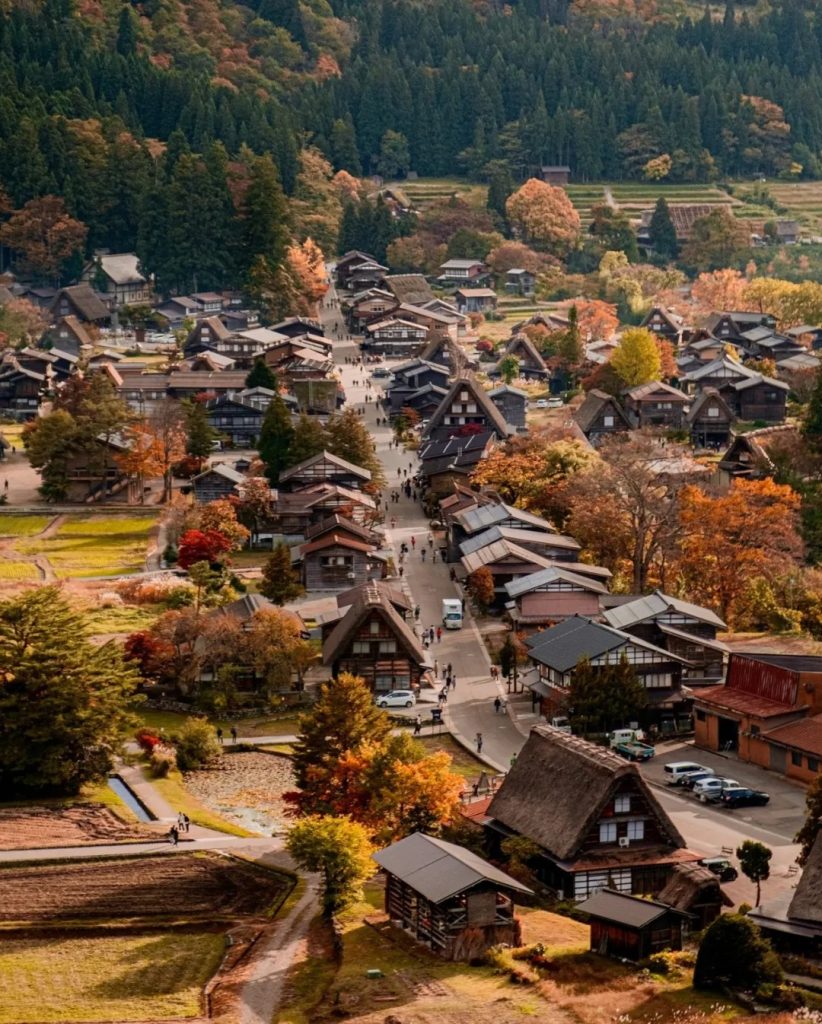
A UNESCO World Heritage Site, Shirakawa-go is famous for its traditional Minka farmhouses with steep thatched roofs.
In autumn, the village is wrapped in shades of red and gold, while surrounding mountains often carry the season’s first snow. From the observation deck, the view of the entire village bathed in autumn color feels straight out of a fairy tale—no wonder it’s a favorite among photographers worldwide.
Why Central Japan Feels Like Autumn Poetry
Autumn in Central Japan isn’t loud or overwhelming. It unfolds slowly, quietly, and with grace. Historic towns, ancient trails, and mountain villages become the perfect stage where maple leaves, memory, and landscape flow together like liquid poetry.
If you’re searching for a deeper, more atmospheric side of Japan’s autumn—this is where the season truly speaks 🍁