





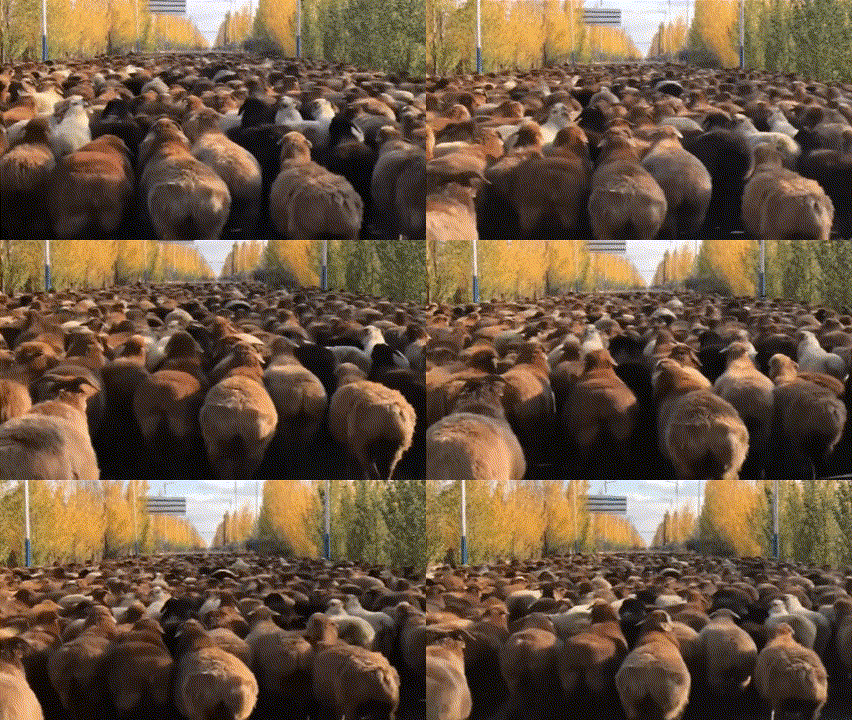
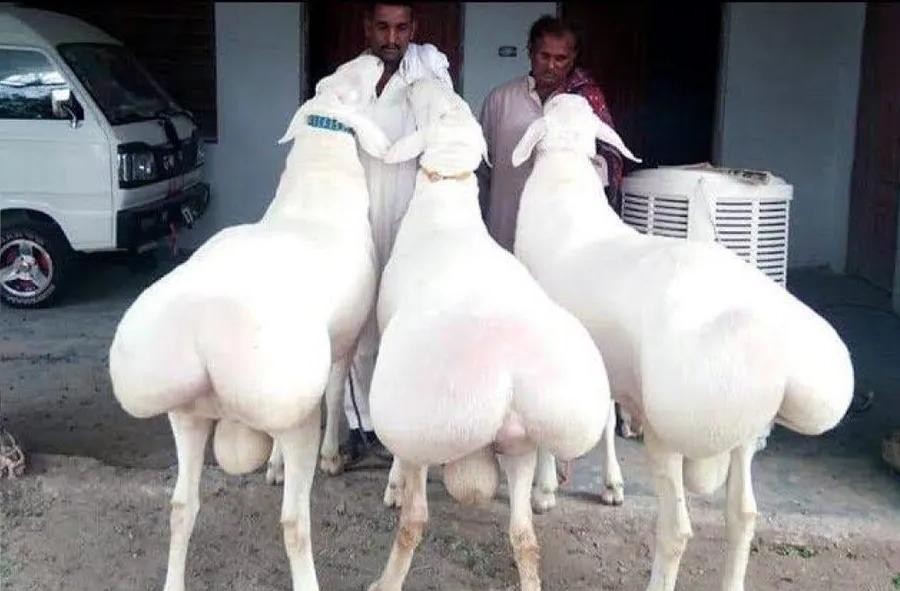
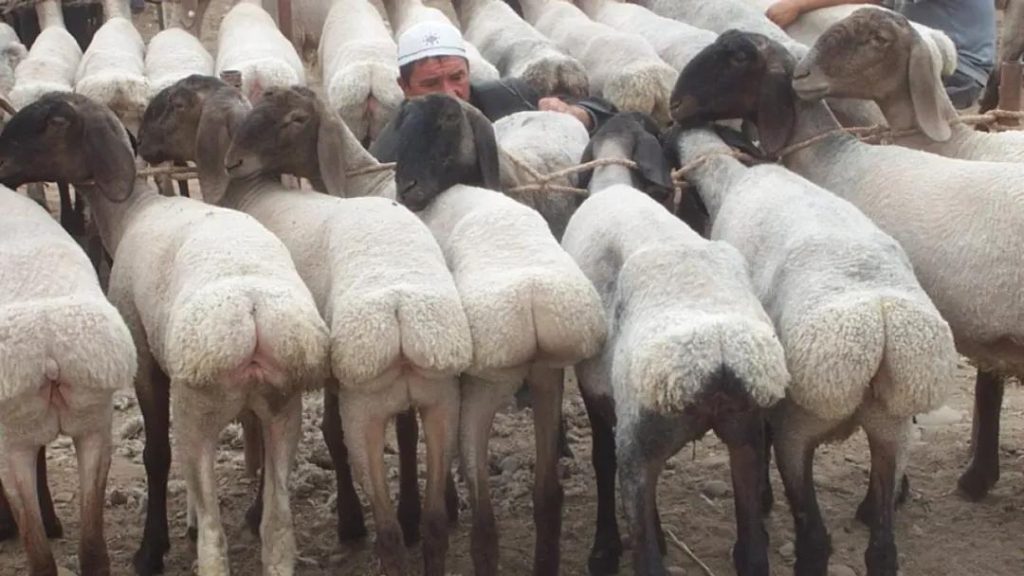
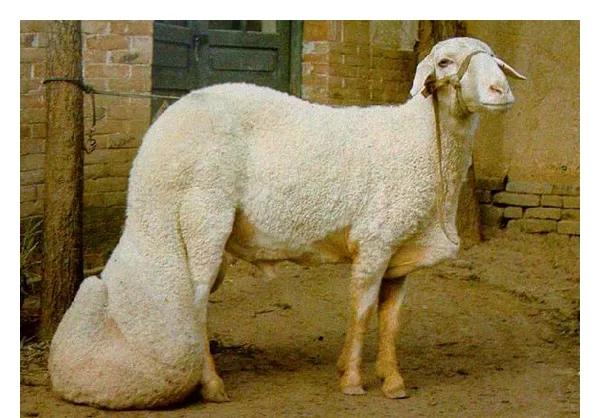
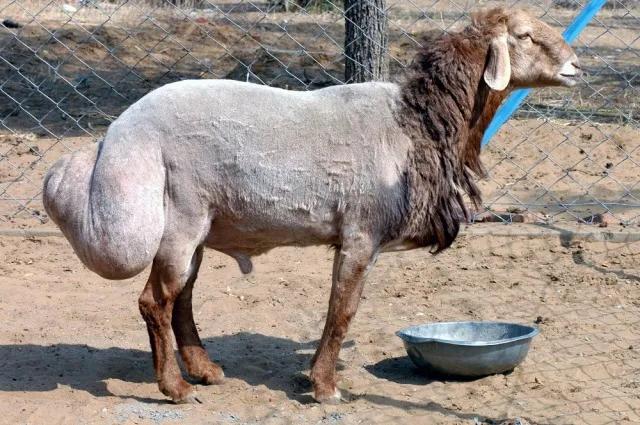
The first time you see one, your eyes go straight to the rear. It’s impossible not to. Perched above those slender legs is a massive, wobbling, jiggling cushion of fat—a tail so oversized it seems to belong to a different animal entirely. As they walk, this fatty appendage swings from side to side, giving them a comical, exaggerated waddle. Meet the Fat-Tailed Sheep, one of the oldest and most widespread livestock breeds on Earth, yet virtually unknown to millions who may have already eaten one without ever realizing it.
Why Would a Sheep Need a Giant Tail?
The answer lies in survival. Fat-Tailed Sheep originated in the harsh, unpredictable climates of the Caucasus and Mesopotamia. In these regions, food could be abundant one season and scarce the next. Evolution found a brilliant solution: store energy not just as body fat, but in a specialized, concentrated reservoir—the tail. Like a camel’s hump, this fatty deposit provides crucial sustenance when grazing is poor, helping the animal survive droughts, cold winters, and long migrations.
A fully grown Fat-Tailed Sheep can carry between 15 and 20 kilograms of pure fat in its tail, with some historical records mentioning tails reaching a staggering 50 kilograms. Beyond being a pantry, the fat tail also acts as insulation, helping regulate body temperature in extreme heat and cold. It’s a mobile survival kit on four legs. 
An Ancient Treasure: From Babylon to the Pharaohs
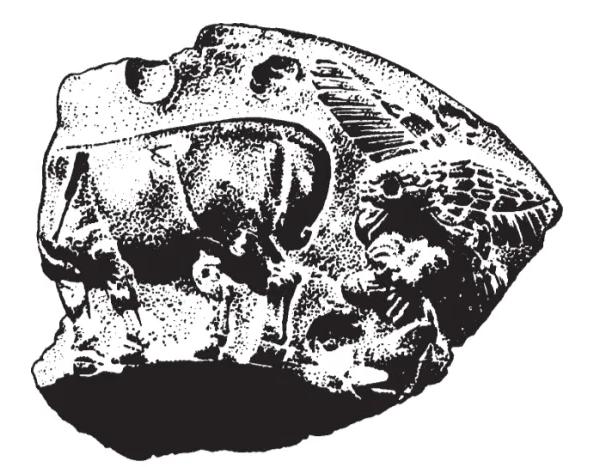
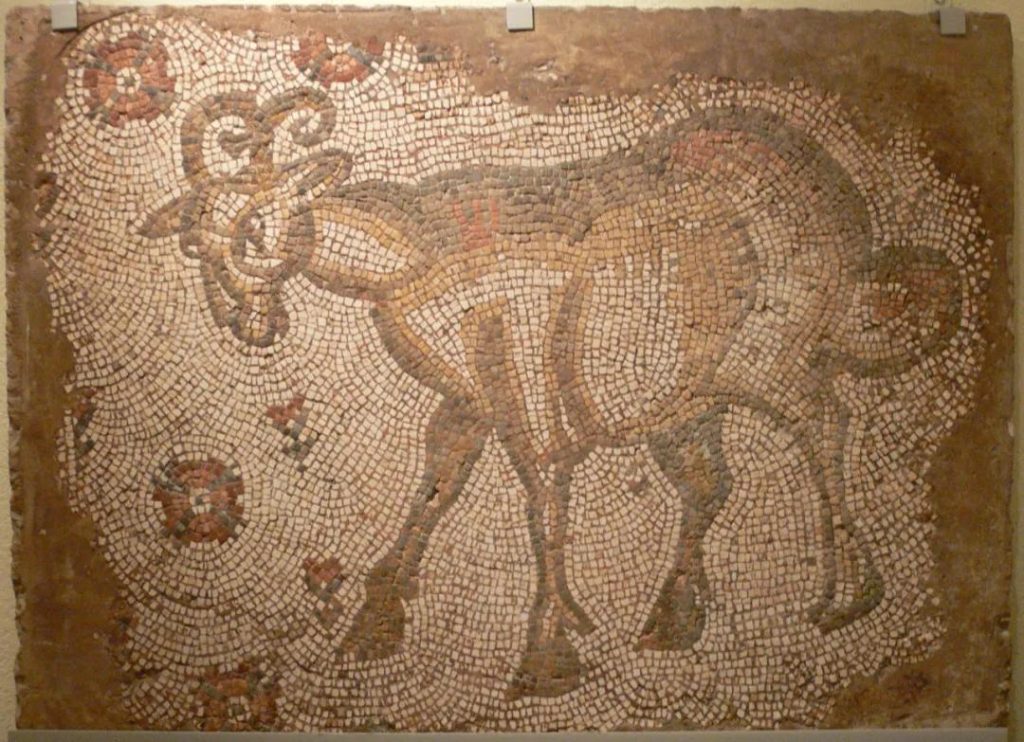
This isn’t a new invention. Fat-Tailed Sheep are ancient. Archaeological evidence places their domestication as early as 3000 BCE in Mesopotamia. Their distinctive silhouette appears on Sumerian clay tablets and Babylonian mosaics, prized possessions of early civilizations.
Initially, they were valued for their wool—specifically, their incredible wool. Records from the Ur III dynasty show that Babylonian breeders had already developed distinct sheep varieties, and the finest, most valuable wool came from fat-tailed breeds. This luxurious fiber was worth two to three times that of ordinary sheep and was reserved exclusively for the king.
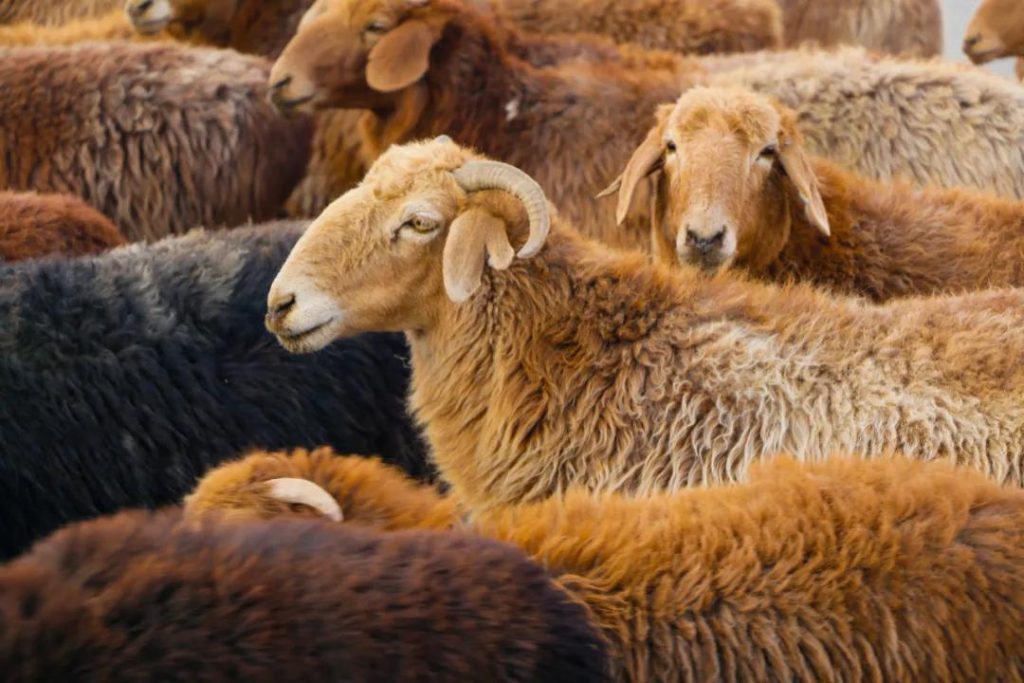
But their true genius soon became apparent. Fat-Tailed Sheep were remarkably adaptable. They thrived on sparse vegetation, resisted diseases, and weathered temperature extremes that would kill other breeds. For communities in marginal lands, they were a walking treasure trove, providing wool, milk, meat, and cooking fat. Records from the Umma temple show they managed a flock of 1,520 fat-tailed sheep—a staggering 78% of their total herd.
The Tail as a Delicacy
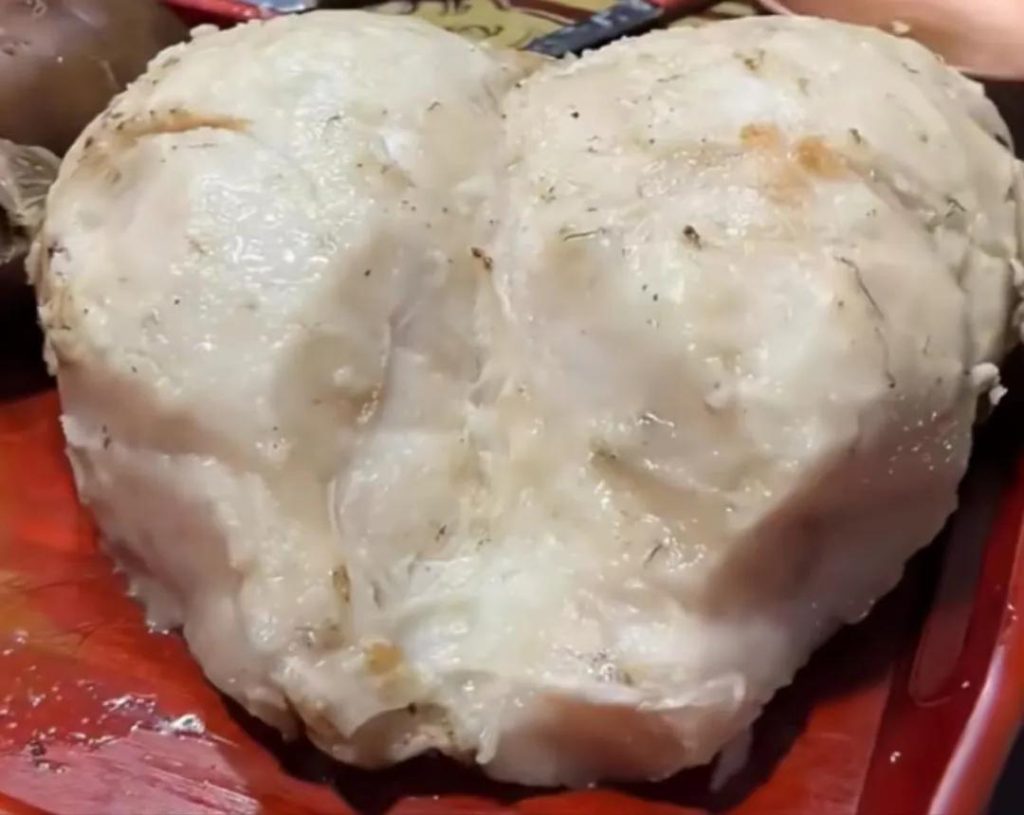
And then, there was the tail itself. In many cultures, the rendered fat from the tail is a prized cooking ingredient, with a rich, buttery flavor and silky texture. In Lebanon, a traditional preserved meat called awarma is made by confit-style cooking lamb in its own tail fat, often served with eggs or chickpeas.
Of course, this evolutionary adaptation comes with trade-offs. The massive tail can hinder reproduction, making fat-tailed ewes less prolific than other breeds. It also slows them down, making them more vulnerable to predators. But for humans, these were acceptable costs for such a versatile animal.

A Global Journey: From Egypt to Indonesia
From their Mesopotamian origins, Fat-Tailed Sheep began an epic journey across the globe. By 2000 BCE, they had reached Somalia in East Africa. A thousand years later, they were in Egypt, prized by the Pharaohs. They followed human migrations south, all the way to South Africa. Their last great expansion came in the late 18th century, when Dutch traders introduced them to Indonesia, where they remain a dominant breed today.
China’s Ancient Love Affair with the Fat-Tailed Sheep
China has its own long and storied history with these animals. Historical records are filled with references. The New Book of Tang mentions “Western Regions’ large-tailed sheep,” noting the tails could weigh ten jin (about 5-6 kg). The Youyang Zazu, a Tang Dynasty miscellany, describes them coming from the Kangju region.
The Song Dynasty was famously obsessed with lamb. The imperial court decreed that the palace kitchen should use only mutton, consuming tens of thousands of animals annually. When envoys from the Western Regions arrived in Kaifeng in 1018, they presented the emperor with large-tailed sheep as a gift—the first recorded introduction of the breed to China’s heartland. The timing was perfect. The tribute launched Fat-Tailed Sheep into Chinese culinary history.
Tales of Wagons and Wheels
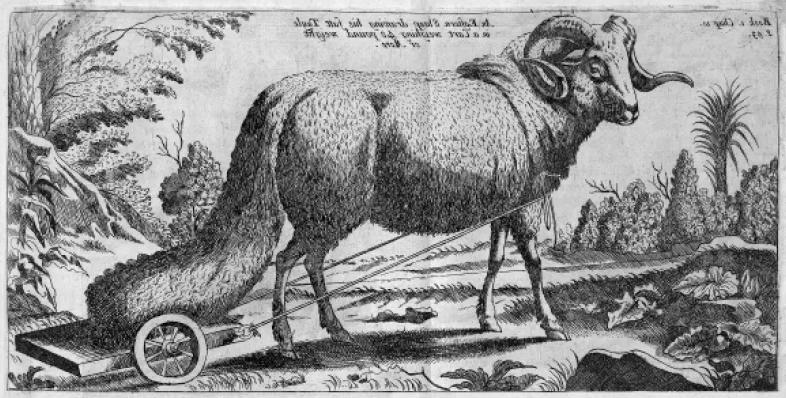
The ancient Greek historian Herodotus wrote of sheep in Asia Minor with tails so enormous—up to 18 inches wide—that they dragged on the ground. To prevent injury, he claimed, shepherds built small carts to support the tails as the animals walked.
For centuries, this story was dismissed as fanciful travelers’ tales, a joke for classical dramatists. Then, in 1756, a Scottish physician named Alexander Russell reported seeing the exact phenomenon in Syria. Local shepherds, he wrote, would attach small wooden boards or even tiny carts to the tails of their fattest sheep to protect them from thorny scrub. Herodotus, it turned out, was telling the truth. The ultra-fat-tailed breeds Russell described have since vanished, likely replaced by more productive varieties, but the story remains a testament to the extremes of this ancient breed.
The Hidden Sheep on Your Plate
Today, Fat-Tailed Sheep are anything but a relic. They dominate the flocks of entire nations. In Turkey, a staggering 87% of domestic sheep are fat-tailed. In Iran, the figure is 96%. Even in tropical Indonesia, 80% of sheep in East Java belong to this ancient lineage.
The 1999 Oxford Companion to Food estimated that nearly a quarter of the world’s domestic sheep are fat-tailed breeds. Over millennia, they have diversified into at least 60 distinct varieties, each adapted to its local environment:
- The Awassi of Syria is famed for its high milk production—a single ewe can produce over 500 liters during lactation.
- The Karakul of Uzbekistan is prized for its lustrous, tight-curled pelts, used in high-end garments.
- The Aouda of North Africa is celebrated for its tender, flavorful meat.
- In India, the heat-adapted Dumba breed grows rapidly, reaching 33 kg by just three months of age, with a mostly bare, wool-less body.
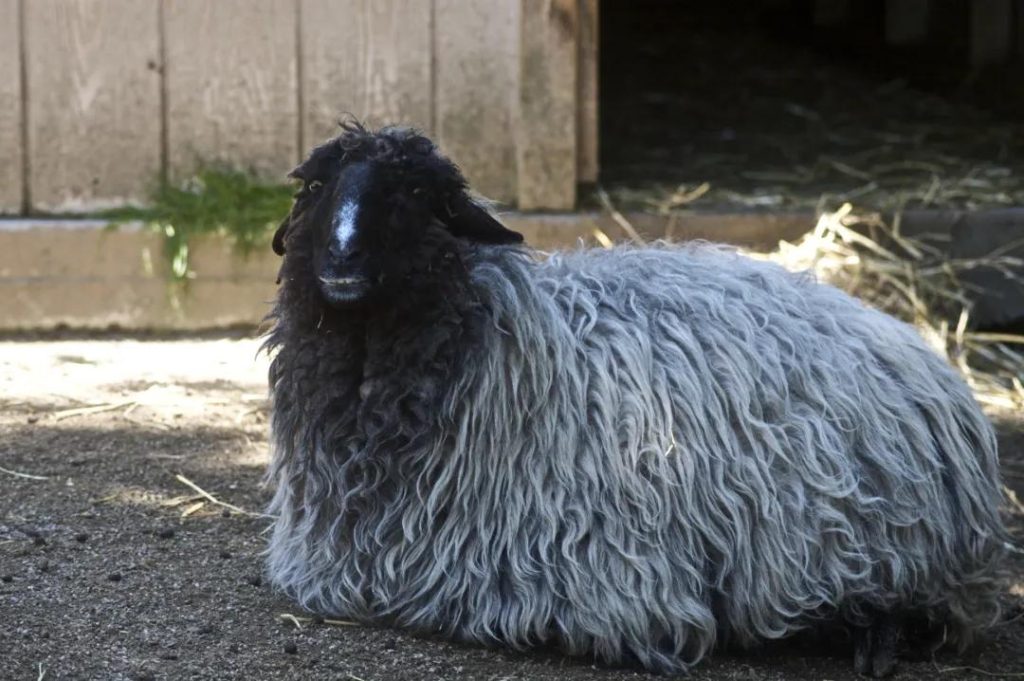
China has developed its own celebrated breeds, valued for their excellent meat: the Altay large-tailed sheep of Xinjiang, the Ujimqin of Inner Mongolia, the Lanzhou large-tailed sheep of Gansu, and the widespread Small-tailed Han sheep of North China, known for their gentle temperament, high feed efficiency, and suitability for household farming.
You’ve Probably Eaten One
Here’s the surprising truth: Fat-Tailed Sheep are not some exotic oddity you’ll only see in a zoo. They are a major part of the global food system. According to 2022 FAO statistics, China is the world’s largest producer of sheep fat, generating 114,793 tons—a staggering 21.46% of the global total. Australia, in second place, produces just 79,173 tons.
In the 1990s alone, Inner Mongolia’s Xilingol League exported over one million fat-tailed sheep to Middle Eastern countries, generating more than 50 million yuan in foreign exchange.
So the next time you enjoy a plate of tender lamb, a savory mutton stew, or even a flaky pastry made with rich, buttery fat, pause for a moment. There’s a good chance you’re tasting the legacy of a breed that has walked alongside humans for over five thousand years—a breed whose strange, wobbling tail is not a joke, but a masterpiece of evolution and a cornerstone of global cuisine. The Fat-Tailed Sheep may not be famous, but it has quietly fed the world.