





Japan sinkhole disaster in Saitama remains unresolved after a year, leaving residents suffering from sewage odor, corrosion, and constant fear.
On the morning of January 28, 2025, at 9:49 a.m., a sudden road collapse shocked Yashio City in Japan’s Saitama Prefecture. A massive sinkhole opened without warning, swallowing a truck and its 74 year old driver. The incident instantly turned an ordinary weekday into a nightmare.
Firefighters from the local station arrived within minutes. At that time, the sinkhole measured roughly nine meters long, ten to eleven meters wide, and about nine meters deep. Rescue teams initially believed there was a strong chance the driver could be saved. 
However, the ground around the site proved unstable. Heavy rescue equipment could not be deployed safely. Additional collapses soon followed, and the hole continued to expand. Eventually, the damaged area grew to nearly forty meters wide and fifteen meters deep, making rescue efforts extremely difficult.
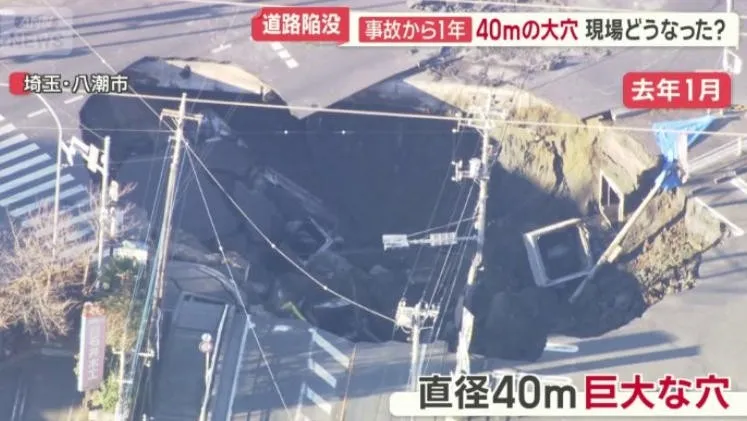
A Tragic Rescue Outcome
After more than three months of continuous rescue work, the driver’s body was finally discovered inside the sewer system. On May 2 of the following year, search teams found his remains in the cabin of the fallen truck during an internal sewer inspection. According to police reports, the driver had been dead for a long time, and the exact cause of death could not be determined.
Local authorities later stated that the collapse was likely caused by corrosion and rupture of underground sewage pipes. Officials initially believed that repairing the sewer and restoring the road would allow nearby residents and businesses to return to normal life fairly quickly.
Nearly one year later, that hope has not become reality.
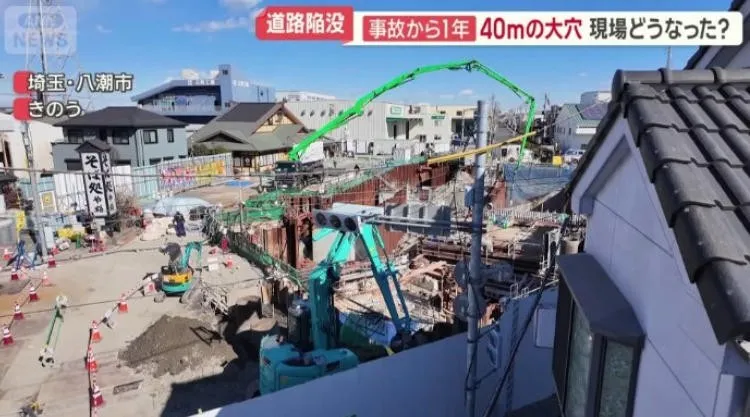
Why the Road Is Still Not Repaired
Even today, wastewater near the site is still being diverted through temporary drainage pipes. Although new sewage pipes were installed by the end of December 2025, additional anti corrosion treatment and internal reinforcement are required. Authorities estimate that wastewater will not be fully redirected to the new system until late March, meaning road repairs may not begin until April.
For local residents, this prolonged delay has been exhausting. Many say they have reached their limit after living with disruption, odor, and anxiety for an entire year.
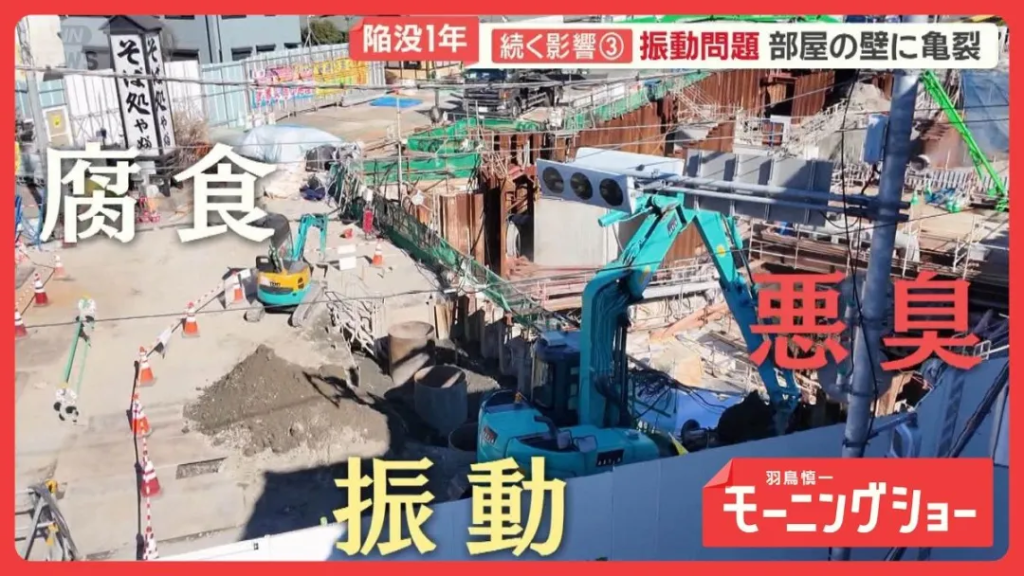
Daily Life Impact One: Corrosion and Failing Appliances
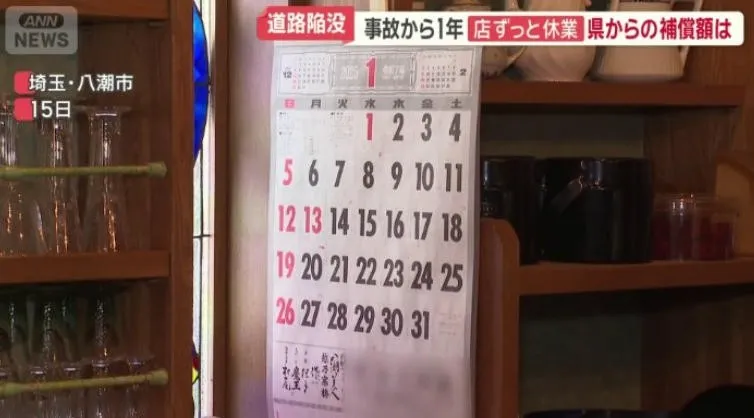
Matsui Taeko has operated a small food shop for nearly twenty years. The sinkhole is located just twenty meters from her storefront. Since the collapse, her shop has been forced to close. Inside, the calendar still shows last year’s date, as if time has frozen.
The Saitama prefectural government provided compensation of one hundred thousand yen to businesses within a two hundred meter radius. For many owners, this amount barely covered their losses.
Matsui also noticed serious problems inside her home. Both of her air conditioners stopped working. Repair costs totaled about two hundred thirty thousand yen, which she had to pay herself.
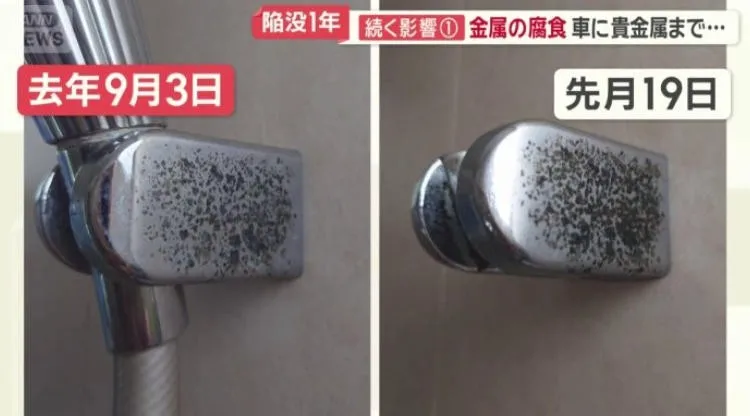
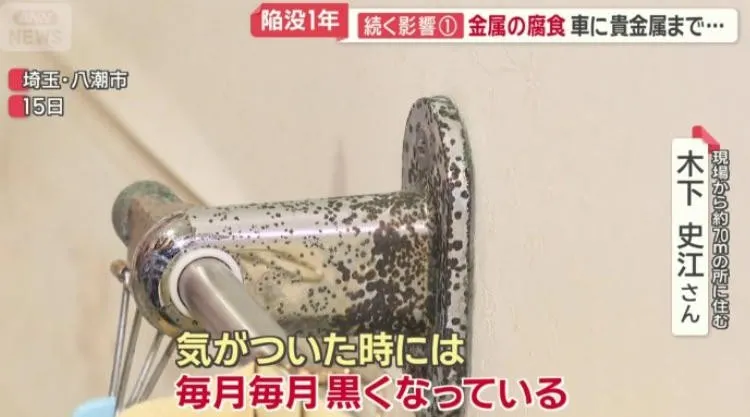
Other residents reported similar issues. One homeowner said the outdoor unit of their air conditioner turned black within months. According to experts, the likely cause is hydrogen sulfide, a toxic gas known for its strong corrosive effects. This gas can accelerate metal corrosion, especially in humid environments. It is commonly associated with sewage systems and is explained in detail on Hydrogen sulfide.
Authorities acknowledged receiving multiple complaints about appliance failures. They stated that compensation would be considered after confirming a direct link between the gas exposure and equipment damage.
Daily Life Impact Two: Overwhelming Odor
Residents living within seventy meters of the sinkhole say the smell is unbearable. One woman explained that the stench of wastewater makes it impossible to stay outdoors for more than ten minutes. She described her home life as living inside a toilet day and night.
Another resident reported waking up in the middle of the night because of the odor. Many complain of loss of appetite, sleep problems, and persistent throat discomfort.
On January 22, local sewer officials stated that hydrogen sulfide levels were low and not directly harmful. However, they admitted that the smell and constant stress could affect the autonomic nervous system, potentially causing indirect health issues.
To address residents’ concerns, the prefecture offered one on one counseling with psychologists. Many locals questioned how emotional support alone could solve an environmental problem.
Daily Life Impact Three: Constant Vibration and Structural Damage
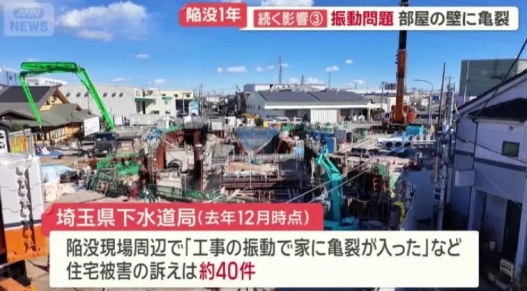
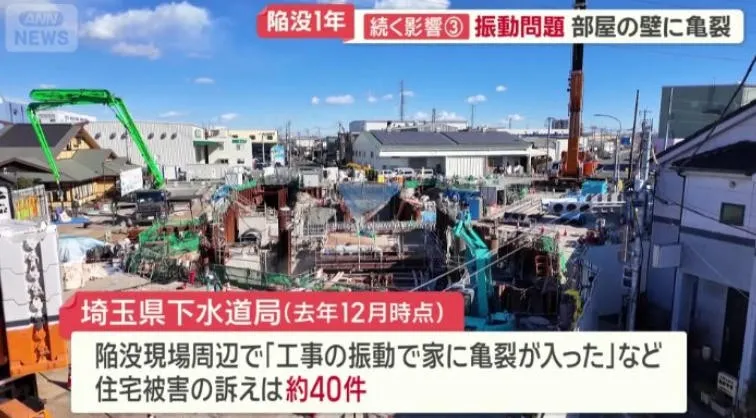
Construction work around the sinkhole has caused continuous vibrations. Some residents say their homes shake around the clock. Cracks have appeared in walls and ceilings, raising fears of possible collapse.
So far, about forty complaints related to structural damage have been filed. Officials promised that once construction is complete, inspections will be conducted and compensation provided if necessary.
Although vibrations have lessened since May, residents still notice plants shaking inside their homes during ongoing work.
A Community Still Waiting
Nearly a year after the disaster, three major problems remain unresolved. Persistent odor, property damage, and daily disruption continue to affect the community. In response, residents formed a victims’ association to voice their concerns collectively.
Members say they do not seek conflict with the government. They simply want their suffering to be acknowledged and addressed. Until the road is repaired and daily life returns to normal, the sinkhole remains more than a hole in the ground. It is a symbol of prolonged uncertainty and frustration.