







Imagine this: You’re a fresh-faced international student in Australia, jet-lagged and hungry. You spot a jar in the supermarket that looks familiar—dark, rich, probably chocolate, right? You spread it thick on toast, take a massive bite, and suddenly you’re questioning every life choice that led you to this moment. Welcome to the world of Vegemite, Australia’s most iconic—and polarizing—food.
That dark, salty, umami-packed spread isn’t chocolate. It’s not even close. Vegemite is a yeast extract spread, made from leftover brewer’s yeast, and it’s been a staple in Australian kitchens for nearly a century. Some worship it. Others wonder how it ever became a thing. Let’s unpack the strange, fascinating story behind this national obsession.
What Actually Is Vegemite?
First, let’s clear up the name. Vegemite is a brand name, like Coke or Kleenex. The product itself is a yeast extract spread—essentially, concentrated umami in a jar. 
The magic starts with yeast, specifically the leftover sludge from beer brewing. During processing, this yeast is heated, triggering autolysis—a fancy term meaning the yeast cells essentially digest themselves. Their own enzymes break down proteins into smaller compounds like amino acids, peptides, and nucleotides. These are the building blocks of savory, meaty flavor.
Then comes the salt—lots of it. Vegemite contains about 8.4% salt, which enhances flavor, preserves the spread, and prevents the yeast from going bitter during processing. That salt level is comparable to many Asian fermented products like fermented tofu.
Vegemite vs. Fermented Tofu: Surprising Cousins
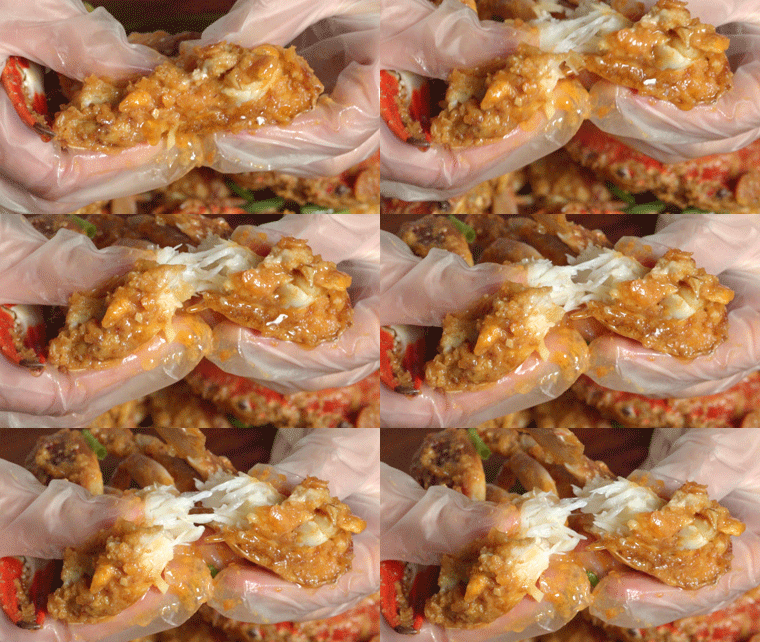
Here’s where things get interesting. If you’ve ever eaten Chinese fermented tofu , you’ve actually tasted something surprisingly similar to Vegemite—just with a different cultural wardrobe.
Both rely on the same core principle: proteins broken down into savory amino acids, especially glutamate—the molecule behind umami.
- Vegemite gets its savoriness from yeast autolysis. Because yeast is a single-celled organism, its RNA breaks down during processing, creating extra nucleotides that amplify the meaty flavor. This is why some people swear Vegemite tastes almost brothy—it can literally be used as soup stock.
- Fermented tofu starts with soy protein, broken down by enzymes from mold. During tofu-making, most of the soy’s RNA gets filtered out with the okara (bean pulp). But soy’s natural fats, plus the rice wine used in aging, give fermented tofu a rich, almost cheesy aroma that Vegemite lacks.
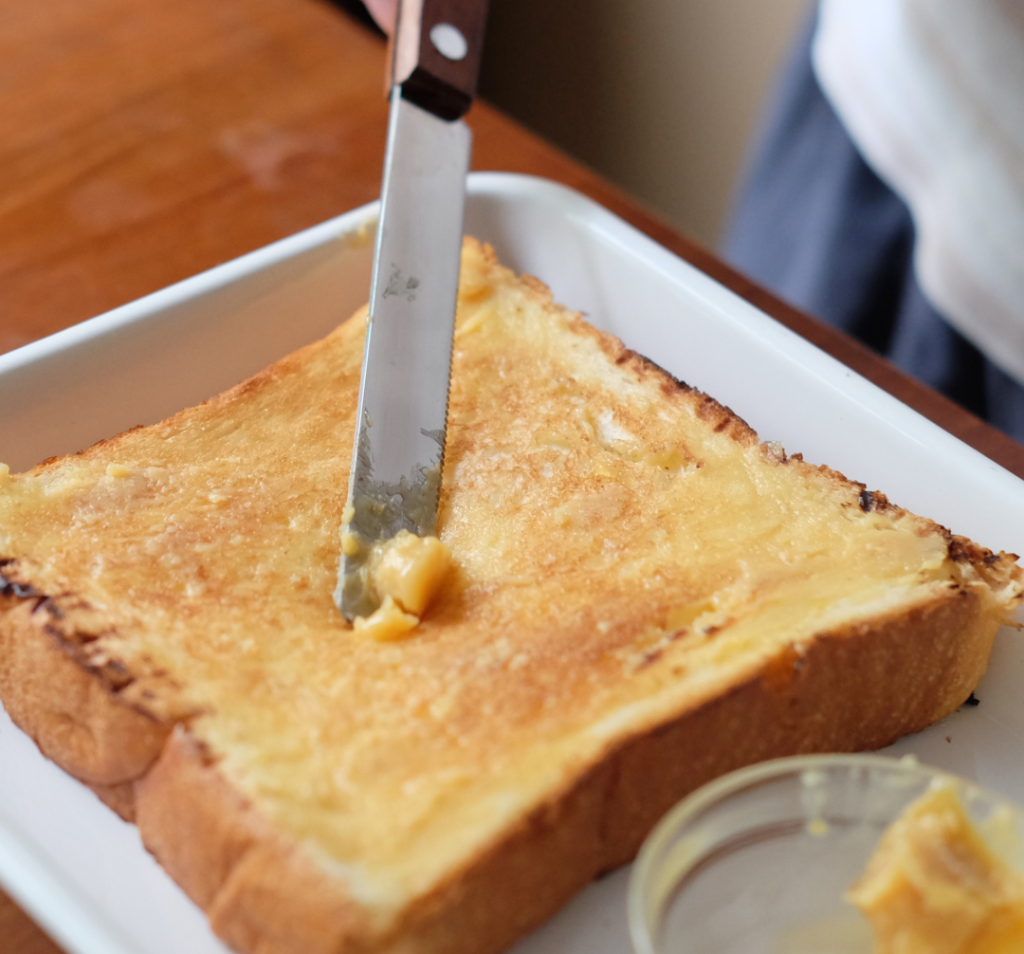
So here’s the takeaway: If you love Vegemite on toast, you’ll probably love fermented tofu on toast too. Just use less—the salt is comparable. Many who’ve tried both agree that fermented tofu beats most Western spreads hands down.
The German Genius Behind the Spread
The story of Vegemite begins not in Australia, but in Germany, with a brilliant 19th-century chemist named Justus von Liebig.

Born in 1803 to a middle-class family selling paints and hardware, Liebig grew up with a practical understanding of chemistry. The catastrophic “Year Without a Summer” in 1816 devastated his region, leaving him with a lifelong awareness of hunger and food scarcity. This combination—chemistry plus famine—shaped his career. He became obsessed with food science.
In 1847, Liebig proposed his “meat extract” theory. He argued that muscle fibers were just scaffolding—the real nutrition leaked out during cooking. He advocated searing meat first to lock in juices, and simmering bones for broth. While he overestimated protein loss, he was right that meat juices contain valuable minerals and fats.
His “Liebig’s Extract of Meat” became wildly popular. Investors funded factories in South America and Australia, where cattle were raised primarily for leather—meat was almost a byproduct. They’d boil down tons of beef into a concentrated paste, canned and sold as a nutritional supplement, essentially the 19th-century version of bouillon cubes.
Liebig’s product fueled armies through the Crimean War and the American Civil War. But eventually, even Liebig realized something was wrong. When he fed dogs nothing but his meat extract, they died of malnutrition. The extract had flavor but lacked nutrition.
By 1873, his company was selling corned beef instead. But Liebig’s work wasn’t done.

From Beer Waste to Yeast Extract
While working on meat extract, Liebig faced a practical problem: producing just one kilogram required 30 kilograms of fresh meat. Even with cheap South American beef, this was unsustainable.
Then he had another idea. In the 1860s, he discovered that brewer’s yeast—a massive waste product from Europe’s beer industry—was packed with nitrogen, meaning it was rich in protein. Germany and Britain produced mountains of spent yeast that even pigs couldn’t finish.
Liebig developed a process: heat the yeast to trigger autolysis, control salt levels, then concentrate the resulting liquid using the same vacuum evaporation technique he’d used for meat extract. The result? A dark, savory paste.
The science was solid, but commercialization took decades.
Britain Gets There First: Marmite Arrives
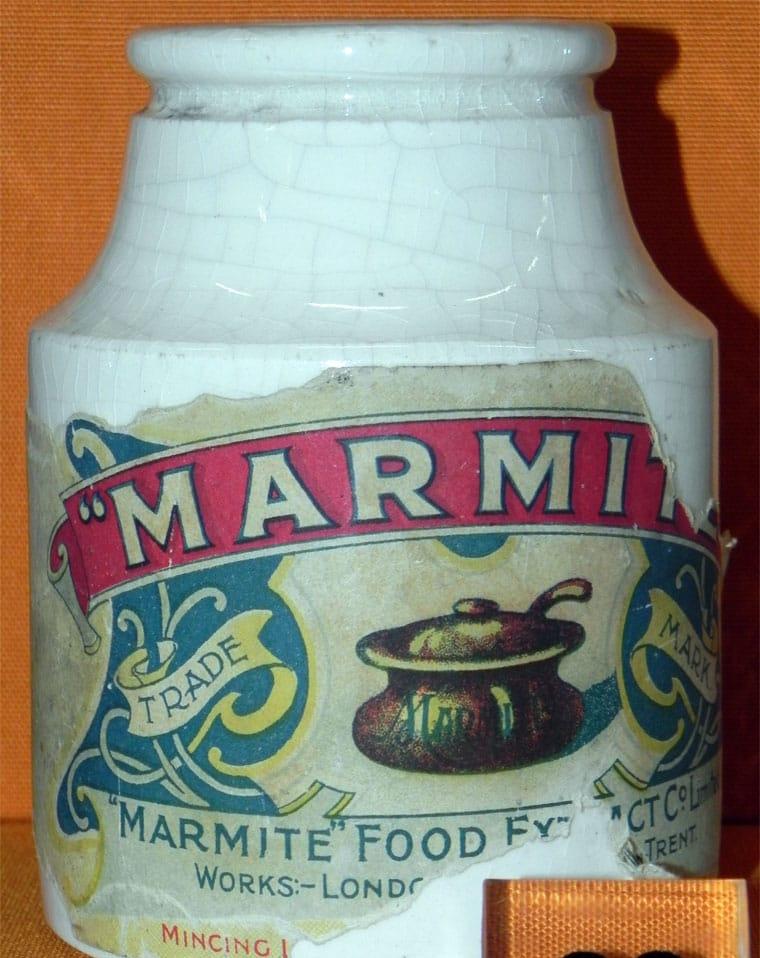
In 1902, a British company finally commercialized Liebig’s technique, launching a product called Marmite. The name came from a French cooking pot (marmite), evoking hearty, homemade soup. Classic Anglo-Saxon branding: German technology, French name, British ownership.
Early Marmite ads positioned it exactly where Liebig intended: as a flavor booster for soups, stews, and gravies. One vintage advertisement shows a man’s gesture that might offend modern Korean viewers, but the text below simply promises to enhance “soups, stews, gravies, and sandwiches.”
Earlier versions mentioned only soups, gravies, stews, meat, and vegetables—no sandwiches. Clearly, Marmite started as a stock concentrate, not a spread.
So how did it end up on toast? Picture a London factory worker in the early 1900s. No wife at home to prepare soup, no time to simmer a stew. But a slice of toast? That he could manage. A quick scrape of Marmite, and he had a savory, filling breakfast in seconds. Necessity invented a new use, and a habit was born.

Australia’s Moment: Vegemite Is Born
Now we arrive in Australia. For years, Australians imported Marmite from the mother country. Local manufacturing of spreads was practically nonexistent.
Then World War I erupted. German U-boats made shipping from Britain to distant Australia treacherous and unreliable.
Among the many spreads Australians relied on, yeast extract was the cheapest and easiest to produce locally—after all, it used waste products from breweries. Enter Fred Walker, an entrepreneur who saw an opportunity. He started a company and created an Australian version of Marmite.
He called it Vegemite.
The “Vege” part was pure marketing genius—it suggested the spread came from vegetables, sounding wholesome and natural to consumers. Capitalists playing word games? Absolutely. But it worked.
Why Vegemite Became Australia’s National Spread
The story of Vegemite is surprisingly simple in hindsight:
- A German chemist invented yeast autolysis technology.
- The British commercialized it and created a consumer habit.
- World War I disrupted British supplies to Australia.
- Australians created their own version to fill the gap.
- Because Vegemite was one of the few spreads Australia could manufacture locally, it became the default, the familiar, the beloved—a national icon born from wartime necessity.
The Final Spread
Today, Vegemite divides opinions like few foods can. Love it or hate it, there’s no denying its cultural significance. It’s the taste of Australian childhood for millions, a pantry staple, a travel essential for expats abroad.
And next time you spread it on toast, remember the journey: German chemistry, British marketing, wartime innovation, and a continent’s determination to be self-sufficient. It’s not just yeast extract. It’s history you can eat.