





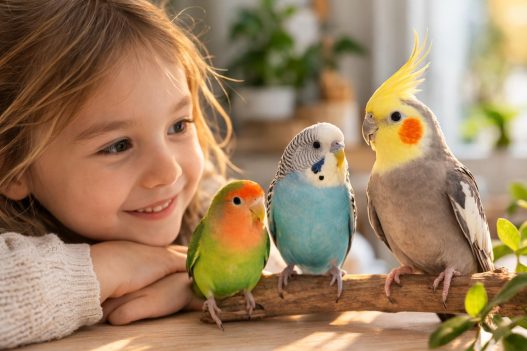
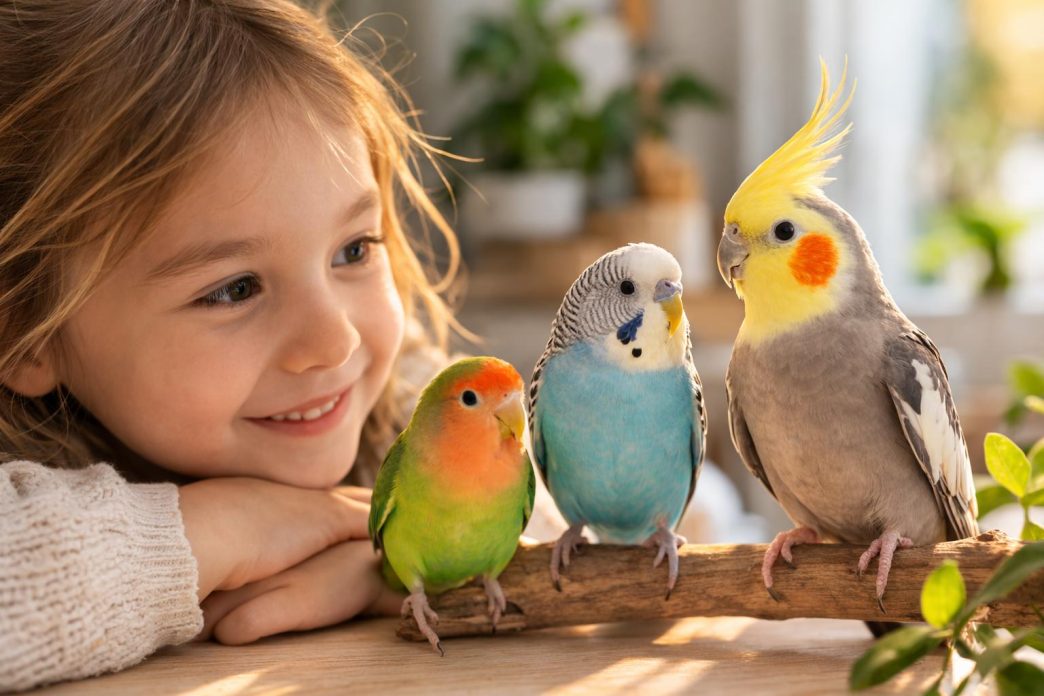
Bringing a pet bird into the family can be a wonderful experience for a child. Birds are colorful, intelligent, and often full of personality. But before rushing to the nearest pet store, parents should take a moment to think carefully about which species will truly fit into a household with children.
When choosing pet birds for kids, several factors matter: how much care the bird requires, how much space it needs, its social behavior, and—very importantly—how noisy it might be. The ideal bird for a child should be gentle, relatively easy to care for, and comfortable living in a busy family environment.
Below are seven bird species that are widely considered excellent companions for children. 
Important Tip: Watch Out for Bird Allergies
Before welcoming a bird into your home, it’s worth knowing that pet birds can sometimes trigger allergic reactions. Birds naturally produce fine dust from their feathers, which may irritate sensitive individuals.
In some cases, exposure to bird dust can lead to conditions such as hypersensitivity pneumonitis, allergic rhinitis, or even certain forms of asthma. Children who are sensitive to animal allergens may react to bird dust in a similar way they would react to dog or cat dander.
Bird feather mites and tiny particles from droppings can also contribute to allergic symptoms. If your child has a history of allergies, it may be wise to consult a healthcare professional before introducing a bird to the home.
1. Finch
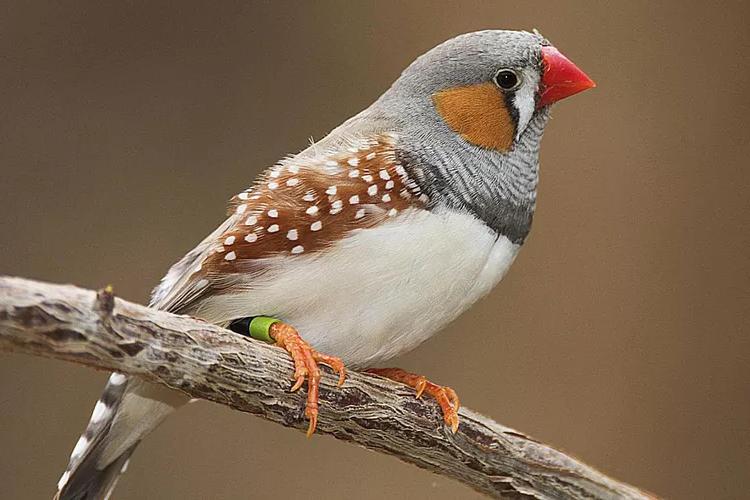
Finches—and their close relatives, the Canary—are fantastic starter birds for children. One of their biggest advantages is that they require very little hands-on interaction. That means kids can enjoy them without needing constant handling or supervision.
Young children often love simply watching finches flutter around their cage while listening to their soft, musical chirps. Their cheerful chatter can add a relaxing atmosphere to a room.
However, finches are not meant to be handled frequently, so they should stay inside their enclosure. Even so, they bring plenty of life and charm to a household. If you plan to get finches for your child, it’s best to adopt two or more, since they are highly social birds and thrive when living with companions.
Species Overview
Length: 5–6 inches
Weight: About ½ ounce
Physical Characteristics: Bright yellow, white, or reddish plumage
2. Dove
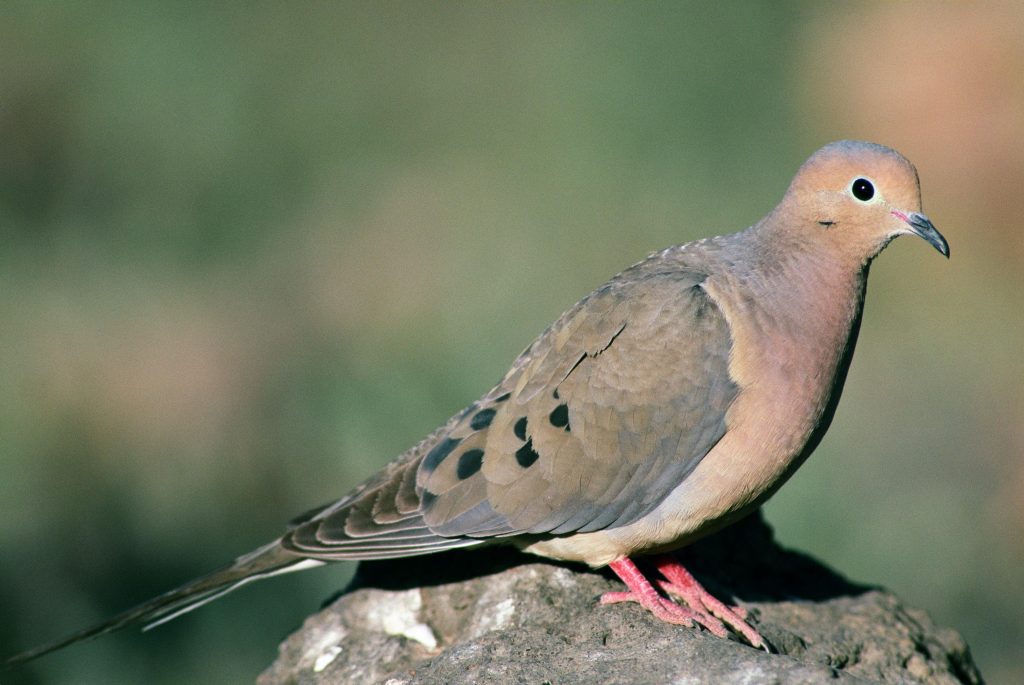
Doves—often closely related to Pigeon—are known for their calm, gentle nature. Unlike many parrots that have powerful hooked beaks, doves have softer beaks and rarely attempt to bite.
Because of their peaceful temperament, they are good companions for older children who know how to behave calmly around animals.
Doves are social birds and usually do best when kept in pairs. Adding items like mirrors, swings, and perches inside their enclosure can help keep them entertained. They also benefit from occasional supervised flight time outside the cage, which allows them to interact with their human caretakers.
Species Overview
Length: 11–13 inches
Weight: 5–8 ounces
Physical Characteristics: White, gray, orange, or mixed coloration; black eyes and dark feet
3. Lovebird
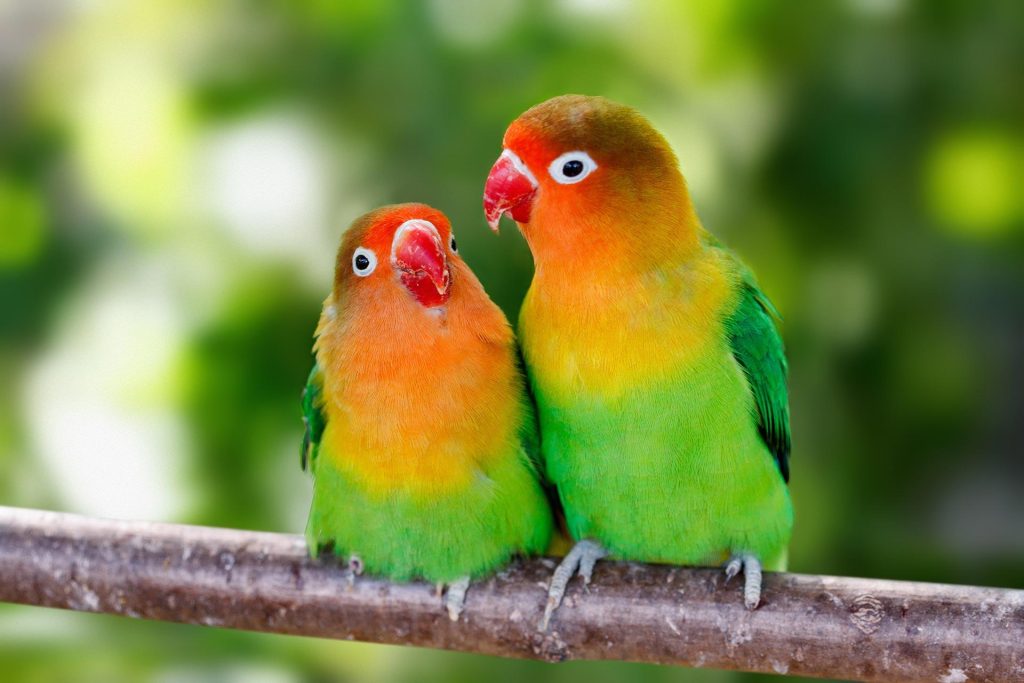
Lovebirds are among the smallest members of the parrot family, yet they pack an impressive amount of personality into their tiny bodies.
Despite their colorful feathers and lively nature, lovebirds tend to be quieter than many larger parrots. This makes them a great choice for families living in apartments or smaller homes.
They are intelligent birds that enjoy social interaction, so children who are interested in learning about birds often find them fascinating companions.
Species Overview
Length: 5–6 inches
Weight: Around 2 ounces
Physical Characteristics: Green bodies, orange heads, blue lower backs, red beaks, and white eye rings
4. Budgerigar (Budgie or Parakeet)
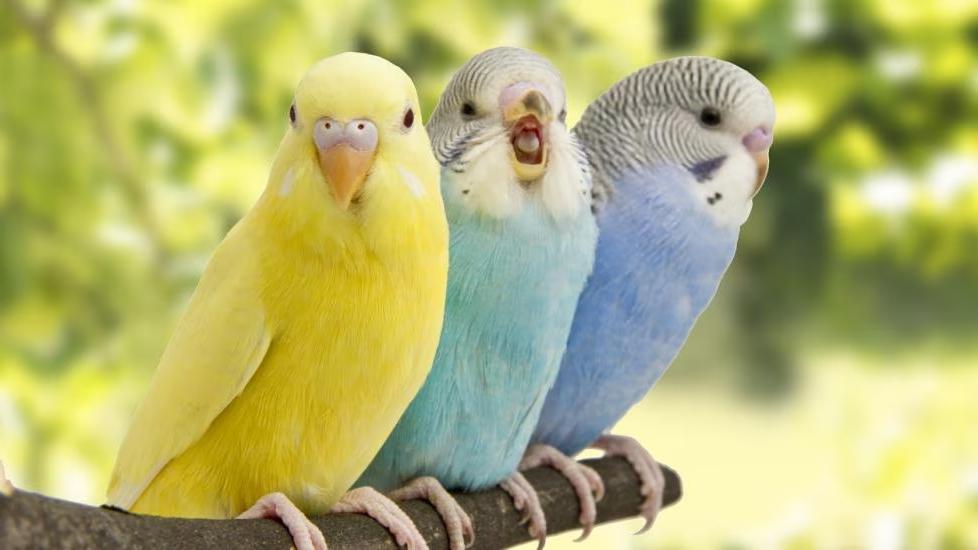
The Budgerigar—commonly called a budgie or parakeet—is one of the most popular pet birds in the world. Native to Australia, these colorful birds are friendly, curious, and surprisingly smart.
Budgies usually tolerate handling well and can even learn to mimic human speech. Many owners are delighted to hear their tiny pet repeating simple words or sounds.
Their gentle personalities and manageable care requirements make them ideal for children who are just beginning to learn how to care for a pet.
Species Overview
Length: About 7 inches
Weight: Around 1 ounce
Physical Characteristics: Green body with black wing markings and yellow head; captive varieties include blue, gray, and violet
5. Cockatiel
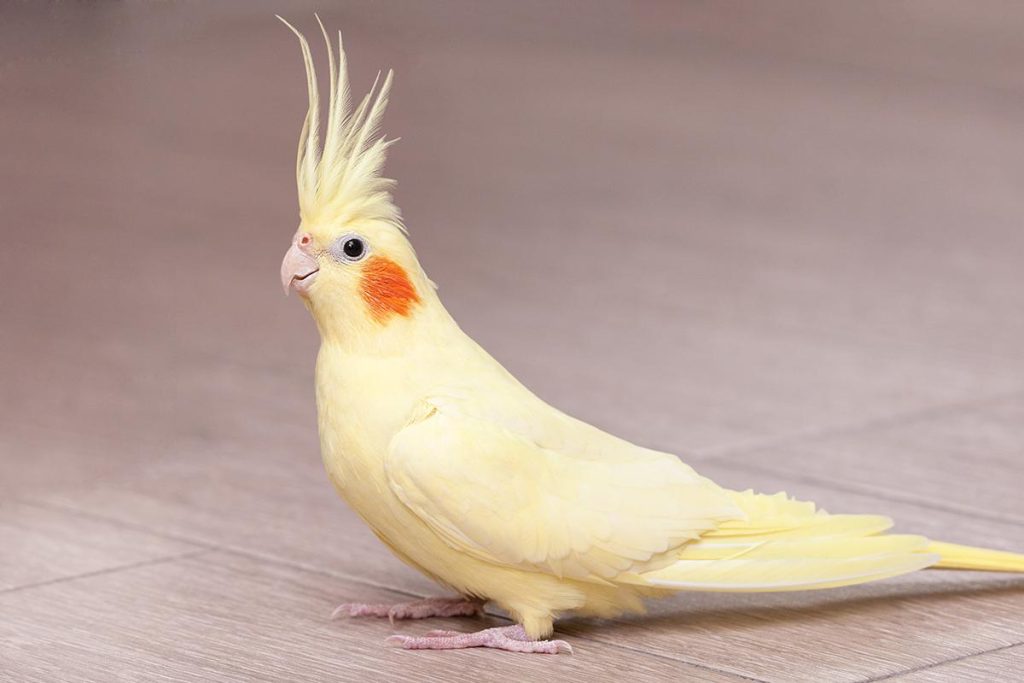
Cockatiels are slightly larger than budgies and finches but still rank among the best birds for children.
These birds are incredibly entertaining. They can learn to whistle tunes, mimic sounds, and even perform small tricks. Because of this playful nature, cockatiels often become favorite companions for kids who enjoy interacting with their pets.
However, cockatiels need regular attention and enjoy spending time outside their cages. Families should be prepared for a bit more cleaning and supervision.
Species Overview
Length: 11–12 inches
Weight: 2.5–3.5 ounces
Physical Characteristics: Gray body, yellow face, orange cheek patches, and a distinctive crest
6. Monk Parakeet (Quaker Parrot)
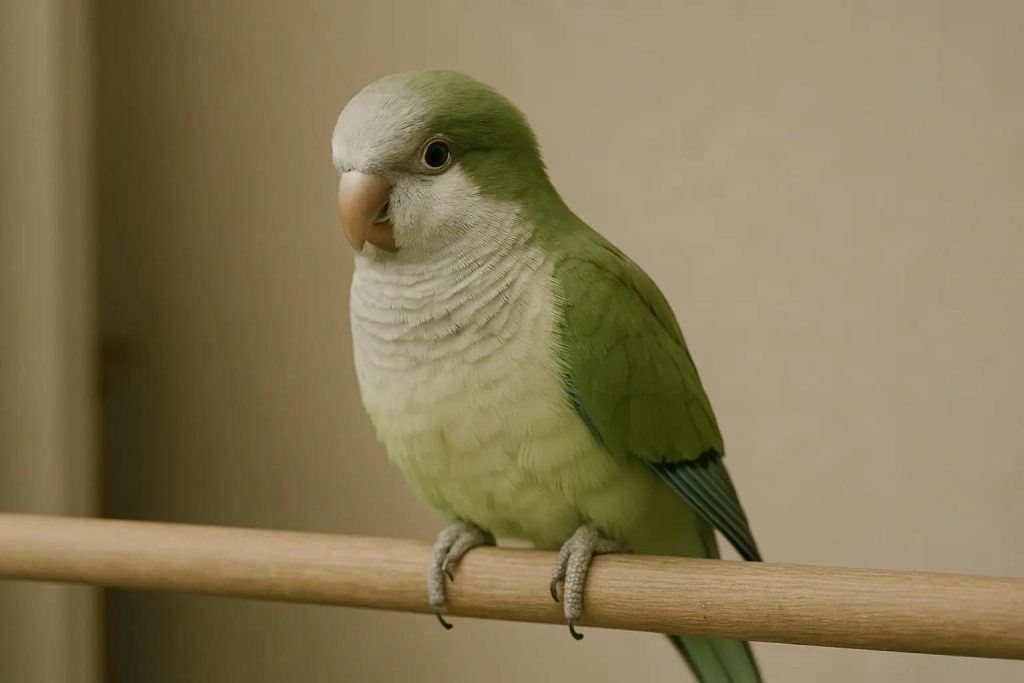
Also known as the Quaker parrot, the Monk Parakeet is a lively and intelligent small parrot.
These birds are excellent mimics and often pick up words and sounds from everyday conversations around the home. Kids often find it hilarious when their pet starts repeating phrases it hears regularly.
Although they are medium-sized birds, they are still relatively easy for children to care for with proper supervision.
Species Overview
Length: Around 11 inches
Weight: 4–5 ounces
Physical Characteristics: Bright green body with gray chest and cheeks, orange beak
7. Silkie (Bantam Chicken)
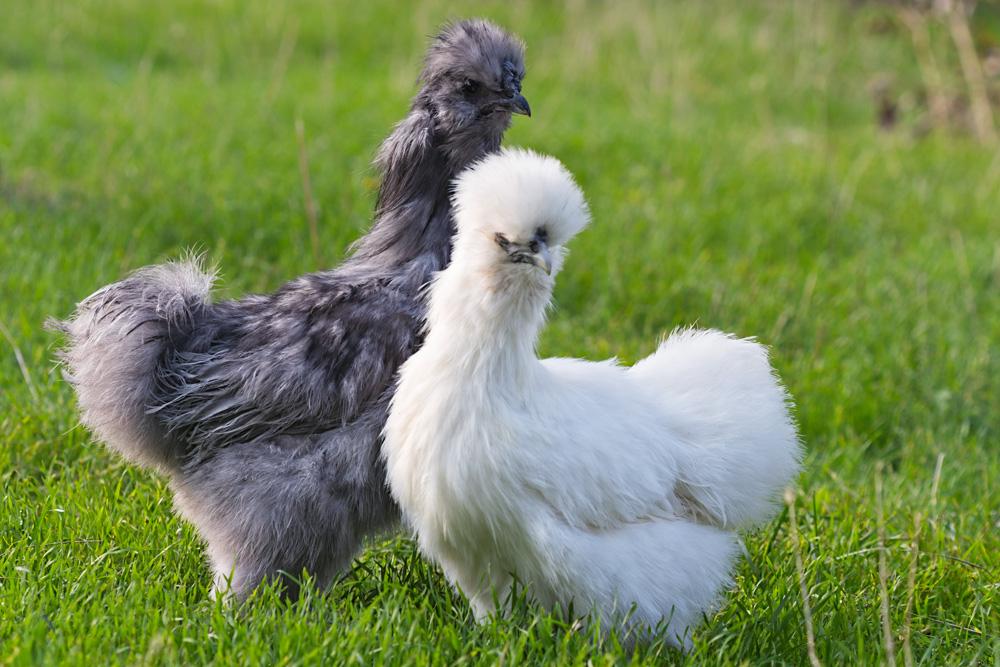
Not all pet birds live inside cages. The Silkie—a type of bantam chicken—is an adorable and unusual option for families with outdoor space.
Silkies are famous for their fluffy, fur-like feathers and incredibly gentle personalities. They are affectionate birds that often enjoy being held and cuddled, which makes them particularly appealing to children.
These birds prefer cooler climates and do best when they have access to a spacious enclosure where they can roam and explore.
Species Overview
Length: 8–14 inches
Weight: 26–32 ounces
Physical Characteristics: Soft, fluffy feathers in black, white, gray, buff, and blue varieties
Choosing the Safest Bird for a Child
When selecting pet birds for kids, safety should always come first. Birds with extremely strong beaks can accidentally cause serious injuries if they bite. Because children have delicate skin, even a defensive nip can lead to painful cuts or lasting scars.
Noise levels are another factor many families overlook. Large birds can produce extremely loud screeches—sometimes reaching sound levels comparable to a jet during takeoff in terms of decibels.
For most households with children, smaller and calmer bird species provide a much better balance of personality, safety, and manageable care. With the right choice, a pet bird can become a joyful and fascinating companion that teaches kids responsibility, empathy, and a love for animals.