







A Desperate Choice in Lahore
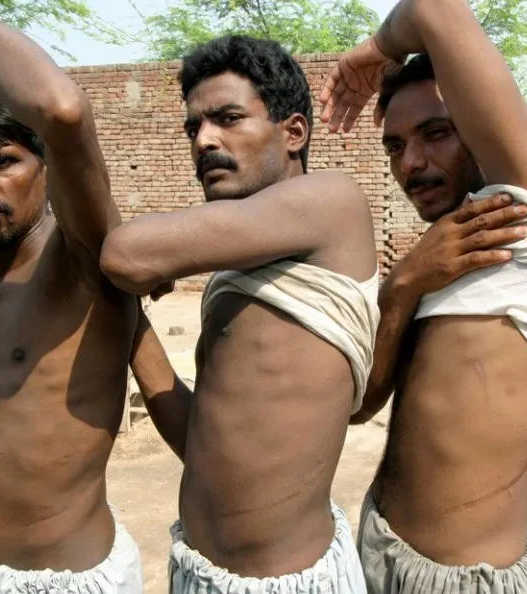
Kidney Selling exposes how debt slavery traps workers, forcing organ sales while leaving victims poorer, weaker, and still in bondage.On the outskirts of Lahore, a city in Pakistan, a brick kiln worker named Shafeeq Masih faced a cruel dilemma.
He could either remain trapped in endless debt or sell one of his kidneys.
The kiln owner claimed he owed 900,000 Pakistani rupees. This amount seemed small by global standards. Yet for Masih, it was overwhelming. No matter how hard he worked, the debt kept growing.
Masih knew the accounts were manipulated. Still, he had no power to question them.
“They record whatever they want,” he said. “We are treated like slaves.” 
With children to feed and elderly parents to support, he saw no escape.
The Illusion of Hope
When a stranger offered 400,000 rupees for his kidney, Masih reluctantly agreed.
Days later, he was taken away in a car and forced to wear taped-over glasses.
During the journey, he felt a flicker of hope. Perhaps this sacrifice would finally free him from debt.
But reality was far harsher.
After the surgery, he received only 300,000 rupees. This was far less than promised.
Despite ongoing pain, he returned to the kiln and handed over the money.
He had hoped for freedom or at least better wages. Instead, he was sent straight back to work.
A Body Broken, A Life Unchanged

Two years later, nothing had improved.
The only difference was his weakened body.
Heavy labor now caused constant pain. His productivity dropped sharply.
Yet the debt remained.
He had lost a kidney, his health, and his hope.
The Hidden Organ Trade
Like many countries, organ trading is illegal in Pakistan. It operates underground and is difficult to measure.
However, the “kidney-selling trap” targeting kiln workers has existed for decades.
The Bonded Labour Liberation Front has fought for workers’ rights for over 35 years.
Its lawyer, Hussain, estimates that thousands of kiln workers have sold kidneys.
“Walk into any kiln,” he said, “and you will find workers who have done it.”
Under international law, consent obtained through coercion or exploitation is invalid.
Such practices may qualify as a form of human trafficking.
A Widespread Pattern
Journalists from The Guardian interviewed several victims in a single day.
Cases like these occur across the country.
Some victims sold kidneys decades ago, others recently.
Most received between 100,000 and 300,000 rupees. Nearly all were paid less than promised.
Many claimed they acted “voluntarily.”
But their decisions were shaped by debt, poverty, and fear.
“It is painful to lose part of your body,” one worker said. “But we have no other choice.”
The System Behind the Trap
The roots of this crisis lie in the structure of brick kilns.
Hussain himself walks with a limp. In 1992, he was shot while suing a kiln owner.
He believes some owners are directly involved in organ trafficking.
The pattern is consistent.
First, workers are pressured to repay debts.
Then, a “middleman” appears and gains their trust.
Finally, the worker is persuaded to sell a kidney.
Life Inside the Kilns
Thousands of kilns surround Lahore.
Each one employs hundreds of workers.
They mold wet clay into bricks under harsh conditions.
Entire families work together. Even children as young as six are involved.
Across Pakistan, an estimated four to five million people work in kilns.
The Debt Trap

Kilns attract poor families by offering advance payments.
This seems like a lifeline during crises such as illness or weddings.
But the system is deeply exploitative.
Interest rates can reach 60 percent.
Employers deduct wages for various reasons, often unfairly.
Workers earn very little.
Even producing thousands of bricks daily barely covers basic needs.
Many workers are illiterate.
Some owners manipulate records or fail to document loans altogether.
Additional fees, such as electricity charges, further reduce income.
As debts grow, workers borrow more.
And they borrow from the same employers.
Modern-Day Slavery

This system creates a cycle of debt bondage.
It functions as a modern form of slavery.
Threats, intimidation, and violence maintain control.
Women often face even harsher abuse.
At their lowest point, workers are offered a “solution.”
Sell a kidney and escape.
For many, it feels like the only chance.
A Debt That Never Dies
In most legal systems, debts do not pass on after death.
But in these kilns, they do.
Children inherit unpaid debts.
Some begin working at the age of six.
They may never leave.
Ironically, many parents sell kidneys hoping to secure a better future for their children.
Stories of Broken Dreams
Cases like Masih’s are common.
Sania Bibi began working in a kiln at age ten.
Her family originally owed 200,000 rupees.
Forty years later, the debt had grown to 3.5 million.
A stranger offered to buy her kidney.
He promised wealth and freedom.
“I imagined a better life,” she said. “I wanted my children to go to school.”
But she received only 100,000 rupees.
“I regret it,” she said. “Nothing changed. My children are still not free.”
A Cycle Without Escape

A 2024 report by a UK parliamentary group described another case.
A father worked over 30 years in bondage. He fell seriously ill.
His son left school to help.
After the father died, the son borrowed money for the funeral.
The owner increased pressure, using threats and violence.
The family begged for mercy.
They were ignored.
A middleman then offered a deal.
Sell a kidney and clear the debt.
The son agreed, seeing no alternative.
But after the surgery, he received only partial payment.
The debt remained.
Like his father, he stayed trapped.
The Cost of False Freedom

These stories reveal a harsh truth.
Selling a kidney does not bring freedom.
It destroys health.
It deepens suffering.
And it rarely changes anything.
For workers like Masih, the price is everything.