





Around your baby’s first birthday, something quietly but powerfully shifts.
Suddenly, your child starts pointing at things, copying what you do, showing little moments of cleverness—and sometimes even pretending not to listen. It feels like they’ve entered a whole new stage overnight.
And with that comes a common thought for many parents:
“Am I missing a critical window for my child’s development?” 
Here’s the truth:
Age one is absolutely a turning point in Cognitive Development. But not because your child suddenly becomes smarter.
What’s really happening is a transition. The brain begins shifting from simply taking in sensory input to actively organizing information—understanding patterns, building Causality, and starting to think in a more structured way.
If you guide your child well during this phase, progress can feel almost dramatic. If you don’t, your child won’t “fall behind”—but certain skills may take longer to develop.
Most importantly, this “critical period” isn’t about expensive toys or formal early education. It’s about using everyday life as a high-quality learning environment.
Why Age One Feels Like a Brain “Upgrade”
Before turning one, your baby’s brain is mainly focused on gathering input—seeing, hearing, touching, tasting, crawling, grabbing. It’s all about exploration.
But around age one, three key abilities begin to emerge almost at the same time.
Joint Attention Comes Online
You may notice your baby looking at you, then at an object, then back at you—as if saying, “Did you see that too?”
This behavior is known as Joint Attention, and it plays a critical role in language development, social interaction, and learning.
Without shared attention, communication becomes much harder.
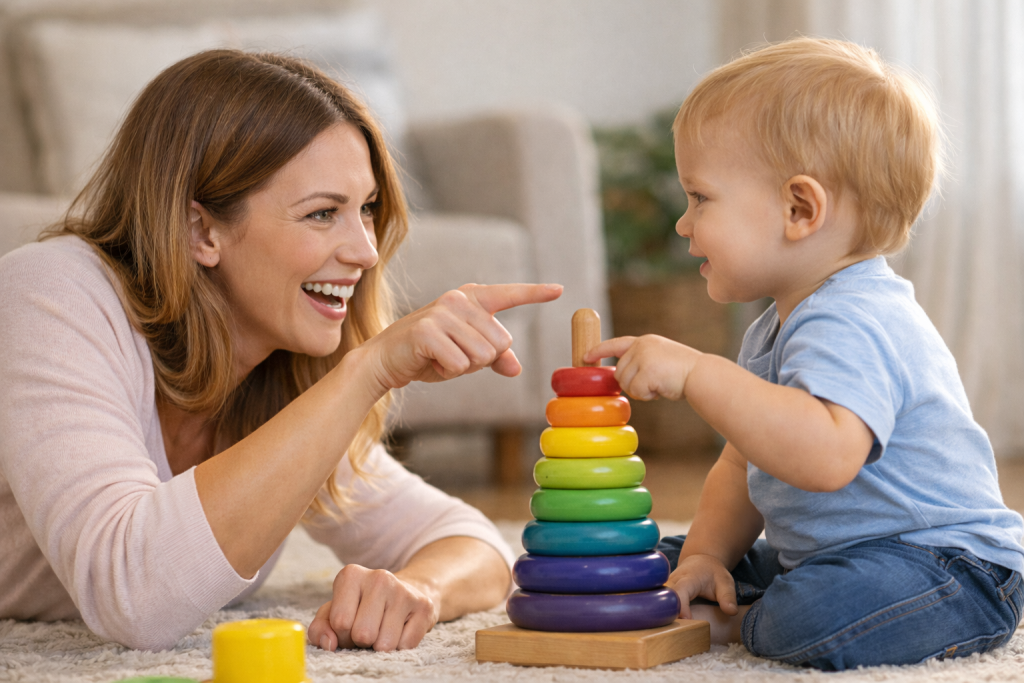
Cause-and-Effect Thinking Becomes More Complex
Before, actions were simple: push something, and it falls.
Now, your child starts to think in steps:
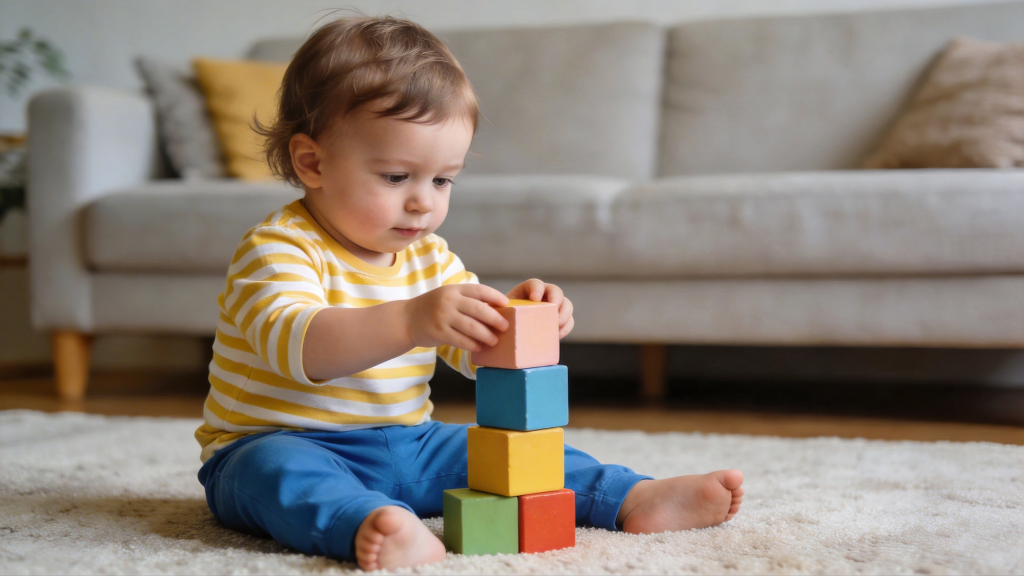
“If I place this block at the bottom, the tower stays stable… maybe I can add another one.”
You’ll see more experimenting—trying, adjusting, and trying again. This is the early stage of logical thinking.
Imitation Evolves Into Real Learning
At this stage, imitation becomes more meaningful.
Your child doesn’t just copy gestures like clapping—they begin copying processes:
You tidy up → they try to tidy
You clean → they want to participate
This reflects early Observational Learning, where children learn by watching and reproducing behavior.
The “Stimulation” Parents Often Misunderstand
Many parents assume that boosting intelligence means teaching more vocabulary, memorizing poems, or exposing children to multiple languages early.
But for a one-year-old, four types of input matter far more.
High-Quality Interaction Matters Most
The more responsive and specific your interactions are, the stronger your child’s neural connections become.
This back-and-forth dynamic is known as Serve and Return, a foundational principle in early brain development.
In simple terms: the more meaningful your communication, the more your child learns to think.
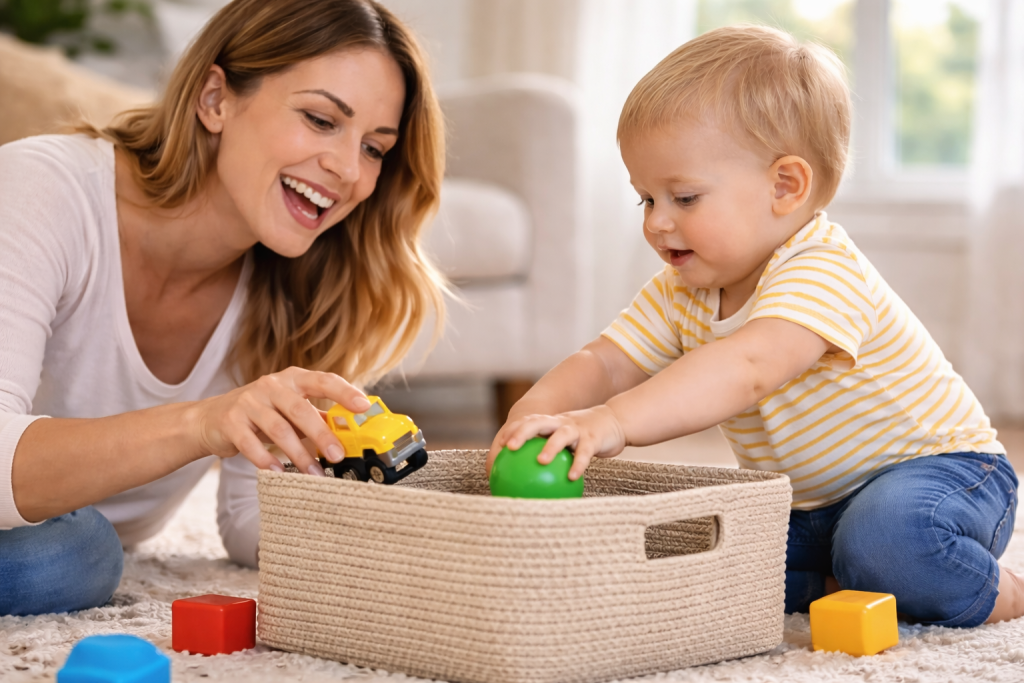
A Hands-On Exploration Environment
Learning at this age is physical.
It’s not about how many toys you own—it’s about whether your child can touch, grab, stack, pour, push, and experiment safely.
Exploration is learning.
Structure and Predictability Build Security
Around age one, children begin forming expectations about how the world works.
When routines are consistent—when meals, sleep, and daily activities follow a pattern—children feel safe. And when they feel safe, their brains are more available for learning instead of managing stress.
Movement Fuels Cognitive Growth
Physical development and brain development are deeply connected.
Activities like crawling, walking, stacking, rotating, and placing objects support Motor Skill, which in turn strengthens attention, spatial awareness, and problem-solving.
Those “messy” actions you see? They’re actually signs of brain growth.
A Simple Daily Approach That Actually Works
You don’t need complicated programs or schedules.
Just 10–20 minutes a day, naturally integrated into your routine, can make a real difference.
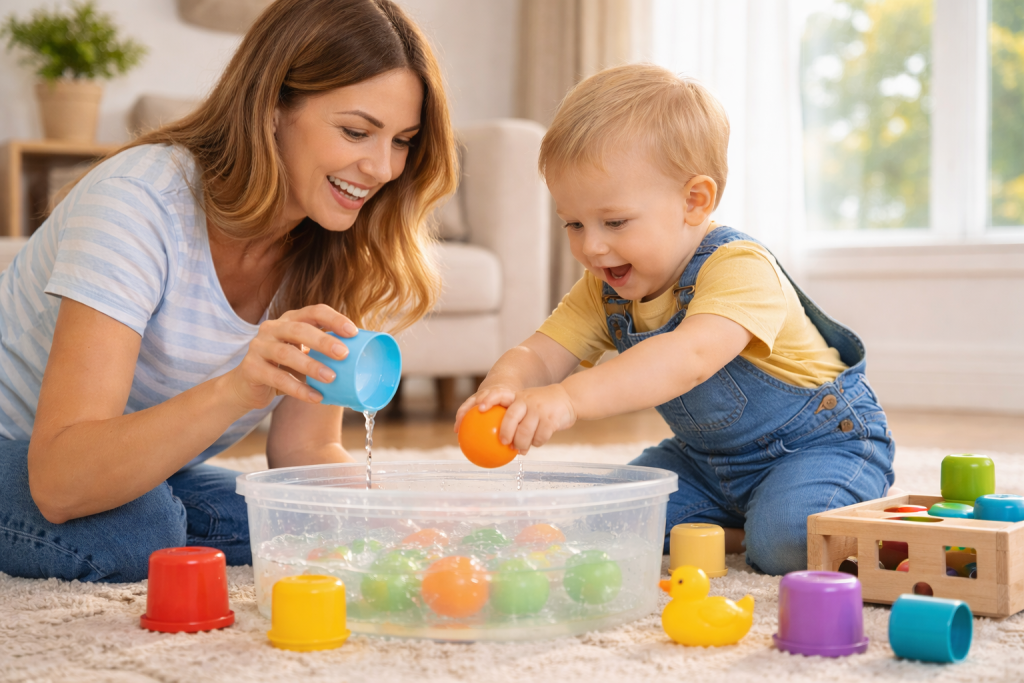
One Daily Cause-and-Effect Activity
Let your child explore simple outcomes:
- Pour water → it overflows
- Push a toy → it moves differently
- Fit objects → big doesn’t fit, small does
- Stack blocks → wider base is more stable
Use simple prompts:
“What do you think will happen?”
“Oh, it fell. Why do you think that happened?”
“Let’s try again.”
These small moments build thinking skills.
One “Follow Their Lead” Conversation
Instead of directing attention, follow your child’s curiosity.
If they look at a car:
“That’s a red car. It’s moving fast.”
If they touch a cat:
“Soft kitty. It says meow.”
This kind of responsive language input is far more effective than structured teaching at this age.
One Fine Motor Challenge
You don’t need special tools—use everyday items:
- Put balls into a container
- Drop socks into a basket
- Place a spoon into a bowl
- Sort blocks by color
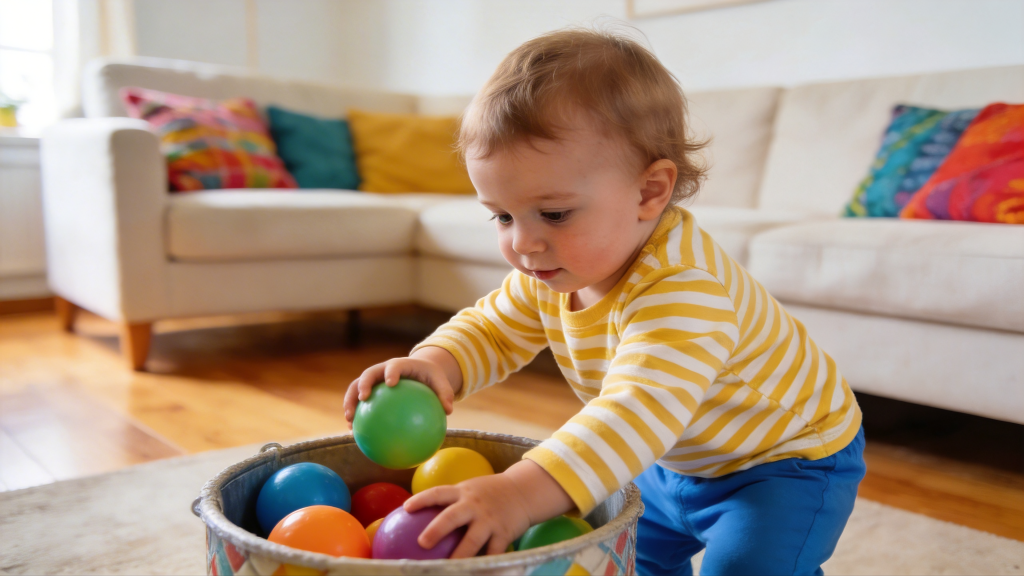
Break tasks into small steps so your child experiences success. Success builds focus and motivation.
One Consistent Routine
Structured routines reduce emotional stress and improve cooperation.
For example:
Bedtime routine:
Bath → Pajamas → Brush teeth → Story → Lights off
Mealtime routine:
Wash hands → Sit down → Eat → Clean up
When routines are predictable, your child’s brain doesn’t need to constantly “figure things out”—it can focus on learning instead.

Common Mistakes That Can Slow Progress
Replacing Interaction With Screens
Screens may provide sound and visuals, but they lack real interaction.
And meaningful development depends on back-and-forth communication—not passive input.
Pushing Academic Skills Too Early
Teaching memorization too early can lead to surface-level learning.
At age one, foundational skills—attention, understanding, and reasoning—are far more important.
Limiting Exploration Too Much
Overly controlled environments can reduce opportunities for learning.
Instead of restricting your child completely, remove hazards and allow safe exploration.
A Simple Daily Checklist You Can Actually Follow
You don’t need to do everything. Just choose what fits your day:
- 3 minutes: cause-and-effect play
- 5 minutes: responsive conversation
- 5 minutes: fine motor practice
- 5 minutes: structured routines
Stick with this for two weeks, and you may notice:
- Increased curiosity
- Longer attention span
- Better understanding
- More stable emotions
Final Thought
This stage isn’t about raising a “genius.”
It’s about giving your child the right kind of input at the right time.
When everyday life becomes intentional, interactive, and engaging, your child’s brain doesn’t just grow—it develops in a strong, healthy, and lasting way.