





A Surprising Diplomatic Moment
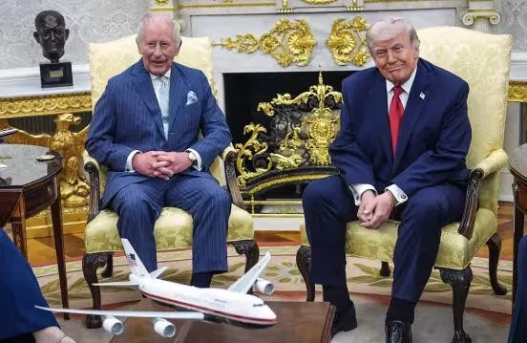
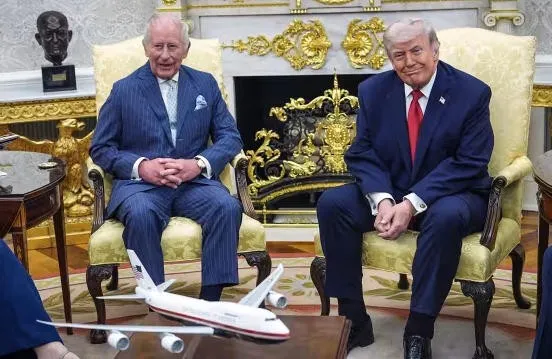
Trump, King Charles, British Royal Family, Genealogy, Scottish Nobility, House of Windsor, Mary Queen of Scots, Royal History, US UK Relations, Ancestry.Few people expected a royal visit to spark such an unusual revelation. When King Charles III and Queen Camilla arrived in the United States for a state visit, the goal was clear. They aimed to strengthen ties between two long-standing allies. The visit also came ahead of America’s upcoming 250th anniversary, adding symbolic weight to the occasion.
Yet before the formalities could settle, Donald Trump took to social media with a striking remark. He joked about wanting to live in Buckingham Palace and hinted he might bring it up with the King directly. The comment sounded playful, but it soon gained a deeper layer of meaning.
A Genealogical Discovery
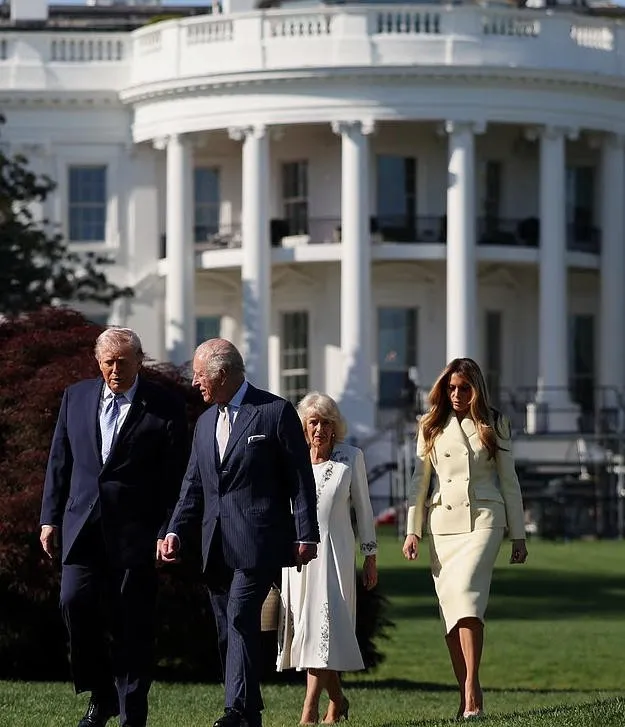
A detailed investigation by a genealogy expert, reported by the Daily Mail, uncovered something remarkable. Trump and King Charles are distant relatives. They are believed to be 15th cousins, sharing a common ancestor from roughly 500 years ago. 
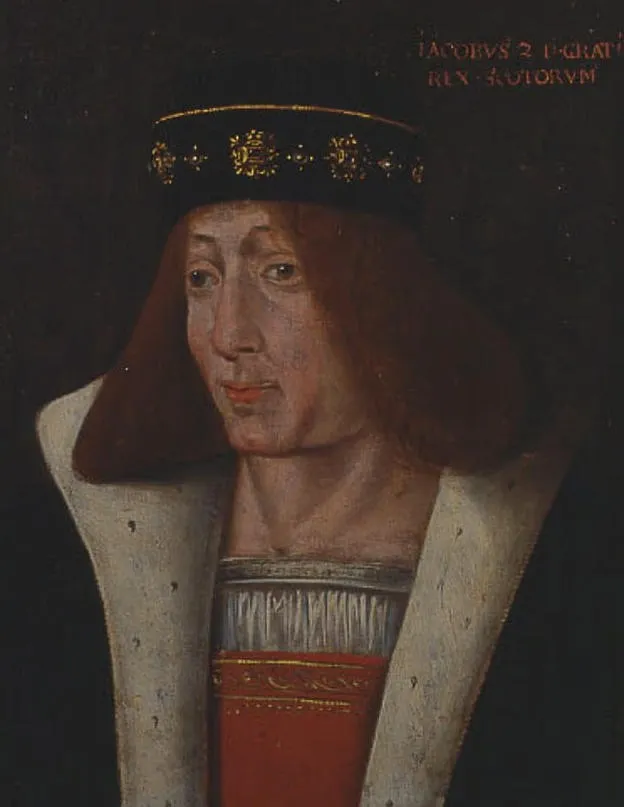
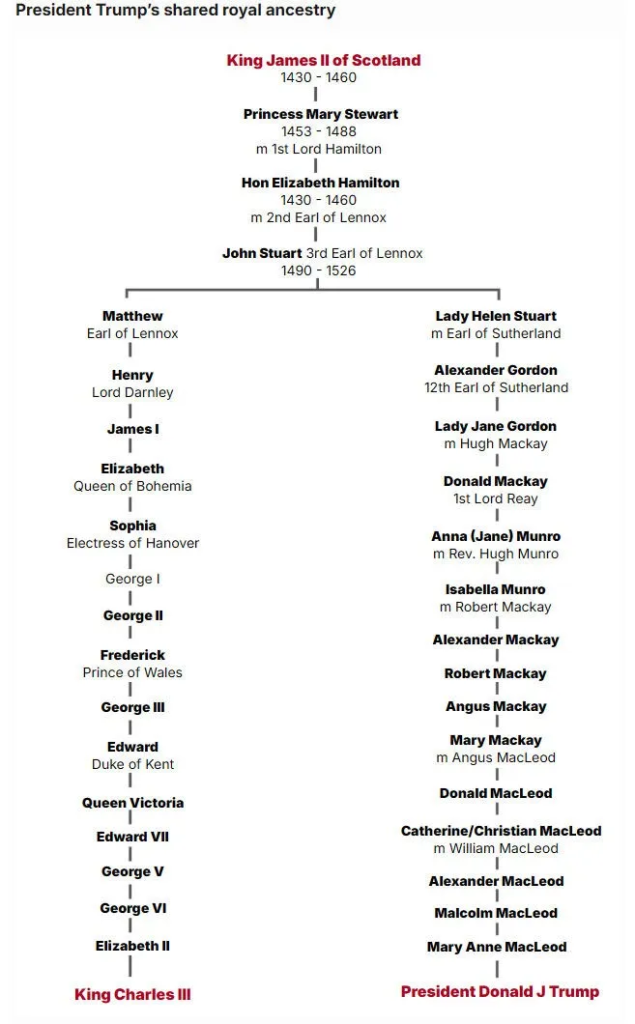
That ancestor was John Stuart, the 3rd Earl of Lennox. He was part of Scottish nobility and a descendant of James II of Scotland. This connection places him firmly within royal bloodlines.
However, his life ended in turmoil. In the early 16th century, Scotland was politically unstable. Competing factions fought for control over the young James V of Scotland. Lennox became entangled in this struggle. He was defeated in 1526 and later killed by a rival known as the “Bastard of Arran.”
Two Family Paths Diverge
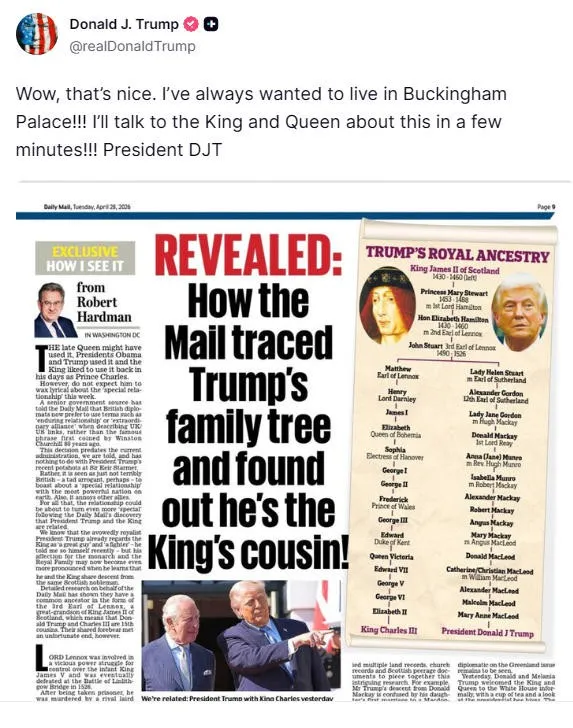
From this tragic figure, the family line split into two very different directions.
The Royal Line
One branch led directly to the British throne. Lennox’s descendants included Lord Darnley, who married Mary, Queen of Scots. Their son became James I of England, uniting the English and Scottish crowns.
From there, the lineage continued through the House of Stuart and eventually evolved into the modern House of Windsor, to which King Charles belongs.
The Distant Branch
The second branch moved steadily away from royal power. Lennox’s daughter married into another noble family in northern Scotland. Over generations, the lineage spread across clans and gradually lost its aristocratic status.
One notable descendant was Donald Mackay, a loyal supporter of Charles I of England. During the English Civil War, he fought for the royalist cause. He was captured, imprisoned, and eventually exiled to Denmark, where he died far from home.
Over time, the family became ordinary citizens. They settled in remote Scottish regions, where Scottish Gaelic was commonly spoken.
From Scotland to America
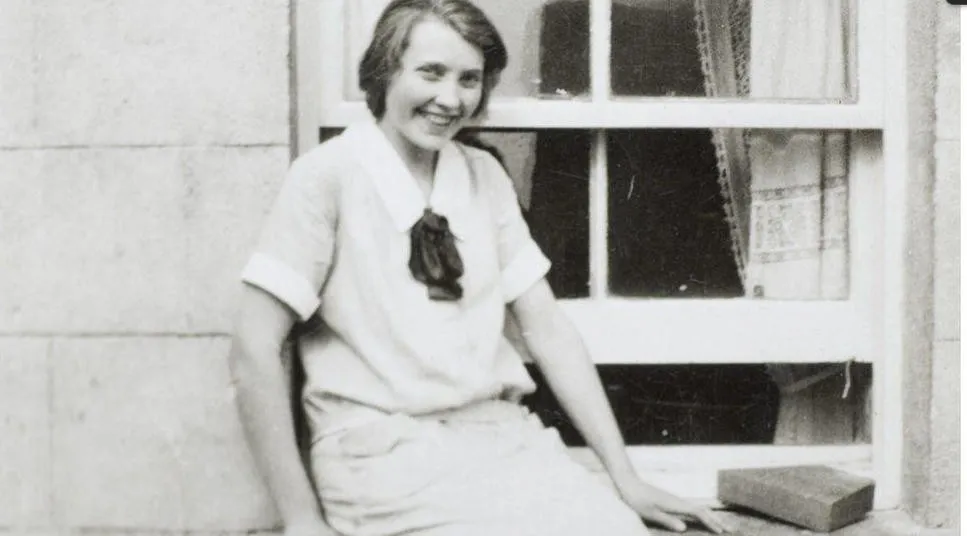
In 1930, an 18-year-old woman named Mary Anne MacLeod left Scotland for New York. She came from a small village in the Hebrides and carried just 50 dollars with her. Her listed occupation was domestic worker.
She later married Fred Trump, a real estate developer in New York. Together they had five children. Their fourth child was Donald Trump.
This maternal lineage helps explain Trump’s fascination with British royalty. He has often spoken warmly about his mother’s admiration for the royal family.
A Personal Connection to Royalty
During a White House ceremony welcoming King Charles, Trump recalled his mother’s deep affection for the monarchy. He described her as a devoted fan of Elizabeth II. Whenever the Queen appeared on television, she would eagerly watch and call her children to join.
Trump also shared a humorous memory. His mother once admired a young Prince Charles on screen, calling him charming. The remark drew laughter from the audience and a slightly awkward smile from the King.
Trump even gestured upward and wondered aloud what his mother might think of the moment now.
Trump and the Royal Experience
Trump’s interest in the royal family is not merely sentimental. During his 2018 visit to the United Kingdom, he met Queen Elizabeth II at Windsor Castle. The meeting was scheduled for 30 minutes but lasted 47.
In a later visit, he and Melania Trump paid respects at St George’s Chapel, where the Queen is buried.
Given this history, his comment about living in Buckingham Palace may not be entirely a joke. It reflects a long-standing fascination shaped by family background.
A Gift with a Twist
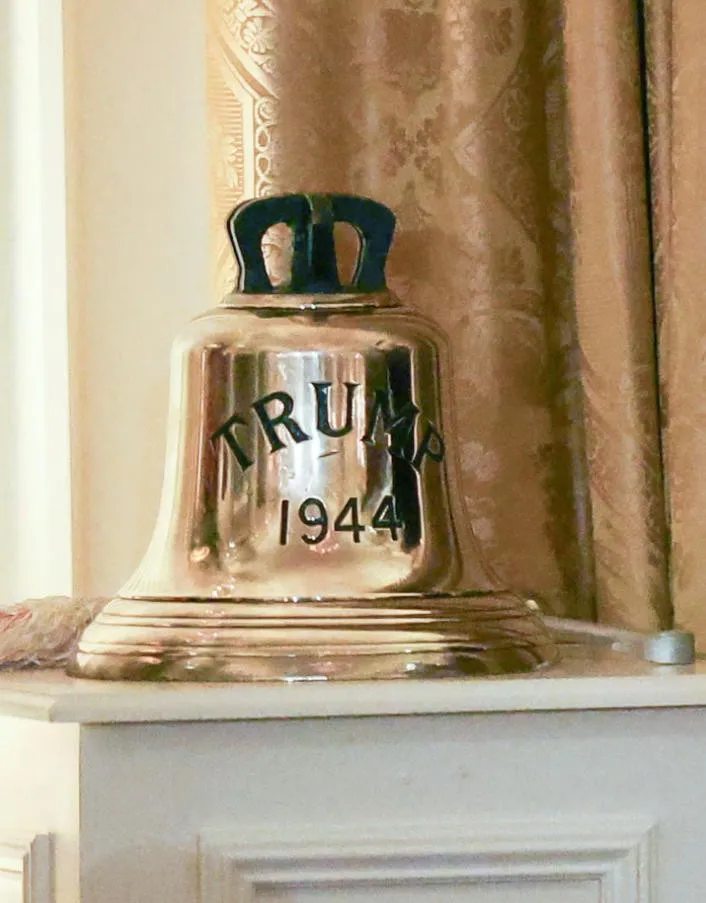
At the state banquet, King Charles presented Trump with an unusual gift. It was a bell from a World War II British Royal Navy submarine named HMS Trump. The vessel was launched in 1944 and served in the Pacific.
The name was purely coincidental, but the King embraced the irony. He described the bell as a symbol of shared history and future cooperation. He even joked that Trump could ring it anytime he wished to make contact.
A Dark Historical Joke
King Charles also showed his sense of humor in another remark. He referenced Trump’s renovation plans for the White House’s East Wing. Then he added a historical quip.
He noted that the British had once carried out their own “real estate development” on the White House in 1814. This was a reference to the burning of the White House during the War of 1812.
The joke was sharp, blending history with wit.
Are They Really Relatives?
While the genealogical link is real, it should be viewed with perspective. Once family trees extend beyond 15 generations, shared ancestors become extremely common. Many people of European descent can trace connections to the same historical figures.
In that sense, calling Trump and King Charles “cousins” is technically correct but somewhat exaggerated. It is a distant connection with little practical meaning.
A Historical Irony
One amusing detail stands out. Through the royal lineage, Trump is also distantly related to George III. This was the British king whose policies angered American colonists and led to the American Declaration of Independence.
As the United States prepares to celebrate 250 years of independence, it is essentially marking its break from a monarch who now shares a distant link with one of its former presidents.
It is an irony that history seems to enjoy.