







Have you already started worrying about the so-called “Terrible Twos”?
What if I told you the real preparation doesn’t begin at two — it begins at one?
Today we’re talking about how to use your child’s first year after turning one to lay the groundwork properly, so that the next stage isn’t a battlefield — it’s a transition. 
Why Start at One? Because the Brain Is Quietly Wiring Itself
Researchers studying early childhood brain development — including work associated with Stanford University — have identified a crucial window between 12 and 18 months of age. During this period, the prefrontal cortex enters its first major developmental peak.
So what exactly is the prefrontal cortex?
Think of it as the brain’s CEO. It is responsible for:
- Emotional regulation
- Impulse control
- Rational decision-making
But at one year old, this CEO has just been hired. No experience. No training. It’s essentially in internship mode. Full executive functioning doesn’t show up until closer to age two.
So what does this “intern” do all year?
It collects data obsessively.
What does Mom’s face look like when she’s angry?
What happens when I cry loudly?
If I want something, what strategy works best?

Every single interaction becomes part of the operating manual that will run during the Terrible Twos.
At one year old, every response you give is like writing code for that CEO.
Write stable code — age two feels like an upgrade.
Write chaotic code — age two feels like a crash.
Three Foundations to Build Before Two
If age two is the house, age one is when you pour the foundation.
There are three pillars that matter most.
Foundation One: Language — Give Emotions an Exit
Why are two-year-olds often described as “dramatic”?
Because their internal world expands faster than their vocabulary.
A longitudinal study from University of Minnesota tracked 200 families and found that toddlers with fewer than 20 words at 18 months were significantly more likely to have intense emotional outbursts at age two.
This isn’t bad behavior.
It’s bottled-up frustration.
When children cannot express what they want, crying, throwing, and hitting become their only communication tools.
How to Build Language at One
Narrate daily life.
During diaper changes, don’t stay silent. Be descriptive:
“Mommy is opening the Velcro. Hear that sound? Now we wipe. Is it cold?”
Use concrete nouns instead of vague words like “this” and “that.”
Research from University of California, Los Angeles shows that increased exposure to specific vocabulary significantly improves expressive language outcomes by age two.
More specific words in → more usable words out.
Upgrade: Teach Emotional Vocabulary
Point to a picture book:
“The bear can’t find his mom. He feels sad. Look at his tears.”
Point to yourself:
“Mommy couldn’t find her keys. I feel frustrated.”
If at two your child can say “I’m mad” instead of collapsing into tears, you’ve already prevented half the meltdown.
Foundation Two: Autonomy — Make Space for Independence
The core tension at two is simple:
“I want to do it myself.”
But…
“I don’t actually have the skills yet.”
If everything is done for a child at one, then independence explodes at two — and so does frustration.
Can’t put on shoes? Cry.
Spills food? Cry.
Can’t reach the elevator button? Cry.
This isn’t manipulation.
It’s the emotional weight of incompetence.
What to Do at One
Within safe limits, begin transferring small pieces of control.
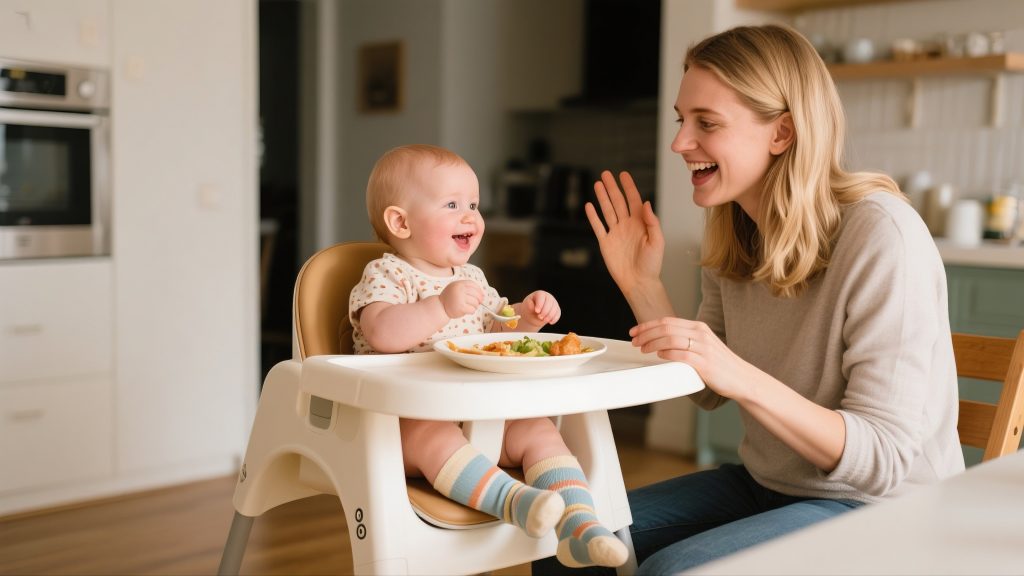
- Feed one spoonful, let them grab the next.
- You put on one shoe, let them try the other.
- Lift them up to press the elevator button.
These tiny victories build confidence.
When power has gradually been shared at one, children don’t need to scream for it at two.
Foundation Three: Routine — Draw a Map of the World
Why do two-year-olds love saying “no”?
Because sometimes “no” is the only thing they can control.
If the world feels chaotic and unpredictable, resistance becomes a safety strategy.
But if the world is structured and consistent, children don’t need constant opposition to feel secure.
The Center on the Developing Child at Harvard University emphasizes the importance of predictable environments for healthy brain development.
When children can anticipate what happens next, their brains shift energy away from scanning for danger and toward exploration and learning.
Build Rhythm at One
Create a repeating daily flow:
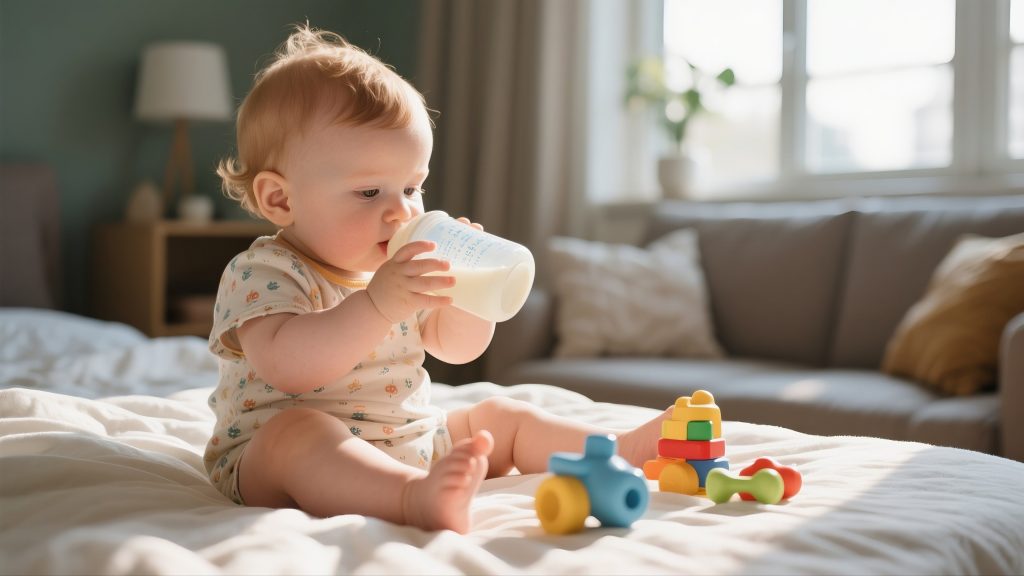
Wake up → milk → diaper → play → solid food → book → nap.
It doesn’t need to be timed down to the minute.
But keep the order consistent.
Around 18 months, you may notice something remarkable: after milk, your toddler moves toward the changing table on their own.
They know what’s next.
That sense of predictability becomes emotional stability during the Terrible Twos.
Three Communication Tools You Can Start Using Now
Communication doesn’t begin at two.
Age one is the practice ground.
1. Limited Choices Instead of Commands
Instead of:
“Put your shoes on.”
Try:
“Do you want the blue shoes or the yellow shoes?”
Two acceptable options. They choose. Cooperation increases.
At two, this evolves into:
“Do you want to brush your teeth yourself or have Mommy help?”

2. Warnings Instead of Sudden Interruptions
If your toddler is deeply focused on play and you suddenly pick them up for dinner, tears are likely.
Instead say:
“Five more minutes, then we eat.”
They may not fully understand time, but they understand tone and transition.
At two, use a timer.
When it rings, it’s not you ending the fun — it’s the signal.
Resistance decreases significantly.
3. Validate Feelings Instead of Dismissing Them
If blocks fall and your child cries, avoid:
“You’re fine.”
Instead say:
“The tower fell. That’s frustrating, isn’t it? Let’s build it again together.”
Children who feel understood regulate faster.
Children whose emotions are dismissed often amplify them later.

A Final Reassurance for Parents
Don’t fear the Terrible Twos.
Long-term developmental research from Yale University followed children for decades and found that strong-willed toddlers often grow into assertive, confident adolescents who are less likely to be socially dominated.
Meanwhile, extremely “easy” toddlers sometimes postpone their independence surge until the teenage years.
Seen differently, the Terrible Twos are not a disaster.
They are your child’s first declaration:
“I am my own person.”
It may be loud.
It may be messy.
But it is growth.
The foundations you build at one communicate something powerful:
You can be independent — and I will stay beside you.
You can say no — and I will teach you better strategies.
You can feel big emotions — and I am not going anywhere.
That isn’t just surviving the Terrible Twos.
That’s shaping them.