




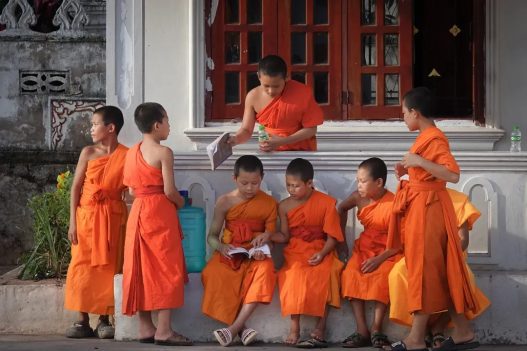
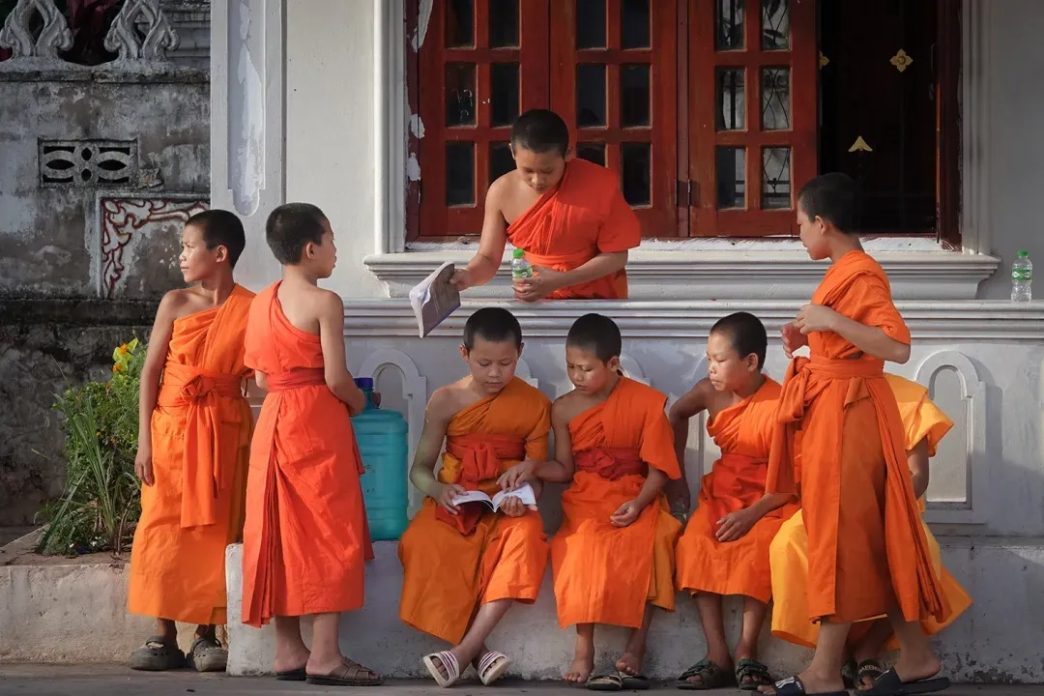
In the quiet and deeply spiritual land of Laos, there exists a timeless tradition: many men, regardless of their background, will spend part of their lives as monks. This practice is more than a ritual—it’s a journey inward, a path toward peace and understanding.
Among these traditions, the daily act of almsgiving—known in Buddhism as a form of generosity—is one of the most moving. Silent and simple, yet profoundly powerful, it reveals the heart of Lao culture.
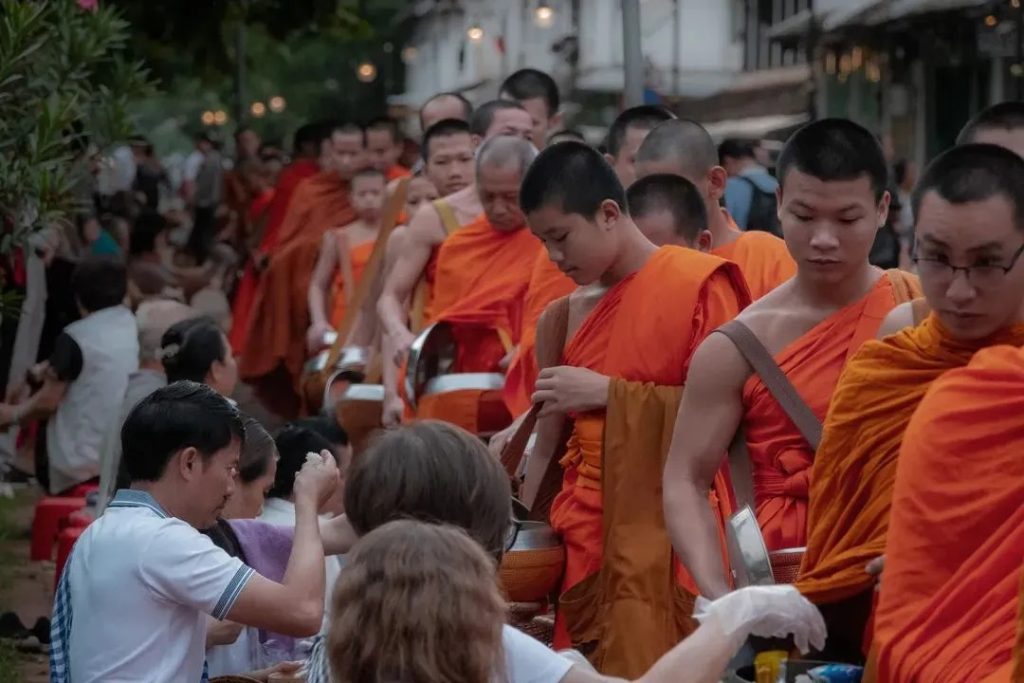
Beyond the Crowds: A Different Side of Almsgiving
Many travelers are drawn to the famous almsgiving ceremonies in Luang Prabang, where long lines of monks create a dramatic and photogenic scene. 
But in Vientiane, the experience feels entirely different—quieter, more intimate, and perhaps even more meaningful.
Here, there are no crowds, no spectacle—just life unfolding as it always has.
Dawn at the Temple: Where the Ritual Begins
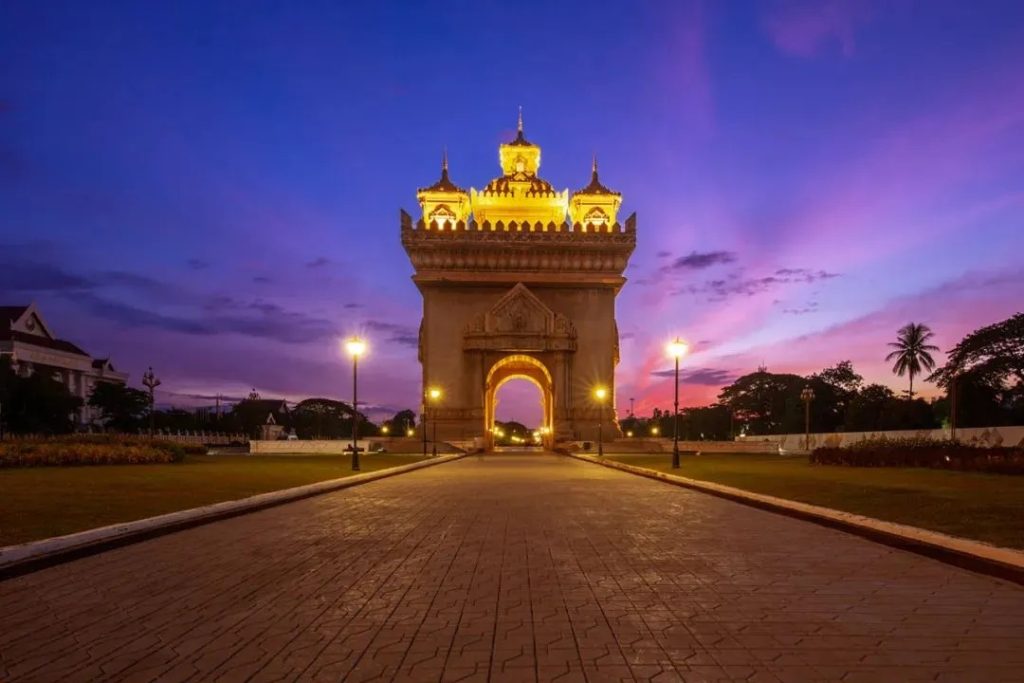
At first light, near the Patuxai, monks in saffron robes pass by almost like flashes of orange in the early morning haze.
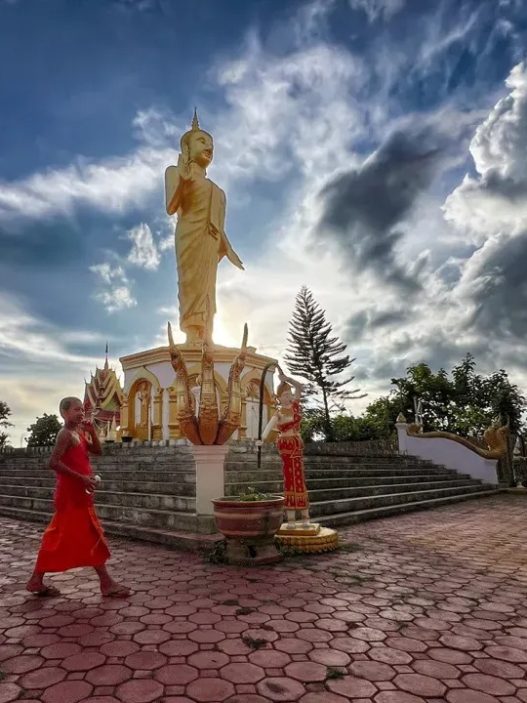
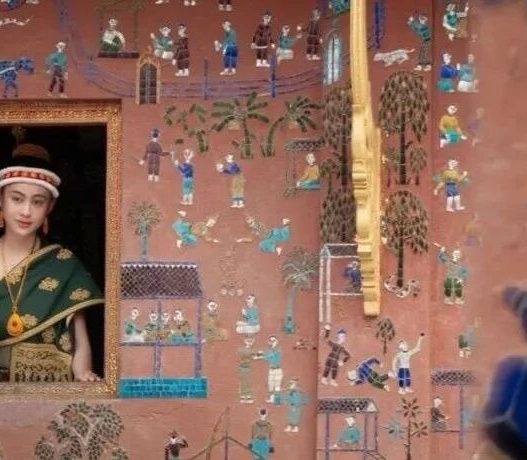
The next day, before sunrise, I followed a local guide to Ban Fai Temple—one of the oldest temples in the city, dating back to the 16th century. Known for its murals and sacred statues, it is also an important center for monastic education, where young monks study scriptures, language, and culture.
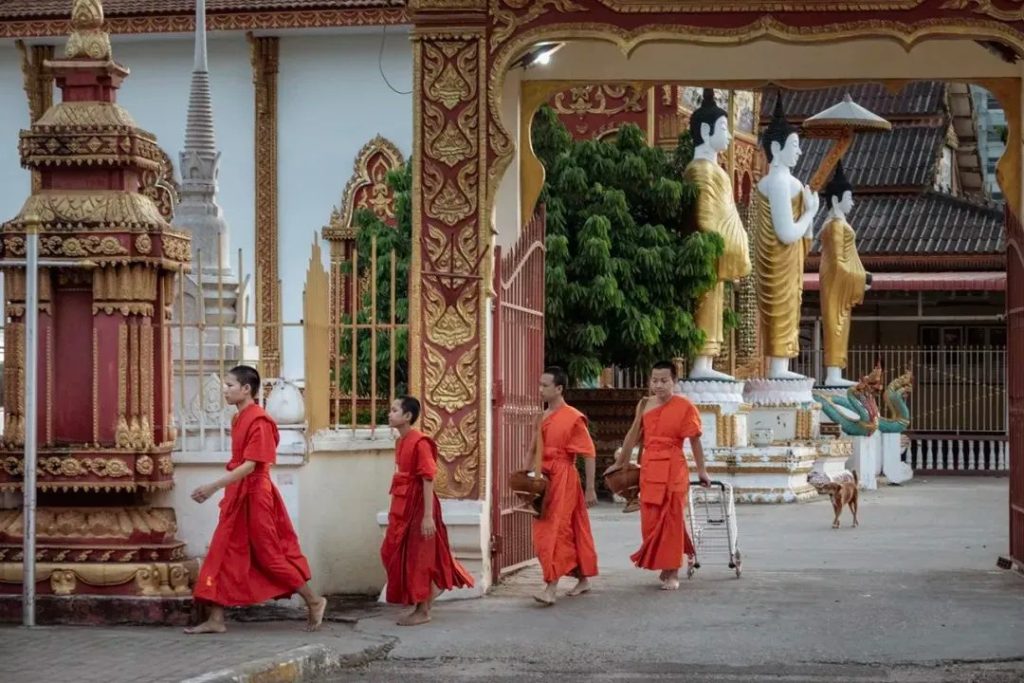
The Almsgiving Ritual: Silent, Simple, Sacred
As the first hints of sunlight begin to touch the streets, the ritual quietly begins.
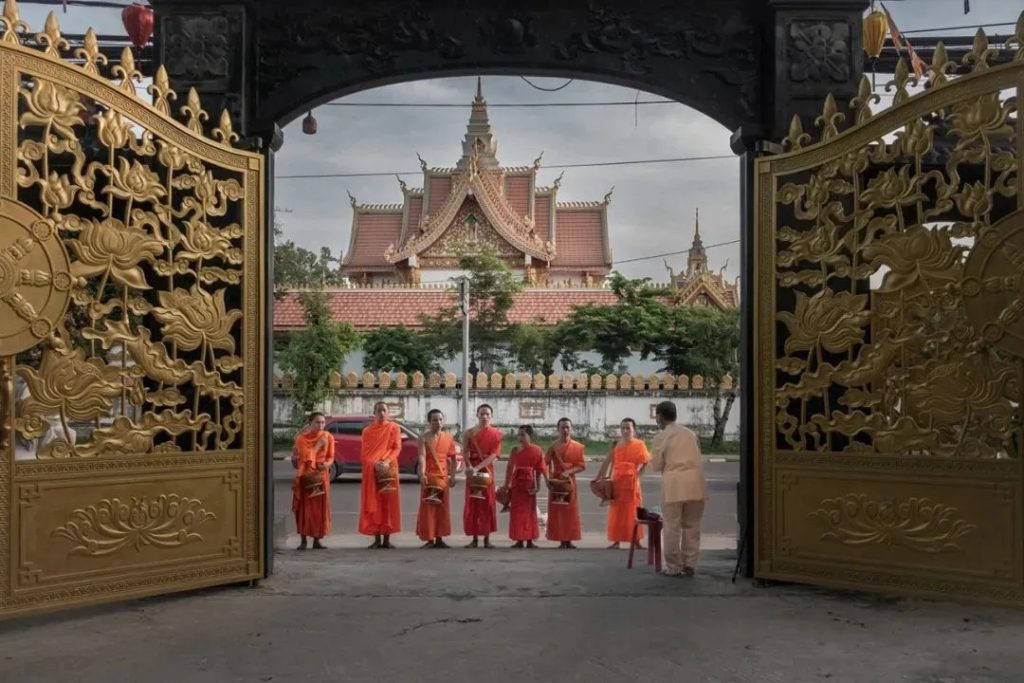
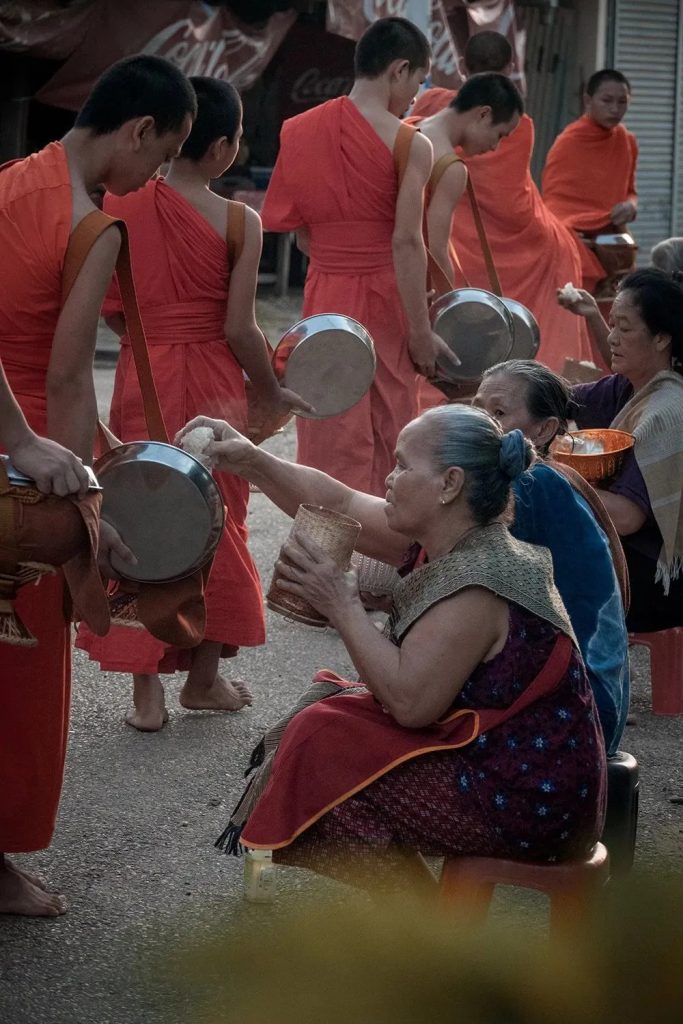
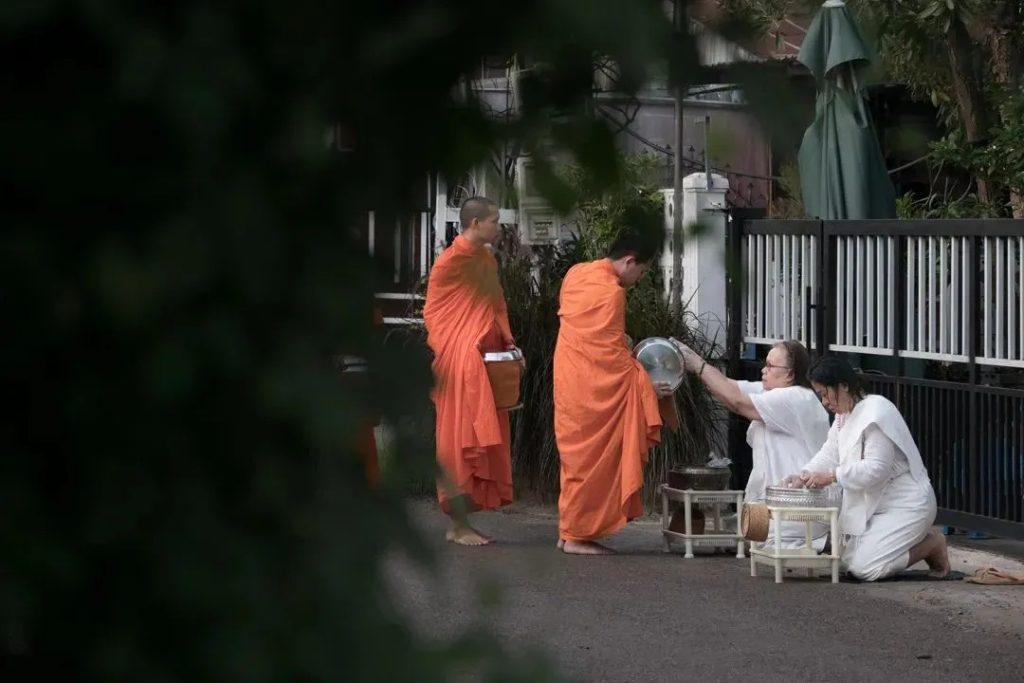
Monks, dressed in orange robes and walking barefoot, move in a calm and orderly line, each carrying an alms bowl. Their pace is steady, almost swift, yet filled with purpose.
On both sides of the street, locals wait patiently. Some kneel, others sit, all with deep respect. With their right hand—never the left—they gently place small portions of sticky rice into the monks’ bowls.
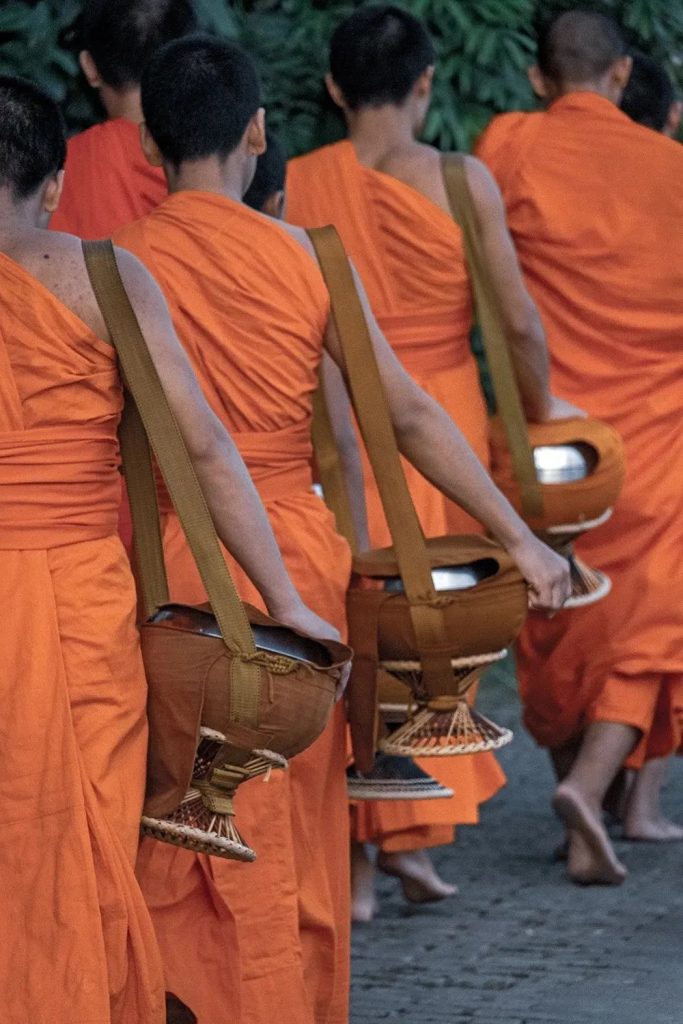
There is no talking. No laughter. No distractions.
Even the donors remain barefoot, a sign of humility and reverence.
The Meaning Behind the Offering
In Buddhism, almsgiving is not just charity—it is a spiritual practice.
For the giver, it is a way to accumulate merit, cultivate compassion, and seek inner peace.
For the monks, accepting offerings is not about material need, but about offering blessings and sharing wisdom in return.
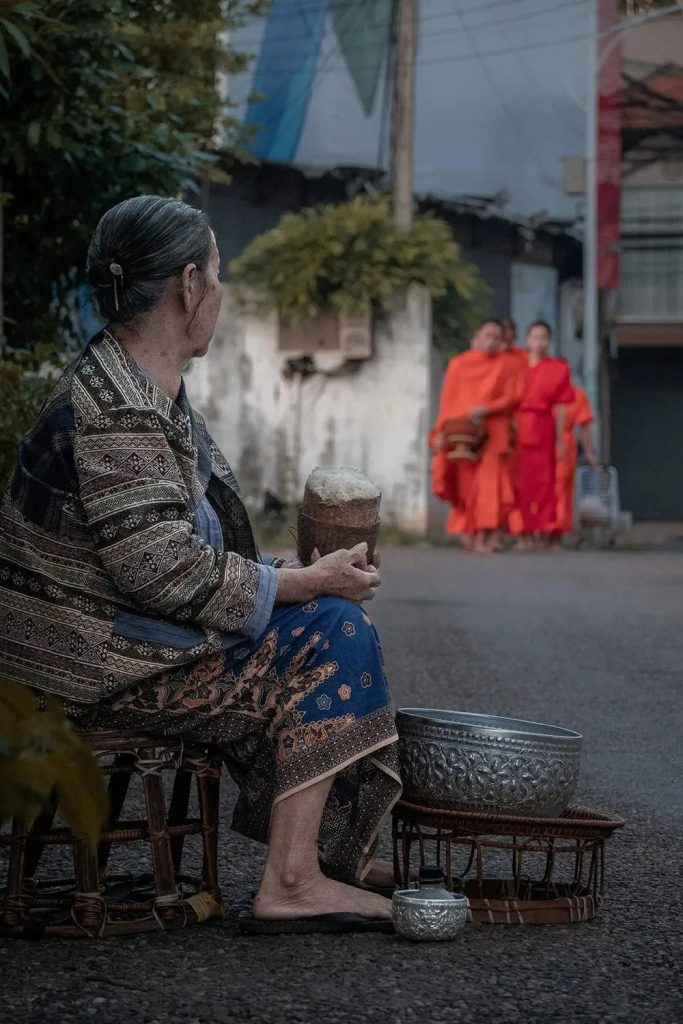
When the bowls are full, excess food is often passed along—to the poor waiting nearby. In this quiet exchange, giving and receiving become one continuous act of kindness.
Equality in Faith: Where Status Disappears
One of the most striking aspects of this ritual is its quiet equality.
Whether rich or poor, every participant approaches the act with the same sincerity. Social status fades away, replaced by a shared sense of devotion. This reflects a core belief in Buddhism—that all beings are equal.
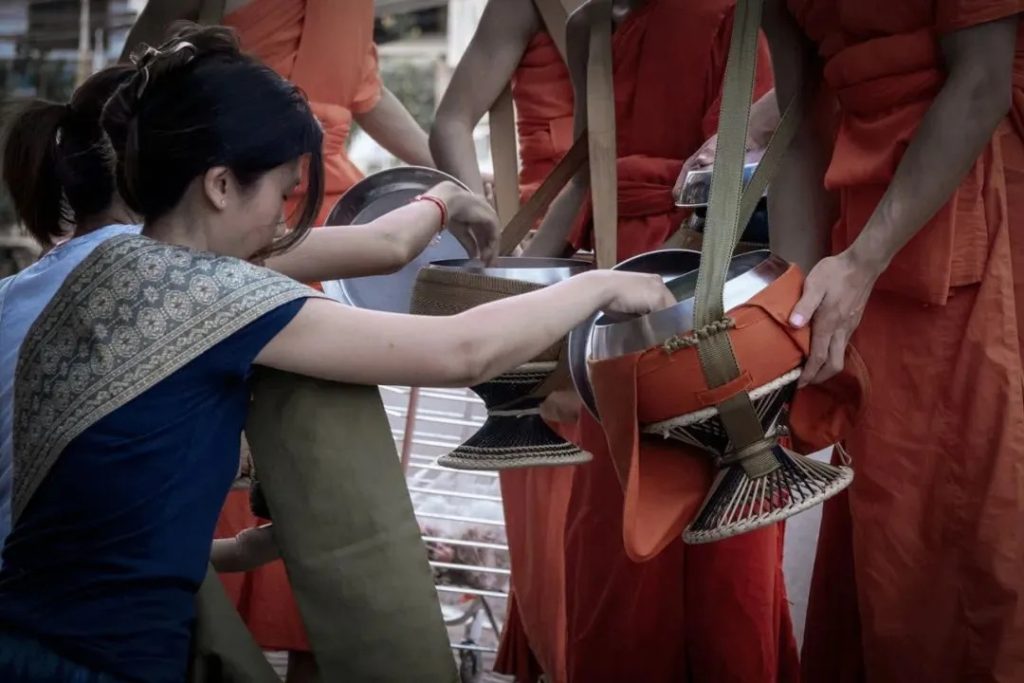
There is no pride in giving, and no shame in receiving. Both are part of a natural cycle of generosity and gratitude.
Vientiane vs. Luang Prabang: Quiet Power Over Spectacle
While Luang Prabang offers a grand and visually impressive almsgiving ceremony, Vientiane’s version feels more authentic.
There are no staged moments, no performances for visitors—just everyday life. This simplicity gives the ritual its strength. It is not something put on display, but something lived.
A Moment That Stays With You
In Vientiane, there are no crowds of tourists, no loud voices—only a quiet understanding between monks and locals.
Every gesture, every glance, carries a sense of calm built over generations.
This humble ritual reveals something deeper: faith does not need to be loud to be powerful. Sometimes, it is in the most ordinary moments that we discover the most extraordinary truths.
Final Reflection: Lessons from a Quiet Morning
As a Buddhist verse suggests:
“All things are impermanent, but generosity endures.”
In the gentle rhythm of giving and receiving, we are reminded of something essential—kindness, humility, and sincerity are what truly matter.
Perhaps, in a fast-moving world, we can all learn from Vientiane—to slow down, to give without expectation, and to find meaning in life’s simplest moments.