





Last week, I visited a friend—and the moment I walked in, I heard a familiar tune floating from the living room: “Twinkle, Twinkle, Little Star.”
I was about to hum along when I noticed her 2-year-old son standing frozen in the middle of the room. His arms were stiff at his sides, his face flushed bright red—and he refused to clap along.
My friend sighed, clearly frustrated.
“The music teacher showed him this… but at home, he just won’t do it!” 
I laughed and said, “You ask a toddler to clap, and suddenly clapping becomes illegal. Classic 2-year-old behavior.”
But she wasn’t amused.
“So how am I supposed to build his musical sense? Everyone says age two is the golden period for right-brain development. If we miss it, it’s gone!”
I sat down and told her something that completely surprised her:
“Right now, your child doesn’t need to clap. He needs to move—freely.”
The Truth About “Right Brain Development”
Let’s break this down.
The human brain has two hemispheres with different roles.
The left side is responsible for logic, language, and analysis.
The right side handles creativity, emotion, imagination, and intuition.
At around ages 2–3, the right brain is going through rapid growth. Neural pathways linked to emotion and creativity are expanding fast—like grass after spring rain.
Miss this stage, and developing those abilities later can become much harder.
But here’s where many parents get it wrong.
They think “right brain development” means piano lessons, reading sheet music, or perfectly clapping on beat—like preparing for a conservatory audition.
That’s not it.
For toddlers, it all comes down to one thing:
Rhythm Through Movement
What does that mean?
It means letting the body move freely with music.
No rules. No perfect timing. No correction.
Just letting music flow into the body—and letting the body respond naturally.
This simple process stimulates the brain far more powerfully than you might expect.
What Happens in the Brain When Music Plays?
Research using functional magnetic resonance imaging has revealed something fascinating:
When we listen to music, almost the entire brain lights up.
Not just the auditory cortex—but also areas responsible for movement, emotion, memory, and even visual imagination.
Music isn’t just something we hear. It’s something we experience with the whole body.
Now imagine what happens when a child moves with music.
The effect multiplies.
Their body is active.
Their emotions are flowing.
Their imagination is engaged.
Both hemispheres are working together, and the bridge connecting them—the corpus callosum—is being strengthened.
Children who regularly engage in free musical movement develop stronger coordination between both sides of the brain.
And that leads to something powerful:
- Better spatial thinking in math
- Stronger logic in creative tasks
- More flexible thinking overall
That’s what real intelligence looks like.
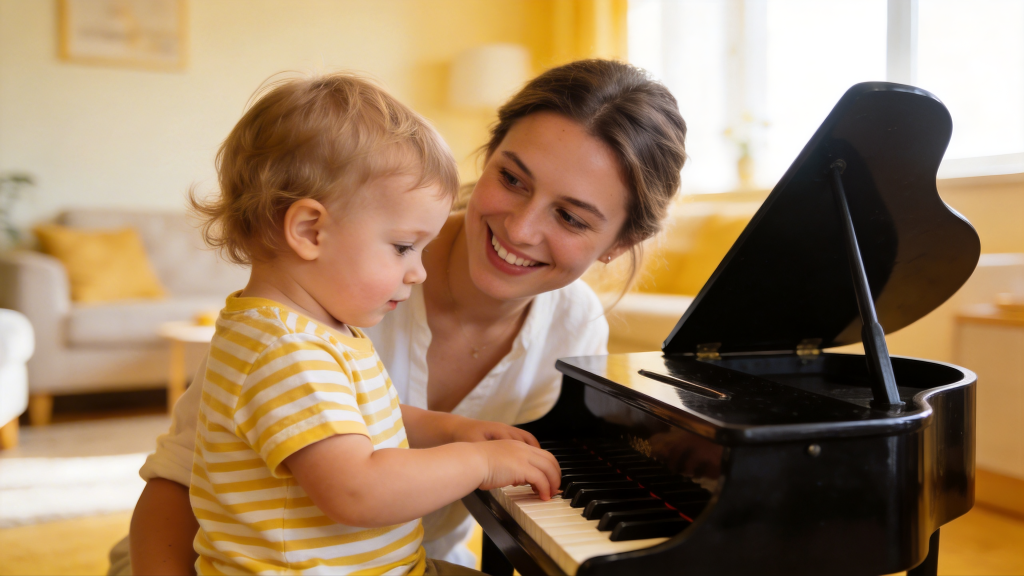
5 Simple Music Games (Just 5 Minutes a Day)
No instruments. No training. Just play.
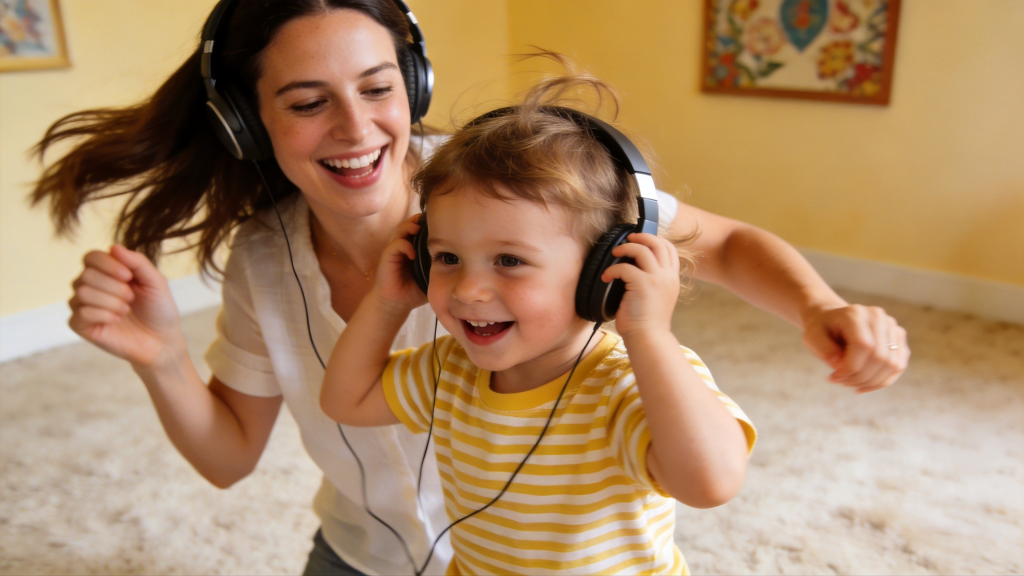
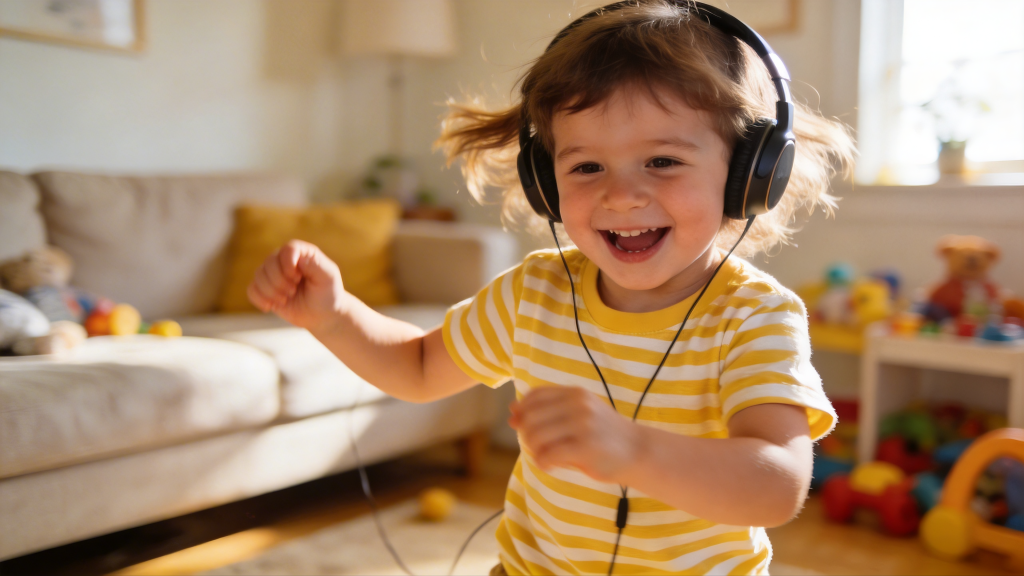
Game 1: The Free Dance Party
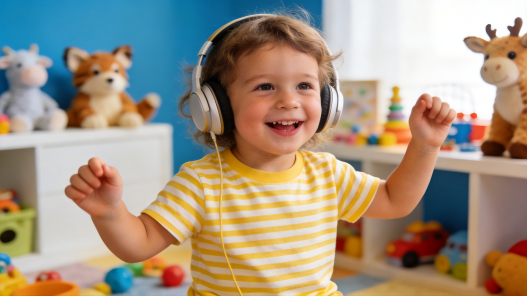
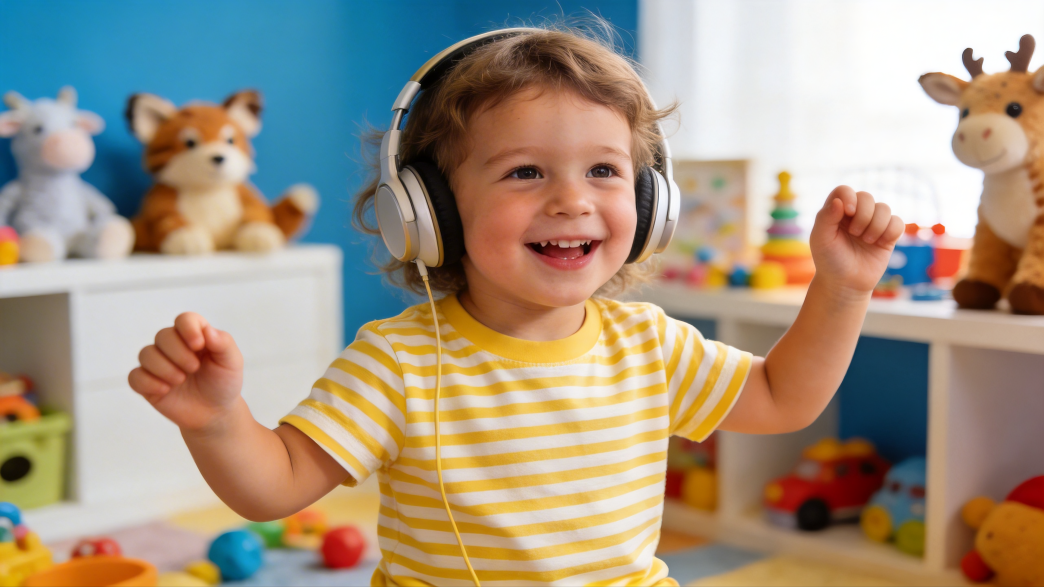
Turn on an upbeat song—and start dancing wildly yourself.
The sillier you are, the more your child will want to join in.
Don’t teach. Don’t correct.
If your child shakes their head, you do the same.
If they spin, you spin too.
You’re a mirror—not a coach.
After 2 minutes, switch to slower music and move gently.
Let them feel the contrast in rhythm.
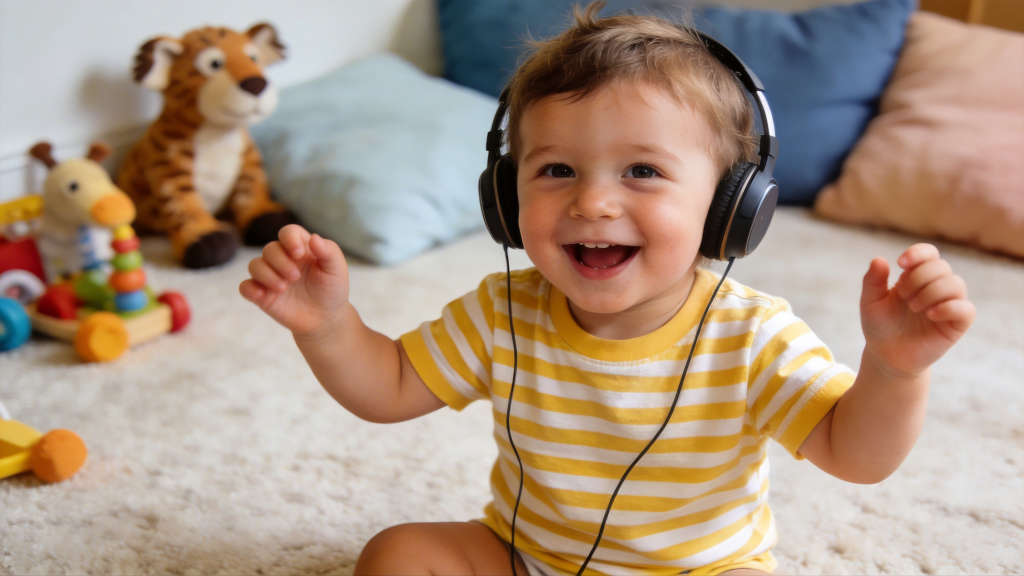
Game 2: Animal Music Adventure
Play music and say:
“Let’s be animals! How does an elephant walk? A bunny hop? A snake move?”
Change animals with each song.
This builds connections between movement, imagination, and sound.
And here’s the magic:
Your child thinks they’re just playing—but they’re actually training coordination, rhythm, creativity, and imitation—all at once.
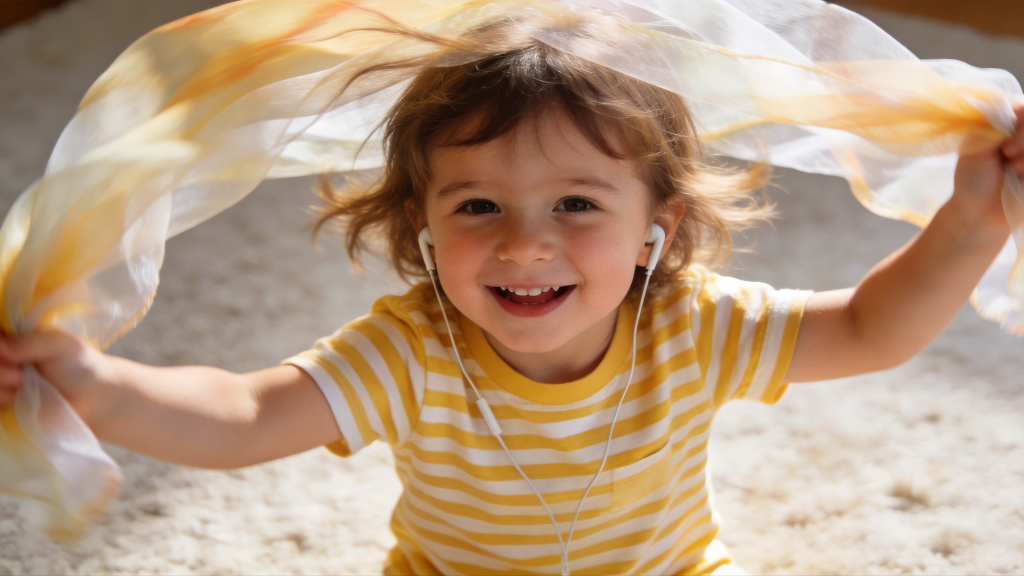
Game 3: Floating Scarf Dance
Grab a scarf or light cloth.
Play soft music and let your child wave it freely.
They can:
- Float it up and down
- Hide behind it
- Toss and catch it
The softness sparks creativity and improves hand-eye coordination.
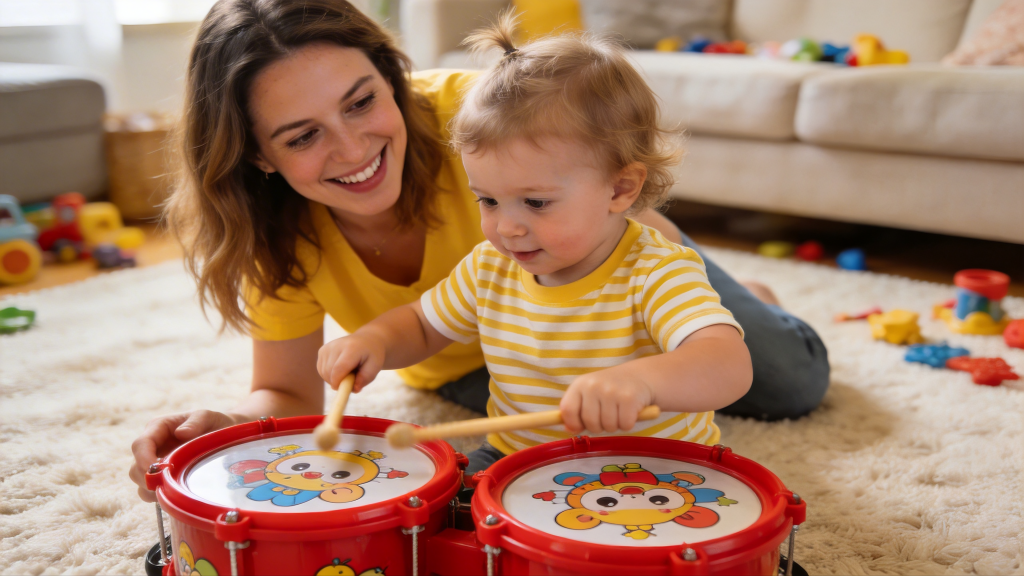
Game 4: Kitchen Band Chaos
This one gets loud—but kids love it.
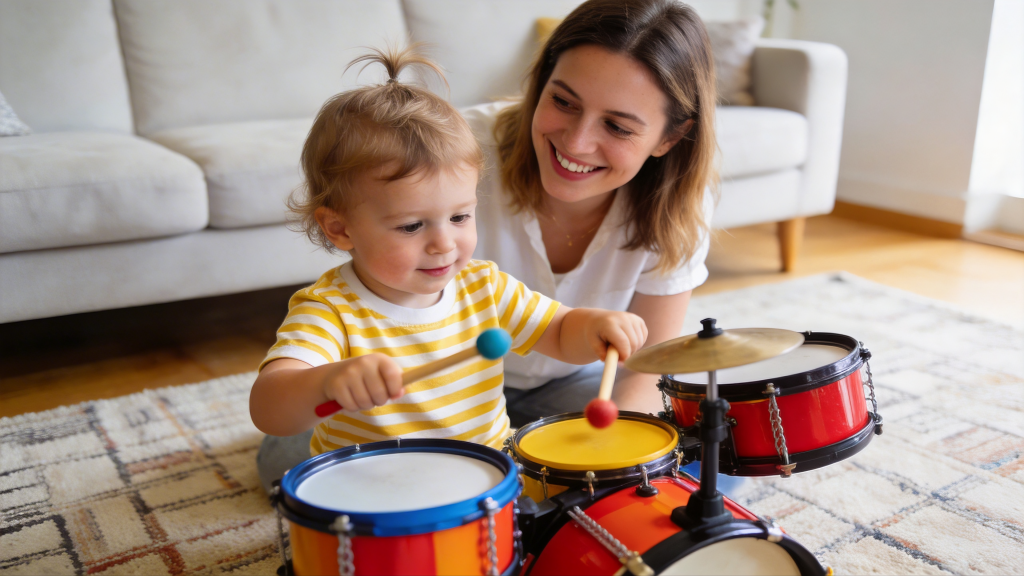
Grab bowls, pots, cups, and a wooden spoon.
Let your child explore different sounds.
Ask questions like:
- Which one is louder?
- Which sounds softer?
- What happens if you tap fast vs. slow?
This isn’t noise—it’s early exploration of rhythm, tone, and volume.
Game 5: Emotion Music Game
Prepare different types of music: happy, sad, tense, calm.
Play one and ask:
“How does this feel? Happy or sad?”
Then let your child express it with movement.
- Happy → jump
- Sad → curl up
- Nervous → look around, shrink shoulders
This builds emotional awareness—one of the foundations of emotional intelligence.
Mistakes Parents Should Avoid
Forcing Perfect Rhythm
Toddlers aren’t wired to follow beats precisely yet.
And that’s okay.
Movement matters more than accuracy.
Only Playing Nursery Rhymes
Kids need a rich musical diet.
Try:
- Classical
- Jazz
- Folk
- Rock
Different styles activate different brain areas.
Using Music as Background Noise
Don’t just press play and walk away.
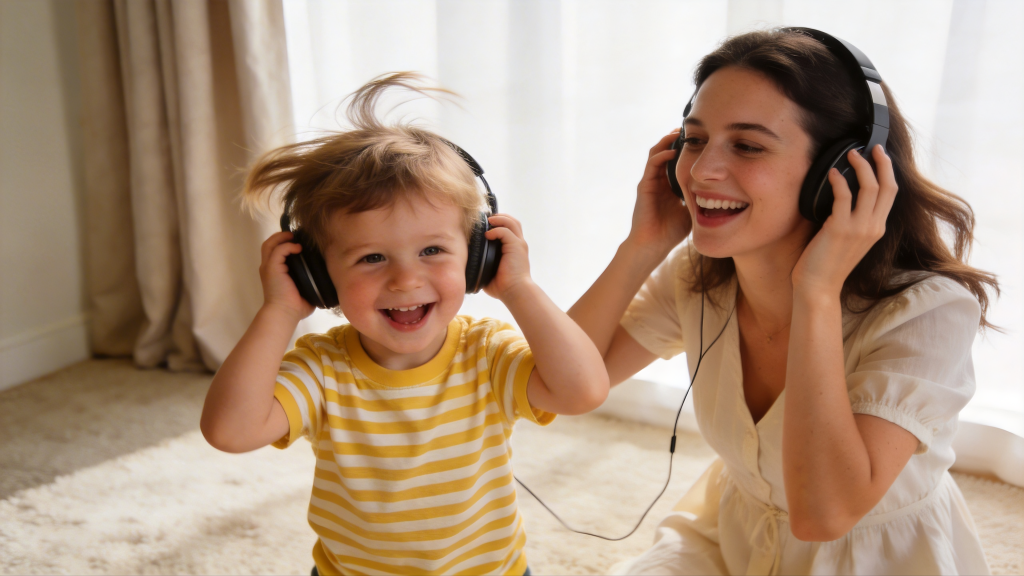
Sit with your child. Move with them.
Music is about connection.
Turning It Into a Performance
“Come on, show everyone what you learned!”
That’s the fastest way to kill interest.
Keep music playful—not performative.
A Surprising Bonus: Better Emotional Regulation
Here’s something unexpected.
After regularly playing music games with my niece, I noticed she became much calmer.
She used to melt down easily.
Now, she sometimes hums and sways—almost like she’s self-soothing through music.
There’s science behind this.
Music activates the brain’s reward system and triggers the release of dopamine, creating feelings of pleasure and calm.
When children learn to regulate emotions through music, they gain a powerful lifelong tool.
The Real Secret Parents Often Miss
At this age, we all want to give our kids “the best.”
The best classes.
The best toys.
The best start.
But here’s the truth:
The most powerful things are often the simplest.
Five minutes of music.
A little movement.
And you—fully present.
That’s more than enough.