






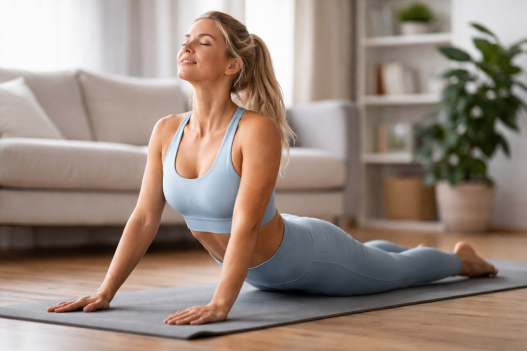
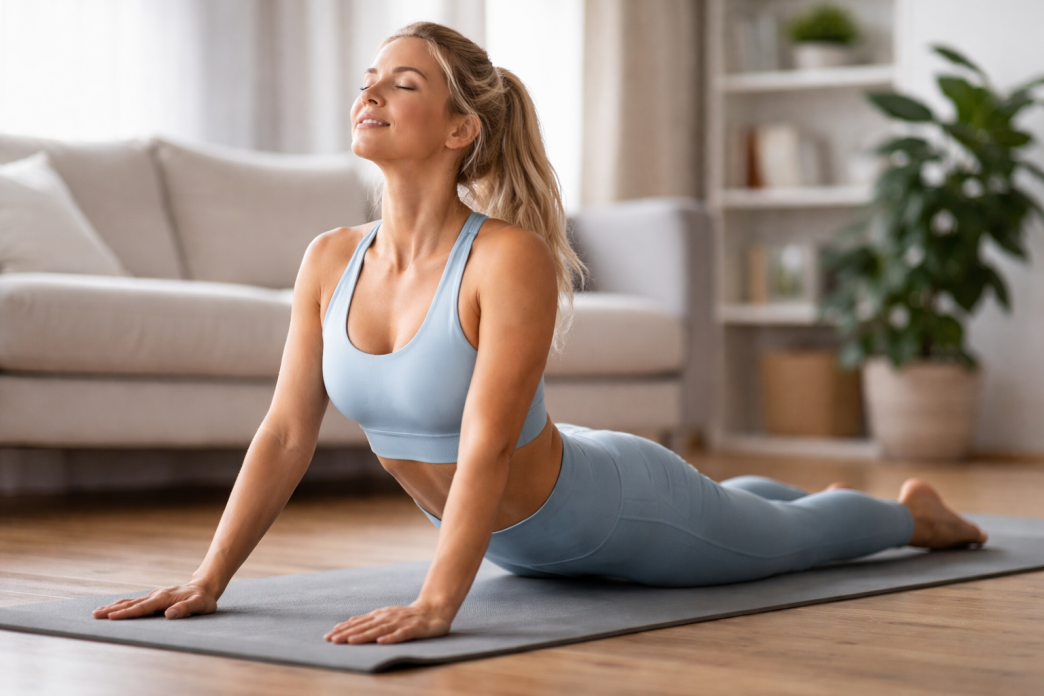
Take a moment to think about your daily routine. If you’re like most people, a large portion of your day is spent sitting—whether it’s at a desk in front of a computer or relaxing on the couch at home.
What many people don’t realize is that this long, uninterrupted sitting can quietly take a toll on your back.
Holding the same posture for extended periods is one of the most common causes of back discomfort. The good news? One of the most effective ways to relieve that pain is also one of the simplest: movement. 
Regular physical activity helps maintain a healthy body weight, which in turn reduces stress on your spine and muscles. Even better, gentle and consistent exercise can significantly ease both upper and lower back pain—and one of the most effective forms of exercise for this is Yoga.
Why Yoga Works So Well for Back Pain
Yoga is more than just stretching. It’s a full-body practice that combines movement, posture, breathing, and even elements of Meditation.
While yoga is widely known for improving strength, flexibility, and balance, its benefits go much deeper—especially if you’re dealing with back pain.
Another major advantage of yoga is its impact on mental health. Many yoga practices include calming breathing techniques that help relax the body and reduce stress. Since stress can often make pain feel worse, learning to calm your mind can directly help reduce physical discomfort.
Perhaps the best part? Yoga is incredibly accessible. It’s suitable for people of all ages and fitness levels, and you can practice it almost anywhere, anytime.
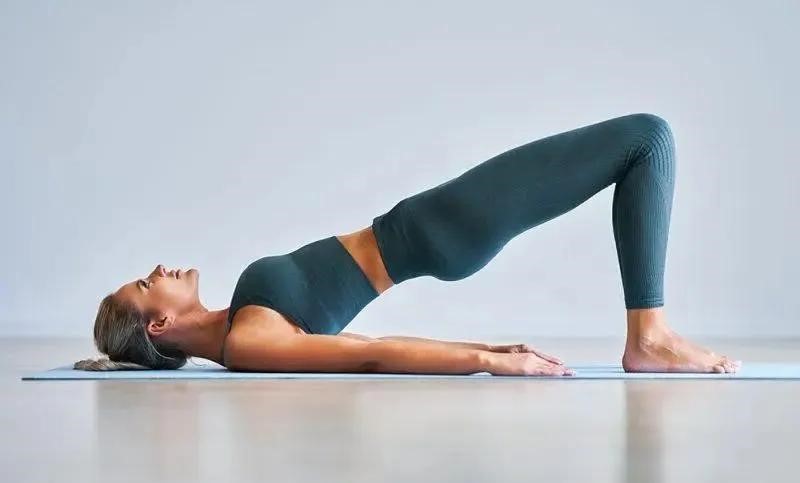
Which Yoga Poses Should You Choose?
With so many yoga styles and poses out there, it can feel overwhelming to know where to start—especially if your goal is to relieve back pain.
The good news is, you don’t need anything complicated. The following four classic poses are simple, effective, and can be done comfortably at home.
Move 1: Cobra Pose
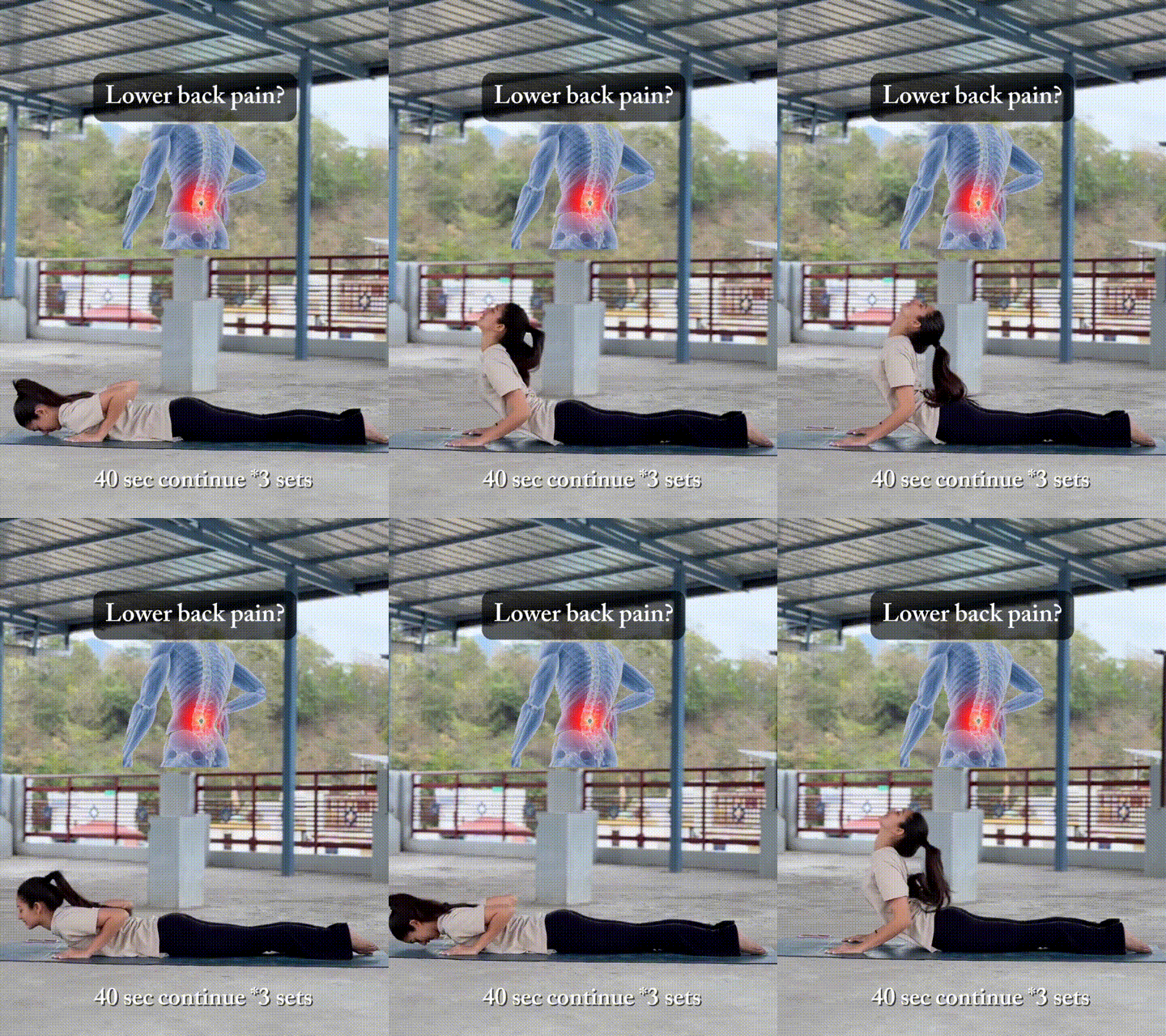
Start by lying face down on the floor. Extend your legs straight back, keeping your feet together and the tops of your feet pressing into the ground. Place your hands beside your chest with your palms flat and fingers pointing forward. Keep your elbows close to your body.
Relax your neck and gently draw your shoulder blades downward.
As you inhale, lengthen your spine and begin to lift your chest upward. Roll your shoulders back and down, drawing your shoulder blades toward each other. Lightly press your hands into the floor, but focus on engaging your back muscles—not pushing with your arms.
Gradually lift your head, chest, and upper abdomen off the ground while keeping your pelvis, thighs, and pubic bone grounded. Open your chest, keep your shoulders relaxed, and gaze slightly upward.
Move 2: Cat–Cow Pose
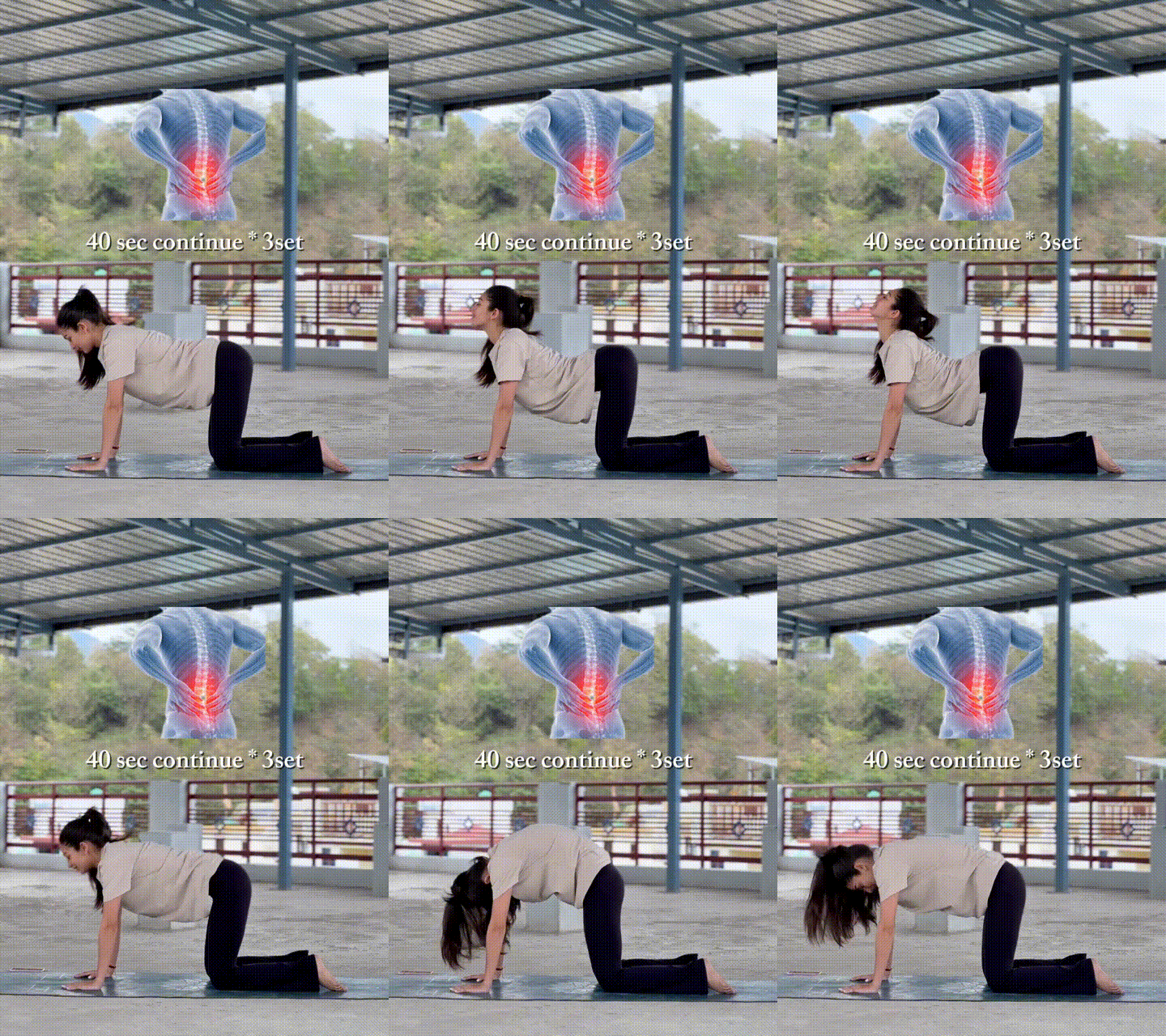
Begin in an all-fours position with your hands under your shoulders and knees under your hips.
As you inhale, bring your awareness to your tailbone. Let the movement travel upward through your spine—your lower back gently dips, your chest opens and lifts, and your gaze follows upward, stretching the front of your neck.
As you exhale, reverse the motion. Tilt your pelvis backward, tuck your tailbone, and engage your core. Round your spine toward the ceiling, letting your head drop naturally and your gaze move toward your navel.
Flow between these two movements for about 40 seconds. Repeat for 3 rounds.
Move 3: Bridge Pose
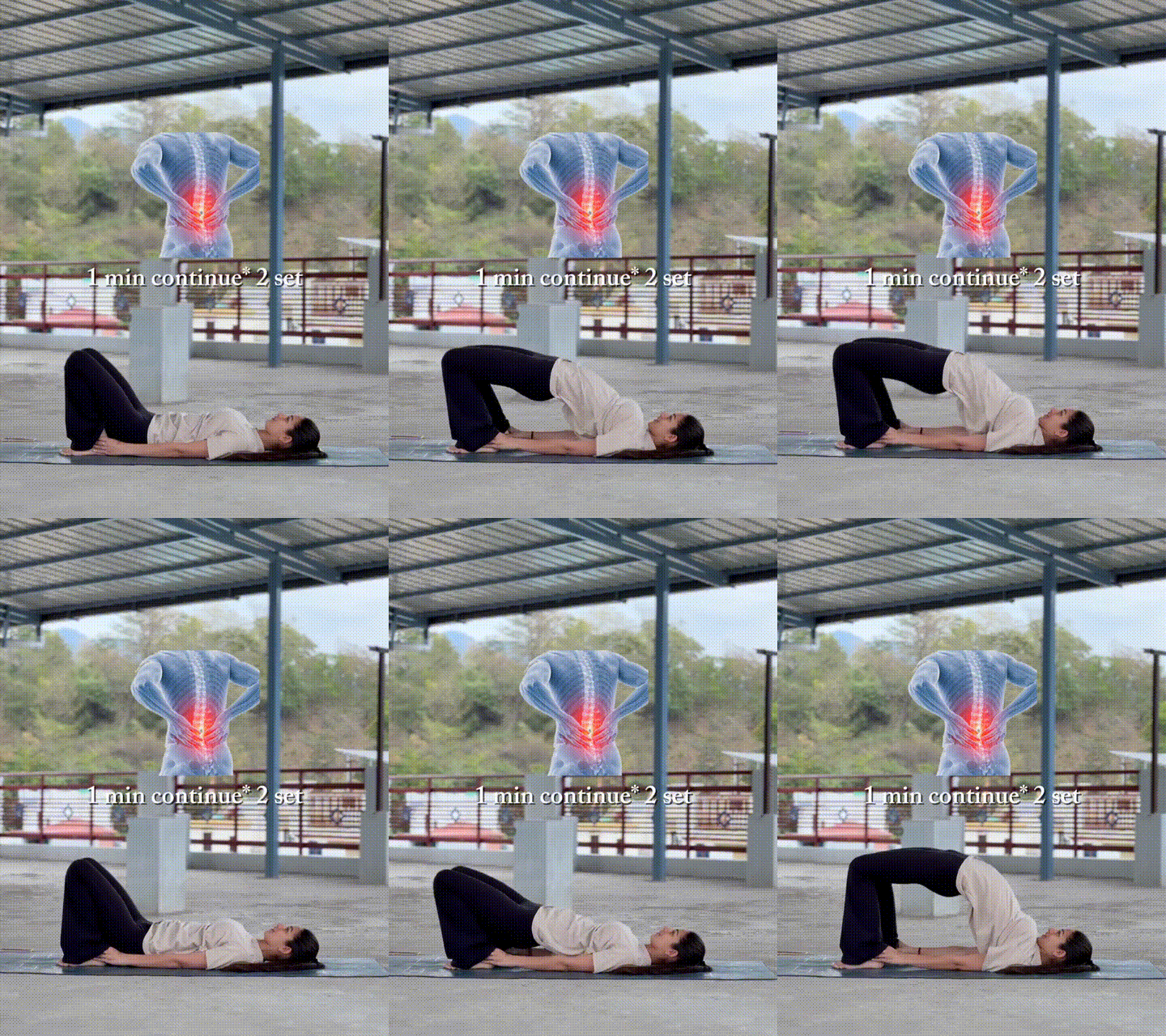
Lie on your back with your knees bent and your feet flat on the floor, hip-width apart. Keep your knees stacked over your ankles. If possible, reach your hands toward your ankles.
As you inhale, slowly lift your lower, middle, and upper back off the floor. Gently roll your shoulders underneath you and lift your chest toward your chin.
Hold briefly, then exhale and slowly lower your spine back down to the mat.
Practice for about 1 minute and repeat for 2 sets.
Move 4: Supine Spinal Twist
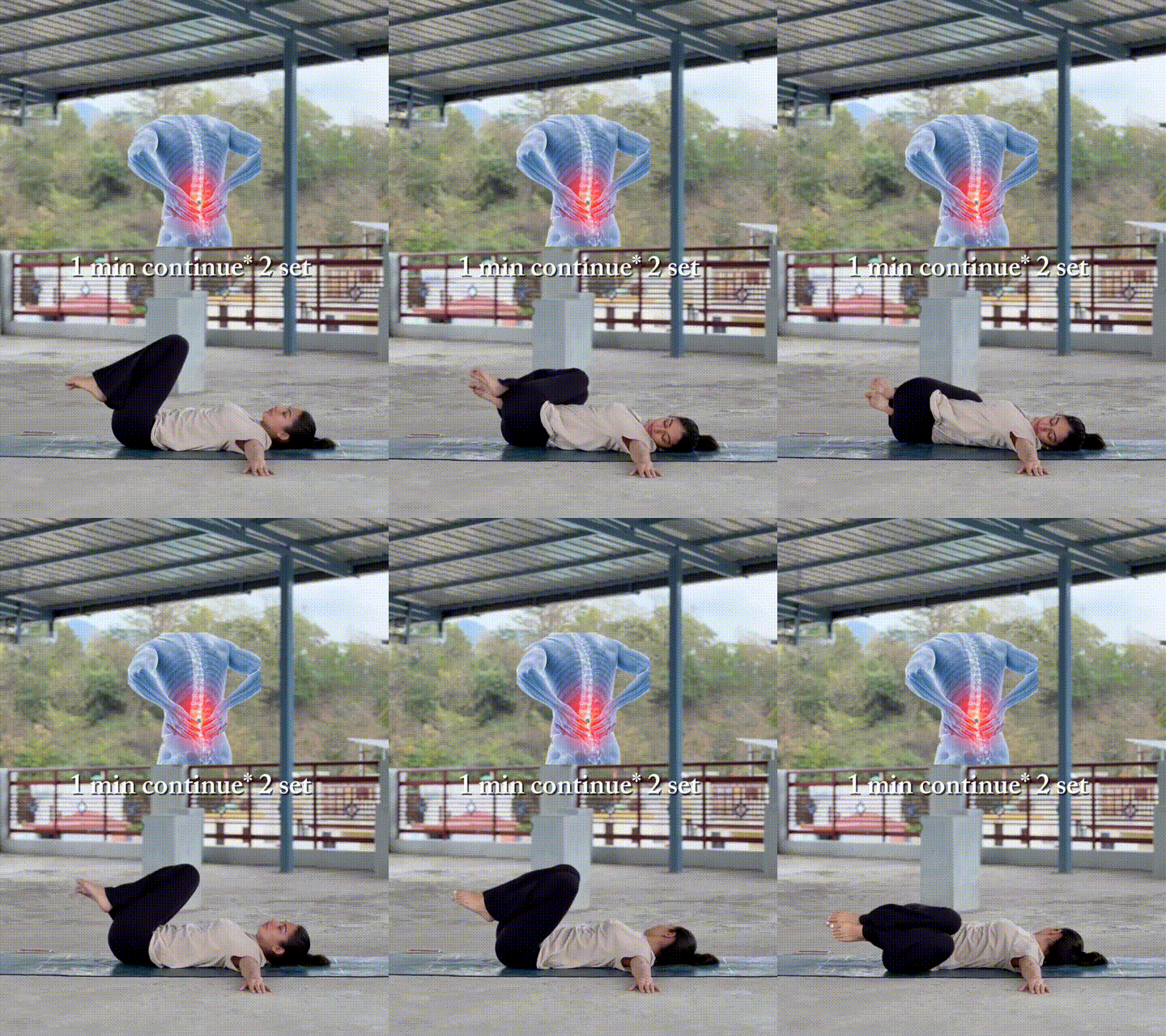
Lie flat on your back and extend your arms out to the sides in a “T” shape. Your palms can face up or down.
Bend your knees and place your feet on the floor. As you inhale, draw your knees toward your chest. As you exhale, gently lower both knees to the right side.
Your knees can either rest on the floor or hover slightly above it. Try to keep your left shoulder grounded—even if it lifts slightly, that’s okay. Turn your head to the left, opposite your knees.
On your next inhale, bring your knees back to center, then repeat on the other side. Turn your head in the opposite direction of your knees.
Continue for about 1 minute and complete 2 sets.
Final Thoughts
Back pain doesn’t always require complicated solutions. Sometimes, just a few minutes of mindful movement each day can make a noticeable difference.
These four simple yoga poses can help open your chest, strengthen your back, improve posture, and even leave you feeling more energized and refreshed.
Consistency is key—stick with it, and your body will thank you.