







What was Soviet Food really like during the darkest shortages? The problem of meat supply reached a new level in 1972. The meat was gone. But people still wanted to eat. Soviet Food had been deteriorating since the late 1950s. By the 1970s, smoked sausages, ham, and salami had been missing from stores for twelve years. In 1970, semi-smoked sausages disappeared. Then, in 1972, even boiled sausage vanished. This is the story of Soviet Food at its most desperate—and most creative.
Grandma’s Sausage Memories
Today, grandmothers who lived through those years tell their grandchildren about sausage—not as a fantasy, but as a memory. They remember when buying raw smoked sausage at a food store was as ordinary as buying bread.
“Child, sausage cost only five rubles!” the grandmothers mutter, their mouths full of nostalgia. 
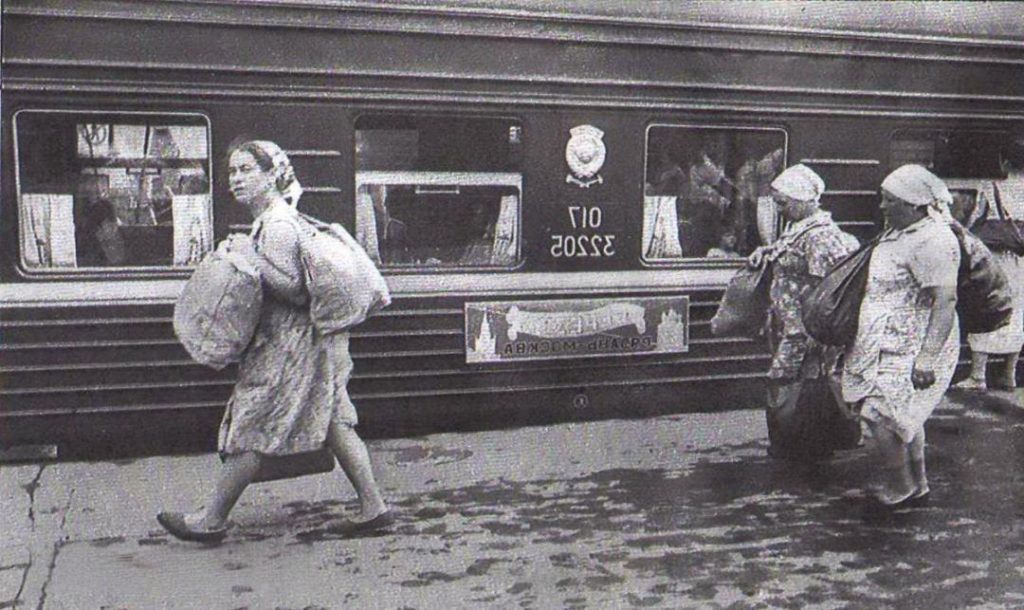
The only places that still had meat were the capital cities: Moscow and Leningrad. So, starting in 1972, Russia saw the rise of the “sausage commuter train.” Before, people traveled to the capitals to see Lenin’s tomb or buy crystal. Now, they went to worship Moscow sausage.
Trains heading to Moscow were packed—with people and with sausages.
The Soy Solution
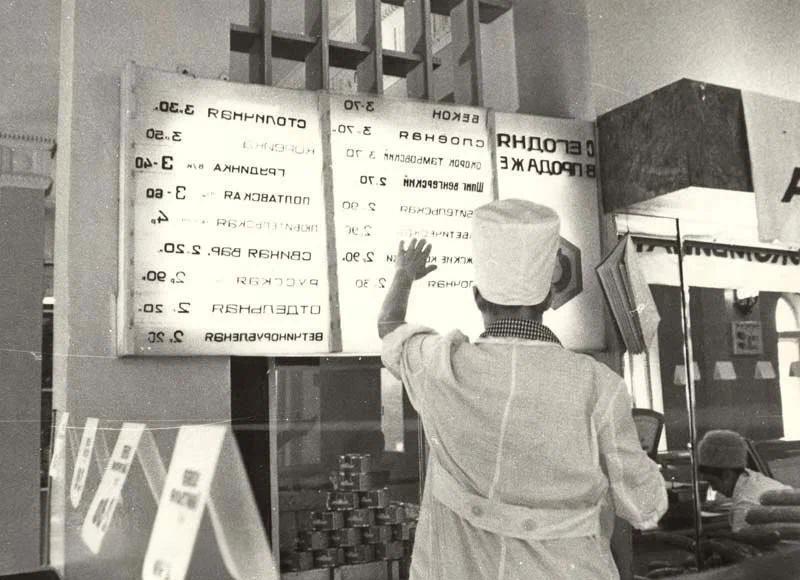
To address the sausage shortage, the Kremlin loosened standards. The meat content in sausage filling dropped, replaced by soy. This gave birth to a new Soviet rumor:
“Vacuum-packed boiled sausage is for ordinary people. It contains 32% soy. But ‘Doctor’s Sausage’ wrapped in natural casing—that’s for the Kremlin. That one has real meat!”
In the 1970s, sausage slices fell apart because of the soy content. They had no meat aroma. The shortage gave birth to new recipes. Family dinners swapped traditional meat-and-potatoes for sausage fried with potatoes—using the very sausage that was so hard to find.
A Family Ritual
Eating this sausage dish became a family affair. Father placed the frying pan on a table covered with Pravda newspaper. Women and children worked together, using bent aluminum forks to spear the food.
It wasn’t fine dining. It was survival.
The Potato Campaign
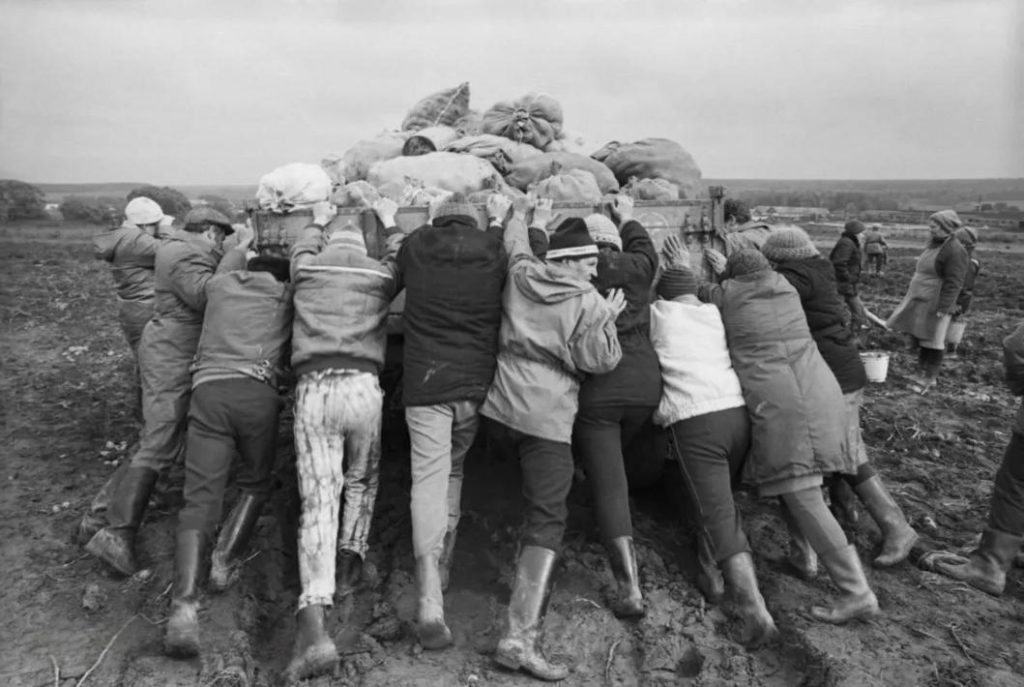
In 1972, quietly and quickly, a new custom arose in the Soviet Union: city residents going to the countryside to dig potatoes. Overnight, students, associate professors, and accountants became temporary collective farm laborers.
They arrived in polished boots and headscarves, working alongside peasants in the fields.
The official line was clear: “Everyone has their role—peasants harvest potatoes, students study.” Their complaints were drowned out by the noise of shovels and hoes. Year after year, city residents flocked to the countryside by the thousands.
Why Young People Dug Potatoes
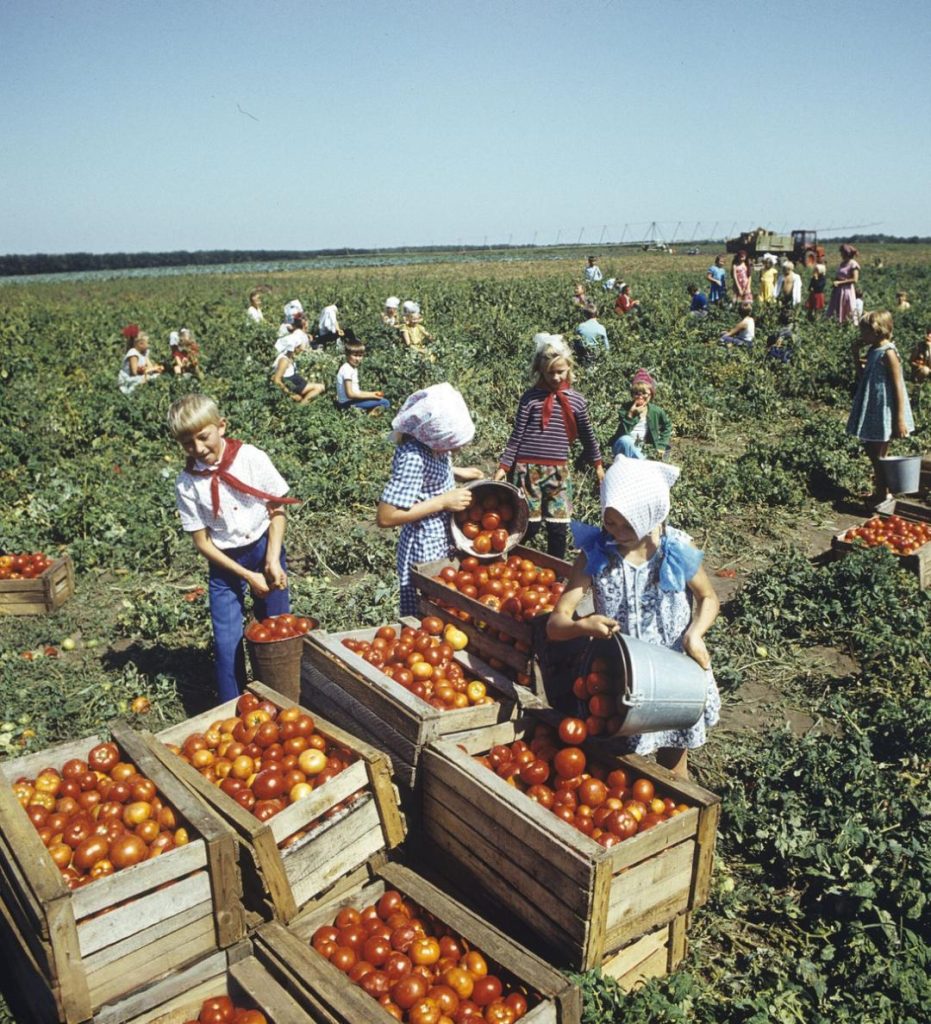
Young people went to dig potatoes to avoid “physical degradation.”
Schoolchildren spent one day a week in the fields. University students worked the entire month of September, until their vocational schools and universities reopened for classes.
Adult leaders sent their employees for one month of potato digging. These long-term potato workers were housed in Young Pioneer camps, which sat empty in the autumn.
In the backdrop of propaganda posters showing smiling Pioneers marching, their parents relived their youth—full of songs, vodka, and romance.
The Reality of the Fields
The work was tedious. Autumn fields were rainy and muddy. The food provided to city workers was poor. But there was a wage. University students could earn 20 rubles—a nice supplement to their scholarships.
This labor obligation was called “helping the countryside.” In the fields and in the Young Pioneer camps, clever people whispered to each other:
“Why is there no combine harvester? What good is this labor?”
Most city residents worked from morning to night, doing the bare minimum. The actual collective farmers? They sat indoors drinking vodka.
The Potato Economy
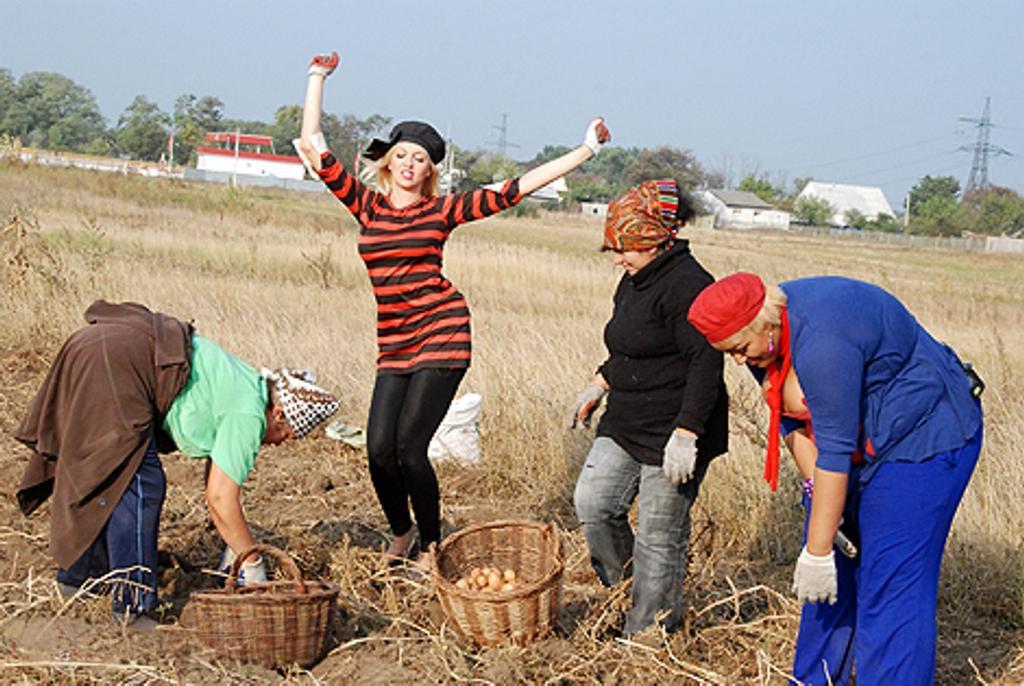
In the Soviet Union, potatoes were the main crop. Anyone with a garden plot—a dacha—devoted half of their land to potatoes. Those without dachas bought potatoes by the sack from roadside traders.
The typical Soviet family stored 100 kilograms of potatoes for winter. The sacks sat in garages, on balconies, in wood sheds.
In many cities, residents pooled money to build communal vegetable storage rooms. Inside, each thrifty family had its own cozy stall—a small space for survival.
The Taste of Shortage
Looking back, the 1972 sausage shortage wasn’t just about missing meat. It was about how ordinary people adapted. They changed their recipes. They changed their diets. They changed their daily routines.
Grandmothers still remember sausage fondly—not because it was gourmet, but because it represented normal life. The kind of life where you could walk into a store and buy what you wanted.
Instead, they dug potatoes. They ate sausage cut with soy. They rode crowded trains to Moscow just to bring home something resembling meat.
This was Soviet Food at its most honest: scarce, improvised, and deeply human.
What Remains
Today, the shortages are long gone. Russian stores are full of sausage, meat, and imported goods. But ask anyone who lived through 1972, and they’ll tell you a different story.
They’ll tell you about the smell of autumn mud and potato fields. About the bent aluminum forks. About the Pravda newspaper on the kitchen table. About the rumor of “Doctor’s Sausage” made only for the Kremlin.
They’ll tell you about survival.
Because that’s what Soviet Food was never about abundance. It was about making do. About finding a way to feed your family when the system couldn’t. About turning potatoes into a staple and scarcity into a shared memory.
And sometimes, late at night, they might still mutter: “Child, sausage cost only five rubles…”
A memory. A dream. A taste of something lost.