






Jordan sits at the crossroads of the Middle East, bordered by Saudi Arabia, Iraq, Syria, Israel, and Palestine. It’s famous for Petra—a UNESCO World Heritage site and one of the New Seven Wonders of the World. But beyond its ancient ruins lies a culinary tradition shaped by centuries of history.
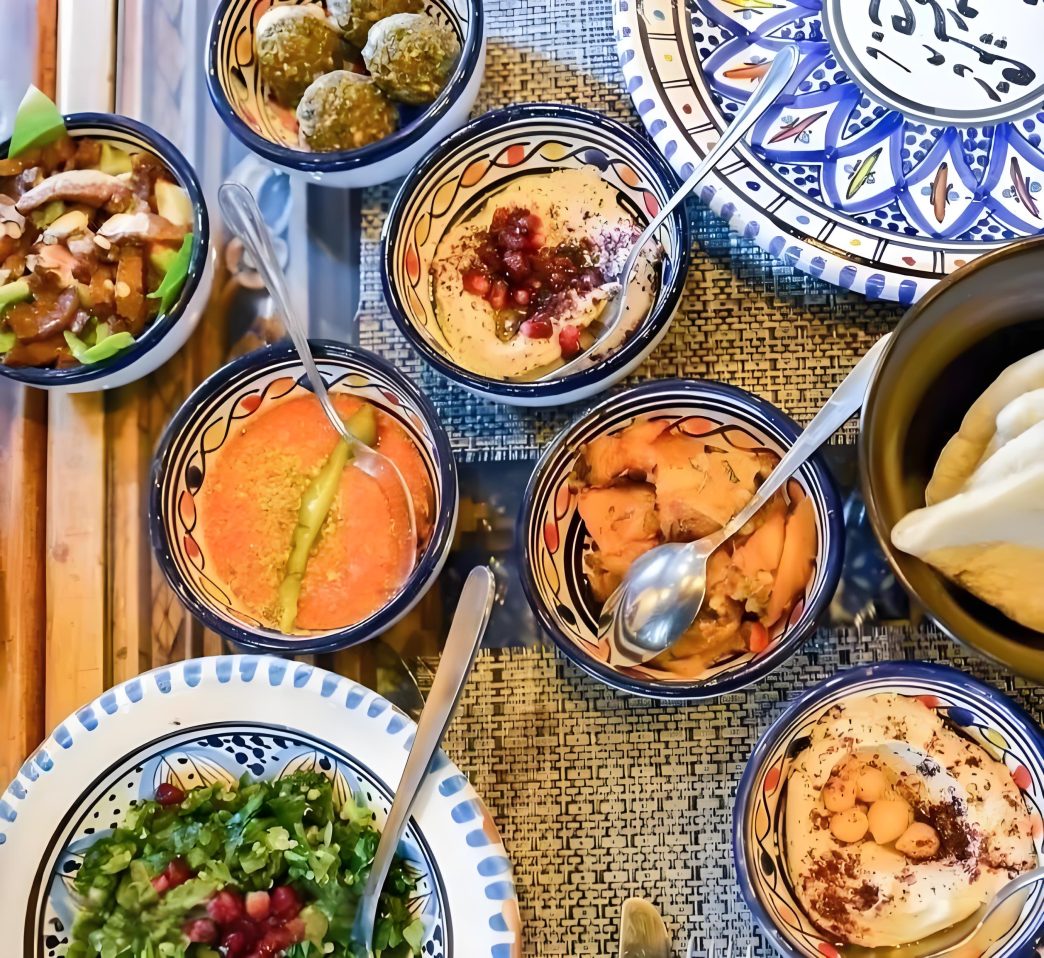
Jordanian Food reflects a rich tapestry of influences: Bedouin cooking techniques, Mediterranean ingredients, and flavors from across the Arab world. Meals are typically shared family-style, with an array of side dishes and dips. Common offerings include moutabel, fattet hummus, and labneh.
Lamb and beef are popular meats. But one dish stands above all others: mansaf, the national dish of Jordan. 
Let’s explore the essential dishes of Jordanian Food.

Mansaf: The National Dish
Mansaf is considered the national dish of Jordan. It consists of slow-cooked lamb served over rice with a distinct fermented yogurt sauce called jameed. This is a classic Bedouin dish that has evolved over time.
The preparation is ceremonial. The lamb is simmered until tender. The rice is often mixed with nuts and parsley. The jameed sauce—dried, salted yogurt reconstituted into a rich, tangy broth—is poured over everything. Traditionally, mansaf is eaten communally, with diners gathering around a large platter and using their right hand to form rice and meat into balls.
Variations exist across the country. In the port city of Aqaba, where fish farms are common, you might find seafood versions. But the classic lamb mansaf remains the heart of Jordanian Food.

Moutabel: Smoky Eggplant Dip
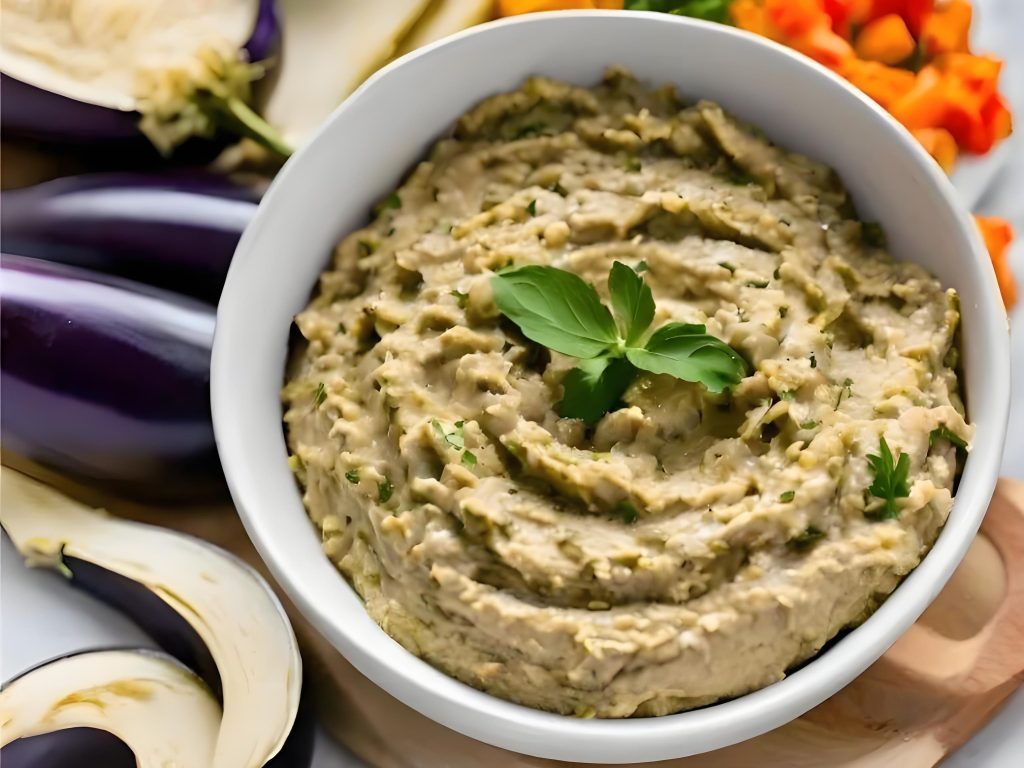
Moutabel is a roasted eggplant dip made with eggplant, yogurt, tahini, garlic, and lemon juice. It resembles baba ghanoush, but there are key differences.
The primary distinction: moutabel uses yogurt and a specific blend of spices. The yogurt adds tanginess and creaminess, while the roasting gives the eggplant a smoky depth. Served with warm pita bread, moutabel is a staple of Jordanian Food mezze spreads.
Fattet Hummus: Crunchy Chickpea Delight
Fattet hummus is a layered dish of white pita bread soaked in broth, topped with mashed chickpeas, tahini, garlic, yogurt, and lemon juice. The texture resembles whipped hummus, but with added crunch from the pita.
The Arabic word “fatteh” means “crushed” or “broken,” referring to the pieces of pita bread that form the base. This dish is popular across the Levant, but the Jordanian version has its own character. It’s often garnished with pine nuts and parsley, adding richness and color to Jordanian Food.

Labneh: Thick, Tangy Yogurt Cheese
Labneh is a thick, creamy yogurt spread that can be slathered on bread or used as a dip for vegetables. It’s made by straining the whey from yogurt, leaving a smooth, cream cheese-like consistency with a pleasant sour tang.
Labneh is a breakfast staple in Jordanian Food. It’s often drizzled with olive oil and sprinkled with dried mint or za’atar. Served alongside fresh cucumbers, tomatoes, and olives, it’s simple, refreshing, and utterly satisfying.

More Than a Meal
Jordanian Food is about more than ingredients and recipes. It’s about hospitality. Meals are long, shared, and generous. Guests are treated like family. The table is never bare.
Whether it’s the ritual of eating mansaf by hand, the smoky dip of moutabel, or the creamy tang of labneh on fresh bread, Jordanian Food invites you to slow down, gather, and share.
So next time you’re in the Middle East—or just cooking at home—try these dishes. Taste the history. Experience the warmth.
That’s the true flavor of Jordan.