





In the mid-16th century, the Venetian ambassador to the Ottoman Empire, Garzoni, sent a curious report back to Venice. He wrote that every morning, Turks drank a small cup of strange black liquid. He speculated that their legendary ferocity and courage might come from this mysterious brew.
Years later, his successor Morosini provided more detail. The black drink, he explained, was made from roasted seeds of the coffee tree, ground into powder, and boiled in water. It made people remarkably alert.
When Morosini returned to Venice in the early 1600s, he brought roasted coffee beans with him. He prepared the drink the Turkish way and served it to Venetian aristocrats. It was an instant sensation. 
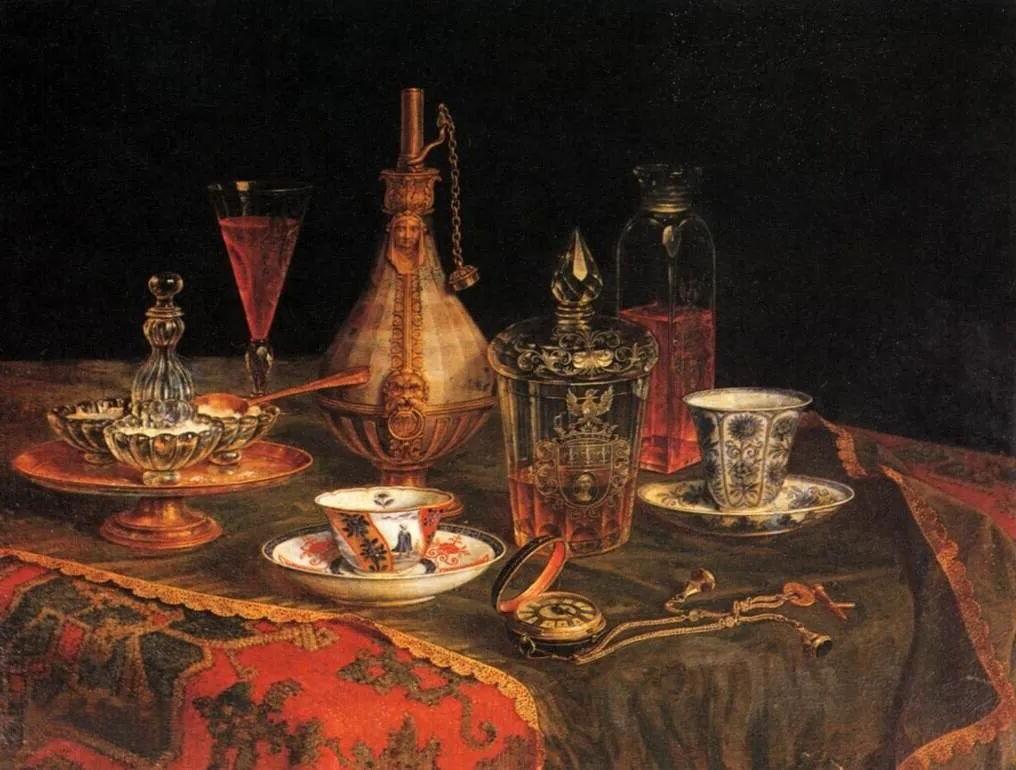
The Pope’s Blessing
As Turkish Coffee spread through Venice, church officials grew alarmed. They called it “Satan’s evil invention” and begged the Pope to ban Christians from drinking it. Pope Clement VIII decided to taste it first, to understand the danger.
One sip. Then he declared: “This drink is too delicious to let infidels have all the fun. We shall baptize it and drink it without sin.”
With the Pope’s blessing, coffee swept across Venice and into the rest of Europe. It became an everyday necessity, never to leave.
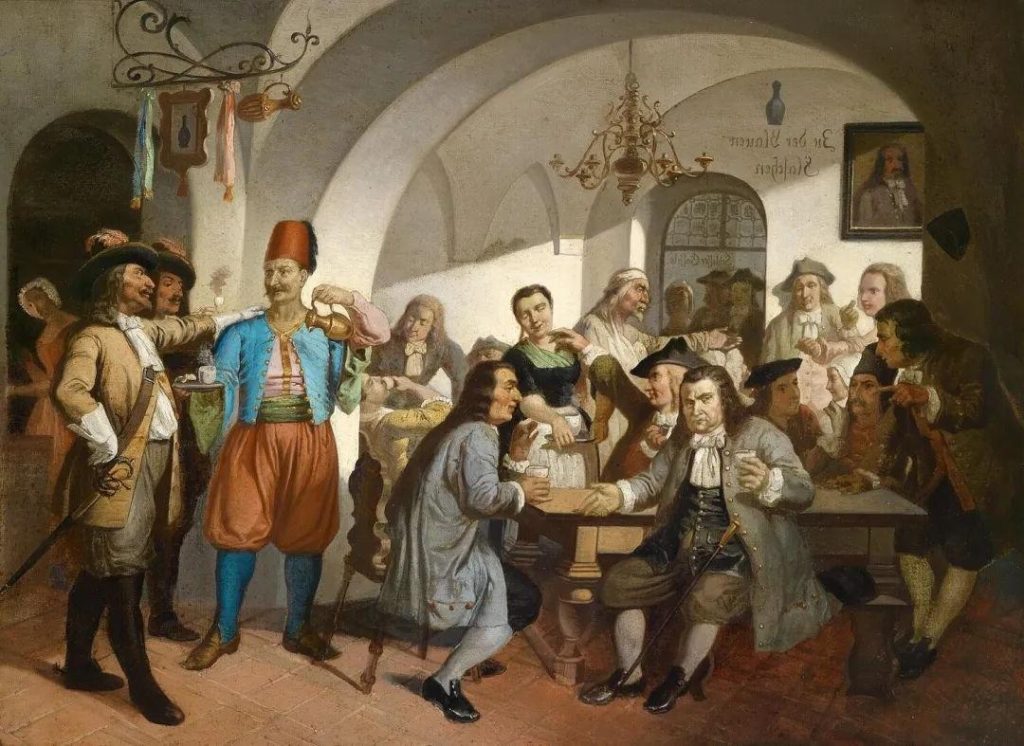
From Yemen to Istanbul
Turkish Coffee actually originated in Yemen. In the mid-15th century, people around the ports of Mocha and Aden dried coffee cherries, lightly roasted the fruit, and brewed it into a drink. The result had a caramel sweetness and provided energy.
Around 1520, someone discovered that roasting the beans with the fruit created an even stronger, more aromatic drink. Özdemir Pasha, the Ottoman governor of Yemen, loved this version and introduced it to Istanbul.
The Turks experimented further. Eventually, they discarded the fruit entirely and brewed only the roasted beans. The result was darker, richer, more intense—the Turkish Coffee that would conquer Europe.
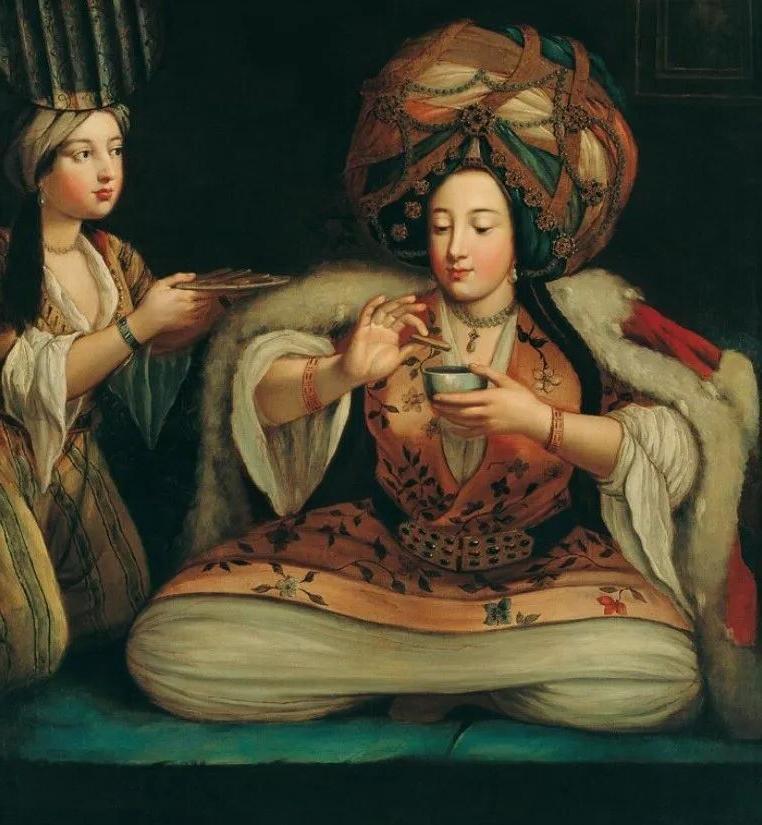
The Sultan’s Personal Barista
Coffee quickly became popular among Ottoman royals. Sultan Süleyman the Magnificent employed his own personal coffee maker. The position was serious—only a master brewer with unquestionable loyalty qualified. Some of these royal coffee makers later became the Sultan’s most trusted advisors.
Soon, the first coffeehouses appeared. They became places where people gathered not just to drink coffee, but to talk—gossip, politics, business, art. Musicians, comedians, and dancers performed. The modern café culture was born.
Ottoman authorities hated this. Coffeehouses became centers of political discussion and royal gossip. Governments shut them down repeatedly.
In the 17th century, Sultan Murad IV went further. He made visiting coffeehouses a capital crime. His brother and uncle had been killed by janissaries who frequented coffeehouses. He believed the janissaries had been radicalized there. So he decreed death.
The Sultan reportedly disguised himself as a commoner and patrolled the streets. If he caught someone leaving a coffeehouse, he drew his sword and executed them on the spot.
None of it worked. By then, coffee had already spread across Europe. Coffeehouses were opening everywhere. The drink was here to stay.
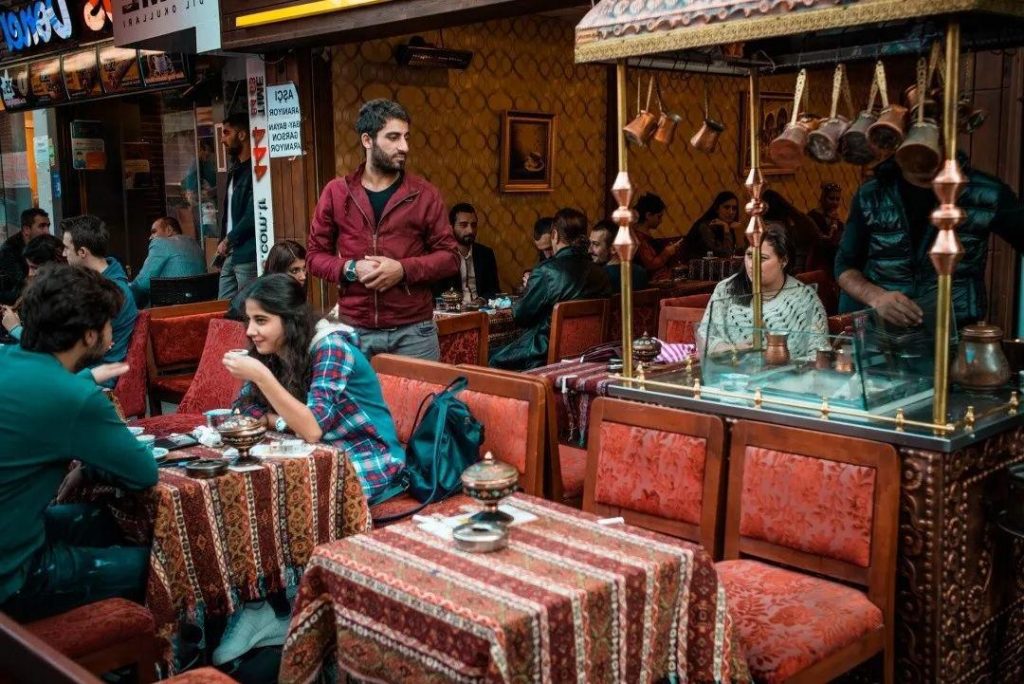
The UNESCO Ritual
Turkish Coffee is on UNESCO’s Intangible Cultural Heritage list—not for the beans, but for the method. Any coffee bean works. The magic is in the preparation.
Traditional Turkish Coffee requires patience. Roast the beans slowly over low heat. Grind them to an impossibly fine powder—finer than espresso, almost like dust.
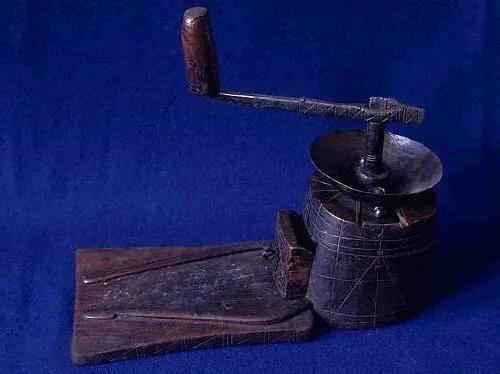
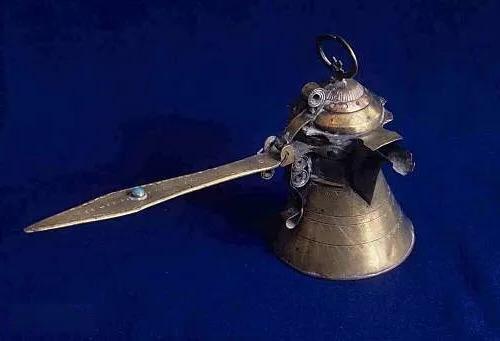
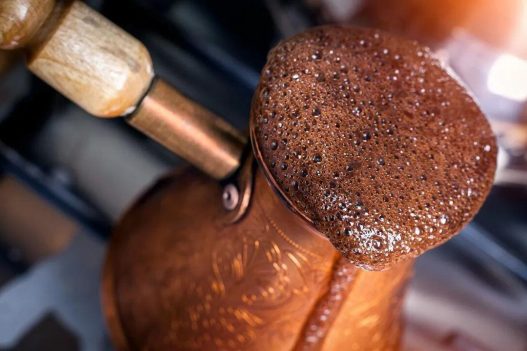
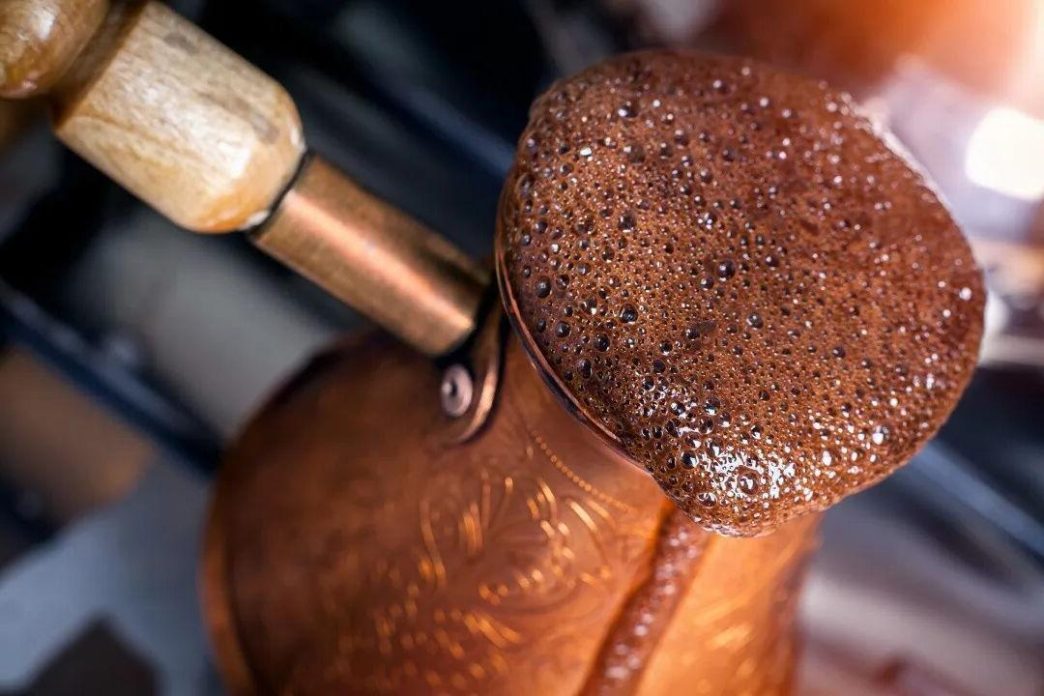
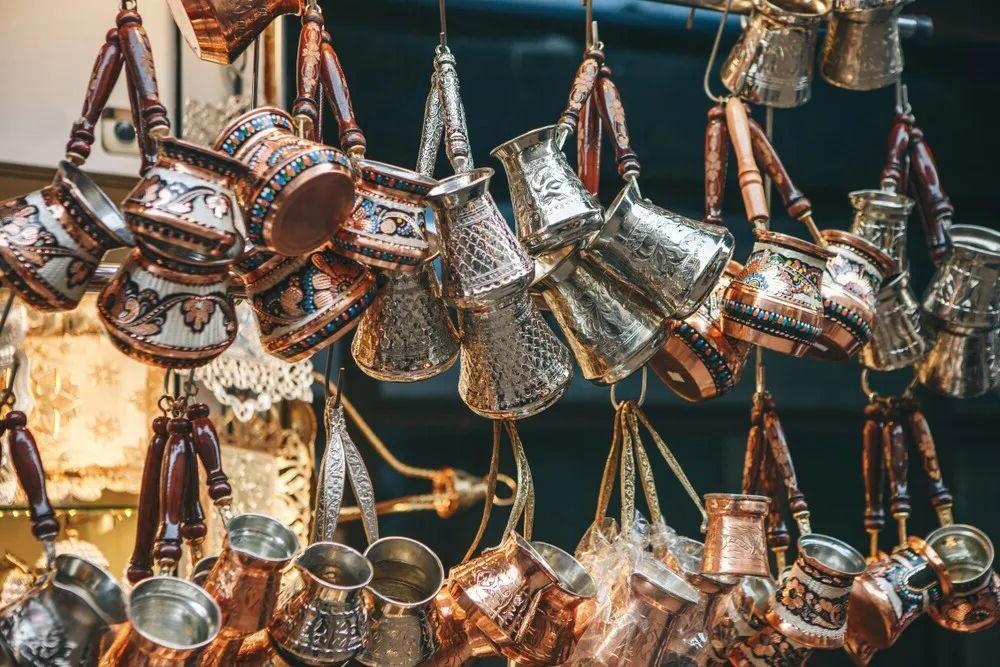
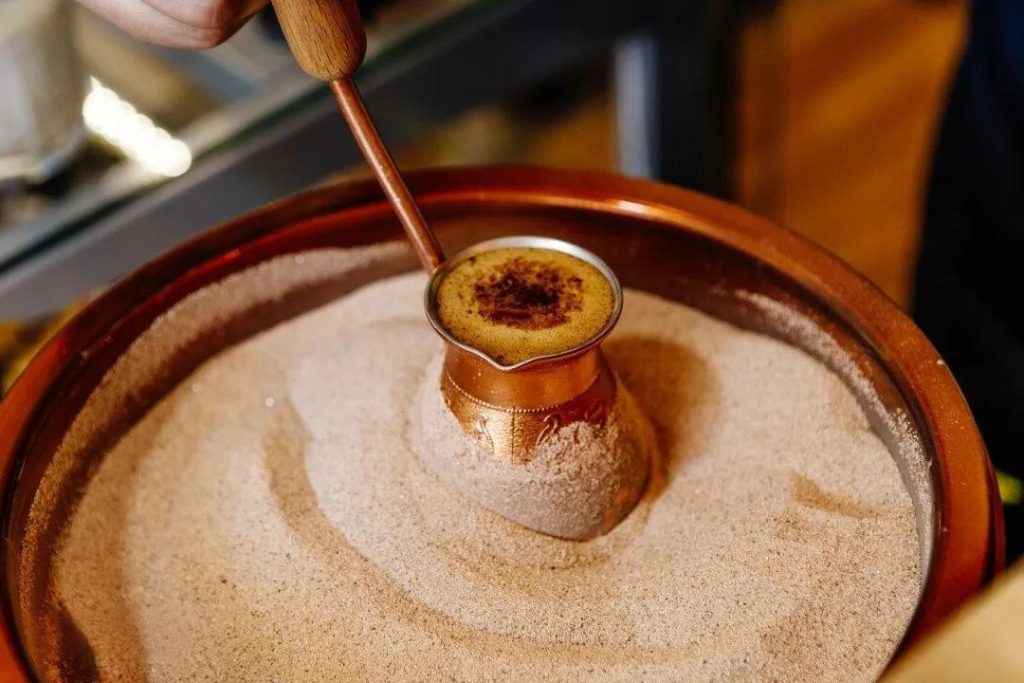
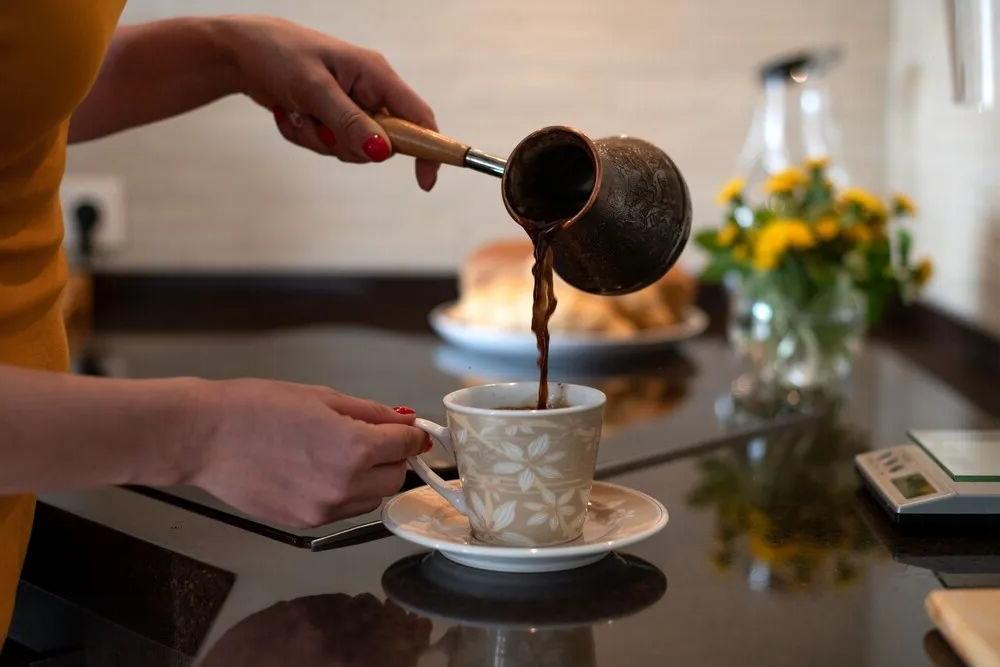
The coffee goes into a small copper pot called a cezve. Handcrafted by artisans, these pots have long handles and are often engraved with intricate patterns. They’re small—each pot brews just two tiny cups.
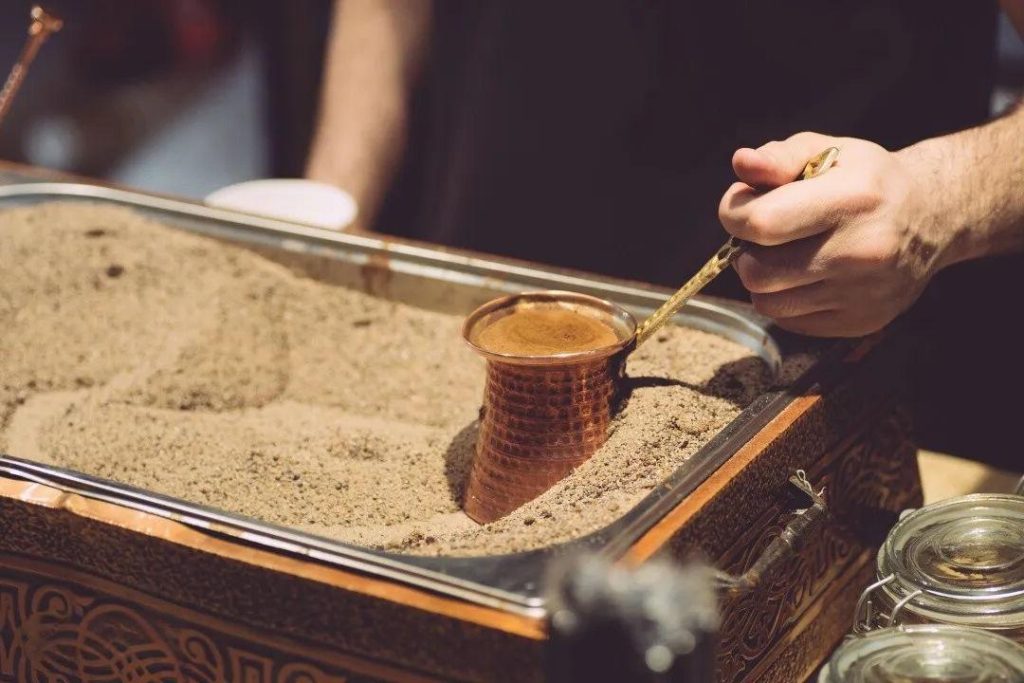
The heat source? A pan of hot sand. The sand is heated until scorching. The cezve is buried in it, ensuring even, gentle heating. The brewer moves the pot through the sand, coaxing the temperature up slowly to extract maximum flavor.
As the coffee heats, a layer of golden foam rises. The brewer lifts the pot from the sand, lets the foam settle, then returns it to the heat. This repeats several times. The foam is crucial. A proper Turkish Coffee must have foam; serving it without foam is a sign of disrespect.
Sometimes, spices like cinnamon, clove, or cardamom are added. But the essence remains pure coffee.
How to Drink It
There’s a Turkish saying: “Coffee should be black as hell, strong as death, and sweet as love.”
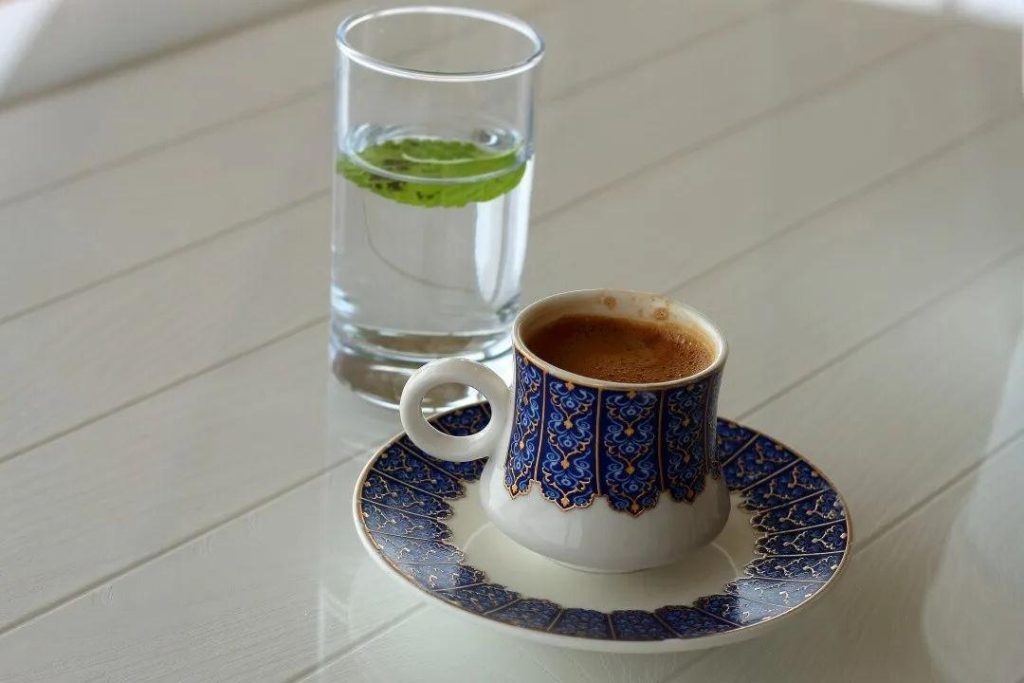
Traditional Turkish Coffee is served without sugar—to appreciate the natural flavor. Before drinking, take a sip of water to cleanse your palate. Drink slowly. Let the thick, unfiltered grounds settle. Don’t stir.
Another saying: “A cup of coffee commits you to forty years of friendship.” Brewing coffee for someone is an act of deep respect. It takes time, care, and patience. You only do that for people you truly value.
Fortune-Telling in the Cup
Because Turkish Coffee is ground so fine, sediment settles at the bottom. After drinking, that sediment becomes a fortune-telling tool.
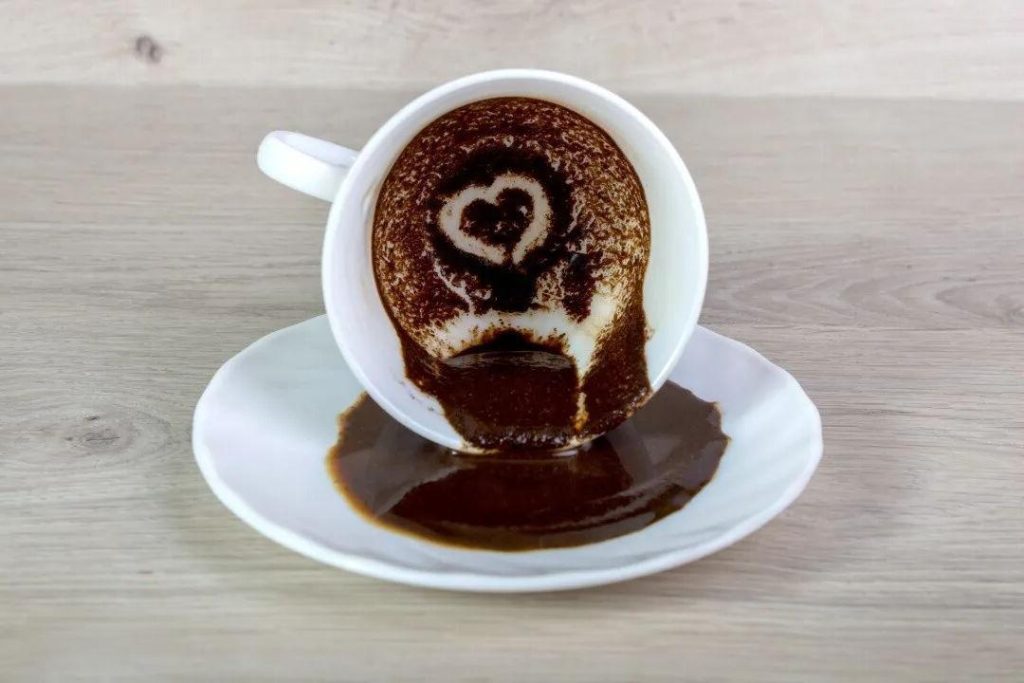
Here’s how it works: after finishing the coffee, the drinker places the saucer on top of the cup, swirls it while making a wish, and inverts it. When the cup is lifted, the dried grounds leave patterns on the saucer and inside the cup. A fortune-teller interprets these shapes.
A dog shape? You’ll soon find a loyal friend. A heart? For the single, love is coming. For those in a relationship, be prepared—trouble may be ahead.
Interpretations vary. One fortune-teller might see wealth in a tower shape; another might see loneliness. That’s part of the fun. Most fortune-tellers in Turkey are women. In Istanbul’s countless coffeehouses, they offer their mysterious services.
Coffee and Marriage
In Turkish, the word for breakfast, kahvaltı, combines kahve (coffee) and altında (under). Coffee is literally “under breakfast”—that’s how essential it is.
In traditional Turkish engagement ceremonies, the bride-to-be brews coffee for her future husband and his family. Failing to know how is shameful—it suggests she won’t make a good wife.
Here’s the twist: she makes a special cup for her fiancé. She adds salt. Sometimes chili powder or pepper. She smiles as she serves it.
The family watches. If he drinks it without complaint—without grimacing, without hesitation—he passes the test. He’s considered patient, good-tempered, and capable of being a good husband.
Afterward, she gives him two sugar cubes. Symbolizing that life together will be bitter first, then sweet.
More Than a Drink
Turkish Coffee is not just coffee. It’s a philosophy. A ritual. A way of measuring time, friendship, love, and character. For five centuries, this dark, foamy brew has carried the weight of empire, the whispers of lovers, the secrets of politics, and the hopes of fortune-seekers.
The same drink that fueled Ottoman sultans and terrified Venetian ambassadors now sits in tiny cups across the world. UNESCO recognizes it. Fortune-tellers read it. Lovers test each other with it.
One sip, and you’ll understand. The bitterness, the sweetness, the patience, the foam—it’s all there. Like the Turkish saying promises: black as hell, strong as death, sweet as love.
Everything else is just coffee. This is Turkish Coffee.