








A Rare Custody Case in the UK
In recent days, a highly unusual custody dispute in the United Kingdom has drawn widespread attention. The case centers on a young girl, referred to as P, whose biological father cannot be identified through standard DNA testing.
Her mother had relationships with a pair of identical twin brothers within the same week. As a result, when P was born, determining her biological father became nearly impossible. Even modern genetic testing could not provide a clear answer.
Ultimately, the court ruled that full custody of the child would belong solely to her mother. 
How the Situation Unfolded

Around 2017, the twins were both dating the same woman without knowing about each other. During that time, both men had intimate relations with her. Shortly afterward, the woman became pregnant with P.
When the twins discovered the situation, tensions escalated quickly. The conflict intensified after a 12-week prenatal check confirmed the pregnancy. Both brothers claimed they could be the father, especially since both had been with the woman during her fertile window.
Why DNA Testing Failed
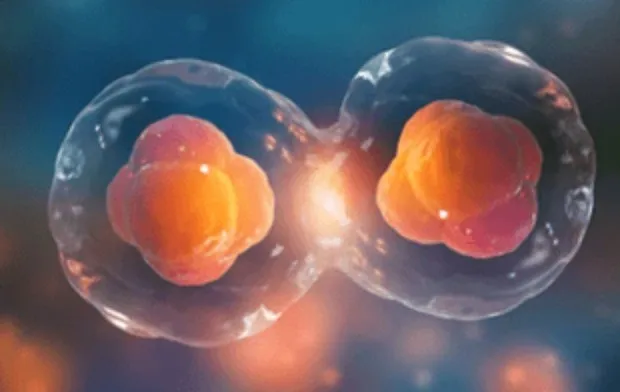
The central issue lies in the nature of identical twins. These twins originate from a single fertilized egg that splits during early development. Because of this, they share nearly identical genetic material.
When a DNA test was conducted, both brothers returned positive results as potential fathers. This is because their genetic profiles are almost indistinguishable.
In 2018, after P was born, the twin who had maintained a longer relationship with the mother, referred to as A, registered himself as the father. He gained legal parental rights, and the three lived together as a family.
A Dispute Reignites

Years later, the relationship between the mother and A broke down. As they prepared to separate, the issue of custody resurfaced.
At this point, the other twin, B, stepped forward. He claimed that he might be the biological father and sought custody rights. This reignited the unresolved question of paternity.
In 2024, a family court held a fact-finding hearing. Scientific evidence confirmed that both A and B could be the father, but could not determine which one definitively.
The Limits of Genetic Science
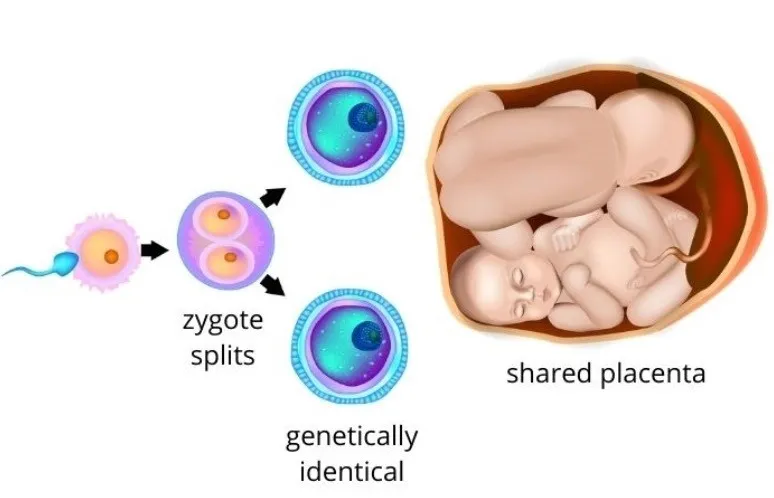
Even advanced methods like whole genome sequencing offer no guaranteed solution. Tiny genetic mutations can occur after the embryo splits, but these differences are extremely rare.
Professor James Ware, a specialist in genomic medicine at Imperial College London, explained that only a handful of mutations may distinguish identical twins. On average, there may be just five such differences across billions of DNA base pairs.
Moreover, these mutations must be present in reproductive cells to be passed to a child. Even then, identifying them is uncertain and costly.
The Court’s Final Decision
Since science could not provide a definitive answer, the court had to rely on legal principles.
The appellate court decided to keep A’s name on the birth certificate. However, it also removed his legal parental responsibility. The reasoning was simple. Without absolute certainty, neither twin could be legally confirmed as the father.
As a result, full custody was granted exclusively to the mother.
The court noted that future scientific advances might eventually identify the biological father. For now, however, the truth remains shared between two possibilities rather than one.
Not the Only Case

This is not an isolated incident. In 2019, a similar case occurred in Brazil. A woman became pregnant after being involved with identical twins. DNA testing again failed to distinguish the father. Since neither man accepted responsibility, the court ordered both to pay child support.
There have even been criminal cases affected by this limitation. In France, during a gang conflict, identical twin suspects were involved in a हत्या. Authorities could not determine which twin pulled the trigger. As a result, neither could be convicted of murder due to lack of conclusive evidence.
Looking Ahead

Cases like this highlight the current limitations of genetic science. While DNA testing is highly reliable in most situations, identical twins remain a rare but significant challenge.
However, as technology continues to evolve, more precise methods may emerge. In the future, science may finally provide clear answers in cases that today seem impossible to resolve.