





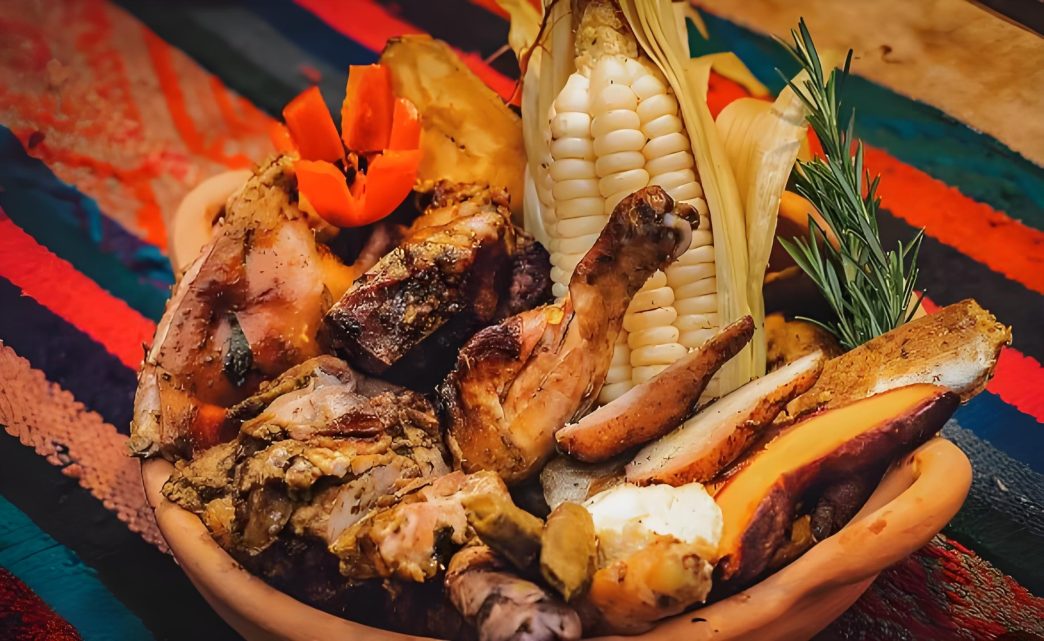
Modern Peruvian Food is a remarkable fusion. It has absorbed influences from Europe (Spanish and Italian), Asia (Chinese and Japanese), and Africa (Maghrebi and West African). The four traditional staples of Peru are corn, potatoes, quinoa, and beans. The Spanish introduced rice, barley, wheat, and the habit of eating beef, pork, and chicken. But the most important ingredient in Peruvian Food is the potato. Markets often sell dozens of varieties.
A History on a Plate
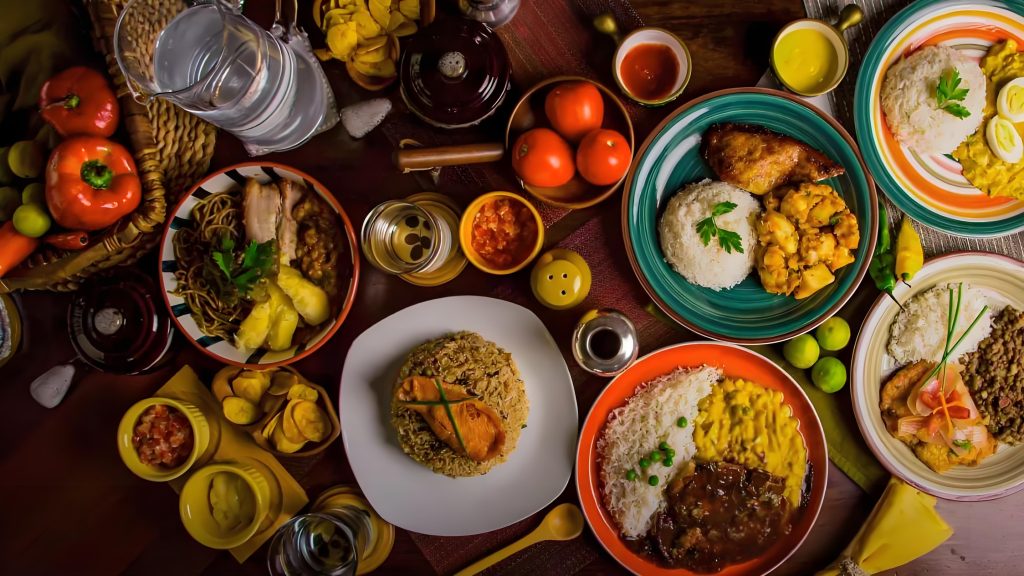
Before the Spanish arrived, Peruvians ate potatoes, corn, quinoa, and other Andean grains. The Inca Empire was an agricultural society. Starting in the 16th century, the colonial era brought new ingredients like onions, garlic, and various meats, along with new cooking techniques like frying and stir-frying.
Later, African and Asian influences arrived. In the late 19th century, African immigrants brought tacutacu—a hearty mix of rice and beans topped with beef or eggs. Chinese immigrants created lomo saltado, a stir-fry of beef, onions, tomatoes, and French fries. It has since become one of Peru’s national dishes. 
The Coastal Classics
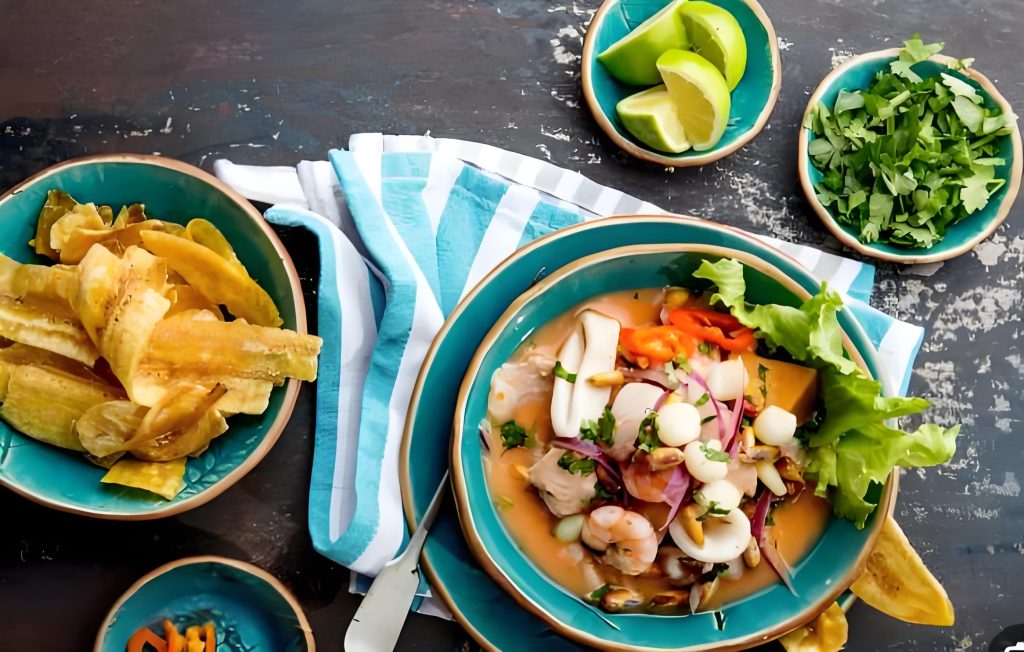
Ceviche: The National Treasure
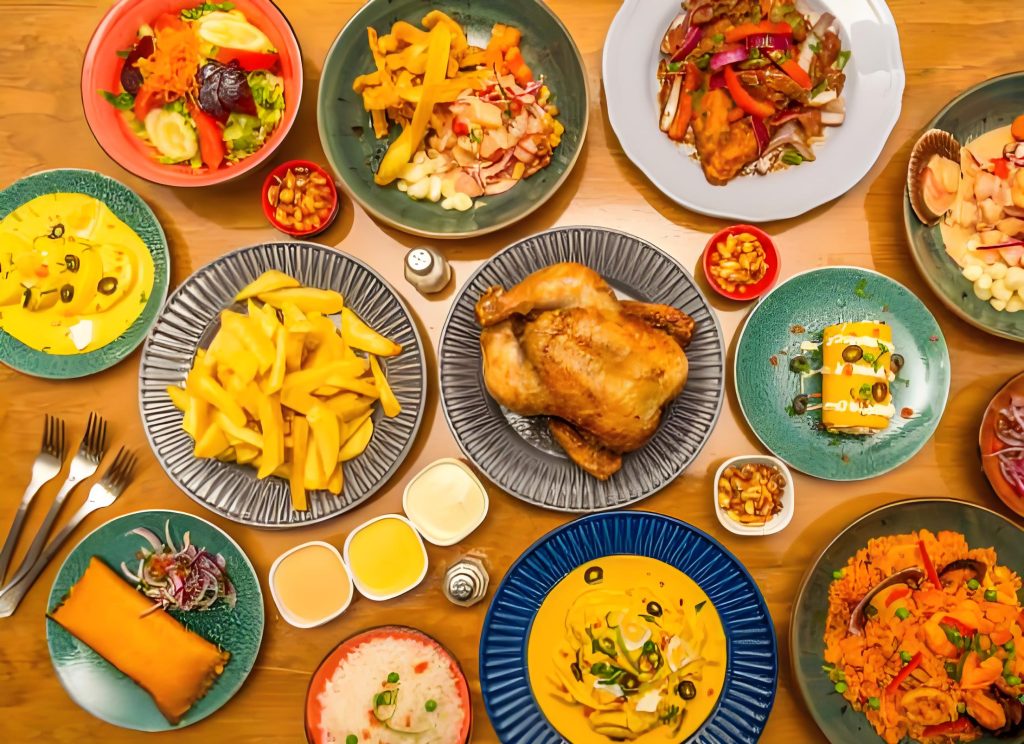
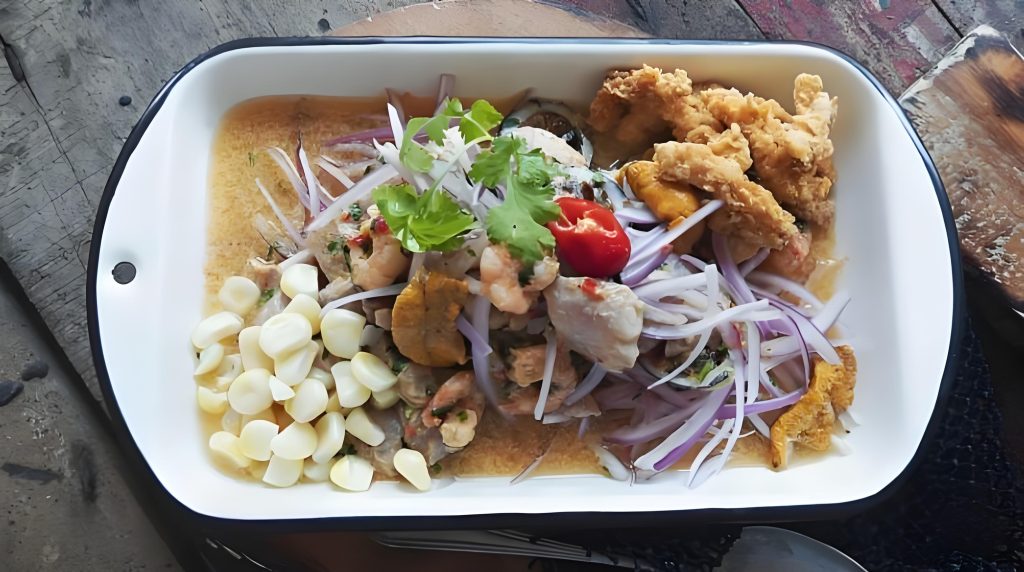
Along the coast, ceviche is another national dish. It’s a cold dish of marinated raw fish or seafood with herbs. The marinade, called leche de tigre (tiger’s milk), is made with Andean chili peppers, onions, and lime juice—a fruit brought by the Spanish. Before the Spanish arrived, locals fermented the juice of banana passionfruit to “cook” their seafood.
Ceviche is slightly spicy. The fish is cut into bite-sized pieces and marinated in lime juice and chili peppers. It’s served with raw onions, boiled sweet potatoes, and toasted corn.
Shrimp Chowder
Another coastal classic is shrimp chowder, a thick soup made with crayfish, potatoes, milk, and chili peppers.
Arroz Chaufa: Peruvian Fried Rice
Arroz Chaufa is Peru’s version of Chinese fried rice. It first became popular in Lima. Rice is stir-fried with chili peppers, onions, garlic, soy sauce, eggs, chicken, sesame oil, ginger, and cumin. Japanese food, especially sushi, is also very popular in Lima. You can also find Arab, Thai, Mexican, French, English, Argentine, Brazilian, and Indian food in the capital.
Bread and Street Food
Peruvians love fresh bread. Between 6-9 AM and 4-6 PM, people queue for bread fresh from the oven. Except for baguettes, most Peruvian breads are made with lard or beef fat. Whole wheat bread is more common in rural areas. Some bakeries sell bran bread as a substitute for whole wheat, but it still contains lard and butter as shortening. Real whole wheat bread in the city is usually imported.
Anticuchos: Grilled Beef Heart
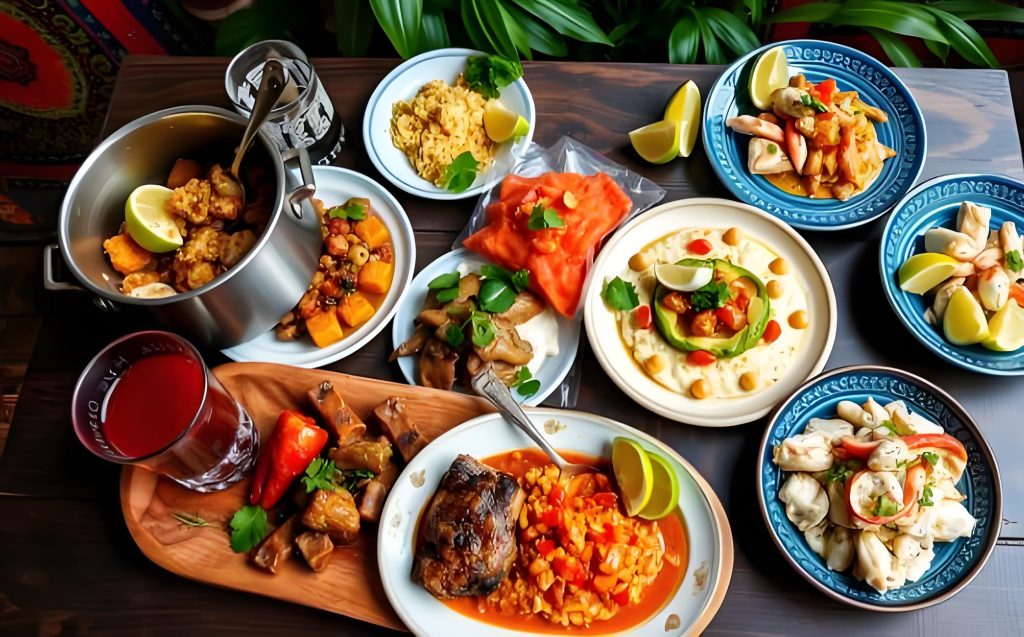
A common street food is anticuchos—skewers of grilled beef heart, marinated in a variety of spices. It’s served with boiled potatoes or corn.
Tamales
Another popular street snack is tamales. One version is made with cooked corn mixed with meat and cheese, wrapped in banana leaves, and steamed. Another version uses corn flour mixed with spices, sugar, onions, pork, and olives, wrapped in corn husks. Tamales are usually served with a salsa of thinly sliced red onions, chili peppers, and cilantro dressed in lime juice.
Classic Restaurant Dishes
Papa a la Huancaina: Huancayo-Style Potatoes
This is a common restaurant dish. Boiled potato slices are served on a bed of lettuce with a spicy olive and cheese sauce. The dish is cheap to make, but the sauce varies so much that almost every restaurant tastes different.
Papa Rellena: Stuffed Potato
Mashed potatoes are formed into a ball, stuffed with seasoned ground meat, olives, and spices, then deep-fried. The same filling can be served over rice as a Peruvian-style rice bowl.
Peruvian Roast Chicken
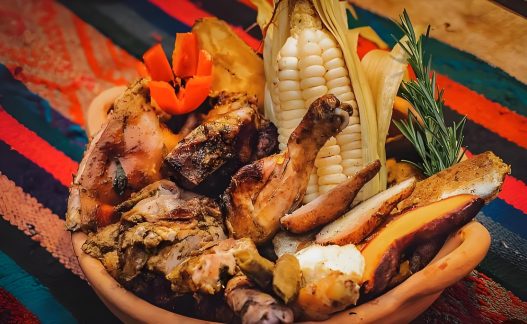
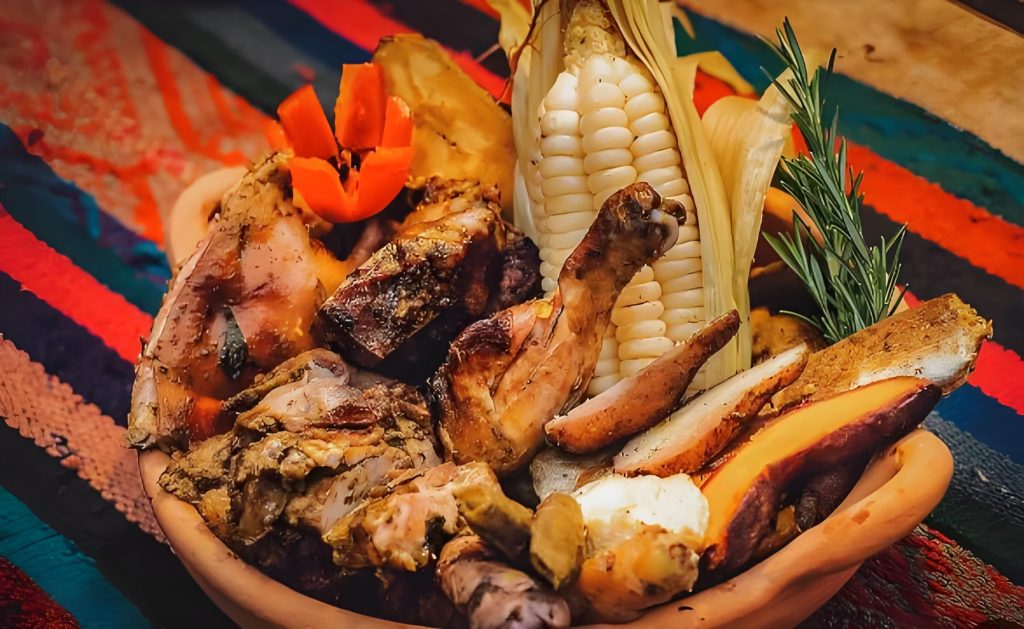
Roast chicken is also a restaurant staple. The whole chicken is marinated and slowly roasted over hot ashes. The dish originated in the 1950s when two Swiss immigrants invented an automatic rotisserie, and roast chicken became wildly popular. It’s served with French fries, salad, and various sauces (mayonnaise, ketchup, olive sauce, or chili sauce).
Lomo Saltado: The Lima Classic
In Lima, the most common main dish is lomo saltado. Beef or pork tenderloin is stir-fried with garlic, cumin, tomatoes, and onions. It’s served with French fries, cilantro, parsley, and white rice. Season with salt and black pepper.
Butter Bean Salad
Butter beans (Lima beans) are boiled, cooled, and mixed with onions and tomatoes, then marinated in lime juice, oil, salt, and vinegar. This is an ancient dish, dating back over 6,000 years.
Peruvian Sandwich
A simple sandwich made with Peruvian ham, onion slices, chili slices, lime juice, salt, pepper, and flavored oil, tucked into white bread.
Causa: Layered Mashed Potato Terrine
Mashed potatoes are mixed with lime juice, chili peppers, onions, and oil. The mash is layered with fillings like avocado, chicken, tuna, or even shellfish. It’s typically served with boiled eggs and olives.
Carapulcra: A Hearty Stew
This is a stew made with pork, chicken, dried potatoes, red chili peppers, peanuts, and cumin. African immigrants adapted the recipe by using fresh potatoes instead of dried.
Empanadas
Brought by the Spanish, the Spanish version uses olive oil and cod. The Peruvian version is filled with chicken, beef, and cheese, sometimes with boiled eggs and raisins.
Aji de Gallina: Creamy Chicken
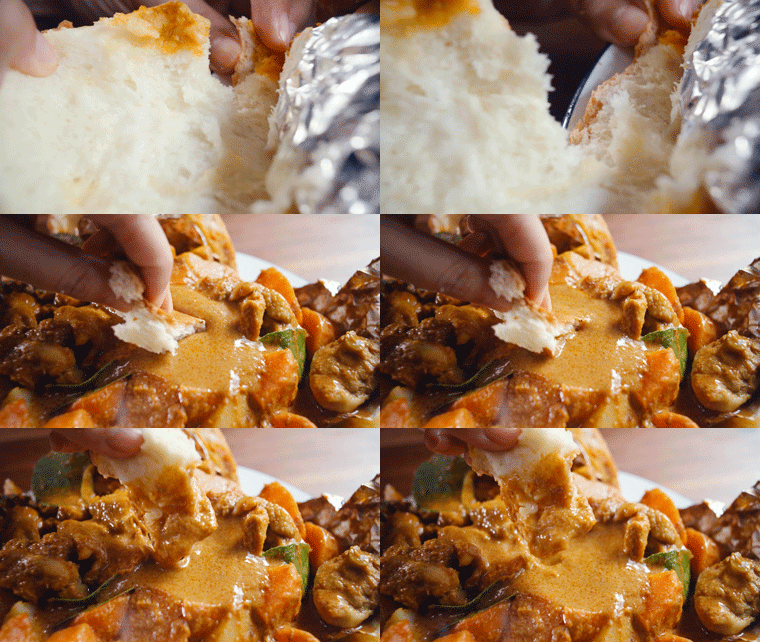
This dish features chicken in a creamy sauce made with Peruvian yellow chili peppers, cheese, and milk. Occasionally walnuts are added. In the past, this dish was expensive because it required young hens that hadn’t yet laid eggs. Today, that rule is less strict.
Cau-Cau: Tripe Stew
There are many versions of this tripe stew. The Creole version uses pre-cooked tripe strips sautéed with onions, garlic, yellow chili, turmeric, salt, pepper, and potato chunks. After cooking, it’s sprinkled with mint and a splash of vinegar. The Italian version uses pre-cooked tripe strips cooked with red onions, peeled tomatoes, tomato sauce, and dried mushrooms (usually porcini). The mixture is seasoned with parsley and served with fried potatoes. Some cooks add a few tablespoons of wine or tequila during the sauté.
Chicharrones: Fried Pork
This is salted pork fried in lard—along with fried pork skin and fried ribs. The pork is first boiled, then fried until red and crispy. You can also find fried squid and other seafood.
Northern Peru
The food in northern Peru differs slightly from Lima. A common dish is stewed lamb. The lamb (sometimes with chicken or beef) is marinated in garlic, cilantro, and other spices, along with local corn beer, before being stewed.
Seco de Chabelo
This dish features stewed, roasted, or dried meat mixed with bananas, plantains, and chili peppers. It’s stirred into rice and eaten together.
Ceviche de Conchas Negras (Black Clam Ceviche)
Popular near the Ecuadorian border, this ceviche is made with black clams and typically served with toasted corn.
The Andes
In the Andes, the staples are corn and potatoes. People eat alpaca and guinea pig. Traditionally, meat was scarce and mostly used to make soups. Today, imported beef, pork, and lamb are more common.
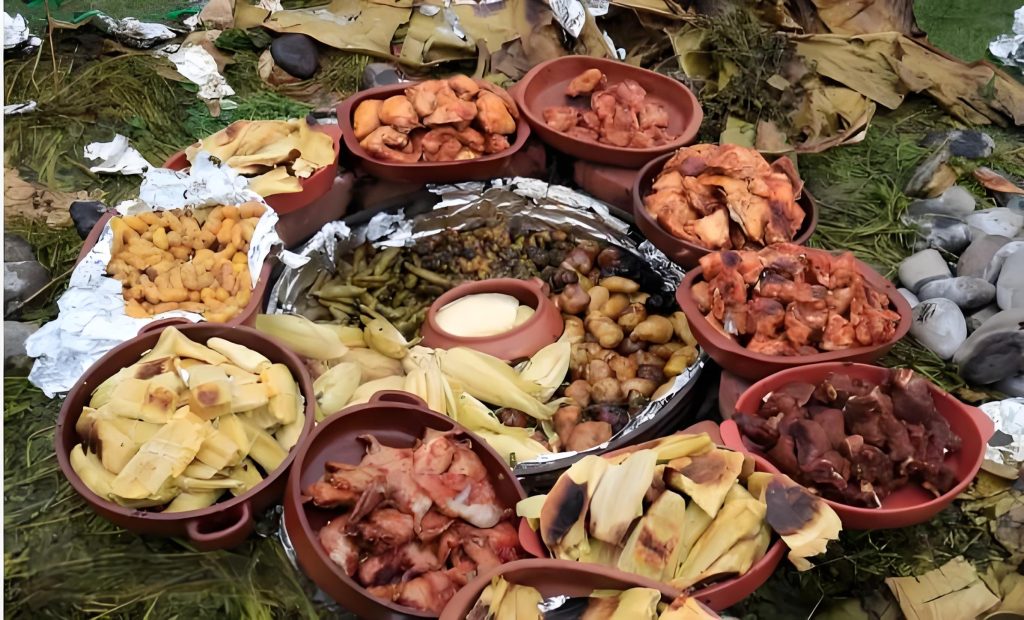
Pachamanca: Earth Oven Barbecue
This is a festive dish, traditionally reserved for special occasions. Various meats, corn, potatoes, and vegetables are buried in a stone-lined pit. A fire is built underneath, and everything slow-cooks. Sometimes local trout is also cooked this way.
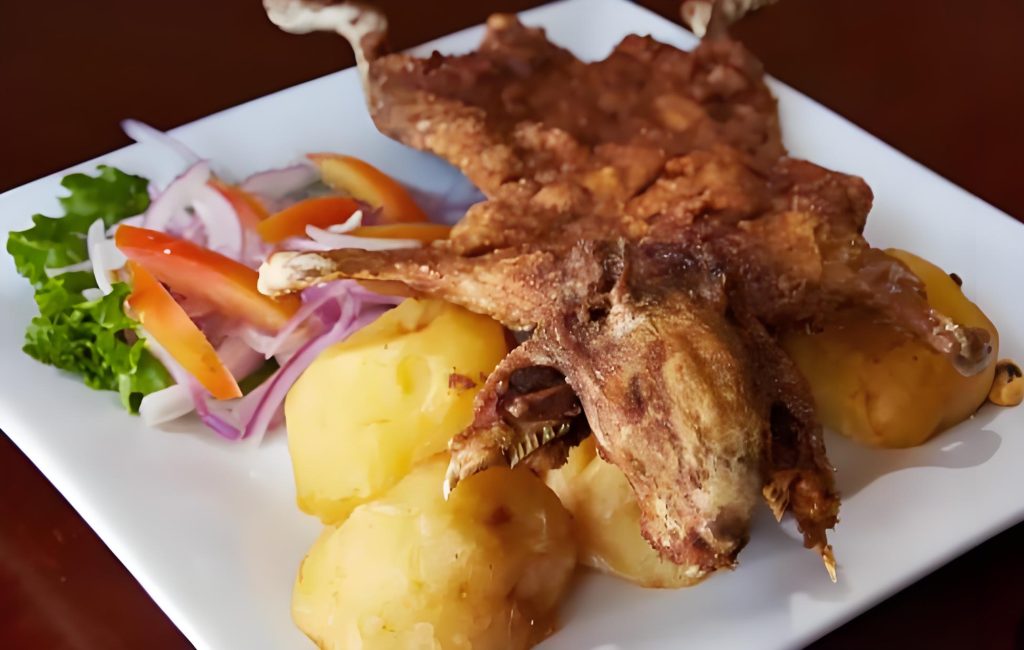
Cuy: Fried Guinea Pig
A popular Andean dish is fried guinea pig. Local women traditionally raise guinea pigs at home. The animal is usually roasted whole or boiled and then fried, stuffed with spices and corn.
Alpaca Stew
Diced marinated alpaca meat is stewed with colorful Andean potatoes and served with white rice.
Rocoto Relleno: Stuffed Spicy Pepper
This dish comes from Arequipa. A very spicy Peruvian chili pepper (rocoto) is stuffed with beef or pork, onions, olives, egg whites, and spices. It’s baked in the oven with cheese, milk, and potato chunks. The heat of the rocoto is not for everyone, but the combination of flavors is unforgettable.
The Taste of Peru
From the coastal ceviche to the hearty stews of the Andes, Peruvian Food is a living museum of history. Every dish tells a story of migration, adaptation, and the blending of cultures. Whether it’s the Chinese influence in lomo saltado, the African roots of tacutacu, or the ancient Andean tradition of causa, Peru’s cuisine is a celebration of its diverse heritage.
And that’s just the beginning. The country’s culinary diversity is so vast that you could eat a different dish every day and still not taste it all. That’s the magic of Peruvian Food.